

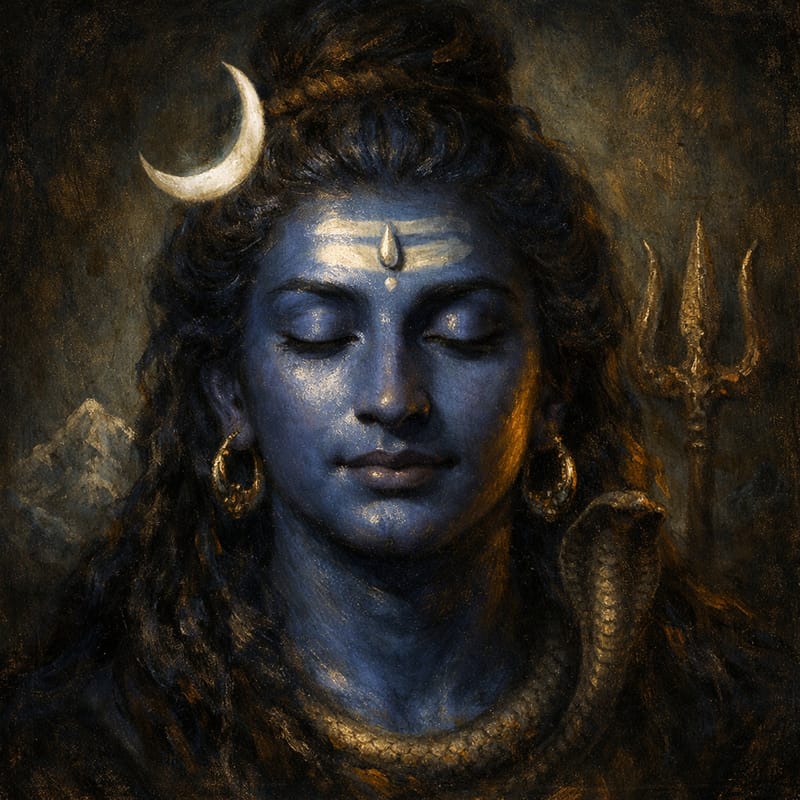
Rudrashtakam — Kannada Lyrics
Rudrashtakam Mantra is an ancient Sanskrit hymn honoring Lord Shiva, dissolving ego and cultivating inner peace through devotional meditation.
Rudrashtakam is an eight-verse Sanskrit hymn of profound devotion to Lord Shiva, composed in the Shiva Purana tradition. The opening verse salutes Shiva as Ishana—the formless, infinite consciousness whose very nature is liberation (nirvana). The mantra describes Him as vibhu (omnipresent), vyapaka (all-pervading), and brahmavedasvarupa (the embodiment of Vedic knowledge). Subsequent verses progressively unveil His cosmic attributes: the source of Om, the transcendent fourth state of consciousness (Turiya), and the master of time itself. Each verse builds a portrait of the supreme deity through metaphor and direct invocation.
Spiritually, Rudrashtakam represents the journey of a seeker recognizing Shiva beyond form and concept. Verses 3 and 4 celebrate His auspicious features—the snow-like radiance, the Ganges flowing from His locks, the crescent moon on His brow—symbols of purity, abundance, and cosmic order. Verse 5 invokes His transcendent power: the destroyer of pride (prachandam), the eternal unborn one (aja), and the wielder of the trident that uproots ignorance. The final verses (6–7) express the seeker's realization that without meditating on Shiva's feet, neither worldly comfort nor spiritual peace is attainable. This is devotion rooted in non-duality—recognizing the divine not as distant but as one's own essential nature.
Rudrashtakam is best chanted during early morning hours (brahma muhurta) or during evening meditation. Practitioners traditionally recite all eight verses sequentially, either aloud or internally, ideally 108 times or at minimum once daily. The hymn means most when accompanied by focused intention (sankalpa) and sincere surrender. Beginners may start with one verse daily, progressing to the full hymn. It is equally effective in temples before Shiva worship or in a personal meditation space. No ritualistic requirements are necessary—only clarity of mind and genuine devotion.
Curated by The Mahakatha Team · Original Composition: Mahakatha · Lyric: Tulsidas (16th century CE)
Rudrashtakam
Shiva · Preview · 2:00
Preview ended
Ancient sounds for transformation, carried across 3,000 years.
Get the full version — plus 275 more ancient chants. 80% OFF today only.
Get Ancient Chants Bundle — 80% OFF →3000+ happy customers · Lifetime access · All devices
2.2M people trust Mahakatha
Chant daily with reminders — Get the Mahakatha app
Lyrics
नमामीशमीशान निर्वाणरूपं विभुं व्यापकं ब्रह्मवेदस्वरूपम् निजं निर्गुणं निर्विकल्पं निरीहं चिदाकाशमाकाशवासं भजेहम्
ನಮಾಮೀಶಮೀಶಾನ ನಿರ್ವಾಣರೂಪಂ ವಿಭುಂ ವ್ಯಾಪಕಂ ಬ್ರಹ್ಮವೇದಸ್ವರೂಪಮ್ ನಿಜಂ ನಿರ್ಗುಣಂ ನಿರ್ವಿಕಲ್ಪಂ ನಿರೀಹಂ ಚಿದಾಕಾಶಮಾಕಾಶವಾಸಂ ಭಜೇಹಮ್
ನಿರ್ವಾಣ ರೂಪವನ್ನು ಪ್ರತಿನಿಧಿಸುವ ಈಶಾನ ಭಗವಂತನಿಗೆ ನಮಸ್ಕಾರಗಳು.
ಅವರು ಎಲ್ಲೆಡೆ ಪ್ರಕಟವಾಗುತ್ತಾರೆ ಮತ್ತು ವೇದಗಳಲ್ಲಿ ಕಂಡುಬರುವ ಪರಮ ಜ್ಞಾನವನ್ನು ಸಾಕಾರಗೊಳಿಸುತ್ತಾರೆ.
ತನ್ನ ಆತ್ಮದಲ್ಲಿ ಲೀನವಾಗಿದ್ದು, ಅವರು ಮೂರು ಗುಣಗಳು, ಬದಲಾವಣೆ ಮತ್ತು ಚಲನೆಯನ್ನು ಮೀರಿದವರು.
ಆಧ್ಯಾತ್ಮಿಕ ಆಕಾಶದಲ್ಲಿ ವಾಸಿಸುವ ಈಶಾನನನ್ನು ನಾನು ಪೂಜಿಸುತ್ತೇನೆ.
निराकारमोङ्करमूलं तुरीयं गिराज्ञानगोतीतमीशं गिरीशम् । करालं महाकालकालं कृपालं गुणागारसंसारपारं नतोहम्
ನಿರಾಕಾರಮೋಙ್ಕರಮೂಲಂ ತುರೀಯಂ ಗಿರಾಜ್ಞಾನಗೋತೀತಮೀಶಂ ಗಿರೀಶಮ್ । ಕರಾಲಂ ಮಹಾಕಾಲಕಾಲಂ ಕೃಪಾಲಂ ಗುಣಾಗಾರಸಂಸಾರಪಾರಂ ನತೋಹಮ್
ಓಂಕಾರದ ಮೂಲವಾದ, ತುರೀಯ ಸ್ಥಿತಿಯಲ್ಲಿ ವಾಸಿಸುವ ನಿರಾಕಾರ ರುದ್ರನಿಗೆ ನಮಸ್ಕಾರಗಳು.
ಅವರು ವಾಣಿ, ಇಂದ್ರಿಯಗಳು ಮತ್ತು ಚಿಂತನೆಯನ್ನು ಮೀರಿದವರು ಮತ್ತು ಪರ್ವತಗಳ ಅಧಿಪತಿಯಾಗಿದ್ದಾರೆ.
ಮಹಾಕಾಲನಾಗಿ, ಅವರು ಕಾಲವನ್ನು ಮೀರಿದವರು ಮತ್ತು ತನ್ನ ಭಕ್ತರ ಮೇಲೆ ಕರುಣೆಯನ್ನು ಸುರಿಸುತ್ತಾರೆ.
ಲೌಕಿಕ ಅಸ್ತಿತ್ವದ ಭ್ರಮೆಯನ್ನು ದಾಟಲು ಸಹಾಯ ಮಾಡುವ ಅವರಿಗೆ ನಾನು ನಮಿಸುತ್ತೇನೆ.
तुषाराद्रिसंकाशगौरं गभिरं मनोभूतकोटिप्रभाश्री शरीरम् । स्फुरन्मौलिकल्लोलिनी चारुगङ्गा लसद्भालबालेन्दु कण्ठे भुजङ्गा
ತುಷಾರಾದ್ರಿಸಂಕಾಶಗೌರಂ ಗಭಿರಂ ಮನೋಭೂತಕೋಟಿಪ್ರಭಾಶ್ರೀ ಶರೀರಮ್ । ಸ್ಫುರನ್ಮೌಲಿಕಲ್ಲೋಲಿನೀ ಚಾರುಗಙ್ಗಾ ಲಸದ್ಭಾಲಬಾಲೇನ್ದು ಕಣ್ಠೇ ಭುಜಙ್ಗಾ
ಹಿಮದ ಪರ್ವತದಂತೆ ಪ್ರಕಾಶಮಾನವಾಗಿರುವ, ಅನಂತ ಗಾಂಭೀರ್ಯವುಳ್ಳ ರುದ್ರನಿಗೆ ನಮಸ್ಕಾರಗಳು.
ಅವರ ಅಸ್ತಿತ್ವದಿಂದ ಅಸಂಖ್ಯಾತ ಪ್ರಭೆಯ ಕಿರಣಗಳು ಹೊರಹೊಮ್ಮಿ ಅವರ ಮಂಗಳಕರ ರೂಪವನ್ನು ಪ್ರಕಾಶಿಸುತ್ತವೆ.
ಪವಿತ್ರ ಗಂಗೆ ಅವರ ತಲೆಯಿಂದ ಹರಿದು ಜಗತ್ತುಗಳನ್ನು ಆಶೀರ್ವದಿಸುತ್ತದೆ.
ಅರ್ಧಚಂದ್ರನು ಅವರ ಹಣೆಯನ್ನು ಅಲಂಕರಿಸುತ್ತದೆ ಮತ್ತು ಸರ್ಪಗಳು ಅವರ ಕೊರಳನ್ನು ಶೋಭಿಸುತ್ತವೆ.
चलत्कुण्डलं भ्रूसुनेत्रं विशालं प्रसन्नाननं नीलकण्ठं दयालम् । मृगाधीशचर्माम्बरं मुण्डमालं प्रियं शङ्करं सर्वनाथं भजामि
ಚಲತ್ಕುಣ್ಡಲಂ ಭ್ರೂಸುನೇತ್ರಂ ವಿಶಾಲಂ ಪ್ರಸನ್ನಾನನಂ ನೀಲಕಣ್ಠಂ ದಯಾಲಮ್ । ಮೃಗಾಧೀಶಚರ್ಮಾಮ್ಬರಂ ಮುಣ್ಡಮಾಲಂ ಪ್ರಿಯಂ ಶಙ್ಕರಂ ಸರ್ವನಾಥಂ ಭಜಾಮಿ
ದೊಡ್ಡ, ಆಕರ್ಷಕ ಕಣ್ಣುಗಳನ್ನು ಹೊಂದಿದ ಸುಂದರ ಮುಖದ ಬಳಿ ಕಿವಿಯೋಲೆಗಳು ಅಲ್ಲಾಡುವ ರುದ್ರನಿಗೆ ನಮಸ್ಕಾರಗಳು.
ಅವರ ಸಂತೋಷಭರಿತ ಮುಖವು ಕರುಣೆಯನ್ನು ಹರಡುತ್ತದೆ ಮತ್ತು ಅವರ ನೀಲ ಕಂಠವು ಅವರ ನಿಸ್ವಾರ್ಥ ಕೃತ್ಯಗಳನ್ನು ಪ್ರತಿಬಿಂಬಿಸುತ್ತದೆ.
ಅವರು ಹುಲಿ ಚರ್ಮ ಮತ್ತು ತಲೆಬುರುಡೆಗಳ ಮಾಲೆಯನ್ನು ಧರಿಸಿ, ತ್ಯಾಗವನ್ನು ಸಾಕಾರಗೊಳಿಸುತ್ತಾರೆ.
ಭಕ್ತರ ಪ್ರಿಯನಾದ ಮತ್ತು ಎಲ್ಲಾ ಜೀವಿಗಳ ಅಧಿಪತಿಯಾದ ಶಂಕರನನ್ನು ನಾನು ಪೂಜಿಸುತ್ತೇನೆ.
प्रचण्डं प्रकृष्टं प्रगल्भं परेशं अखण्डं अजं भानुकोटिप्रकाशं । त्र्यःशूलनिर्मूलनं शूलपाणिं भजेहं भवानीपतिं भावगम्यम्
ಪ್ರಚಣ್ಡಂ ಪ್ರಕೃಷ್ಟಂ ಪ್ರಗಲ್ಭಂ ಪರೇಶಂ ಅಖಣ್ಡಂ ಅಜಂ ಭಾನುಕೋಟಿಪ್ರಕಾಶಂ । ತ್ರ್ಯಃಶೂಲನಿರ್ಮೂಲನಂ ಶೂಲಪಾಣಿಂ ಭಜೇಹಂ ಭವಾನೀಪತಿಂ ಭಾವಗಮ್ಯಮ್
ಒಂದು ಮಿಲಿಯನ್ ಸೂರ್ಯರ ಪ್ರಕಾಶದಿಂದ ಪ್ರಕಾಶಮಾನವಾಗಿರುವ, ಭಯಂಕರ, ಪರಮ ರುದ್ರನಿಗೆ ನಮಸ್ಕಾರಗಳು.
ಅವರು ಶಾಶ್ವತ, ಅಜನ್ಮ ಮತ್ತು ಸಂಪೂರ್ಣರಾಗಿದ್ದಾರೆ.
ಅವರ ತ್ರಿಶೂಲವು ಮೂರು ಗುಣಗಳ ಬಂಧನಗಳನ್ನು ತೆಗೆದುಹಾಕಿ ಆತ್ಮವನ್ನು ಮುಕ್ತಗೊಳಿಸುತ್ತದೆ.
ಭಕ್ತಿಯ ಮೂಲಕ ಮಾತ್ರ ಸಾಧ್ಯವಾಗುವ ದೇವಿ ಭವಾನಿಯ ಪತಿಯನ್ನು ನಾನು ಪೂಜಿಸುತ್ತೇನೆ.
कलातीतकल्याण कल्पान्तकारी सदा सज्जनानन्ददाता पुरारी । चिदानन्दसंदोह मोहापहारी प्रसीद प्रसीद प्रभो मन्मथारी
ಕಲಾತೀತಕಲ್ಯಾಣ ಕಲ್ಪಾನ್ತಕಾರೀ ಸದಾ ಸಜ್ಜನಾನನ್ದದಾತಾ ಪುರಾರೀ । ಚಿದಾನನ್ದಸಂದೋಹ ಮೋಹಾಪಹಾರೀ ಪ್ರಸೀದ ಪ್ರಸೀದ ಪ್ರಭೋ ಮನ್ಮಥಾರೀ
ಭೌತಿಕ ಅಂಶಗಳನ್ನು ಮೀರಿದ ಮತ್ತು ಚಕ್ರದ ಅಂತ್ಯದಲ್ಲಿ ಸೃಷ್ಟಿಯನ್ನು ವಿಸರ್ಜಿಸುವ ರುದ್ರನಿಗೆ ನಮಸ್ಕಾರಗಳು.
ಅವರು ಜ್ಞಾನಿಗಳಿಗೆ ಸಂತೋಷವನ್ನು ತರುತ್ತಾರೆ ಮತ್ತು ತ್ರಿಪುರಾಸುರರಿಂದ ಪ್ರತಿನಿಧಿಸಲ್ಪಟ್ಟ ಅಧರ್ಮವನ್ನು ನಾಶಮಾಡುತ್ತಾರೆ.
ಭ್ರಮೆಯನ್ನು ಹೋಗಲಾಡಿಸಿ, ಅವರು ಆತ್ಮವನ್ನು ಶುದ್ಧ ಪ್ರಜ್ಞೆಯ ಆನಂದದಲ್ಲಿ ಮುಳುಗಿಸುತ್ತಾರೆ.
ಓ ಮನ್ಮಥನ ನಾಶಕ, ನನ್ನ ಮೇಲೆ ದಯೆ ತೋರಿಸು, ಓ ಭಗವಂತ.
न यावद् उमानाथपादारविन्दं भजन्तीह लोके परे वा नराणाम् । न तावत्सुखं शान्ति सन्तापनाशं प्रसीद प्रभो सर्वभूताधिवासं
ನ ಯಾವದ್ ಉಮಾನಾಥಪಾದಾರವಿನ್ದಂ ಭಜನ್ತೀಹ ಲೋಕೇ ಪರೇ ವಾ ನರಾಣಾಮ್ । ನ ತಾವತ್ಸುಖಂ ಶಾನ್ತಿ ಸನ್ತಾಪನಾಶಂ ಪ್ರಸೀದ ಪ್ರಭೋ ಸರ್ವಭೂತಾಧಿವಾಸಂ
ಎಲ್ಲಾ ಜೀವಿಗಳು ಆರಾಧಿಸಬೇಕಾದ ಪದ್ಮ ಪಾದಗಳನ್ನು ಹೊಂದಿರುವ ರುದ್ರನಿಗೆ ನಮಸ್ಕಾರಗಳು.
ಆರಾಧನೆಯಿಲ್ಲದೆ, ನಿಜವಾದ ಸಂತೋಷ, ಶಾಂತಿ ಮತ್ತು ದುಃಖದಿಂದ ಮುಕ್ತಿಯನ್ನು ಪಡೆಯಲು ಸಾಧ್ಯವಿಲ್ಲ.
ಆದುದರಿಂದ, ಓ ಭಗವಂತ, ದಯೆ ತೋರಿಸಿ ನಿನ್ನನ್ನು ಹುಡುಕುವವರನ್ನು ಆಶೀರ್ವದಿಸು.
ಎಲ್ಲಾ ಜೀವಿಗಳಲ್ಲಿ ವಾಸಿಸುವ ನೀನು, ದಯವಿಟ್ಟು ನಿನ್ನ ಕೃಪೆಯನ್ನು ದಯಪಾಲಿಸು.
न जानामि योगं जपं नैव पूजां नतोहं सदा सर्वदा शम्भुतुभ्यम् । जराजन्मदुःखौघ तातप्यमानं प्रभो पाहि आपन्नमामीश शंभो
ನ ಜಾನಾಮಿ ಯೋಗಂ ಜಪಂ ನೈವ ಪೂಜಾಂ ನತೋಹಂ ಸದಾ ಸರ್ವದಾ ಶಮ್ಭುತುಭ್ಯಮ್ । ಜರಾಜನ್ಮದುಃಖೌಘ ತಾತಪ್ಯಮಾನಂ ಪ್ರಭೋ ಪಾಹಿ ಆಪನ್ನಮಾಮೀಶ ಶಂಭೋ
ಯೋಗ, ಜಪ ಅಥವಾ ಪೂಜೆಯನ್ನು ಹೇಗೆ ನಿರ್ವಹಿಸಬೇಕೆಂದು ನನಗೆ ತಿಳಿದಿಲ್ಲವಾದ್ದರಿಂದ ಶಂಭುವಿಗೆ ನಮಸ್ಕಾರಗಳು.
ನಿನ್ನ ಕೃಪೆಯಲ್ಲಿ ಆಶ್ರಯ ಪಡೆಯುತ್ತಾ, ನಾನು ಎಲ್ಲಾ ಸಮಯದಲ್ಲೂ ನಿನಗೆ ಮಾತ್ರ ನಮಿಸುತ್ತೇನೆ.
ಜನನ, ವೃದ್ಧಾಪ್ಯ ಮತ್ತು ದುಃಖವನ್ನು ತರುವ ಪಾಪಗಳಿಂದ ನನ್ನನ್ನು ರಕ್ಷಿಸು.
ಓ ಭಗವಂತ ಶಂಭು, ನನ್ನನ್ನು ಎಲ್ಲಾ ಸಂಕಟಗಳಿಂದ ರಕ್ಷಿಸಿ ನನಗೆ ಶಾಂತಿಯನ್ನು ದಯಪಾಲಿಸು.
॥ इति श्रीगोस्वामितुलसीदासकृतं श्रीरुद्राष्टकं सम्पूर्णम् ॥
॥ ಇತಿ ಶ್ರೀಗೋಸ್ವಾಮಿತುಲಸೀದಾಸಕೃತಂ ಶ್ರೀರುದ್ರಾಷ್ಟಕಂ ಸಮ್ಪೂರ್ಣಮ್ ॥
ಗೋಸ್ವಾಮಿ ತುಲಸೀದಾಸರಿಂದ ರಚಿಸಲ್ಪಟ್ಟ ರುದ್ರಾಷ್ಟಕಂ ಇಲ್ಲಿ ಸಮಾಪ್ತವಾಗುತ್ತದೆ.
How to Chant Rudrashtakam
- 1
Find a quiet, clean space
Sit in a comfortable, undisturbed environment. Face east or north if possible. You may light incense or a candle to set a contemplative atmosphere.
- 2
Settle into a comfortable posture
Sit cross-legged on the floor or upright in a chair. Keep the spine erect and place the hands on the knees with palms facing upward.
- 3
Take three cleansing breaths
Inhale slowly through the nose, hold briefly, and exhale completely. Repeat three times to calm the mind and prepare for mantra recitation.
- 4
Begin chanting Rudrashtakam
Chant the mantra clearly and with devotion — aloud, in a whisper, or silently. Use a mala (108 beads) to count repetitions. Aim for a consistent, unhurried rhythm throughout the session.
- 5
Rest in stillness
After completing your chanting, sit quietly for two to five minutes. Allow the vibration of the mantra to settle within. Close the practice with a moment of gratitude.
Benefits of Rudrashtakam
-
Dissolves ego and cultivates humility before the infinite divine, reducing pride and arrogance.
Source: Shiva Purana tradition
-
Bestows inner peace and mental clarity by focusing the mind on the formless, eternal nature of consciousness.
Source: Upanishadic philosophy
-
Grants courage and resilience in facing life's challenges by connecting with Shiva's transcendent power.
Source: Traditional practice
-
Supports spiritual growth and the search for self-realization through repeated contemplation of non-dual truth.
Source: Advaita Vedanta tradition
-
Purifies the mind and removes obstacles (antarayas) on the spiritual path when chanted with devotion.
Source: Tantra and meditation texts
Story & Symbolism
Rudrashtakam emerges from the Shiva Purana tradition, a vast collection of teachings on Shiva's nature and grace. While traditionally attributed to Goswami Tulsidas (8th-century CE)—the legendary non-dualist sage who unified Vedic philosophy—the hymn's true authorship remains veiled in antiquity. What is certain is that the eight verses synthesize the highest teachings of the Upanishads, particularly the Shvetashvatara Upanishad, which declares: "Shiva is the supreme, formless consciousness that transcends all names and forms." The hymn became a standard meditation text in Shaivite monasteries and temples, passed orally through guru-disciple lineages for over a thousand years. Its preservation in multiple Sanskrit manuscripts across South and North India testifies to its sacred status.
The deity symbolism woven throughout Rudrashtakam reflects ancient Shaivite cosmology. Shiva is not merely a god of destruction but the transcendent principle that sustains, transforms, and ultimately liberates consciousness. The verses invoke His auspicious forms—the Ganges in His locks (cosmic purification), the crescent moon on His brow (the eternal cycle), serpents around His neck (traditionally read as kundalini shakti), the trident in His hand (mastery over past, present, and future). Yet beneath these poetic images lies a radical truth: all these attributes are metaphors for formless awareness itself. The hymn progressively dissolves the seeker's attachment to form, guiding consciousness inward toward the infinite source beyond all imagery.
Today, Rudrashtakam remains a living practice across Hindu temples, yoga ashrams, and meditation centers worldwide. Millions chant it daily as both devotional prayer and non-dual contemplation. Its enduring power lies in its ability to awaken spiritual courage, humble the ego, and reveal the divine not as a distant deity but as the eternal ground of one's own being. The mantra continues to fulfill its ancient purpose: guiding seekers from ignorance to self-realization.
How to Use in Daily Life
Dawn Chanting
Recite Rudrashtakam during brahma muhurta (pre-dawn) when the mind is naturally serene. Sit facing east, light a lamp before Shiva's image if available, and chant slowly with full attention. This morning practice infuses your day with spiritual clarity and inner strength.
Meditation Focus
Use Rudrashtakam as a meditation anchor. After settling into stillness, mentally chant one verse at a time, resting attention on its meaning. Allow the words to dissolve into silence. This trains the mind toward non-dual awareness and deepens your experience of the eternal self Shiva represents.
Temple Worship
Before a Shiva Lingam or image, recite the full hymn as an offering of reverence. Many practitioners chant it 3 times, dedicating each round to purification, devotion, and liberation. This practice transforms ritual worship into direct communion with the divine.
Evening Reflection
Chant Rudrashtakam in the evening as an act of surrender before sleep. Let the verses remind you that all worldly striving returns to Shiva's eternal stillness. This practice cultivates gratitude, releases day's tensions, and aligns your consciousness with divine peace throughout the night.