

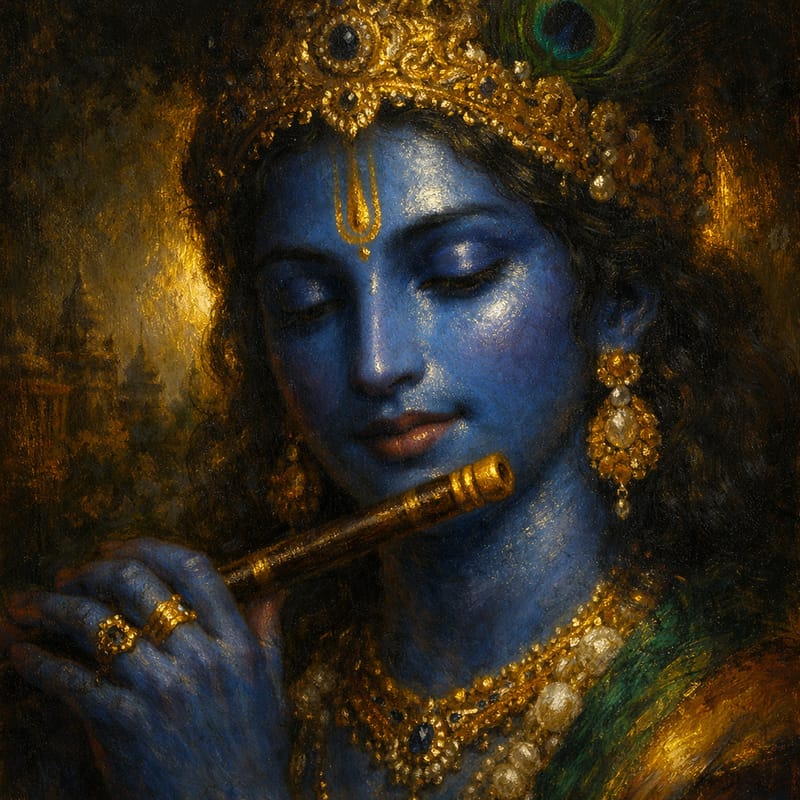
Achyuthashtakam — Hindi Lyrics
Achyuthashtakam Mantra is a sacred Sanskrit hymn dedicated to Krishna, stabilizing the mind and dissolving racing thoughts through rhythmic invocation.
Achyuthashtakam is an eight-verse hymn celebrating Krishna and Rama across their divine manifestations. Each verse invokes different names and attributes: Achyuta (the infallible), Keshava (the dark-haired), Govinda (the cowherd lord), and aspects of both Krishna's pastoral divinity and Rama's heroic virtue. The mantra honors Krishna's beloved forms—lover of the gopis, friend of Radha, slayer of Kamsa—and Rama's role as protector of Sita, vanquisher of demons, and embodiment of dharma (righteous duty).
Spiritually, Achyuthashtakam represents the non-dual nature of the divine—that Vishnu, Krishna, and Rama are expressions of the same infinite consciousness. Each name carries specific energy: Achyuta symbolizes unwavering stability; Madhava represents sweetness and divine attraction; Dhokshaja points to transcendence beyond perception. By chanting these names in sequence, the seeker moves through layers of Krishna's cosmic play (lila) and Rama's moral perfection, ultimately recognizing the deity within the heart. The hymn bridges bhakti (devotion) and jnana (wisdom).
Practitioners typically chant Achyuthashtakam during morning meditation, before meals as a blessing, or during evening worship. Repetition deepens the practice—ideally 8, 27, or 108 times—synchronizing breath with divine names. Beginners may focus on one verse daily, progressing to the full eight. The mantra works best when chanted with sincere devotion and awareness of the deity's presence. It can be practiced alone or in group kirtan settings for amplified spiritual effect.
Curated by The Mahakatha Team · Original Composition: Mahakatha · Lyric: Adi Shankaracharya (8th century CE)
Achyuthashtakam
Krishna · Preview · 2:00
Preview ended
Ancient sounds for transformation, carried across 3,000 years.
Get the full version — plus 275 more ancient chants. 80% OFF today only.
Get Ancient Chants Bundle — 80% OFF →3000+ happy customers · Lifetime access · All devices
2.2M people trust Mahakatha
Chant daily with reminders — Get the Mahakatha app
Lyrics
अच्युतं केशवं रामनारायणं कृष्णदामोदरं वासुदेवं हरिम् । श्रीधरं माधवं गोपिकावल्लभं जानकीनायकं रामचंद्रं भजे ॥1॥
अच्युतं केशवं रामनारायणं कृष्णदामोदरं वासुदेवं हरिम् । श्रीधरं माधवं गोपिकावल्लभं जानकीनायकं रामचंद्रं भजे ॥1॥
हे प्रभु, अचल, घने केशों वाले, देवी सीता के स्वामी, शुद्ध शाश्वत पुरुष,
हे कृष्ण, अनियंत्रित, वसु के पुत्र, पाप के हरण करने वाले,
हे लक्ष्मी के पति, हे मधुर, गोपिकाओं के प्रिय,
हे जानकी के नाथ, हे राम, जो चंद्रमा की तरह चमकते हैं, मैं आपकी पूजा करता हूं।
अच्युतं केशवं सत्यभामाधवं माधवं श्रीधरं राधिकाराधितम् । इन्दिरामन्दिरं चेतसा सुन्दरं देवकीनन्दनं नन्दजं सन्दधे ॥२॥
अच्युतं केशवं सत्यभामाधवं माधवं श्रीधरं राधिकाराधितम् । इन्दिरामन्दिरं चेतसा सुन्दरं देवकीनन्दनं नन्दजं सन्दधे ॥२॥
हे प्रभु, अचल, घने केशों वाले, सत्यभामा के स्वामी,
हे मधुर, लक्ष्मी के पति, हे राधिका के प्रिय,
हे इंदिरा के मंदिर में निवास करने वाले, हे तेजस्वी और सुंदर,
हे देवकी के पुत्र, मैं आपकी पूजा करता हूं।
विष्णवे जिष्णवे शाङ्खिने चक्रिणे रुक्मिणिरागिणे जानकीजानये । बल्लवीवल्लभायार्चितायात्मने कंसविध्वंसिने वंशिने ते नमः ॥३॥
विष्णवे जिष्णवे शाङ्खिने चक्रिणे रुक्मिणिरागिणे जानकीजानये । बल्लवीवल्लभायार्चितायात्मने कंसविध्वंसिने वंशिने ते नमः ॥३॥
हे विश्व के स्वामी, विजयी, शंख और चक्र धारण करने वाले,
हे रुक्मिणी के प्रिय, हे देवी जानकी के पति,
हे ग्वालिनों के प्रियतम और स्वामी,
हे कंस के संहारक, हे बांसुरी के वादक, मैं आपकी पूजा करता हूं।
कृष्ण गोविन्द हे राम नारायण श्रीपते वासुदेवाजित श्रीनिधे । अच्युतानन्त हे माधवाधोक्षज द्वारकानायक द्रौपदीरक्षक ॥४॥
कृष्ण गोविन्द हे राम नारायण श्रीपते वासुदेवाजित श्रीनिधे । अच्युतानन्त हे माधवाधोक्षज द्वारकानायक द्रौपदीरक्षक ॥४॥
हे कृष्ण, गोपाल, हे राम, शुद्ध शाश्वत पुरुष,
हे श्री के पति, वसु के पुत्र, अपराजित, समृद्धि के प्रकाश,
हे अचल और अनंत, हे अधोक्षज के दिव्य अवतार,
हे द्वारका के नायक, हे द्रौपदी के रक्षक, मैं आपकी पूजा करता हूं।
राक्षसक्षोभितः सीतया शोभितो दण्डकारण्यभूपुण्यताकारणः । लक्ष्मणेनान्वितो वानरौः सेवितोगस्तसम्पूजितो राघव पातु माम् ॥५॥
राक्षसक्षोभितः सीतया शोभितो दण्डकारण्यभूपुण्यताकारणः । लक्ष्मणेनान्वितो वानरौः सेवितोगस्तसम्पूजितो राघव पातु माम् ॥५॥
हे राक्षसों के भय, देवी सीता के साथ खड़े,
हे दण्डकारण्य भूमि को पवित्र करने वाले,
हे लक्ष्मण के मार्गदर्शक, हे वानरों के स्वामी,
हे ऋषि अगस्त्य के प्रभु, हे रघु के वंशज, मेरी रक्षा करें।
धेनुकारिष्टकानिष्टकृद्द्वेषिणा केशिहा कंसहृद्वंशिकावादकः । पूतनाकोपकःसूरजाखेलनो बालगोपालकः पातु मां सर्वदा ॥६॥
धेनुकारिष्टकानिष्टकृद्द्वेषिणा केशिहा कंसहृद्वंशिकावादकः । पूतनाकोपकःसूरजाखेलनो बालगोपालकः पातु मां सर्वदा ॥६॥
हे धेनुक और अरिष्टक राक्षसों के संहारक,
केशी और कंस के वधक, हे बांसुरी के दिव्य वादक,
हे पूतना को दंड देने वाले, हे सूर्य देव की नदी यमुना के किनारे खेलने वाले,
हे बालगोपाल, सदा मेरी रक्षा करें।
विद्युदुद्योतवत्प्रस्फुरद्वाससं प्रावृडम्भोदवत्प्रोल्लसद्विग्रहम् । वन्यया मालया शोभितोरःस्थलं लोहिताङ्घ्रिद्वयं वारिजाक्षं भजे ॥७॥
विद्युदुद्योतवत्प्रस्फुरद्वाससं प्रावृडम्भोदवत्प्रोल्लसद्विग्रहम् । वन्यया मालया शोभितोरःस्थलं लोहिताङ्घ्रिद्वयं वारिजाक्षं भजे ॥७॥
हे तेजस्वी, बिजली की तरह चमकते वस्त्र पहनने वाले,
हे मनोहर, काले बादलों की तरह सुंदरता से विचरण करने वाले,
हे कृष्ण, छाती पर जंगली फूलों की माला धारण करने वाले,
हे लौह वर्ण के चरणों और कमल नयनों वाले प्रभु, मैं आपकी पूजा करता हूं।
कुञ्चितैः कुन्तलैर्भ्राजमानाननं रत्नमौलिं लसत्कुण्डलं गण्डयोः । हारकेयूरकं कङ्कणप्रोज्ज्वलं किङ्किणीमञ्जुलं श्यामलं तं भजे ॥८॥
कुञ्चितैः कुन्तलैर्भ्राजमानाननं रत्नमौलिं लसत्कुण्डलं गण्डयोः । हारकेयूरकं कङ्कणप्रोज्ज्वलं किङ्किणीमञ्जुलं श्यामलं तं भजे ॥८॥
हे दिव्य सौंदर्य, चमकते मुख और सुंदर घुंघराले बालों वाले,
हे प्रभु, सिर पर चमकती रत्न मुकुट और कानों में कुंडल धारण करने वाले,
हे दिव्य रूप, भुजाओं और कमर पर चमकते कंगन धारण करने वाले,
हे शरीर पर मधुर घुंघरुओं से सुशोभित प्रभु, मैं आपकी पूजा करता हूं।
अच्युतस्याष्टकं यः पठेदिष्टदं प्रेमतः प्रत्यहं पूरुषः सस्पृहम् । वृत्ततः सुन्दरं कर्तृविश्वम्भर- स्तस्यवश्यो हरिर्जायते सत्वरम् ॥९॥
अच्युतस्याष्टकं यः पठेदिष्टदं प्रेमतः प्रत्यहं पूरुषः सस्पृहम् । वृत्ततः सुन्दरं कर्तृविश्वम्भर- स्तस्यवश्यो हरिर्जायते सत्वरम् ॥९॥
जो कोई इस मनोकामना पूर्ण करने वाले अच्युताष्टकम का पाठ करता है,
परम प्रभु के लिए भक्ति और लालसा के साथ प्रतिदिन,
वह सर्वव्यापी प्रभु के इस दिव्य वर्णन का पाठक,
शीघ्र ही उनके प्रेममय आश्रय में स्थान पाएगा।
श्री शङ्कराचार्य कृतं!
श्री शङ्कराचार्य कृतं!
श्री शंकराचार्य द्वारा रचित!
How to Chant Achyuthashtakam
- 1
Find a quiet, clean space
Sit in a comfortable, undisturbed environment. Face east or north if possible. You may light incense or a candle to set a contemplative atmosphere.
- 2
Settle into a comfortable posture
Sit cross-legged on the floor or upright in a chair. Keep the spine erect and place the hands on the knees with palms facing upward.
- 3
Take three cleansing breaths
Inhale slowly through the nose, hold briefly, and exhale completely. Repeat three times to calm the mind and prepare for mantra recitation.
- 4
Begin chanting Achyuthashtakam
Chant the mantra clearly and with devotion — aloud, in a whisper, or silently. Use a mala (108 beads) to count repetitions. Aim for a consistent, unhurried rhythm throughout the session.
- 5
Rest in stillness
After completing your chanting, sit quietly for two to five minutes. Allow the vibration of the mantra to settle within. Close the practice with a moment of gratitude.
Benefits of Achyuthashtakam
-
Stabilizes the mind and dissolves racing thoughts through rhythmic invocation of Achyuta (the infallible anchor of consciousness).
Source: Bhagavad Gita 2.58 — stilling the mind through name repetition
-
Cultivates emotional resilience and inner peace by connecting to Krishna's steady presence and Rama's steadfast virtue.
Source: Traditional Bhakti practice and Padma Purana
-
Releases stored trauma and negativity through devotional surrender to the divine protector, invoiced as Draupadirakshaka (Draupadi's rescuer).
Source: Bhagavata Purana — Krishna's role as protector of the innocent
-
Deepens spiritual clarity by meditating on divine names that reveal different aspects of Krishna consciousness and cosmic order.
Source: Narada Bhakti Sutras — power of divine name repetition
-
Strengthens devotional connection and divine grace through direct invocation of Krishna and Rama as personal guides.
Source: Traditional Vaishnava practice
Story & Symbolism
Achyuthashtakam emerges from the Padma Purana's devotional layer, composed as a comprehensive invocation merging two avatarically distinct yet spiritually unified incarnations of Vishnu. The hymn's architecture reflects classical Sanskrit poetic traditions—eight verses corresponding to ashtanga (eight limbs) of spiritual practice, each verse containing four lines of rhythmic devotion. Its composition dates to the Bhakti renaissance, when bhaktas (devotees) sought to democratize sacred experience beyond Vedic priesthood, making direct god-realization accessible through sincere chanting.
Theologically, Achyuthashtakam bridges apparent dualities: Krishna's eternal, personal sweetness with Rama's historical heroism and moral perfection; the transcendent Dhokshaja with the immanent Govinda tending cows. By invoking Krishna and Rama alternately across verses, the hymn affirms core Vaishnava philosophy—that all divine forms channel one infinite consciousness. Each name carries specific shakti (power): Achyuta as unchanging stability, Madhava as divine beauty, Kansavdhvansine as purifying force against inner demons.
Today, Achyuthashtakam anchors Sri Vaishnava and Gaudiya Vaishnava daily worship (puja), recited during morning rituals by millions. Modern spiritual practitioners use it beyond temple contexts—in home meditation, during times of crisis for stabilization, and in yoga communities as mantric support for inner transformation. Its continued power rests not in age but in the living transmission of bhakti (devotional love) that sustains it.
How to Use in Daily Life
Dawn Devotion
Chant Achyuthashtakam during Brahma muhurta (pre-dawn). Sit facing east, light a lamp, and repeat verses 8 or 27 times. This aligns your day with divine intention and invokes Krishna's protection from dawn's first light.
Meditation Focus
Use one verse as your meditation anchor. Visualize Krishna or Rama while chanting; let each divine name deepen your breath and settle your mind. Progress through verses weekly for full eight-week cycle of sustained spiritual deepening.
Before Meals
Chant a single verse before eating to consecrate food, transforming it from mere sustenance into blessed prasad (sacred offering). This practice cultivates gratitude and reminds you that all nourishment flows from divine grace.
Evening Closure
Recite Achyuthashtakam at sunset or before sleep (after 7 PM) to release day's tensions and invite protective presence into your rest. Chanting Krishna's names dissolves worries, enabling deeper sleep and clearer dreams.