

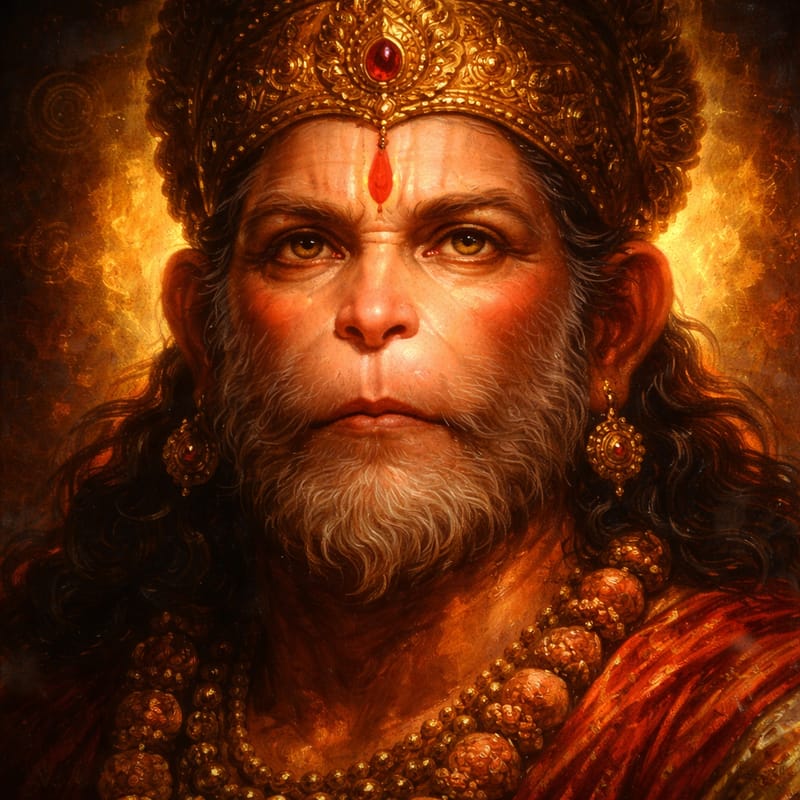
Hanuman Chalisa — Russian Lyrics
The Hanuman Chalisa is a 40-verse devotional hymn composed by Tulsidas in the 16th century, written in Awadhi-Hindi vernacular with Sanskrit roots. The opening doha (couplet) establishes the spiritual foundation: the poet cleanses the mirror of his mind with the dust of his guru's lotus feet, then narrates the immaculate glory of Rama—who grants the four fruits of life (dharma, artha, kama, moksha). Acknowledging his own ignorance, the poet seeks Hanuman's grace for strength, wisdom, and freedom from afflictions. Each subsequent verse celebrates Hanuman's divine attributes, courage, and role as Rama's eternal messenger.
Hanuman represents the pinnacle of bhakti (devotion), courage, and selfless service in Hindu spirituality. He is the bridge between the human and divine—monkey-born yet supremely enlightened, embodying humility despite incomparable strength. The Chalisa positions him as 'ocean of wisdom,' 'dispeller of evil thoughts,' and 'remover of obstacles.' In the Ramcharitmanas, Tulsidas portrays Hanuman as the ideal devotee: his mind rests eternally in Rama, his intellect serves Rama's purpose, and his body executes Rama's will. For practitioners, Hanuman exemplifies how surrendered action transcends ego and draws out great inner strength—a living gateway to shakti (power) and bhakti (grace) simultaneously.
Chant the Hanuman Chalisa with sincerity, preferably in the early morning (brahma muhurta) or during times of difficulty. Begin by bowing to your guru and Hanuman. Recite all 40 verses slowly, focusing on their meaning rather than speed. Many devotees practice it weekly on Tuesdays or Saturdays (auspicious for Hanuman). Even reciting a single verse with concentrated awareness yields benefit. The mantra works best when paired with intentional living—embodying Hanuman's virtues of courage, loyalty, and service. No special ritual is required; sincere repetition awakens the Hanuman consciousness within.
Curated by The Mahakatha Team · Original Composition: Mahakatha · Lyric: Tulsidas (16th century CE)
Hanuman Chalisa
Hanuman · Preview · 2:00
Preview ended
Ancient sounds for transformation, carried across 3,000 years.
Get the full version — plus 275 more ancient chants. 80% OFF today only.
Get Ancient Chants Bundle — 80% OFF →3000+ happy customers · Lifetime access · All devices
2.2M people trust Mahakatha
Chant daily with reminders — Get the Mahakatha app
दोहा श्रीगुरु चरन सरोज रज, निजमन मुकुरु सुधारि। बरनउं रघुवर बिमल जसु, जो दायकु फल चारि।। बुद्धिहीन तनु जानिके, सुमिरौं पवन-कुमार। बल बुधि बिद्या देहु मोहिं, हरहु कलेस बिकार।।
доха шригуру чаран сародж радж, ниджаман мукуру судхари. баранау рагхувар вимал джасу, джо даяку пхал чари. буддхихин тану джаникэ, сумирау паван-кумар. бал будхи видья дэху мохим, хараху калес викар.
Пылью с лотосных стоп Моего Господа я очищаю зеркало своего ума.
Я повествую о Священной Славе Шри Рагхубара (Шри Рама Чандры), который дарует четыре плода жизни (Дхарма, Артха, Кама и Мокша).
Считая себя невежественным, я медитирую на Тебя, о Паван Кумар (Хануман).
Даруй мне Силу, Мудрость и Знание, и удали мои страдания и недостатки.
चौपाई
чаупаи
जय हनुमान ज्ञान गुन सागर। जय कपीस तिहुं लोक उजागर।। राम दूत अतुलित बल धामा। अंजनि-पुत्र पवनसुत नामा।।
джай хануман гьяна гуна сагар. джай капис тихум лок уджагар. рам дут атулит бал дхама. анджани-путра паванасут нама.
Слава Тебе, о Хануман, который есть океан мудрости и добродетели,
Слава Владыке обезьян, который есть просветитель трех миров.
Ты посланник Шри Рамы, обладающий безмерной силой,
Ты известен как Анджани-Путра (сын Анджани) и Павана-Сута (сын Паваны, бога ветра).
महाबीर बिक्रम बजरंगी। कुमति निवार सुमति के संगी।। कंचन बरन बिराज सुवेसा। कानन कुण्डल कुँचित केसा।।
махабир викрам баджаранги. кумати нивар сумати кэ санги. канчан баран бирадж сувэса. канан кундал кунчит кэса.
Ты великий герой, чрезвычайно доблестный, с телом крепким как молния,
Ты разрушитель злых помыслов и спутник здравого смысла и мудрости.
Ты обладаешь золотым сиянием, и ты прекрасно одет,
Ты носишь серьги и имеешь красивые вьющиеся волосы.
हाथ बज्र अरु ध्वजा बिराजे। कांधे मूंज जनेउ साजे।। संकर स्वयं केसरी नंदन। तेज प्रताप महा जग वंदन।।
хатх баджра ару дхваджа бирадже. кандхэ мундж джанэу садже. шанкар суван кэсари нандан. тэдж пратап маха джаг вандан.
Ты держишь молнию и флаг в своих руках.
Ты носишь священный шнур через плечо.
Ты воплощение Господа Шивы и сын Кесари,
Тебя почитает весь мир за твою великую силу и мужество.
विद्यावान गुनी अति चातुर। राम काज करिबे को आतुर।। प्रभु चरित्र सुनिबे को रसिया। राम लखन सीता मन बसिया।।
видьяван гуни ати чатур. рам кадж карибэ ко атур. прабху чаритра унибэ ко расия. рам лакхан сита ман басия.
Ты ученый, добродетельный и чрезвычайно разумный,
Ты всегда стремишься совершать деяния Шри Рамы.
Ты наслаждаешься слушанием о славе Шри Рамы,
В твоем сердце пребывают Шри Рама, Шри Лакшмана и Деви Сита.
सूक्ष्म रूप धरि सियहिं दिखावा। बिकट रूप धरि लंक जरावा।। भीम रूप धरि असुर संहारे। रामचन्द्र के काज संवारे।।
сукшма руп дхари сияхим дикхава. викат руп дхари ланка джарава. бхим руп дхари асур сангхарэ. рамачандра кэ кадж саварэ.
Ты явился перед Деви Ситой, приняв крошечный облик (в Ланке),
Ты принял грозный облик и сжег Ланку.
Ты принял гигантский облик и уничтожил демонов,
Тем самым исполнив задачу Шри Рамы.
लाय सजीवन लखन जियाये। श्री रघुबीर हरषि उर लाये।। रघुपति कीन्ही बहुत बड़ाई। तुम मम प्रिय भरतहि सम भाई।।
лай садживан лакхан джияйэ. шри рагхубир харши ур лайэ. рагхупати кинхи бахут бадаи. тум мам прия бхаратахи сам бхаи.
Ты принес траву Санджвани и оживил Шри Лакшману.
За это Шри Рама обнял тебя, переполненный радостью.
Шри Рама восхвалял тебя великими словами,
И сказал: «Ты так же дорог мне, как мой брат Бхарата».
सहस बदन तुम्हरो जस गावैं। अस कहि श्रीपति कण्ठ लगावैं।। सनकादिक ब्रह्मादि मुनीसा। नारद सारद सहित अहीसा।।
сахас бадан тумхаро джас гавай. ас кахи шрипати кантх лагавай. санакадик брахмади муниса. нарад сарад сахит ахиса.
«Тысячеглавый Шешнаг воспевает твою славу»,
Сказал Шри Рама, заключая тебя в объятия.
Санака и другие мудрецы, Господь Брахма и другие боги,
Нарада, Деви Сарасвати и Шешнаг...
जम कुबेर दिगपाल जहां ते। कवि कोविद कहि सके कहां ते।। तुम उपकार सुग्रीवहिं कीन्हा। राम मिलाय राज पद दीन्हा।।
джам кубэр дигапал джахам тэ. кави ковид кахи сакэ кахам тэ. тум упакар сугривахим кинха. рам милай радж пад динха.
Яма (бог смерти), Кубера (бог богатства), Дигпалы (божества-хранители),
Поэты и ученые не смогли описать твою славу в полной мере.
Ты оказал великую помощь Сугриве.
Ты представил его Шри Раме и тем самым вернул ему царство.
तुम्हरो मंत्र बिभीषन माना। लंकेश्वर भए सब जग जाना।। जुग सहस्र जोजन पर भानु। लील्यो ताहि मधुर फल जानू।।
тумхаро мантра вибхишан мана. ланкэшвар бхайэ саб джаг джана. джуг сахастра йоджан пар бхану. лилйо тахи мадхур пхал джану.
Вибхишана последовал твоему совету,
И весь мир знает, что он стал царем Ланки.
Солнце, которое находилось на расстоянии шестнадцати тысяч миль,
Ты проглотил его, приняв за сладкий плод.
प्रभु मुद्रिका मेलि मुख माहीं। जलधि लांघि गये अचरज नाहीं।। दुर्गम काज जगत के जेते। सुगम अनुग्रह तुम्हरे तेते।।
прабху мудрика мэли мукх махим. джаладхи лангхи гайэ ачарадж нахим. дургам кадж джагат кэ джэтэ. сугам ануграх тумхарэ тэтэ.
Неся кольцо Господа Шри Рамы во рту,
Ты пересек океан, нет в этом ничего удивительного.
Все трудные задачи в этом мире,
Становятся легкими благодаря твоей милости.
राम दुआरे तुम रखवारे। होत न आज्ञा बिनु पैसारे।। सब सुख लहै तुम्हारी सरना। तुम रक्षक काहू को डर ना।।
рам дуарэ тум ракхаварэ. хот на агья бину паисарэ. саб сукх лахай тумхари сарана. тум ракшак каху ко дар на.
Ты страж царства Шри Рамы.
Никто не может войти без твоего разрешения.
Те, кто находят убежище в тебе, обретают все счастье.
Если ты защитник, чего же бояться?
आपन तेज सम्हारो आपै। तीनों लोक हांक तें कांपै।। भूत पिसाच निकट नहिं आवै। महावीर जब नाम सुनावै।।
апан тэдж самхаро апай. тино лок ханк тэм капай. бхут писач никат нахим авай. махавир джаб нам сунавай.
Только ты можешь контролировать свою великую энергию.
Когда ты ревешь, три мира трепещут.
Призраки и злые духи не приблизятся,
Когда произносят имя Махавира (Ханумана).
नासै रोग हरे सब पीरा। जपत निरन्तर हनुमत बीरा।। संकट तें हनुमान छुड़ावै। मन क्रम बचन ध्यान जो लावै।।
насай рог харэ саб пира. джапат нирантар ханумат бира. санкат тэм хануман чхудавай. ман крам бачан дхьян джо лавай.
Ты уничтожаешь болезни и удаляешь все боли,
Когда непрерывно произносят твое имя.
Хануман освобождает от трудностей,
Когда медитируют на него умом, делами и словами.
सब पर राम राय सिर राजा। तिन के काज सकल तुम साजा।। और मनोरथ जो कोई लावै। सोई अमित जीवन फल पावै।।
саб пар рам тапасви раджа. тин кэ кадж сакал тум саджа. аур маноратх джо кои лавай. сои амит дживан пхал павай.
Шри Рама — царь тапасви (преданных, совершающих покаяния).
И ты (Хануман) исполняешь все деяния Шри Рамы (как хранитель).
Преданные, имеющие любые другие желания,
В конечном итоге получат высший плод жизни.
चारों जुग परताप तुम्हारा। है परसिद्ध जगत उजियारा।। साधु संत के तुम रखवारे।। असुर निकन्दन राम दुलारे।।
чаро джуг паратап тумхара. хай парасиддх джагат уджияра. садху сант кэ тум ракхаварэ. асур никандан рам дуларэ.
Твоя слава царит во всех четырех эпохах.
И твоя слава сияет по всему миру.
Ты спаситель святых и мудрецов.
Ты уничтожаешь демонов, о возлюбленный Шри Рамы.
अष्टसिद्धि नौ निधि के दाता। अस बर दीन जानकी माता।। राम रसायन तुम्हरे पासा। सादर हो रघुपति के दासा।।
аштасиддхи нау нидхи кэ дата. ас бар дин джанаки мата. рам расаян тумхарэ паса. сада рахо рагхупати кэ даса.
Ты можешь даровать восемь сиддхи (сверхъестественных сил) и девять нидхи (видов преданности).
Мать Джанаки (Деви Сита) дала тебе это благословение.
Ты хранишь суть преданности Шри Раме.
Ты всегда остаешься слугой Рагхупати (Шри Рамы).
तुह्मरे भजन राम को पावै। जनम जनम के दुख बिसरावै।। अंत काल रघुबर पुर जाई। जहां जन्म हरिभक्त कहाई।।
тумхарэ бхаджан рам ко павай. джанам джанам кэ дукх бисаравай. ант кал рагхубар пур джаи. джахам джанма харибхакт кахаи.
Через преданность тебе обретают Шри Раму,
Тем самым освобождаясь от страданий жизни за жизнью.
В конце приходят в обитель Рагхупати (Шри Рамы).
Где становятся известны как преданный Хари.
और देवता चित्त न धरई। हनुमत सेइ सर्ब सुख करई।। सङ्कट कटै मिटै सब पीरा। जो सुमिरै हनुमत बलबीरा।।
аур дэвата читт на дхарай. ханумат сэи сарб сукх карай. санкат катай митай саб пира. джо сумирай ханумат балабира.
Даже не поклоняясь никаким другим божествам,
Обретает все счастье тот, кто поклоняется Шри Хануману.
Трудности исчезают и печали удаляются,
Для тех, кто размышляет о могущественном Шри Ханумане.
जय जय जय हनुमान गोसाईं। कृपा करहु गुरुदेव की नाईं।। यह सत बार पाठ कर जोइ। छूटहि बन्दि महा सुख होई।।
джай джай джай хануман госаим. крипа караху гурудэв ки наим. джо сат бар патх кар джои. чхутахи банди маха сукх хои.
Слава, слава, слава тебе, о Хануман,
Прошу, яви свою милость как наш высший гуру.
Те, кто читают эту Хануман Чалису сто раз (с преданностью),
Освободятся от мирских уз и обретут великое счастье.
जो यह पढ़ै हनुमान चालीसा। होय सिद्धि साखी गौरीसा।। तुलसीदास सदा हरि चेरा। कीजै नाथ हृदय महं डेरा।।
джо ях падхай хануман чалиса. хой сиддхи сакхи гауриса. туласидас сада хари чэра. киджай натх хридай махам дэра.
Те, кто читают Хануман Чалису (с преданностью),
Станут совершенными, Господь Шива тому свидетель.
Туласидас, который всегда слуга Хари.
Молит Господа пребывать в его сердце.
दोहा पवनतनय संकट हरन, मंगल मूर्ति रूप। राम लखन सीता सहित, हृदय बसहु सुर भूप।।
доха паванатанай санкат харан, мангал мурти руп. рам лакхан сита сахит, хридай басаху сур бхуп.
Шри Хануман, который есть сын Паваны, который удаляет трудности,
Который имеет благословенный облик,
Вместе с Шри Рамой, Шри Лакшманой и Деви Ситой,
Прошу, пребывай в моем сердце.
How to Chant Hanuman Chalisa
- 1
Find a quiet, clean space
Sit in a comfortable, undisturbed environment. Face east or north if possible. You may light incense or a candle to set a contemplative atmosphere.
- 2
Settle into a comfortable posture
Sit cross-legged on the floor or upright in a chair. Keep the spine erect and place the hands on the knees with palms facing upward.
- 3
Take three cleansing breaths
Inhale slowly through the nose, hold briefly, and exhale completely. Repeat three times to calm the mind and prepare for mantra recitation.
- 4
Begin chanting Hanuman Chalisa
Chant the mantra clearly and with devotion — aloud, in a whisper, or silently. Use a mala (108 beads) to count repetitions. Aim for a consistent, unhurried rhythm throughout the session.
- 5
Rest in stillness
After completing your chanting, sit quietly for two to five minutes. Allow the vibration of the mantra to settle within. Close the practice with a moment of gratitude.
Benefits of Hanuman Chalisa
-
Grants fearlessness and inner courage to face life's obstacles and challenges with equanimity.
Source: Hanuman Chalisa verse 13-14; Traditional devotional practice
-
Removes negative mental patterns, obstacles, and destructive thoughts; protects the practitioner from harm.
Source: Verse 2 (kumati nivara—dispeller of evil thoughts); Ramcharitmanas tradition
-
Strengthens mental clarity, intellectual focus, and wisdom needed for spiritual and worldly success.
Source: Verse 1 (gyana guna sagara—ocean of wisdom); Verse 4 (vidyavana guni—learned and virtuous)
-
Cultivates steady devotion (bhakti) and surrender, aligning the chanter's will with divine purpose.
Source: Verse 16-17; Bhakti yoga tradition as taught in Bhagavad Gita 12.2
-
Devotees chant it for comfort when carrying trauma, emotional hurt, and past suffering, calling on Hanuman's protective grace.
Source: Verse 18 (sankata katai—removes suffering); Traditional healing practice
-
Devotees pray through it for problems to be resolved and, as tradition holds, for liberation from cycles of birth and death.
Source: Verse 20 (chhutahi bandi—liberation from bondage); Verse 17 (janama janama ke dukha bisaravai)
Story & Symbolism
Tradition credits the 16th-century poet-saint Tulsidas with the Hanuman Chalisa. It is a separate work from his Ramcharitmanas (1574–1577 CE), the Awadhi retelling of the Ramayana, although the two share a language and a devotion to Rama. Tulsidas lived much of his life in Varanasi, and devotional stories tell of him receiving darshan (a vision) of Hanuman; these are traditional accounts rather than historical records. Its 40 short verses were open to everyone, whatever their caste or class. The work became central to North Indian Hindu devotion and has been passed on through oral tradition, teachers and, later, printed texts.
Hanuman himself represents the archetypal devotee in Hindu spirituality—embodying the principle that selfless service and unwavering love are the fastest pathways to liberation. In the original Ramayana (Valmiki), Hanuman is portrayed as Rama's perfect instrument: his mind serves only Rama, his intellect is devoted to Rama's purpose, his body executes Rama's will. The Chalisa elevates this further, positioning Hanuman as a cosmic force—not merely a monkey-deity, but the embodiment of shakti (divine power), bhakti (devotion), and jnana (wisdom) unified. Each verse is a meditation on a different facet of transcendent consciousness accessible through surrendered devotion. Tulsidas teaches that Hanuman-consciousness dissolves the ego-knot and reveals the eternal presence of Rama (the Self) within and without.
Today, the Hanuman Chalisa remains the most widely chanted mantra in Hindu tradition, recited daily in temples, homes, meditation centers, and by individuals worldwide. It has been translated into every major language and appears in countless YouTube versions, podcasts, and spiritual apps. What began as Tulsidas's personal devotional experience has become a collective healing and liberation tool for millions. Its durability across 500 years testifies to its spiritual potency—each generation discovers fresh meaning within the same verses, proving that true sacred texts are alive, responsive, and eternally relevant to human consciousness.
How to Use in Daily Life
Morning Sadhana
Chant the full Hanuman Chalisa upon waking, ideally between (pre-dawn). Begin with prostrations and a clear intention. This establishes divine protection and mental clarity for the entire day ahead.
Meditation Practice
Recite the Chalisa slowly during meditation, focusing deeply on each verse's meaning. Visualize Hanuman's golden form, his fearless courage, and his loving devotion to Rama. Let the words dissolve into silence.
Crisis & Challenge
When facing obstacles, ill health, fear, or conflict, chant the Chalisa with sincere invocation. Repeat the line sankata te hanumana chhudavai ("Hanuman frees you from trouble") as a prayer for relief and clarity.
Evening Reflection
Before sleep, chant the Chalisa or listen to a recording. This is a prayer for protection through the night and for sleep free of nightmares, inviting Hanuman's blessing into your dreams.