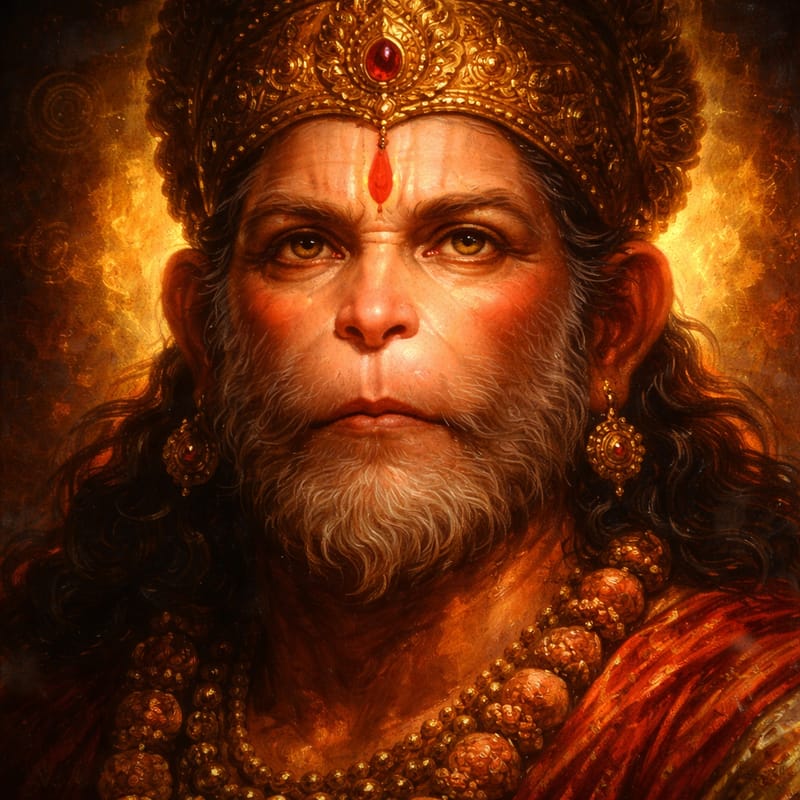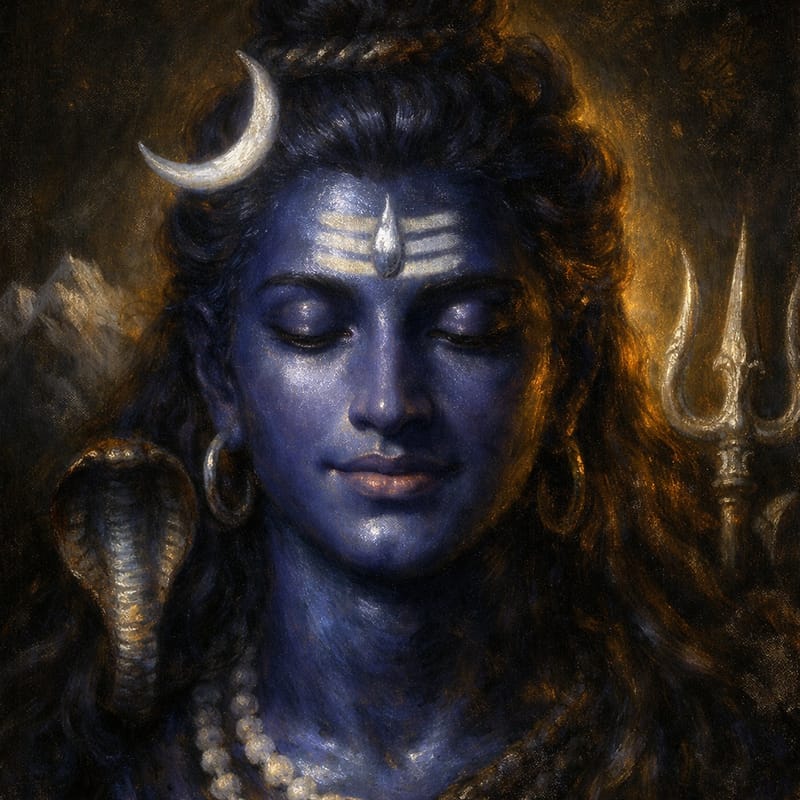


Lord Hanuman is the mighty monkey god and the devoted servant of Rama in Hindu tradition. He is the son of Anjana and of Vayu the wind god. The Ramayana tells how he leapt across the sea to find Sita. Devotees love him for his strength, courage and humble heart. Many turn to him when they feel afraid.
Names of Lord Hanuman and what they mean
Hanuman's names tell his story. Each one is a small hymn in itself.
Hanuman
Hanu means jaw. The story says his jaw was struck when he was a child. So the name means the one with the marked jaw.
Anjaneya
The son of Anjana. This name is loved across the South.
Maruti
The son of the wind. It is his common name in Maharashtra.
Pavanputra
Pavan also means wind. So this name too means son of the wind.
Bajrangbali
It comes from vajra anga, which means limbs as strong as a thunderbolt. Bali means mighty. It is a favourite name in the North.
Sankat Mochan
Sankat means a crisis or hard time. Devotees call him the one who frees them from trouble.
Kesari Nandan
The son of Kesari. Kesari was the monkey chief who raised him with Anjana.
Ramduta
Rama's messenger. Duta means messenger.
Stories of Lord Hanuman
The Ramayana is the epic of Rama. Hanuman's stories are told in every Ramayana. Valmiki tells them in Sanskrit. Tulsidas sings them in Awadhi. Thai dancers act them out on stage. Each telling adds its own colour.
The child who tried to eat the sun
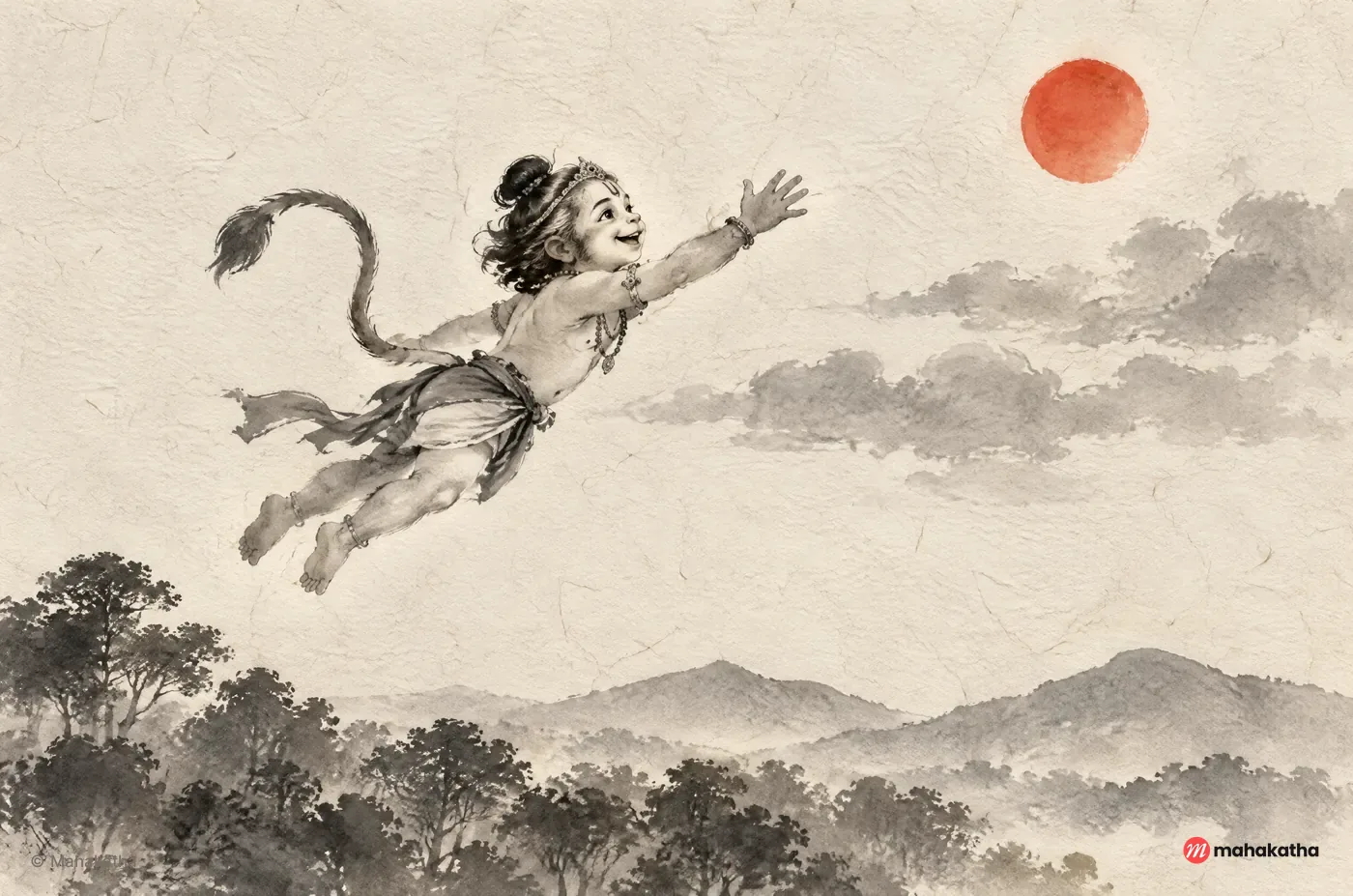
The story says baby Hanuman woke up hungry one morning. He saw the rising sun and thought it was a ripe fruit. He leapt into the sky to grab it. Indra struck him with his thunderbolt and he fell. His father Vayu was so hurt that he stopped the winds. The gods then blessed the child with many gifts to calm Vayu.
The power he forgot
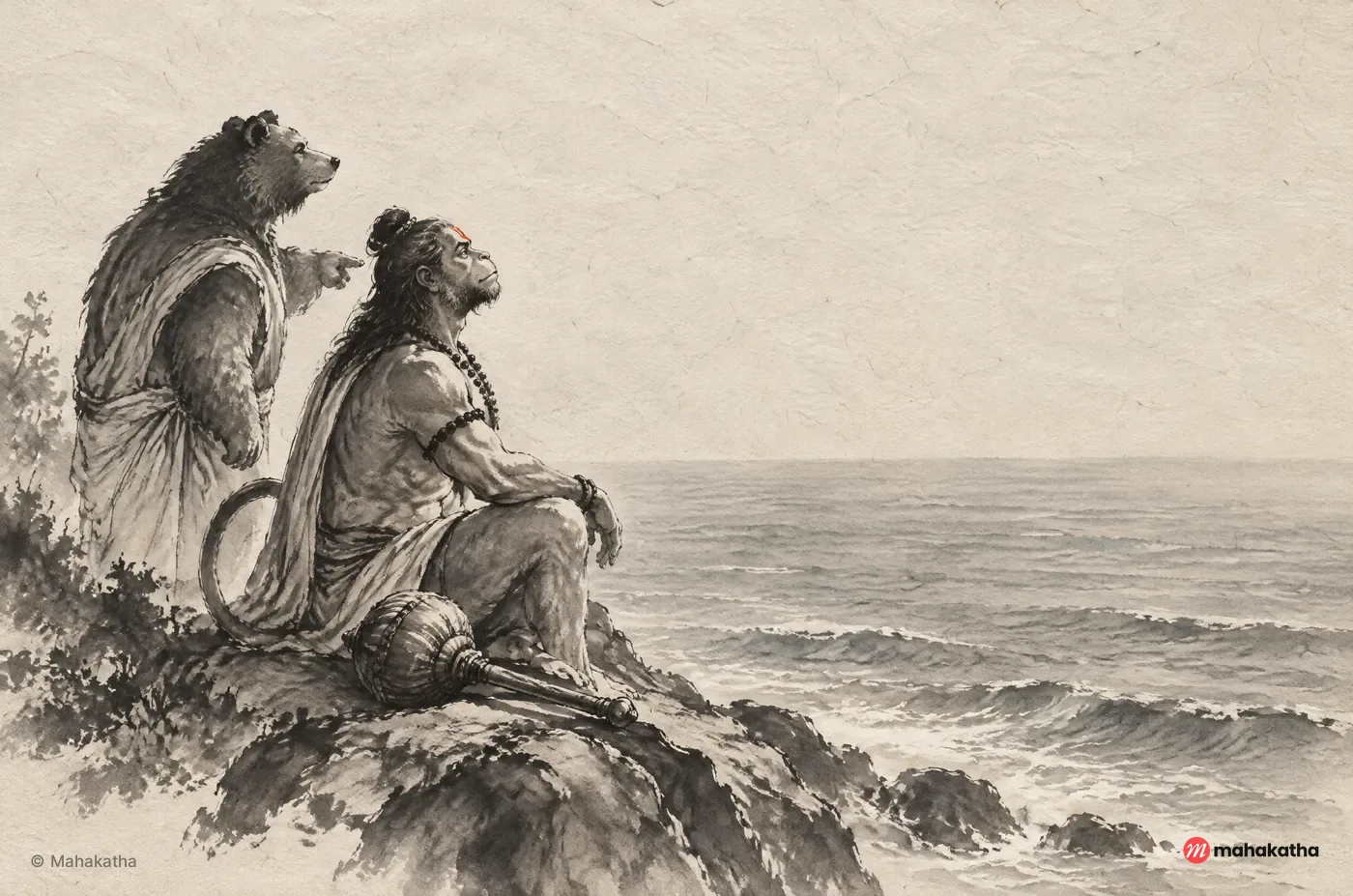
As a boy Hanuman was full of mischief. He disturbed the quiet of forest sages. In one telling they put a gentle curse on him. He would forget his own strength until someone reminded him. Years later the bear king Jambavan did just that at the edge of the sea. Hanuman grew huge and got ready to leap.
The leap to Lanka
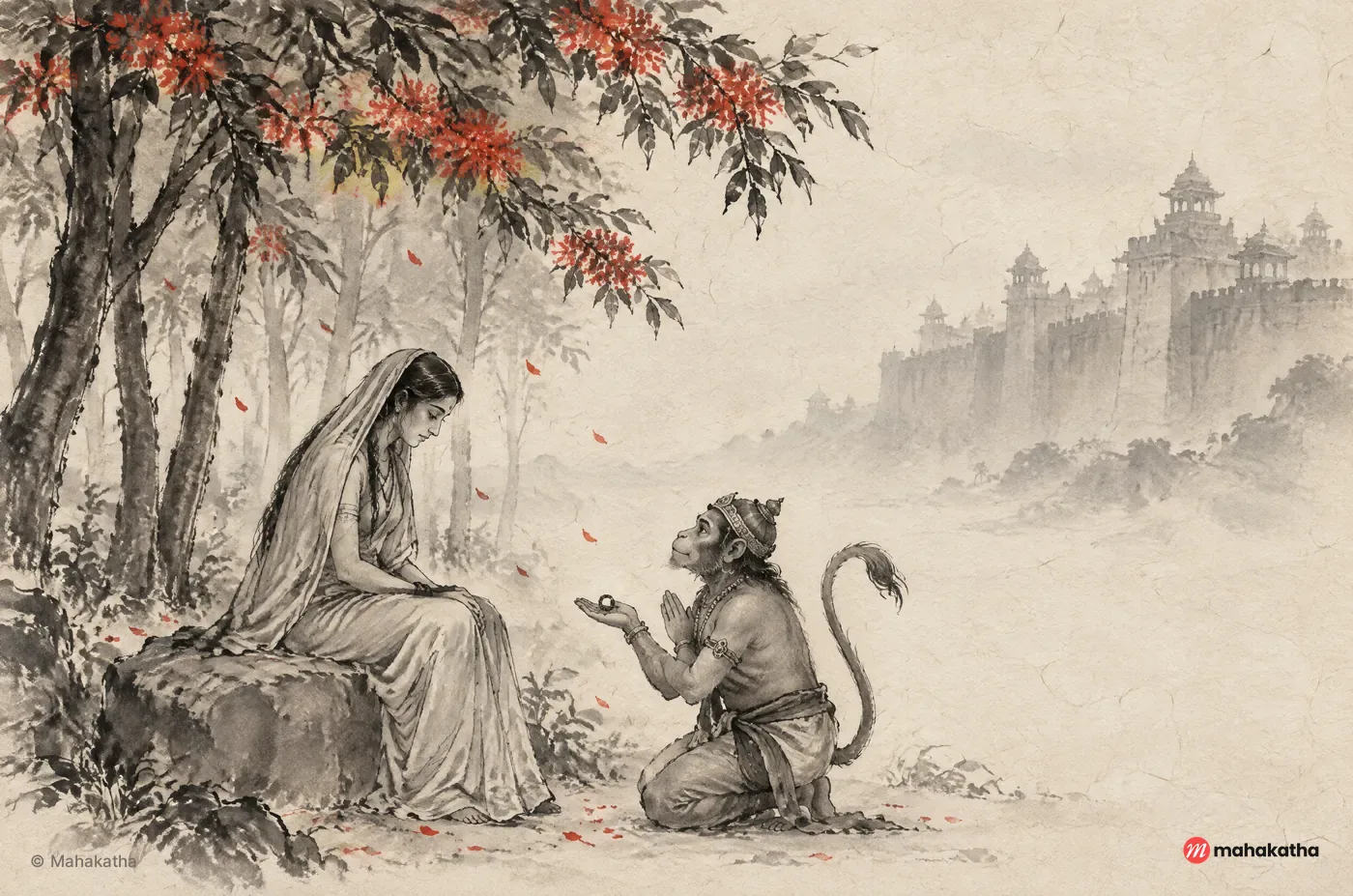
In the epic Ravana had carried Sita away to Lanka. Hanuman crossed the ocean in one great leap. He found Sita in the Ashoka grove. He gave her Rama's ring as a sign. When Ravana's men set his tail on fire he ran across the rooftops. Much of Lanka burned. This part of the epic is the Sundara Kanda, the beautiful book.
The mountain of herbs
The epic tells that in the war Rama's brother Lakshmana fell badly wounded. Only a herb from the Himalayas could revive him. It was called sanjeevani, the life-giver. Hanuman flew north but could not tell which plant it was. So he lifted the whole mountain and carried it back. Many images show him holding that mountain in one hand.
Rama in his heart
A later story tells of a gift of pearls from Sita. Hanuman bit each one open looking for Rama. People laughed at him. So he tore open his chest. Inside sat Rama and Sita. Folk tradition and art love this scene.
How the worship of Hanuman grew
Hanuman began as a hero in an epic. Over the centuries he became a god in his own right. Scholars debate many dates. These are the broad steps.
The Ramayana
Valmiki's Ramayana is the oldest telling of Hanuman's deeds. Scholars think it took shape over several centuries. Many place it between about the 5th century BCE and the 3rd century CE. Dates are debated. Here Hanuman is wise and learned as well as strong.
The Mahabharata
Hanuman appears in the Mahabharata too. In one tale the strong Bhima finds an old monkey lying across his path. Bhima cannot lift its tail. The monkey is his elder brother Hanuman. Both are sons of the wind. Hanuman also rides on the flag of Arjuna's chariot.
Shrines of his own
Over time Hanuman gained temples of his own. His images guard village edges and fort gates. In the South he often stands with folded hands before Rama.
The bhakti poets
Bhakti means loving devotion to God. Kamban retold the Ramayana in Tamil. Most scholars place him in the 12th century but some say earlier. Krittivas later told it in Bengali. In the 16th century Tulsidas wrote the Ramcharitmanas in Awadhi. Tradition also credits him with the Hanuman Chalisa. These works brought Hanuman into every home.
Saints and wrestlers
In 17th-century Maharashtra the saint Samarth Ramdas set up Maruti shrines in many villages. He joined strength of body with devotion. An akhara is a traditional wrestling school. Wrestlers in akharas still bow to Hanuman before they train.
Today
Crowds gather at his temples on Tuesdays and Saturdays. Groups recite the Hanuman Chalisa together. Giant statues of him rise in cities and on hilltops. Children and wrestlers and grandparents all love him.
Lord Hanuman across India
Hanuman is loved in every part of India. Each region dresses and feeds him in its own way.
North
In the North he is Bajrangbali. Tuesdays bring long lines at his temples with offerings of sindoor and laddoos. Sindoor is an orange-red powder. In Lucknow the Tuesdays of one summer month are kept as Bade Mangal. People set up stalls of free food for everyone.
South
In the South he is Anjaneya. Devotees in Tamil Nadu offer him garlands of vada, a savoury fried snack. Others coat his image in butter. Many in Karnataka hold Anjanadri hill near Hampi as his birthplace.
East
In Bengal the Ramayana of Krittivas made him a household hero. In Odisha Hanuman shrines guard the gates of the Jagannath temple at Puri. By the sea stands Bedi Hanuman, which means Hanuman in chains. The local story says Jagannath chained him so he would not wander off and let the sea in.
West
In Maharashtra many villages have a Maruti temple at their edge. Anjaneri near Nashik is held by many as his birthplace. In Gujarat the Kashtabhanjan temple at Sarangpur draws large crowds.
Beyond India
In Thailand Hanuman is a dashing hero of the Ramakien, the Thai Ramayana. In Bali and Java he leaps through shadow puppet plays and Kecak dance. In Trinidad a tall Hanuman statue stands at Carapichaima.
Hanuman temples across India
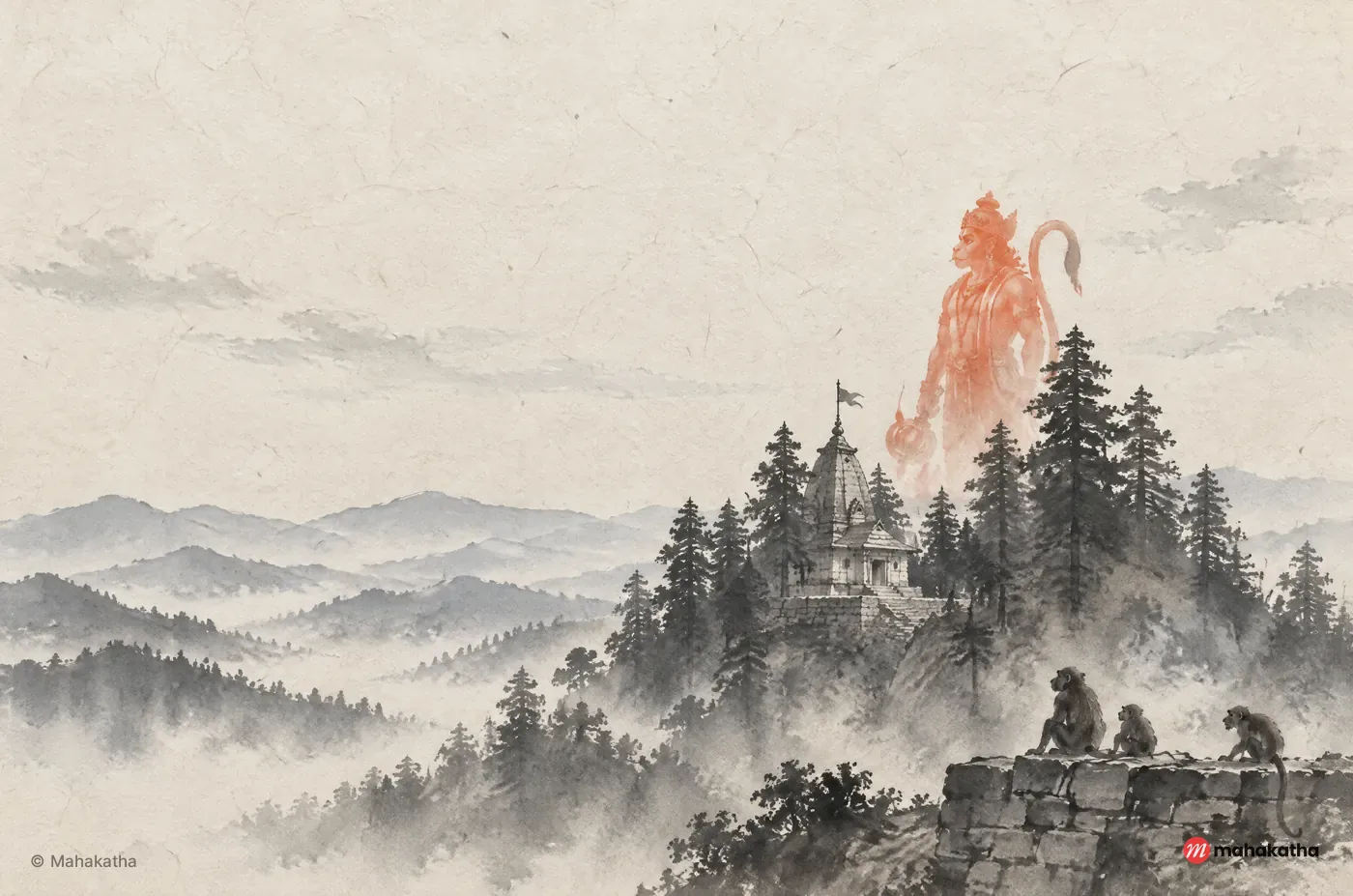
There are Hanuman shrines in towns and villages across India. These are among the most visited.
Sankat Mochan Hanuman Temple, Varanasi (Uttar Pradesh)
Tradition links this temple with Tulsidas. Pilgrims offer laddoos here and recite the Chalisa together.
Hanuman Garhi, Ayodhya (Uttar Pradesh)
A hilltop temple reached by many steps. Devotees often visit here before going on to Rama's temple.
Bade Hanuman Ji Temple, Prayagraj (Uttar Pradesh)
It stands near the meeting of the rivers. Here Hanuman lies in a reclining pose.
Salasar Balaji Temple, Salasar (Rajasthan)
A desert temple where Hanuman is shown with a beard and moustache. Pilgrims walk here from distant towns.
Mehandipur Balaji Temple, Mehandipur (Rajasthan)
People come here with deep fears and troubles. It is known for its crowded and intense rituals.
Jakhu Temple, Shimla (Himachal Pradesh)
It sits on the highest hill above Shimla. A huge statue of Hanuman rises above the trees. The story says he rested here on his way to the Himalayan herbs.
Namakkal Anjaneyar Temple, Namakkal (Tamil Nadu)
A tall standing Hanuman with folded hands. He stands under the open sky facing a shrine of Narasimha.
Suchindram Thanumalayan Temple, Suchindram (Tamil Nadu)
A temple near Kanyakumari with a huge Hanuman image inside. Devotees often cover him in butter.
Kashtabhanjan Hanuman Temple, Sarangpur (Gujarat)
Kashtabhanjan means the one who breaks sorrow. Large crowds gather here on Saturdays.
Anjanadri Hill Temple, Anegundi (Karnataka)
Near the ruins of Hampi. Many believe this land was Kishkindha, the monkey kingdom of the Ramayana. Pilgrims climb hundreds of steps to the small white temple.
Symbols of Lord Hanuman and their meaning
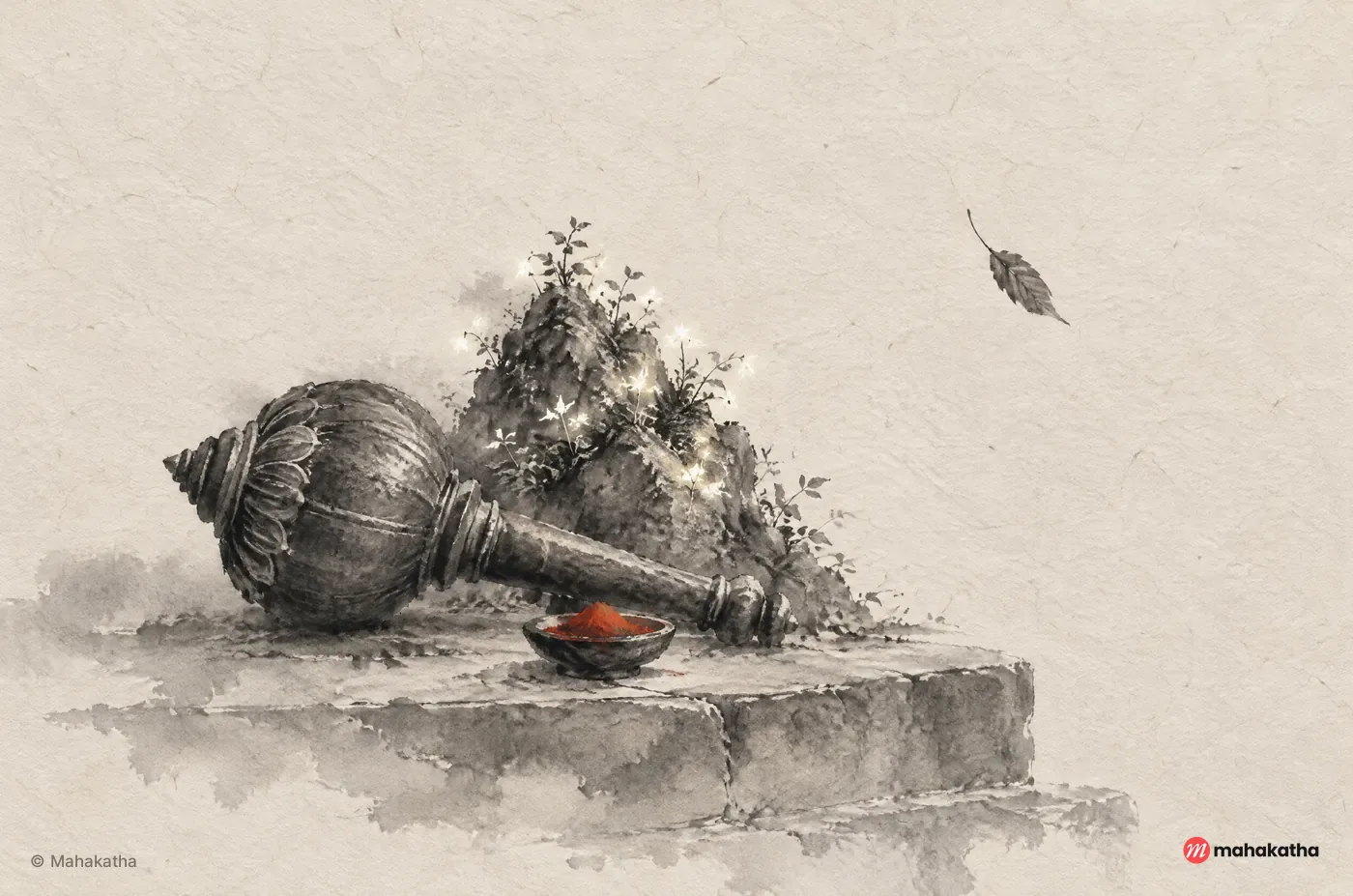
Hanuman's image is simple and strong. Each part can speak to our own life.
The mace
His gada is a heavy club. It stands for strength used to protect. Real strength serves others.
The mountain
He carries the whole mountain of herbs. It shows a devotee who goes to any length for those he loves.
Folded hands
Anjali means hands joined in respect. Even the mightiest one bows. Strength and humility live together in him.
The open chest
Rama and Sita sit in his heart. It shows that what we love lives within us.
The orange colour
His image is often coated in sindoor. A folk story says Sita wore sindoor for Rama's long life. So Hanuman covered his whole body in it.
The burning tail
His tail was set on fire to shame him. He turned it into light across Lanka. A hard moment can become a turning point.
The monkey form
Hanuman is a vanara, a forest being of the Ramayana. Yogis often compare the restless mind to a monkey. In Hanuman that mind becomes steady and devoted.
Hanuman mantras and the Chalisa
A mantra is a sacred sound or verse that you repeat with feeling. Hanuman's mantras are full of courage. People chant them when they feel weak or afraid. Each one links to our page with the full words and meaning.
Hanuman Chalisa
Chalisa means forty. These forty verses in Awadhi are credited to Tulsidas. It opens with "shriguru charana saroja raja". That means with the dust of my guru's lotus feet. Many families recite it on Tuesdays and Saturdays.
Manojavam Marutatulyavegam
"manojavam marutatulyavegam" describes Hanuman as swift as the mind and fast as the wind. It ends by taking refuge in Rama's messenger.
Hanuman Gayatri Mantra
"Om Anjaneyaya Vidmahe" begins this short prayer. It asks the son of Anjana and Vayu to guide the mind.
Om Hum Hanumate Namah
"om hum hanumate namah" is a short mantra with the seed sound Hum. It is easy to repeat with the breath.
Ashtasiddhi Hanuman Mantra
This verse opens "buddhir balam yasho dhairyam". It names gifts that devotees link with remembering Hanuman. Wisdom and strength and patience are among them. Many see these as qualities to grow within.
Ramaskandam Mantra
"Ramam Skandam Hanumantam" is a bedtime verse. It remembers Rama and Skanda and Hanuman with other heroes. Tradition holds it is said at night for peaceful sleep.
Om Namo Hanumate
"Om Namo Hanumate" opens this prayer to the one who breaks fear. Devotees say it when worry sits heavy on the heart.
Panchamukhi Hanuman Dhyanam
A meditation on Hanuman with five faces. It begins "panchasyachyutamanka vichitra viryam". Four other faces join his own. Narasimha the lion is one of them.
Festivals and days of Lord Hanuman
Hanuman's days are full of song and simple food. Most are kept by ordinary families at home and in local temples.
Hanuman Jayanti
His birth festival. Temples hold long recitals of the Chalisa and the Sundara Kanda. Regions mark it in different seasons of the year.
Tuesdays and Saturdays
These are his weekly days. Saturday is linked with a story about Shani. Tradition says Hanuman freed Shani from Ravana's prison. In return Shani vowed not to trouble Hanuman's devotees.
Bade Mangal
A festival of Lucknow kept on the Tuesdays of one summer month. The whole city shares free food in his name.
Ram Navami and Dussehra
Ramlila is a folk play of the Ramayana. Hanuman is at its heart. Actors in monkey masks leap across village stages.
Simple ways to remember Hanuman each day
Recite the Chalisa
Read or sing the Hanuman Chalisa on a Tuesday or Saturday. It takes about ten minutes. Let its rhythm settle your breath.
Sing the aarti
Light a small lamp and sing Aarti Kije Hanuman Lala Ki. It is a short song of praise.
Name your fear
When fear rises say his name softly. Then take one brave step.
Serve someone
Hanuman served Rama without asking for credit. Do one quiet act of help today.
Read the Sundara Kanda
Families often read the Sundara Kanda together. Even a few verses a day keep the story close.
Move your body
Hanuman is the friend of wrestlers. A short walk or stretch can be your offering of strength.
What Lord Hanuman can teach us
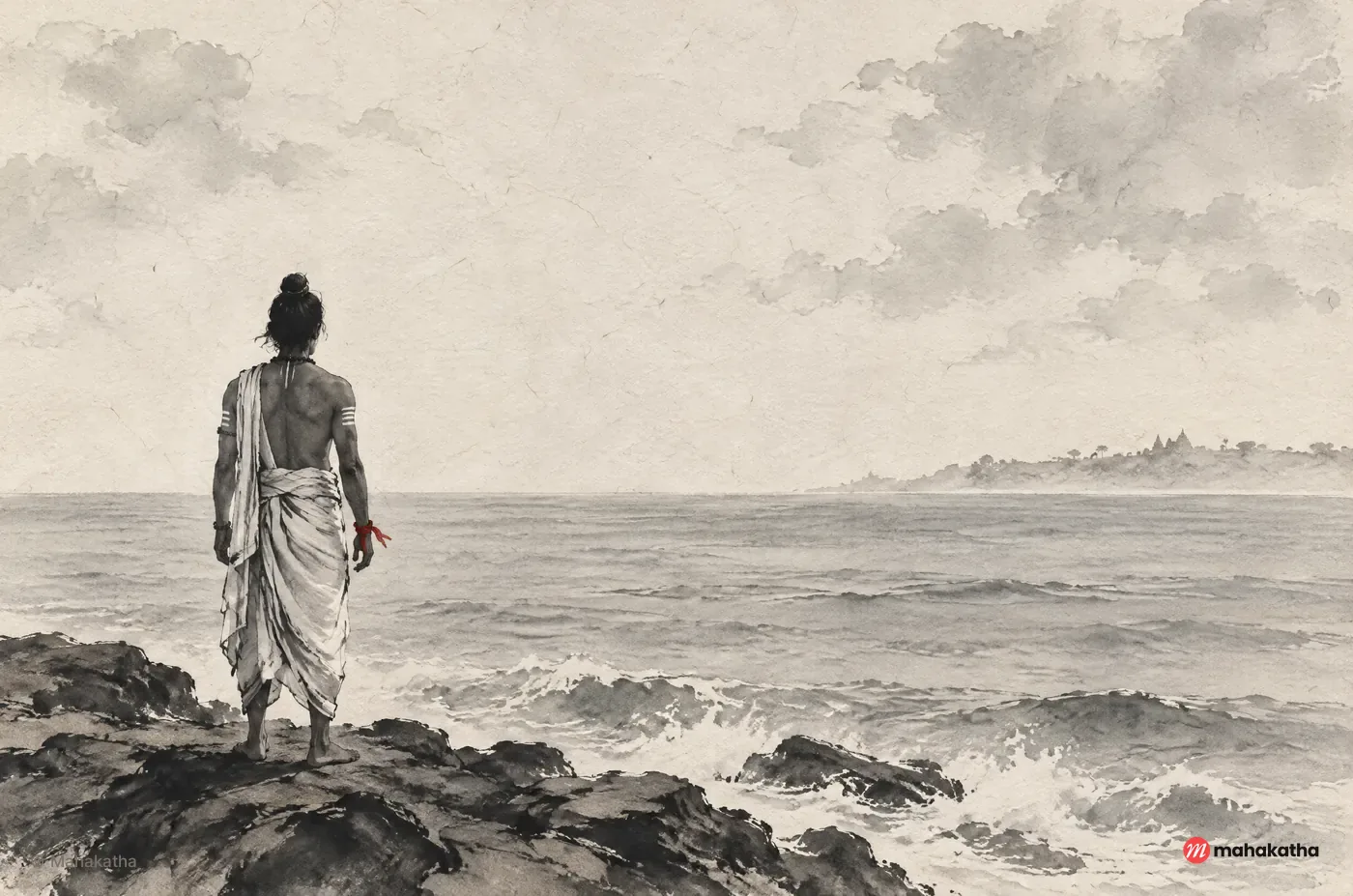
Hanuman is the strongest being in the Ramayana. Yet he always stands with folded hands. His strength never makes him proud. He offers all of it to Rama.
The story of his forgotten power touches many of us. We too forget what we can do. Fear makes us small. Sometimes a friend like Jambavan must remind us. Sometimes we can remind ourselves.
When you feel afraid think of Hanuman at the edge of the sea. The ocean looked endless. He took one breath and leapt. Courage is not the absence of fear. It is love that moves anyway.
The monkey mind jumps from branch to branch. Hanuman shows that this same mind can grow steady and loving. Fill it with one name. Let it rest in one heart.
Questions people ask
Who is Lord Hanuman?
Lord Hanuman is the monkey god of the Ramayana and the devoted servant of Rama. He is the son of Anjana and Vayu the wind god. He leapt across the sea to find Sita and carried a mountain of herbs to save Lakshmana. Devotees worship him for strength and courage and humble devotion.
Why is Hanuman worshipped on Tuesday and Saturday?
Tuesday is widely held as Hanuman's day across North India. Saturday is linked with a story about Shani. Tradition says Hanuman freed Shani from Ravana's prison. In return Shani vowed not to trouble those who pray to Hanuman. So many devotees visit his temples on both days.
Who wrote the Hanuman Chalisa?
Tradition credits the Hanuman Chalisa to Tulsidas. He was a 16th-century poet who also wrote the Ramcharitmanas. The Chalisa is written in Awadhi, an old form of Hindi. Chalisa means forty and the hymn has forty main verses. It is one of the most recited devotional hymns in India today.
Is Hanuman still alive?
Tradition counts Hanuman among the chiranjivis. A chiranjivi is one who lives on through the ages. Devotees believe he is present wherever Rama's name is sung. Some leave an empty seat for him when the Ramayana is read aloud. It is a gentle belief held with love.
Why is Hanuman orange?
His images are often coated in sindoor, an orange-red powder. A folk story says Hanuman once saw Sita wearing sindoor. She told him it was for Rama's long life. So Hanuman covered his whole body in it out of love. Devotees still offer sindoor to him on Tuesdays and Saturdays.
Where was Hanuman born?
Several places claim his birth. Many in Karnataka point to Anjanadri hill near Hampi. Others name Anjaneri near Nashik in Maharashtra. Some at Tirumala hold one of its seven hills as his birthplace. Tradition has not settled the question. Each place keeps its own story with love.