

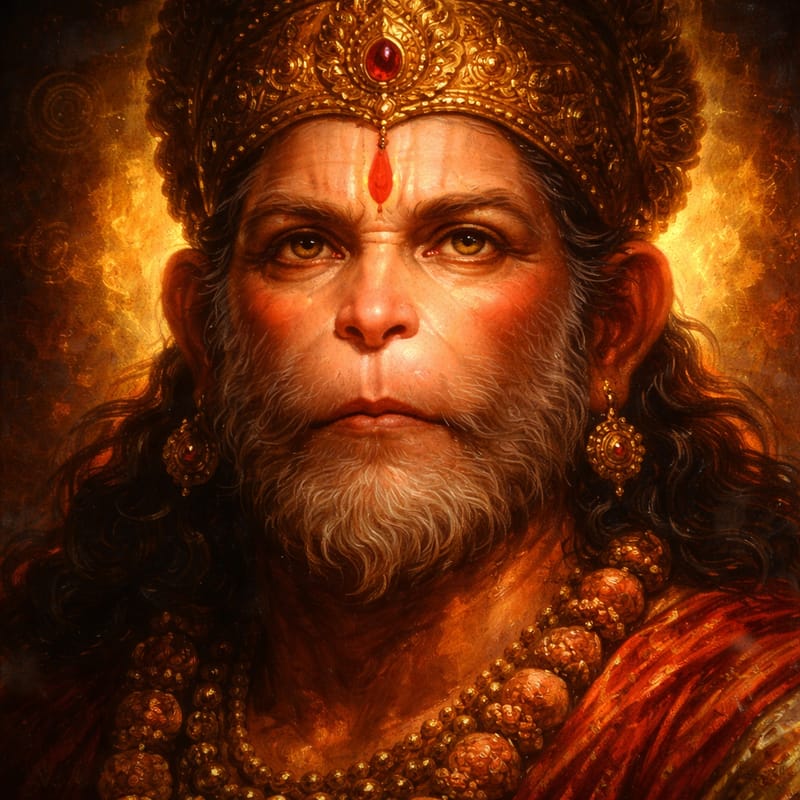
Hanuman Chalisa — Tamil Lyrics
The Hanuman Chalisa is a 40-verse devotional hymn composed by Tulsidas in the 16th century, written in Awadhi-Hindi vernacular with Sanskrit roots. The opening doha (couplet) establishes the spiritual foundation: the poet cleanses the mirror of his mind with the dust of his guru's lotus feet, then narrates the immaculate glory of Rama—who grants the four fruits of life (dharma, artha, kama, moksha). Acknowledging his own ignorance, the poet seeks Hanuman's grace for strength, wisdom, and freedom from afflictions. Each subsequent verse celebrates Hanuman's divine attributes, courage, and role as Rama's eternal messenger.
Hanuman represents the pinnacle of bhakti (devotion), courage, and selfless service in Hindu spirituality. He is the bridge between the human and divine—monkey-born yet supremely enlightened, embodying humility despite incomparable strength. The Chalisa positions him as 'ocean of wisdom,' 'dispeller of evil thoughts,' and 'remover of obstacles.' In the Ramcharitmanas, Tulsidas portrays Hanuman as the ideal devotee: his mind rests eternally in Rama, his intellect serves Rama's purpose, and his body executes Rama's will. For practitioners, Hanuman exemplifies how surrendered action transcends ego and draws out great inner strength—a living gateway to shakti (power) and bhakti (grace) simultaneously.
Chant the Hanuman Chalisa with sincerity, preferably in the early morning (brahma muhurta) or during times of difficulty. Begin by bowing to your guru and Hanuman. Recite all 40 verses slowly, focusing on their meaning rather than speed. Many devotees practice it weekly on Tuesdays or Saturdays (auspicious for Hanuman). Even reciting a single verse with concentrated awareness yields benefit. The mantra works best when paired with intentional living—embodying Hanuman's virtues of courage, loyalty, and service. No special ritual is required; sincere repetition awakens the Hanuman consciousness within.
Curated by The Mahakatha Team · Original Composition: Mahakatha · Lyric: Tulsidas (16th century CE)
Hanuman Chalisa
Hanuman · Preview · 2:00
Preview ended
Ancient sounds for transformation, carried across 3,000 years.
Get the full version — plus 275 more ancient chants. 80% OFF today only.
Get Ancient Chants Bundle — 80% OFF →3000+ happy customers · Lifetime access · All devices
2.2M people trust Mahakatha
Chant daily with reminders — Get the Mahakatha app
Lyrics
दोहा श्रीगुरु चरन सरोज रज, निजमन मुकुरु सुधारि। बरनउं रघुवर बिमल जसु, जो दायकु फल चारि।। बुद्धिहीन तनु जानिके, सुमिरौं पवन-कुमार। बल बुधि बिद्या देहु मोहिं, हरहु कलेस बिकार।।
தோஹா ஶ்ரீகுரு சரந ஸரோஜ ரஜ, நிஜமந முகுரு ஸுதாரி। பரநஉம் ரகுவர பிமல ஜஸு, ஜோ தாயகு பல சாரி।। புத்திஹீந தநு ஜாநிகே, ஸுமிரௌம் பவந-குமார। பல புதி பித்யா தேஹு மோஹிம், ஹரஹு கலேஸ பிகார।।
என் இறைவனின் தாமரை பாதங்களின் தூசியால், என் மனமாகிய கண்ணாடியைத் தூய்மைப்படுத்துகிறேன்.
வாழ்வின் நான்கு பலன்களையும் (தர்மம், அர்த்தம், காமம் மற்றும் மோட்சம்) அளிக்கும் ஸ்ரீ ரகுவரின் (ஸ்ரீ ராம சந்திரனின்) புனித மகிமையை விவரிக்கிறேன்.
என்னை அறிவற்றவனாகக் கருதி, ஓ பவன குமாரா (ஆஞ்சநேயரே), உன்னை தியானிக்கிறேன்.
எனக்கு வலிமை, ஞானம் மற்றும் அறிவை அளித்து, என் துன்பங்களையும் குறைகளையும் நீக்குவாயாக.
चौपाई
சௌபாஈ
जय हनुमान ज्ञान गुन सागर। जय कपीस तिहुं लोक उजागर।। राम दूत अतुलित बल धामा। अंजनि-पुत्र पवनसुत नामा।।
ஜய ஹநுமாந ஜ்ஞாந குந ஸாகர। ஜய கபீஸ திஹும் லோக உஜாகர।। ராம தூத அதுலித பல தாமா। அம்ஜநி-புத்ர பவநஸுத நாமா।।
ஞானம் மற்றும் நற்குணங்களின் கடலான ஆஞ்சநேயரே, உமக்கு வெற்றி,
மூன்று உலகங்களுக்கும் ஒளியூட்டும் வானரர்களின் தலைவரே, உமக்கு வெற்றி.
நீர் அளவிட முடியாத வலிமை கொண்ட ஸ்ரீ ராமரின் தூதர்,
நீர் அஞ்சனி புத்திரர் (அஞ்சனியின் மகன்) மற்றும் பவன சுதர் (காற்றுக் கடவுளான பவனின் மகன்) என அறியப்படுகிறீர்.
महाबीर बिक्रम बजरंगी। कुमति निवार सुमति के संगी।। कंचन बरन बिराज सुवेसा। कानन कुण्डल कुँचित केसा।।
மஹாபீர பிக்ரம பஜரம்கீ। குமதி நிவார ஸுமதி கே ஸம்கீ।। கம்சந பரந பிராஜ ஸுவேஸா। காநந குண்டல குँசித கேஸா।।
நீர் ஒரு மாபெரும் வீரர், மிகுந்த வீரம் கொண்டவர், இடியைப் போன்ற உறுதியான உடல் கொண்டவர்,
நீர் தீய எண்ணங்களை அகற்றுபவர் மற்றும் நல்லறிவு மற்றும் ஞானத்தின் துணைவர்.
நீர் பொன்னிற ஒளி கொண்டவர், நேர்த்தியாக உடையணிந்தவர்,
நீர் காதணிகள் அணிந்து அழகான சுருட்டை முடி கொண்டவர்.
हाथ बज्र अरु ध्वजा बिराजे। कांधे मूंज जनेउ साजे।। संकर स्वयं केसरी नंदन। तेज प्रताप महा जग वंदन।।
ஹாத பஜ்ர அரு த்வஜா பிராஜே। காம்தே மூம்ஜ ஜநேஉ ஸாஜே।। ஸம்கர ஸ்வயம் கேஸரீ நம்தந। தேஜ ப்ரதாப மஹா ஜக வம்தந।।
உம் கைகளில் இடி மற்றும் கொடியை ஏந்தியுள்ளீர்.
உம் தோளில் புனித நூலை அணிந்துள்ளீர்.
நீர் சிவபெருமானின் அவதாரம் மற்றும் கேசரியின் மகன்,
உம் மாபெரும் வலிமை மற்றும் தைரியத்தின் காரணமாக முழு உலகத்தாலும் வணங்கப்படுகிறீர்.
विद्यावान गुनी अति चातुर। राम काज करिबे को आतुर।। प्रभु चरित्र सुनिबे को रसिया। राम लखन सीता मन बसिया।।
வித்யாவாந குநீ அதி சாதுர। ராம காஜ கரிபே கோ ஆதுர।। ப்ரபு சரித்ர ஸுநிபே கோ ரஸியா। ராம லகந ஸீதா மந பஸியா।।
நீர் கல்விமான், நற்பண்புடையவர் மற்றும் மிகவும் புத்திசாலி,
நீர் எப்போதும் ஸ்ரீ ராமரின் பணிகளைச் செய்ய ஆர்வமாக உள்ளீர்.
நீர் ஸ்ரீ ராமரின் மகிமைகளைக் கேட்பதில் மகிழ்ச்சி அடைகிறீர்,
உம் இதயத்தில் ஸ்ரீ ராமர், ஸ்ரீ லட்சுமணர் மற்றும் தேவி சீதை வாழ்கின்றனர்.
सूक्ष्म रूप धरि सियहिं दिखावा। बिकट रूप धरि लंक जरावा।। भीम रूप धरि असुर संहारे। रामचन्द्र के काज संवारे।।
ஸூக்ஷ்ம ரூப தரி ஸியஹிம் திகாவா। பிகட ரூப தரி லம்க ஜராவா।। பீம ரூப தரி அஸுர ஸம்ஹாரே। ராமசந்த்ர கே காஜ ஸம்வாரே।।
நீர் சிறிய உருவம் எடுத்து தேவி சீதையின் முன் தோன்றினீர் (இலங்கையில்),
நீர் பயங்கர உருவம் எடுத்து இலங்கையை எரித்தீர்.
நீர் பிரமாண்ட உருவம் எடுத்து அரக்கர்களை அழித்தீர்,
இதன் மூலம் ஸ்ரீ ராமரின் பணியை நிறைவேற்றினீர்.
लाय सजीवन लखन जियाये। श्री रघुबीर हरषि उर लाये।। रघुपति कीन्ही बहुत बड़ाई। तुम मम प्रिय भरतहि सम भाई।।
லாய ஸஜீவந லகந ஜியாயே। ஶ்ரீ ரகுபீர ஹரஷி உர லாயே।। ரகுபதி கீந்ஹீ பஹுத படாஈ। தும மம ப்ரிய பரதஹி ஸம பாஈ।।
நீர் சஞ்சீவனி மூலிகையைக் கொண்டுவந்து ஸ்ரீ லட்சுமணரை உயிர்ப்பித்தீர்.
இதனால் ஸ்ரீ ராமர் மகிழ்ச்சியுடன் பெருகி உம்மைத் தழுவினார்.
ஸ்ரீ ராமர் உம்மை மிகவும் புகழ்ந்தார்,
மேலும் கூறினார்: "நீர் எனக்கு என் சகோதரன் பரதனைப் போல அன்பானவர்".
सहस बदन तुम्हरो जस गावैं। अस कहि श्रीपति कण्ठ लगावैं।। सनकादिक ब्रह्मादि मुनीसा। नारद सारद सहित अहीसा।।
ஸஹஸ பதந தும்ஹரோ ஜஸ காவைம்। அஸ கஹி ஶ்ரீபதி கண்ட லகாவைம்।। ஸநகாதிக ப்ரஹ்மாதி முநீஸா। நாரத ஸாரத ஸஹித அஹீஸா।।
"ஆயிரம் தலைகள் கொண்ட ஆதிசேஷன் உம் புகழைப் பாடுகிறான்",
என்று ஸ்ரீ ராமர் உம்மைத் தழுவிக்கொண்டு கூறினார்.
சனகர் மற்றும் பிற முனிவர்கள், பிரம்மா மற்றும் பிற தேவர்கள்,
நாரதர், தேவி சரஸ்வதி மற்றும் ஆதிசேஷன் ...
जम कुबेर दिगपाल जहां ते। कवि कोविद कहि सके कहां ते।। तुम उपकार सुग्रीवहिं कीन्हा। राम मिलाय राज पद दीन्हा।।
ஜம குபேர திகபால ஜஹாம் தே। கவி கோவித கஹி ஸகே கஹாம் தே।। தும உபகார ஸுக்ரீவஹிம் கீந்ஹா। ராம மிலாய ராஜ பத தீந்ஹா।।
யமன் (மரண தேவன்), குபேரன் (செல்வத்தின் தேவன்), திக்பாலகர்கள் (திசைகளின் காவலர் தேவதைகள்),
கவிஞர்கள் மற்றும் அறிஞர்கள் உம் மகிமைகளை முழுமையாக விவரிக்க முடியவில்லை.
நீர் சுக்ரீவனுக்கு மிகப்பெரிய உதவி செய்தீர்.
நீர் அவனை ஸ்ரீ ராமருக்கு அறிமுகப்படுத்தி அவன் அரசைத் திரும்பக் கொடுத்தீர்.
तुम्हरो मंत्र बिभीषन माना। लंकेश्वर भए सब जग जाना।। जुग सहस्र जोजन पर भानु। लील्यो ताहि मधुर फल जानू।।
தும்ஹரோ மம்த்ர பிபீஷந மாநா। லம்கேஶ்வர பஏ ஸப ஜக ஜாநா।। ஜுக ஸஹஸ்ர ஜோஜந பர பாநு। லீல்யோ தாஹி மதுர பல ஜாநூ।।
விபீஷணன் உங்கள் அறிவுரையைப் பின்பற்றினான்,
அவன் இலங்கையின் அரசனானான் என்பதை முழு உலகமும் அறியும்.
பதினாறாயிரம் மைல் தொலைவில் இருந்த சூரியனை,
இனிப்பான பழம் என்று நினைத்து நீங்கள் அதை (சூரியனை) விழுங்கினீர்கள்.
प्रभु मुद्रिका मेलि मुख माहीं। जलधि लांघि गये अचरज नाहीं।। दुर्गम काज जगत के जेते। सुगम अनुग्रह तुम्हरे तेते।।
ப்ரபு முத்ரிகா மேலி முக மாஹீம்। ஜலதி லாம்கி கயே அசரஜ நாஹீம்।। துர்கம காஜ ஜகத கே ஜேதே। ஸுகம அநுக்ரஹ தும்ஹரே தேதே।।
ஸ்ரீ ராமரின் மோதிரத்தை உங்கள் வாயில் ஏந்தி,
நீங்கள் கடலைக் கடந்தீர்கள், அதில் ஆச்சரியமில்லை.
இந்த உலகில் உள்ள அனைத்து கடினமான பணிகளும்,
உங்கள் அருளால் எளிதாக்கப்படுகின்றன.
राम दुआरे तुम रखवारे। होत न आज्ञा बिनु पैसारे।। सब सुख लहै तुम्हारी सरना। तुम रक्षक काहू को डर ना।।
ராம துஆரே தும ரகவாரே। ஹோத ந ஆஜ்ஞா பிநு பைஸாரே।। ஸப ஸுக லஹை தும்ஹாரீ ஸரநா। தும ரக்ஷக காஹூ கோ டர நா।।
நீங்கள் ஸ்ரீ ராமரின் இராஜ்யத்தின் வாயிற்காவலர்.
உங்கள் அனுமதியின்றி யாரும் உள்ளே நுழைய முடியாது.
உங்களிடம் அடைக்கலம் புகுபவர்கள் எல்லா மகிழ்ச்சியையும் அனுபவிப்பார்கள்.
நீங்கள் காவலராக இருந்தால், பயப்படுவதற்கு என்ன இருக்கிறது?
आपन तेज सम्हारो आपै। तीनों लोक हांक तें कांपै।। भूत पिसाच निकट नहिं आवै। महावीर जब नाम सुनावै।।
ஆபந தேஜ ஸம்ஹாரோ ஆபை। தீநோம் லோக ஹாம்க தேம் காம்பை।। பூத பிஸாச நிகட நஹிம் ஆவை। மஹாவீர ஜப நாம ஸுநாவை।।
உங்கள் மாபெரும் சக்தியை நீங்கள் மட்டுமே கட்டுப்படுத்த முடியும்.
நீங்கள் கர்ஜிக்கும்போது, மூன்று உலகங்களும் நடுங்கும்.
பேய்களும் தீய ஆவிகளும் அருகில் வராது,
மகாவீரன் (ஹனுமான்) நாமத்தை உச்சரிக்கும்போது.
नासै रोग हरे सब पीरा। जपत निरन्तर हनुमत बीरा।। संकट तें हनुमान छुड़ावै। मन क्रम बचन ध्यान जो लावै।।
நாஸை ரோக ஹரே ஸப பீரா। ஜபத நிரந்தர ஹநுமத பீரா।। ஸம்கட தேம் ஹநுமாந சுடாவை। மந க்ரம பசந த்யாந ஜோ லாவை।।
நீங்கள் நோய்களை அழித்து எல்லா வலிகளையும் நீக்குகிறீர்கள்,
உங்கள் நாமத்தை தொடர்ந்து உச்சரிக்கும்போது.
ஹனுமான் கஷ்டங்களிலிருந்து ஒருவரை விடுவிக்கிறார்,
மனம், செயல், வாக்கு மூலம் அவரை தியானிக்கும்போது.
सब पर राम राय सिर राजा। तिन के काज सकल तुम साजा।। और मनोरथ जो कोई लावै। सोई अमित जीवन फल पावै।।
ஸப பர ராம ராய ஸிர ராஜா। திந கே காஜ ஸகல தும ஸாஜா।। ஔர மநோரத ஜோ கோஈ லாவை। ஸோஈ அமித ஜீவந பல பாவை।।
ஸ்ரீ ராமர் தவசிகளின் (தவம் செய்யும் பக்தர்களின்) அரசர் ஆவார்.
நீர் (ஹனுமான்) ஸ்ரீ ராமரின் அனைத்து பணிகளையும் (பாதுகாவலராக) நிறைவேற்றுகிறீர்.
வேறு ஏதேனும் ஆசைகளை கொண்ட பக்தர்கள்,
இறுதியில் வாழ்வின் உயர்ந்த பலனை அடைவார்கள்.
चारों जुग परताप तुम्हारा। है परसिद्ध जगत उजियारा।। साधु संत के तुम रखवारे।। असुर निकन्दन राम दुलारे।।
சாரோம் ஜுக பரதாப தும்ஹாரா। ஹை பரஸித்த ஜகத உஜியாரா।। ஸாது ஸம்த கே தும ரகவாரே।। அஸுர நிகந்தந ராம துலாரே।।
நான்கு யுகங்களிலும் உமது மகிமை நிலவுகிறது.
உமது புகழ் உலகம் முழுவதும் பரவுகிறது.
நீர் துறவிகள் மற்றும் முனிவர்களின் காப்பாளர்.
நீர் அரக்கர்களை அழிக்கிறீர், ஓ ஸ்ரீ ராமரின் அன்பானவரே.
अष्टसिद्धि नौ निधि के दाता। अस बर दीन जानकी माता।। राम रसायन तुम्हरे पासा। सादर हो रघुपति के दासा।।
அஷ்டஸித்தி நௌ நிதி கே தாதா। அஸ பர தீந ஜாநகீ மாதா।। ராம ரஸாயந தும்ஹரே பாஸா। ஸாதர ஹோ ரகுபதி கே தாஸா।।
நீர் எட்டு சித்திகளையும் (அமானுஷ்ய சக்திகள்) ஒன்பது நிதிகளையும் (பக்தி வகைகள்) அளிக்க வல்லவர்.
தாய் ஜானகி (தேவி சீதை) இந்த ஆசீர்வாதத்தை உமக்கு அளித்தாள்.
நீர் ஸ்ரீ ராமரிடம் பக்தியின் சாரத்தை கொண்டிருக்கிறீர்.
நீர் எப்போதும் ரகுபதியின் (ஸ்ரீ ராமர்) சேவகனாக இருக்கிறீர்.
तुह्मरे भजन राम को पावै। जनम जनम के दुख बिसरावै।। अंत काल रघुबर पुर जाई। जहां जन्म हरिभक्त कहाई।।
துஹ்மரே பஜந ராம கோ பாவை। ஜநம ஜநம கே துக பிஸராவை।। அம்த கால ரகுபர புர ஜாஈ। ஜஹாம் ஜந்ம ஹரிபக்த கஹாஈ।।
உம்மிடம் பக்தி செலுத்துவதன் மூலம், ஒருவர் ஸ்ரீ ராமரை அடைகிறார்,
அதன் மூலம் பிறவி பிறவியின் துன்பங்களிலிருந்து விடுபடுகிறார்.
இறுதியில் ஒருவர் ரகுபதியின் (ஸ்ரீ ராமர்) இருப்பிடத்திற்கு செல்கிறார்.
அங்கு ஒருவர் ஹரியின் பக்தராக அறியப்படுகிறார்.
और देवता चित्त न धरई। हनुमत सेइ सर्ब सुख करई।। सङ्कट कटै मिटै सब पीरा। जो सुमिरै हनुमत बलबीरा।।
ஔர தேவதா சித்த ந தரஈ। ஹநுமத ஸேஇ ஸர்ப ஸுக கரஈ।। ஸங்கட கடை மிடை ஸப பீரா। ஜோ ஸுமிரை ஹநுமத பலபீரா।।
வேறு எந்த தெய்வங்களையும் வணங்காமலேயே,
ஸ்ரீ ஹனுமானை வணங்குபவர் அனைத்து மகிழ்ச்சியையும் பெறுகிறார்.
சிரமங்கள் மறைந்து துன்பங்கள் அகற்றப்படுகின்றன,
வலிமைமிக்க ஸ்ரீ ஹனுமானை தியானிப்பவர்களுக்கு.
जय जय जय हनुमान गोसाईं। कृपा करहु गुरुदेव की नाईं।। यह सत बार पाठ कर जोइ। छूटहि बन्दि महा सुख होई।।
ஜய ஜய ஜய ஹநுமாந கோஸாஈம்। க்ரு'பா கரஹு குருதேவ கீ நாஈம்।। யஹ ஸத பார பாட கர ஜோஇ। சூடஹி பந்தி மஹா ஸுக ஹோஈ।।
வெற்றி, வெற்றி, வெற்றி உமக்கு, ஓ ஆஞ்சநேயா,
தயவுசெய்து எங்கள் உயர்ந்த குருவாக உங்கள் அருளை அளியுங்கள்.
இந்த ஹனுமான் சாலீசாவை நூறு முறை (பக்தியுடன்) ஓதுபவர்கள்,
உலக பந்தங்களிலிருந்து விடுபட்டு மிகுந்த மகிழ்ச்சி பெறுவார்கள்.
जो यह पढ़ै हनुमान चालीसा। होय सिद्धि साखी गौरीसा।। तुलसीदास सदा हरि चेरा। कीजै नाथ हृदय महं डेरा।।
ஜோ யஹ படை ஹநுமாந சாலீஸா। ஹோய ஸித்தி ஸாகீ கௌரீஸா।। துலஸீதாஸ ஸதா ஹரி சேரா। கீஜை நாத ஹ்ரு'தய மஹம் டேரா।।
ஹனுமான் சாலீசாவை (பக்தியுடன்) படிப்பவர்கள்,
சித்தி பெறுவார்கள், சிவபெருமான் சாட்சி.
துளசிதாஸ் எப்போதும் ஹரியின் அடியவர்,
பிரபுவை தனது இதயத்தில் வசிக்க வேண்டுகிறார்.
दोहा पवनतनय संकट हरन, मंगल मूर्ति रूप। राम लखन सीता सहित, हृदय बसहु सुर भूप।।
தோஹா பவநதநய ஸம்கட ஹரந, மம்கல மூர்தி ரூப। ராம லகந ஸீதா ஸஹித, ஹ்ரு'தய பஸஹு ஸுர பூப।।
ஸ்ரீ ஆஞ்சநேயா, பவனன் புதல்வன், துன்பங்களை நீக்குபவர்,
மங்களகரமான உருவம் கொண்டவர்,
ஸ்ரீ ராமர், ஸ்ரீ லட்சுமணர் மற்றும் தேவி சீதையுடன்,
தயவுசெய்து என் இதயத்தில் வசியுங்கள்.
How to Chant Hanuman Chalisa
- 1
Find a quiet, clean space
Sit in a comfortable, undisturbed environment. Face east or north if possible. You may light incense or a candle to set a contemplative atmosphere.
- 2
Settle into a comfortable posture
Sit cross-legged on the floor or upright in a chair. Keep the spine erect and place the hands on the knees with palms facing upward.
- 3
Take three cleansing breaths
Inhale slowly through the nose, hold briefly, and exhale completely. Repeat three times to calm the mind and prepare for mantra recitation.
- 4
Begin chanting Hanuman Chalisa
Chant the mantra clearly and with devotion — aloud, in a whisper, or silently. Use a mala (108 beads) to count repetitions. Aim for a consistent, unhurried rhythm throughout the session.
- 5
Rest in stillness
After completing your chanting, sit quietly for two to five minutes. Allow the vibration of the mantra to settle within. Close the practice with a moment of gratitude.
Benefits of Hanuman Chalisa
-
Grants fearlessness and inner courage to face life's obstacles and challenges with equanimity.
Source: Hanuman Chalisa verse 13-14; Traditional devotional practice
-
Removes negative mental patterns, obstacles, and destructive thoughts; protects the practitioner from harm.
Source: Verse 2 (kumati nivara—dispeller of evil thoughts); Ramcharitmanas tradition
-
Strengthens mental clarity, intellectual focus, and wisdom needed for spiritual and worldly success.
Source: Verse 1 (gyana guna sagara—ocean of wisdom); Verse 4 (vidyavana guni—learned and virtuous)
-
Cultivates steady devotion (bhakti) and surrender, aligning the chanter's will with divine purpose.
Source: Verse 16-17; Bhakti yoga tradition as taught in Bhagavad Gita 12.2
-
Devotees chant it for comfort when carrying trauma, emotional hurt, and past suffering, calling on Hanuman's protective grace.
Source: Verse 18 (sankata katai—removes suffering); Traditional healing practice
-
Devotees pray through it for problems to be resolved and, as tradition holds, for liberation from cycles of birth and death.
Source: Verse 20 (chhutahi bandi—liberation from bondage); Verse 17 (janama janama ke dukha bisaravai)
Story & Symbolism
Tradition credits the 16th-century poet-saint Tulsidas with the Hanuman Chalisa. It is a separate work from his Ramcharitmanas (1574–1577 CE), the Awadhi retelling of the Ramayana, although the two share a language and a devotion to Rama. Tulsidas lived much of his life in Varanasi, and devotional stories tell of him receiving darshan (a vision) of Hanuman; these are traditional accounts rather than historical records. Its 40 short verses were open to everyone, whatever their caste or class. The work became central to North Indian Hindu devotion and has been passed on through oral tradition, teachers and, later, printed texts.
Hanuman himself represents the archetypal devotee in Hindu spirituality—embodying the principle that selfless service and unwavering love are the fastest pathways to liberation. In the original Ramayana (Valmiki), Hanuman is portrayed as Rama's perfect instrument: his mind serves only Rama, his intellect is devoted to Rama's purpose, his body executes Rama's will. The Chalisa elevates this further, positioning Hanuman as a cosmic force—not merely a monkey-deity, but the embodiment of shakti (divine power), bhakti (devotion), and jnana (wisdom) unified. Each verse is a meditation on a different facet of transcendent consciousness accessible through surrendered devotion. Tulsidas teaches that Hanuman-consciousness dissolves the ego-knot and reveals the eternal presence of Rama (the Self) within and without.
Today, the Hanuman Chalisa remains the most widely chanted mantra in Hindu tradition, recited daily in temples, homes, meditation centers, and by individuals worldwide. It has been translated into every major language and appears in countless YouTube versions, podcasts, and spiritual apps. What began as Tulsidas's personal devotional experience has become a collective healing and liberation tool for millions. Its durability across 500 years testifies to its spiritual potency—each generation discovers fresh meaning within the same verses, proving that true sacred texts are alive, responsive, and eternally relevant to human consciousness.
How to Use in Daily Life
Morning Sadhana
Chant the full Hanuman Chalisa upon waking, ideally between (pre-dawn). Begin with prostrations and a clear intention. This establishes divine protection and mental clarity for the entire day ahead.
Meditation Practice
Recite the Chalisa slowly during meditation, focusing deeply on each verse's meaning. Visualize Hanuman's golden form, his fearless courage, and his loving devotion to Rama. Let the words dissolve into silence.
Crisis & Challenge
When facing obstacles, ill health, fear, or conflict, chant the Chalisa with sincere invocation. Repeat the line sankata te hanumana chhudavai ("Hanuman frees you from trouble") as a prayer for relief and clarity.
Evening Reflection
Before sleep, chant the Chalisa or listen to a recording. This is a prayer for protection through the night and for sleep free of nightmares, inviting Hanuman's blessing into your dreams.