

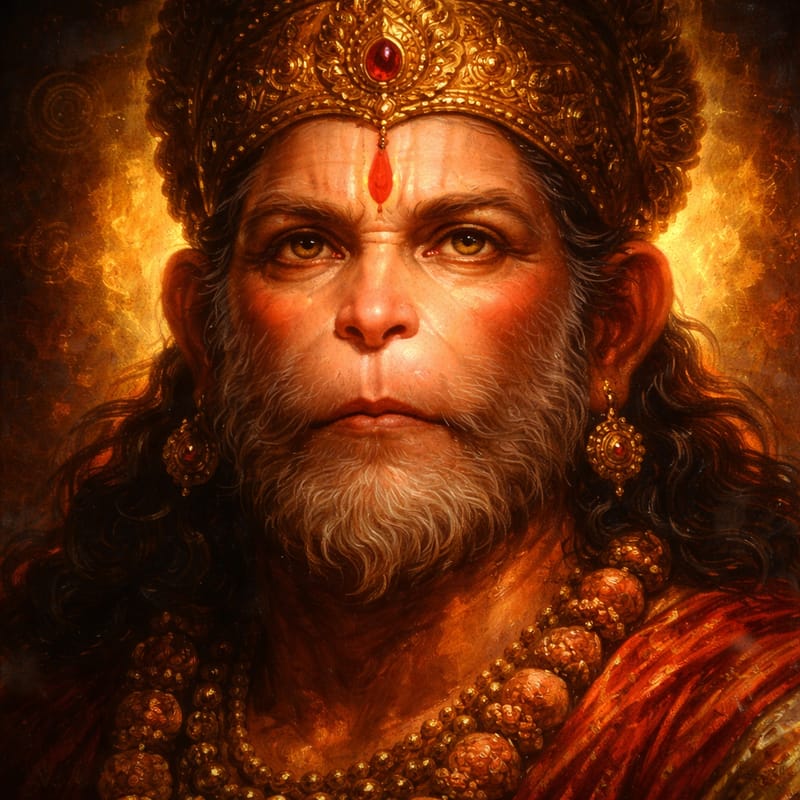
Hanuman Chalisa — Kannada Lyrics
The Hanuman Chalisa is a 40-verse devotional hymn composed by Tulsidas in the 16th century, written in Awadhi-Hindi vernacular with Sanskrit roots. The opening doha (couplet) establishes the spiritual foundation: the poet cleanses the mirror of his mind with the dust of his guru's lotus feet, then narrates the immaculate glory of Rama—who grants the four fruits of life (dharma, artha, kama, moksha). Acknowledging his own ignorance, the poet seeks Hanuman's grace for strength, wisdom, and freedom from afflictions. Each subsequent verse celebrates Hanuman's divine attributes, courage, and role as Rama's eternal messenger.
Hanuman represents the pinnacle of bhakti (devotion), courage, and selfless service in Hindu spirituality. He is the bridge between the human and divine—monkey-born yet supremely enlightened, embodying humility despite incomparable strength. The Chalisa positions him as 'ocean of wisdom,' 'dispeller of evil thoughts,' and 'remover of obstacles.' In the Ramcharitmanas, Tulsidas portrays Hanuman as the ideal devotee: his mind rests eternally in Rama, his intellect serves Rama's purpose, and his body executes Rama's will. For practitioners, Hanuman exemplifies how surrendered action transcends ego and draws out great inner strength—a living gateway to shakti (power) and bhakti (grace) simultaneously.
Chant the Hanuman Chalisa with sincerity, preferably in the early morning (brahma muhurta) or during times of difficulty. Begin by bowing to your guru and Hanuman. Recite all 40 verses slowly, focusing on their meaning rather than speed. Many devotees practice it weekly on Tuesdays or Saturdays (auspicious for Hanuman). Even reciting a single verse with concentrated awareness yields benefit. The mantra works best when paired with intentional living—embodying Hanuman's virtues of courage, loyalty, and service. No special ritual is required; sincere repetition awakens the Hanuman consciousness within.
Curated by The Mahakatha Team · Original Composition: Mahakatha · Lyric: Tulsidas (16th century CE)
Hanuman Chalisa
Hanuman · Preview · 2:00
Preview ended
Ancient sounds for transformation, carried across 3,000 years.
Get the full version — plus 275 more ancient chants. 80% OFF today only.
Get Ancient Chants Bundle — 80% OFF →3000+ happy customers · Lifetime access · All devices
2.2M people trust Mahakatha
Chant daily with reminders — Get the Mahakatha app
Lyrics
दोहा श्रीगुरु चरन सरोज रज, निजमन मुकुरु सुधारि। बरनउं रघुवर बिमल जसु, जो दायकु फल चारि।। बुद्धिहीन तनु जानिके, सुमिरौं पवन-कुमार। बल बुधि बिद्या देहु मोहिं, हरहु कलेस बिकार।।
ದೋಹಾ ಶ್ರೀಗುರು ಚರನ ಸರೋಜ ರಜ, ನಿಜಮನ ಮುಕುರು ಸುಧಾರಿ। ಬರನಉಂ ರಘುವರ ಬಿಮಲ ಜಸು, ಜೋ ದಾಯಕು ಫಲ ಚಾರಿ।। ಬುದ್ಧಿಹೀನ ತನು ಜಾನಿಕೇ, ಸುಮಿರೌಂ ಪವನ-ಕುಮಾರ। ಬಲ ಬುಧಿ ಬಿದ್ಯಾ ದೇಹು ಮೋಹಿಂ, ಹರಹು ಕಲೇಸ ಬಿಕಾರ।।
ನನ್ನ ಪ್ರಭುವಿನ ಪಾದಪದ್ಮದ ಧೂಳಿನಿಂದ, ನಾನು ನನ್ನ ಮನಸ್ಸಿನ ಕನ್ನಡಿಯನ್ನು ಶುದ್ಧಗೊಳಿಸುತ್ತೇನೆ.
ನಾನು ಶ್ರೀ ರಘುವರನ (ಶ್ರೀ ರಾಮಚಂದ್ರನ) ಪವಿತ್ರ ಮಹಿಮೆಯನ್ನು ವರ್ಣಿಸುತ್ತೇನೆ, ಅವರು ಜೀವನದ ನಾಲ್ಕು ಫಲಗಳನ್ನು (ಧರ್ಮ, ಅರ್ಥ, ಕಾಮ ಮತ್ತು ಮೋಕ್ಷ) ಅನುಗ್ರಹಿಸುತ್ತಾರೆ.
ನನ್ನನ್ನು ಅಜ್ಞಾನಿ ಎಂದು ಪರಿಗಣಿಸಿ, ನಾನು ನಿಮ್ಮನ್ನು ಧ್ಯಾನಿಸುತ್ತೇನೆ, ಓ ಪವನಕುಮಾರ (ಹನುಮಾನ).
ನನಗೆ ಶಕ್ತಿ, ಬುದ್ಧಿವಂತಿಕೆ ಮತ್ತು ಜ್ಞಾನವನ್ನು ಅನುಗ್ರಹಿಸಿ, ಮತ್ತು ನನ್ನ ಕಷ್ಟಗಳು ಮತ್ತು ದೋಷಗಳನ್ನು ದೂರ ಮಾಡಿ.
चौपाई
ಚೌಪಾಈ
जय हनुमान ज्ञान गुन सागर। जय कपीस तिहुं लोक उजागर।। राम दूत अतुलित बल धामा। अंजनि-पुत्र पवनसुत नामा।।
ಜಯ ಹನುಮಾನ ಜ್ಞಾನ ಗುನ ಸಾಗರ। ಜಯ ಕಪೀಸ ತಿಹುಂ ಲೋಕ ಉಜಾಗರ।। ರಾಮ ದೂತ ಅತುಲಿತ ಬಲ ಧಾಮಾ। ಅಂಜನಿ-ಪುತ್ರ ಪವನಸುತ ನಾಮಾ।।
ನಿಮಗೆ ವಿಜಯವಾಗಲಿ, ಓ ಹನುಮಾನ, ನೀವು ಜ್ಞಾನ ಮತ್ತು ಸದ್ಗುಣಗಳ ಸಾಗರ,
ಮೂರು ಲೋಕಗಳಿಗೆ ಪ್ರಕಾಶ ನೀಡುವ ವಾನರರ ಒಡೆಯನಿಗೆ ವಿಜಯವಾಗಲಿ.
ನೀವು ಅಪರಿಮಿತ ಶಕ್ತಿಯುಳ್ಳ ಶ್ರೀ ರಾಮನ ದೂತರು,
ನೀವು ಅಂಜನಿ-ಪುತ್ರ (ಅಂಜನಿಯ ಮಗ) ಮತ್ತು ಪವನ-ಸುತ (ವಾಯುದೇವನ ಮಗ) ಎಂದು ಪ್ರಸಿದ್ಧರು.
महाबीर बिक्रम बजरंगी। कुमति निवार सुमति के संगी।। कंचन बरन बिराज सुवेसा। कानन कुण्डल कुँचित केसा।।
ಮಹಾಬೀರ ಬಿಕ್ರಮ ಬಜರಂಗೀ। ಕುಮತಿ ನಿವಾರ ಸುಮತಿ ಕೇ ಸಂಗೀ।। ಕಂಚನ ಬರನ ಬಿರಾಜ ಸುವೇಸಾ। ಕಾನನ ಕುಣ್ಡಲ ಕುಁಚಿತ ಕೇಸಾ।।
ನೀವು ಮಹಾವೀರರು, ಅತ್ಯಂತ ಪರಾಕ್ರಮಶಾಲಿ, ಮತ್ತು ವಜ್ರದಂತೆ ಬಲವಾದ ದೇಹವುಳ್ಳವರು,
ನೀವು ದುರ್ಭಾವನೆಗಳನ್ನು ನಾಶಪಡಿಸುವವರು ಮತ್ತು ಸುಜ್ಞಾನ ಮತ್ತು ಬುದ್ಧಿವಂತಿಕೆಯ ಸಹಚರರು.
ನೀವು ಸುವರ್ಣ ವರ್ಣವನ್ನು ಹೊಂದಿದ್ದೀರಿ ಮತ್ತು ನೀವು ಸುಂದರವಾಗಿ ಅಲಂಕರಿಸಿದ್ದೀರಿ,
ನೀವು ಕಿವಿಯೋಲೆಗಳನ್ನು ಧರಿಸಿದ್ದೀರಿ ಮತ್ತು ಸುಂದರವಾದ ಸುರುಳಿಯಾಕಾರದ ಕೂದಲನ್ನು ಹೊಂದಿದ್ದೀರಿ.
हाथ बज्र अरु ध्वजा बिराजे। कांधे मूंज जनेउ साजे।। संकर स्वयं केसरी नंदन। तेज प्रताप महा जग वंदन।।
ಹಾಥ ಬಜ್ರ ಅರು ಧ್ವಜಾ ಬಿರಾಜೇ। ಕಾಂಧೇ ಮೂಂಜ ಜನೇಉ ಸಾಜೇ।। ಸಂಕರ ಸ್ವಯಂ ಕೇಸರೀ ನಂದನ। ತೇಜ ಪ್ರತಾಪ ಮಹಾ ಜಗ ವಂದನ।।
ನೀವು ನಿಮ್ಮ ಕೈಗಳಲ್ಲಿ ವಜ್ರಾಯುಧ ಮತ್ತು ಧ್ವಜವನ್ನು ಹಿಡಿದಿದ್ದೀರಿ.
ನೀವು ನಿಮ್ಮ ಭುಜದ ಮೇಲೆ ಪವಿತ್ರ ಜನಿವಾರವನ್ನು ಧರಿಸಿದ್ದೀರಿ.
ನೀವು ಭಗವಾನ್ ಶಿವನ ಅವತಾರ ಮತ್ತು ಕೇಸರಿಯ ಮಗ,
ನಿಮ್ಮ ಮಹಾ ಶಕ್ತಿ ಮತ್ತು ಧೈರ್ಯದ ಕಾರಣದಿಂದಾಗಿ ನೀವು ಇಡೀ ಜಗತ್ತಿನಿಂದ ಪೂಜಿಸಲ್ಪಡುತ್ತೀರಿ.
विद्यावान गुनी अति चातुर। राम काज करिबे को आतुर।। प्रभु चरित्र सुनिबे को रसिया। राम लखन सीता मन बसिया।।
ವಿದ್ಯಾವಾನ ಗುನೀ ಅತಿ ಚಾತುರ। ರಾಮ ಕಾಜ ಕರಿಬೇ ಕೋ ಆತುರ।। ಪ್ರಭು ಚರಿತ್ರ ಸುನಿಬೇ ಕೋ ರಸಿಯಾ। ರಾಮ ಲಖನ ಸೀತಾ ಮನ ಬಸಿಯಾ।।
ನೀನು ವಿದ್ವಾಂಸ, ಗುಣವಂತ ಮತ್ತು ಅತ್ಯಂತ ಬುದ್ಧಿವಂತ,
ನೀನು ಶ್ರೀರಾಮನ ಕಾರ್ಯಗಳನ್ನು ಮಾಡಲು ಯಾವಾಗಲೂ ಉತ್ಸುಕನಾಗಿರುತ್ತೀಯ.
ನೀನು ಶ್ರೀರಾಮನ ಮಹಿಮೆಯನ್ನು ಕೇಳುವುದರಲ್ಲಿ ಆನಂದಿಸುತ್ತೀಯ,
ನಿನ್ನ ಹೃದಯದಲ್ಲಿ ಶ್ರೀರಾಮ, ಶ್ರೀಲಕ್ಷ್ಮಣ ಮತ್ತು ದೇವಿ ಸೀತೆ ನೆಲೆಸಿದ್ದಾರೆ.
सूक्ष्म रूप धरि सियहिं दिखावा। बिकट रूप धरि लंक जरावा।। भीम रूप धरि असुर संहारे। रामचन्द्र के काज संवारे।।
ಸೂಕ್ಷ್ಮ ರೂಪ ಧರಿ ಸಿಯಹಿಂ ದಿಖಾವಾ। ಬಿಕಟ ರೂಪ ಧರಿ ಲಂಕ ಜರಾವಾ।। ಭೀಮ ರೂಪ ಧರಿ ಅಸುರ ಸಂಹಾರೇ। ರಾಮಚನ್ದ್ರ ಕೇ ಕಾಜ ಸಂವಾರೇ।।
ನೀನು ದೇವಿ ಸೀತೆಯ ಮುಂದೆ ಸೂಕ್ಷ್ಮ ರೂಪವನ್ನು ಧರಿಸಿ ಕಾಣಿಸಿಕೊಂಡೆ (ಲಂಕೆಯಲ್ಲಿ),
ನೀನು ಭೀಕರ ರೂಪವನ್ನು ಧರಿಸಿ ಲಂಕೆಯನ್ನು ಸುಟ್ಟೆ.
ನೀನು ವಿಶಾಲ ರೂಪವನ್ನು ಧರಿಸಿ ರಾಕ್ಷಸರನ್ನು ನಾಶಮಾಡಿದೆ,
ಹೀಗೆ ಶ್ರೀರಾಮನ ಕಾರ್ಯವನ್ನು ಸಾಧಿಸಿದೆ.
लाय सजीवन लखन जियाये। श्री रघुबीर हरषि उर लाये।। रघुपति कीन्ही बहुत बड़ाई। तुम मम प्रिय भरतहि सम भाई।।
ಲಾಯ ಸಜೀವನ ಲಖನ ಜಿಯಾಯೇ। ಶ್ರೀ ರಘುಬೀರ ಹರಷಿ ಉರ ಲಾಯೇ।। ರಘುಪತಿ ಕೀನ್ಹೀ ಬಹುತ ಬಡ಼ಾಈ। ತುಮ ಮಮ ಪ್ರಿಯ ಭರತಹಿ ಸಮ ಭಾಈ।।
ನೀನು ಸಂಜೀವನಿ ಗಿಡವನ್ನು ತಂದು ಶ್ರೀಲಕ್ಷ್ಮಣನನ್ನು ಪುನರ್ಜೀವಿಸಿದೆ.
ಇದರಿಂದ ಶ್ರೀರಾಮ ಹರ್ಷದಿಂದ ತುಂಬಿ ನಿನ್ನನ್ನು ಅಪ್ಪಿಕೊಂಡನು.
ಶ್ರೀರಾಮ ನಿನ್ನನ್ನು ಬಹಳವಾಗಿ ಹೊಗಳಿದನು,
ಮತ್ತು ಹೇಳಿದನು: "ನೀನು ನನ್ನ ಸಹೋದರ ಭರತನಂತೆ ನನಗೆ ಪ್ರಿಯನು".
सहस बदन तुम्हरो जस गावैं। अस कहि श्रीपति कण्ठ लगावैं।। सनकादिक ब्रह्मादि मुनीसा। नारद सारद सहित अहीसा।।
ಸಹಸ ಬದನ ತುಮ್ಹರೋ ಜಸ ಗಾವೈಂ। ಅಸ ಕಹಿ ಶ್ರೀಪತಿ ಕಣ್ಠ ಲಗಾವೈಂ।। ಸನಕಾದಿಕ ಬ್ರಹ್ಮಾದಿ ಮುನೀಸಾ। ನಾರದ ಸಾರದ ಸಹಿತ ಅಹೀಸಾ।।
"ಸಹಸ್ರ ಶಿರಸ್ಸಿನ ಶೇಷನಾಗ ನಿನ್ನ ಮಹಿಮೆಯನ್ನು ಹಾಡುತ್ತಾನೆ",
ಎಂದು ಶ್ರೀರಾಮ ನಿನ್ನನ್ನು ತನ್ನ ಅಪ್ಪುಗೆಯಲ್ಲಿ ತೆಗೆದುಕೊಂಡು ಹೇಳಿದನು.
ಸನಕಾದಿ ಮುನಿಗಳು, ಬ್ರಹ್ಮದೇವರು ಮತ್ತು ಇತರ ದೇವತೆಗಳು,
ನಾರದ, ದೇವಿ ಸರಸ್ವತಿ ಮತ್ತು ಶೇಷನಾಗ ...
जम कुबेर दिगपाल जहां ते। कवि कोविद कहि सके कहां ते।। तुम उपकार सुग्रीवहिं कीन्हा। राम मिलाय राज पद दीन्हा।।
ಜಮ ಕುಬೇರ ದಿಗಪಾಲ ಜಹಾಂ ತೇ। ಕವಿ ಕೋವಿದ ಕಹಿ ಸಕೇ ಕಹಾಂ ತೇ।। ತುಮ ಉಪಕಾರ ಸುಗ್ರೀವಹಿಂ ಕೀನ್ಹಾ। ರಾಮ ಮಿಲಾಯ ರಾಜ ಪದ ದೀನ್ಹಾ।।
ಯಮ (ಮೃತ್ಯುದೇವ), ಕುಬೇರ (ಧನದೇವ), ದಿಕ್ಪಾಲಕರು (ದಿಕ್ಕುಗಳ ರಕ್ಷಕ ದೇವತೆಗಳು),
ಕವಿಗಳು ಮತ್ತು ವಿದ್ವಾಂಸರು ನಿನ್ನ ಮಹಿಮೆಯನ್ನು ಸಂಪೂರ್ಣವಾಗಿ ವರ್ಣಿಸಲು ಸಾಧ್ಯವಾಗಲಿಲ್ಲ.
ನೀನು ಸುಗ್ರೀವನಿಗೆ ಮಹಾನ್ ಸಹಾಯವನ್ನು ಮಾಡಿದೆ.
ನೀನು ಅವನನ್ನು ಶ್ರೀರಾಮನಿಗೆ ಪರಿಚಯಿಸಿ ಅವನ ರಾಜ್ಯವನ್ನು ಹಿಂದಿರುಗಿಸಿದೆ.
तुम्हरो मंत्र बिभीषन माना। लंकेश्वर भए सब जग जाना।। जुग सहस्र जोजन पर भानु। लील्यो ताहि मधुर फल जानू।।
ತುಮ್ಹರೋ ಮಂತ್ರ ಬಿಭೀಷನ ಮಾನಾ। ಲಂಕೇಶ್ವರ ಭಏ ಸಬ ಜಗ ಜಾನಾ।। ಜುಗ ಸಹಸ್ರ ಜೋಜನ ಪರ ಭಾನು। ಲೀಲ್ಯೋ ತಾಹಿ ಮಧುರ ಫಲ ಜಾನೂ।।
ವಿಭೀಷಣನು ನಿಮ್ಮ ಸಲಹೆಯನ್ನು ಅನುಸರಿಸಿದನು,
ಮತ್ತು ಅವನು ಲಂಕಾದ ರಾಜನಾದನು ಎಂದು ಇಡೀ ಪ್ರಪಂಚಕ್ಕೆ ತಿಳಿದಿದೆ.
ಹದಿನಾರು ಸಾವಿರ ಮೈಲುಗಳ ದೂರದಲ್ಲಿದ್ದ ಸೂರ್ಯನನ್ನು,
ನೀವು ಅದನ್ನು ಸಿಹಿ ಹಣ್ಣೆಂದು ಭಾವಿಸಿ ನುಂಗಿದಿರಿ.
प्रभु मुद्रिका मेलि मुख माहीं। जलधि लांघि गये अचरज नाहीं।। दुर्गम काज जगत के जेते। सुगम अनुग्रह तुम्हरे तेते।।
ಪ್ರಭು ಮುದ್ರಿಕಾ ಮೇಲಿ ಮುಖ ಮಾಹೀಂ। ಜಲಧಿ ಲಾಂಘಿ ಗಯೇ ಅಚರಜ ನಾಹೀಂ।। ದುರ್ಗಮ ಕಾಜ ಜಗತ ಕೇ ಜೇತೇ। ಸುಗಮ ಅನುಗ್ರಹ ತುಮ್ಹರೇ ತೇತೇ।।
ಪ್ರಭು ಶ್ರೀರಾಮನ ಉಂಗುರವನ್ನು ನಿಮ್ಮ ಬಾಯಲ್ಲಿ ಹಿಡಿದು,
ನೀವು ಸಮುದ್ರವನ್ನು ದಾಟಿದಿರಿ, ಅದರಲ್ಲಿ ಆಶ್ಚರ್ಯವೇನೂ ಇಲ್ಲ.
ಈ ಲೋಕದಲ್ಲಿರುವ ಎಲ್ಲಾ ಕಷ್ಟಕರವಾದ ಕಾರ್ಯಗಳು,
ನಿಮ್ಮ ಅನುಗ್ರಹದಿಂದ ಸುಲಭವಾಗುತ್ತವೆ.
राम दुआरे तुम रखवारे। होत न आज्ञा बिनु पैसारे।। सब सुख लहै तुम्हारी सरना। तुम रक्षक काहू को डर ना।।
ರಾಮ ದುಆರೇ ತುಮ ರಖವಾರೇ। ಹೋತ ನ ಆಜ್ಞಾ ಬಿನು ಪೈಸಾರೇ।। ಸಬ ಸುಖ ಲಹೈ ತುಮ್ಹಾರೀ ಸರನಾ। ತುಮ ರಕ್ಷಕ ಕಾಹೂ ಕೋ ಡರ ನಾ।।
ನೀವು ಶ್ರೀರಾಮನ ರಾಜ್ಯದ ದ್ವಾರಪಾಲಕರು.
ನಿಮ್ಮ ಅನುಮತಿಯಿಲ್ಲದೆ ಯಾರೂ ಪ್ರವೇಶಿಸಲು ಸಾಧ್ಯವಿಲ್ಲ.
ನಿಮ್ಮ ಶರಣು ಹೊಂದುವವರು ಎಲ್ಲಾ ಸುಖಗಳನ್ನು ಅನುಭವಿಸುತ್ತಾರೆ.
ನೀವು ರಕ್ಷಕರಾಗಿದ್ದರೆ, ಭಯಪಡಲು ಏನಿದೆ?
आपन तेज सम्हारो आपै। तीनों लोक हांक तें कांपै।। भूत पिसाच निकट नहिं आवै। महावीर जब नाम सुनावै।।
ಆಪನ ತೇಜ ಸಮ್ಹಾರೋ ಆಪೈ। ತೀನೋಂ ಲೋಕ ಹಾಂಕ ತೇಂ ಕಾಂಪೈ।। ಭೂತ ಪಿಸಾಚ ನಿಕಟ ನಹಿಂ ಆವೈ। ಮಹಾವೀರ ಜಬ ನಾಮ ಸುನಾವೈ।।
ನಿಮ್ಮ ಮಹಾ ಶಕ್ತಿಯನ್ನು ನೀವು ಮಾತ್ರ ನಿಯಂತ್ರಿಸಬಲ್ಲಿರಿ.
ನೀವು ಗರ್ಜಿಸಿದಾಗ, ಮೂರು ಲೋಕಗಳೂ ನಡುಗುತ್ತವೆ.
ಭೂತ ಮತ್ತು ದುರಾತ್ಮಗಳು ಹತ್ತಿರ ಬರುವುದಿಲ್ಲ,
ಯಾರಾದರೂ ಮಹಾವೀರನ (ಹನುಮಂತನ) ನಾಮವನ್ನು ಉಚ್ಚರಿಸಿದಾಗ.
नासै रोग हरे सब पीरा। जपत निरन्तर हनुमत बीरा।। संकट तें हनुमान छुड़ावै। मन क्रम बचन ध्यान जो लावै।।
ನಾಸೈ ರೋಗ ಹರೇ ಸಬ ಪೀರಾ। ಜಪತ ನಿರನ್ತರ ಹನುಮತ ಬೀರಾ।। ಸಂಕಟ ತೇಂ ಹನುಮಾನ ಛುಡ಼ಾವೈ। ಮನ ಕ್ರಮ ಬಚನ ಧ್ಯಾನ ಜೋ ಲಾವೈ।।
ನೀವು ರೋಗಗಳನ್ನು ನಾಶಪಡಿಸುತ್ತೀರಿ ಮತ್ತು ಎಲ್ಲಾ ನೋವುಗಳನ್ನು ದೂರ ಮಾಡುತ್ತೀರಿ,
ಯಾರಾದರೂ ನಿಮ್ಮ ನಾಮವನ್ನು ನಿರಂತರವಾಗಿ ಉಚ್ಚರಿಸಿದಾಗ.
ಹನುಮಂತನು ಕಷ್ಟಗಳಿಂದ ಮುಕ್ತಗೊಳಿಸುತ್ತಾನೆ,
ಯಾರಾದರೂ ಮನಸ್ಸು, ಕ್ರಿಯೆ ಮತ್ತು ಮಾತುಗಳಿಂದ ಅವನನ್ನು ಧ್ಯಾನಿಸಿದಾಗ.
सब पर राम राय सिर राजा। तिन के काज सकल तुम साजा।। और मनोरथ जो कोई लावै। सोई अमित जीवन फल पावै।।
ಸಬ ಪರ ರಾಮ ರಾಯ ಸಿರ ರಾಜಾ। ತಿನ ಕೇ ಕಾಜ ಸಕಲ ತುಮ ಸಾಜಾ।। ಔರ ಮನೋರಥ ಜೋ ಕೋಈ ಲಾವೈ। ಸೋಈ ಅಮಿತ ಜೀವನ ಫಲ ಪಾವೈ।।
ಶ್ರೀ ರಾಮರು ತಪಸ್ವಿಗಳ (ತಪಸ್ಸಿನಲ್ಲಿ ತೊಡಗಿರುವ ಭಕ್ತರ) ರಾಜರು.
ಮತ್ತು ನೀನು (ಹನುಮಂತ) ಶ್ರೀ ರಾಮರ ಎಲ್ಲಾ ಕಾರ್ಯಗಳನ್ನು (ಸೇವಕನಾಗಿ) ಪೂರ್ಣಗೊಳಿಸುವೆ.
ಬೇರೆ ಯಾವುದೇ ಆಸೆಗಳನ್ನು ಹೊಂದಿರುವ ಭಕ್ತರು,
ಅಂತಿಮವಾಗಿ ಜೀವನದ ಅತ್ಯುನ್ನತ ಫಲವನ್ನು ಪಡೆಯುತ್ತಾರೆ.
चारों जुग परताप तुम्हारा। है परसिद्ध जगत उजियारा।। साधु संत के तुम रखवारे।। असुर निकन्दन राम दुलारे।।
ಚಾರೋಂ ಜುಗ ಪರತಾಪ ತುಮ್ಹಾರಾ। ಹೈ ಪರಸಿದ್ಧ ಜಗತ ಉಜಿಯಾರಾ।। ಸಾಧು ಸಂತ ಕೇ ತುಮ ರಖವಾರೇ।। ಅಸುರ ನಿಕನ್ದನ ರಾಮ ದುಲಾರೇ।।
ನಿನ್ನ ಮಹಿಮೆಯು ನಾಲ್ಕೂ ಯುಗಗಳಲ್ಲಿ ವ್ಯಾಪಿಸಿದೆ.
ಮತ್ತು ನಿನ್ನ ಕೀರ್ತಿಯು ಜಗತ್ತಿನಾದ್ಯಂತ ಪ್ರಕಾಶಿಸುತ್ತದೆ.
ನೀನು ಸಾಧು-ಸಂತರ ರಕ್ಷಕ.
ನೀನು ರಾಕ್ಷಸರನ್ನು ನಾಶಮಾಡುವವನು, ಓ ಶ್ರೀ ರಾಮರ ಪ್ರಿಯನೇ.
अष्टसिद्धि नौ निधि के दाता। अस बर दीन जानकी माता।। राम रसायन तुम्हरे पासा। सादर हो रघुपति के दासा।।
ಅಷ್ಟಸಿದ್ಧಿ ನೌ ನಿಧಿ ಕೇ ದಾತಾ। ಅಸ ಬರ ದೀನ ಜಾನಕೀ ಮಾತಾ।। ರಾಮ ರಸಾಯನ ತುಮ್ಹರೇ ಪಾಸಾ। ಸಾದರ ಹೋ ರಘುಪತಿ ಕೇ ದಾಸಾ।।
ನೀನು ಅಷ್ಟಸಿದ್ಧಿಗಳನ್ನು (ಅಲೌಕಿಕ ಶಕ್ತಿಗಳನ್ನು) ಮತ್ತು ನವನಿಧಿಗಳನ್ನು (ಭಕ್ತಿಯ ವಿಧಗಳನ್ನು) ಕೊಡಬಲ್ಲೆ.
ತಾಯಿ ಜಾನಕಿ (ದೇವಿ ಸೀತೆ) ನಿನಗೆ ಈ ಆಶೀರ್ವಾದವನ್ನು ನೀಡಿದರು.
ನೀನು ಶ್ರೀ ರಾಮರ ಭಕ್ತಿಯ ಸಾರವನ್ನು ಹೊಂದಿದ್ದೀಯೆ.
ನೀನು ಯಾವಾಗಲೂ ರಘುಪತಿಯ (ಶ್ರೀ ರಾಮರ) ಸೇವಕನಾಗಿ ಉಳಿಯುವೆ.
तुह्मरे भजन राम को पावै। जनम जनम के दुख बिसरावै।। अंत काल रघुबर पुर जाई। जहां जन्म हरिभक्त कहाई।।
ತುಹ್ಮರೇ ಭಜನ ರಾಮ ಕೋ ಪಾವೈ। ಜನಮ ಜನಮ ಕೇ ದುಖ ಬಿಸರಾವೈ।। ಅಂತ ಕಾಲ ರಘುಬರ ಪುರ ಜಾಈ। ಜಹಾಂ ಜನ್ಮ ಹರಿಭಕ್ತ ಕಹಾಈ।।
ನಿನ್ನ ಭಕ್ತಿಯ ಮೂಲಕ, ಒಬ್ಬರು ಶ್ರೀ ರಾಮರನ್ನು ಪಡೆಯುತ್ತಾರೆ,
ಆ ಮೂಲಕ ಜನ್ಮಜನ್ಮಾಂತರಗಳ ದುಃಖಗಳಿಂದ ಮುಕ್ತರಾಗುತ್ತಾರೆ.
ಅಂತ್ಯದಲ್ಲಿ ಒಬ್ಬರು ರಘುಪತಿಯ (ಶ್ರೀ ರಾಮರ) ಧಾಮಕ್ಕೆ ಹೋಗುತ್ತಾರೆ.
ಅಲ್ಲಿ ಒಬ್ಬರು ಹರಿಯ ಭಕ್ತನೆಂದು ಪ್ರಸಿದ್ಧರಾಗುತ್ತಾರೆ.
और देवता चित्त न धरई। हनुमत सेइ सर्ब सुख करई।। सङ्कट कटै मिटै सब पीरा। जो सुमिरै हनुमत बलबीरा।।
ಔರ ದೇವತಾ ಚಿತ್ತ ನ ಧರಈ। ಹನುಮತ ಸೇಇ ಸರ್ಬ ಸುಖ ಕರಈ।। ಸಙ್ಕಟ ಕಟೈ ಮಿಟೈ ಸಬ ಪೀರಾ। ಜೋ ಸುಮಿರೈ ಹನುಮತ ಬಲಬೀರಾ।।
ಬೇರೆ ಯಾವುದೇ ದೇವತೆಗಳನ್ನು ಪೂಜಿಸದಿದ್ದರೂ,
ಶ್ರೀ ಹನುಮಂತನನ್ನು ಪೂಜಿಸುವವರು ಎಲ್ಲಾ ಸುಖವನ್ನು ಪಡೆಯುತ್ತಾರೆ.
ಕಷ್ಟಗಳು ಮಾಯವಾಗುತ್ತವೆ ಮತ್ತು ದುಃಖಗಳು ನಿವಾರಣೆಯಾಗುತ್ತವೆ,
ಶಕ್ತಿಶಾಲಿ ಶ್ರೀ ಹನುಮಂತನನ್ನು ಧ್ಯಾನಿಸುವವರಿಗೆ.
जय जय जय हनुमान गोसाईं। कृपा करहु गुरुदेव की नाईं।। यह सत बार पाठ कर जोइ। छूटहि बन्दि महा सुख होई।।
ಜಯ ಜಯ ಜಯ ಹನುಮಾನ ಗೋಸಾಈಂ। ಕೃಪಾ ಕರಹು ಗುರುದೇವ ಕೀ ನಾಈಂ।। ಯಹ ಸತ ಬಾರ ಪಾಠ ಕರ ಜೋಇ। ಛೂಟಹಿ ಬನ್ದಿ ಮಹಾ ಸುಖ ಹೋಈ।।
ಓ ಹನುಮಾನ್, ನಿಮಗೆ ವಿಜಯ, ವಿಜಯ, ವಿಜಯ
ದಯವಿಟ್ಟು ನಮ್ಮ ಪರಮ ಗುರುವಿನಂತೆ ನಿಮ್ಮ ಕೃಪೆಯನ್ನು ದಯಪಾಲಿಸಿ
ಈ ಹನುಮಾನ್ ಚಾಲೀಸಾವನ್ನು ನೂರು ಬಾರಿ (ಭಕ್ತಿಯಿಂದ) ಪಾರಾಯಣ ಮಾಡುವವರು
ಲೌಕಿಕ ಬಂಧನದಿಂದ ಮುಕ್ತರಾಗಿ ಮಹಾ ಸುಖವನ್ನು ಪಡೆಯುವರು
जो यह पढ़ै हनुमान चालीसा। होय सिद्धि साखी गौरीसा।। तुलसीदास सदा हरि चेरा। कीजै नाथ हृदय महं डेरा।।
ಜೋ ಯಹ ಪಢ಼ೈ ಹನುಮಾನ ಚಾಲೀಸಾ। ಹೋಯ ಸಿದ್ಧಿ ಸಾಖೀ ಗೌರೀಸಾ।। ತುಲಸೀದಾಸ ಸದಾ ಹರಿ ಚೇರಾ। ಕೀಜೈ ನಾಥ ಹೃದಯ ಮಹಂ ಡೇರಾ।।
ಹನುಮಾನ್ ಚಾಲೀಸಾವನ್ನು (ಭಕ್ತಿಯಿಂದ) ಓದುವವರು
ಸಿದ್ಧರಾಗುವರು, ಶಿವನು ಸಾಕ್ಷಿ
ತುಲಸೀದಾಸರು ಯಾವಾಗಲೂ ಹರಿಯ ಸೇವಕರು
ಪ್ರಭುವು ತನ್ನ ಹೃದಯದಲ್ಲಿ ನೆಲೆಸಬೇಕೆಂದು ಪ್ರಾರ್ಥಿಸುತ್ತಾರೆ
दोहा पवनतनय संकट हरन, मंगल मूर्ति रूप। राम लखन सीता सहित, हृदय बसहु सुर भूप।।
ದೋಹಾ ಪವನತನಯ ಸಂಕಟ ಹರನ, ಮಂಗಲ ಮೂರ್ತಿ ರೂಪ। ರಾಮ ಲಖನ ಸೀತಾ ಸಹಿತ, ಹೃದಯ ಬಸಹು ಸುರ ಭೂಪ।।
ಪವನ ಪುತ್ರ ಶ್ರೀ ಹನುಮಾನ್, ಸಂಕಟಗಳನ್ನು ಹರಿಸುವವರು
ಮಂಗಳಕರ ರೂಪವನ್ನು ಹೊಂದಿದವರು
ಶ್ರೀ ರಾಮ, ಶ್ರೀ ಲಕ್ಷ್ಮಣ ಮತ್ತು ದೇವಿ ಸೀತೆಯೊಂದಿಗೆ
ದಯವಿಟ್ಟು ನನ್ನ ಹೃದಯದಲ್ಲಿ ನೆಲೆಸಿರಿ
How to Chant Hanuman Chalisa
- 1
Find a quiet, clean space
Sit in a comfortable, undisturbed environment. Face east or north if possible. You may light incense or a candle to set a contemplative atmosphere.
- 2
Settle into a comfortable posture
Sit cross-legged on the floor or upright in a chair. Keep the spine erect and place the hands on the knees with palms facing upward.
- 3
Take three cleansing breaths
Inhale slowly through the nose, hold briefly, and exhale completely. Repeat three times to calm the mind and prepare for mantra recitation.
- 4
Begin chanting Hanuman Chalisa
Chant the mantra clearly and with devotion — aloud, in a whisper, or silently. Use a mala (108 beads) to count repetitions. Aim for a consistent, unhurried rhythm throughout the session.
- 5
Rest in stillness
After completing your chanting, sit quietly for two to five minutes. Allow the vibration of the mantra to settle within. Close the practice with a moment of gratitude.
Benefits of Hanuman Chalisa
-
Grants fearlessness and inner courage to face life's obstacles and challenges with equanimity.
Source: Hanuman Chalisa verse 13-14; Traditional devotional practice
-
Removes negative mental patterns, obstacles, and destructive thoughts; protects the practitioner from harm.
Source: Verse 2 (kumati nivara—dispeller of evil thoughts); Ramcharitmanas tradition
-
Strengthens mental clarity, intellectual focus, and wisdom needed for spiritual and worldly success.
Source: Verse 1 (gyana guna sagara—ocean of wisdom); Verse 4 (vidyavana guni—learned and virtuous)
-
Cultivates steady devotion (bhakti) and surrender, aligning the chanter's will with divine purpose.
Source: Verse 16-17; Bhakti yoga tradition as taught in Bhagavad Gita 12.2
-
Devotees chant it for comfort when carrying trauma, emotional hurt, and past suffering, calling on Hanuman's protective grace.
Source: Verse 18 (sankata katai—removes suffering); Traditional healing practice
-
Devotees pray through it for problems to be resolved and, as tradition holds, for liberation from cycles of birth and death.
Source: Verse 20 (chhutahi bandi—liberation from bondage); Verse 17 (janama janama ke dukha bisaravai)
Story & Symbolism
Tradition credits the 16th-century poet-saint Tulsidas with the Hanuman Chalisa. It is a separate work from his Ramcharitmanas (1574–1577 CE), the Awadhi retelling of the Ramayana, although the two share a language and a devotion to Rama. Tulsidas lived much of his life in Varanasi, and devotional stories tell of him receiving darshan (a vision) of Hanuman; these are traditional accounts rather than historical records. Its 40 short verses were open to everyone, whatever their caste or class. The work became central to North Indian Hindu devotion and has been passed on through oral tradition, teachers and, later, printed texts.
Hanuman himself represents the archetypal devotee in Hindu spirituality—embodying the principle that selfless service and unwavering love are the fastest pathways to liberation. In the original Ramayana (Valmiki), Hanuman is portrayed as Rama's perfect instrument: his mind serves only Rama, his intellect is devoted to Rama's purpose, his body executes Rama's will. The Chalisa elevates this further, positioning Hanuman as a cosmic force—not merely a monkey-deity, but the embodiment of shakti (divine power), bhakti (devotion), and jnana (wisdom) unified. Each verse is a meditation on a different facet of transcendent consciousness accessible through surrendered devotion. Tulsidas teaches that Hanuman-consciousness dissolves the ego-knot and reveals the eternal presence of Rama (the Self) within and without.
Today, the Hanuman Chalisa remains the most widely chanted mantra in Hindu tradition, recited daily in temples, homes, meditation centers, and by individuals worldwide. It has been translated into every major language and appears in countless YouTube versions, podcasts, and spiritual apps. What began as Tulsidas's personal devotional experience has become a collective healing and liberation tool for millions. Its durability across 500 years testifies to its spiritual potency—each generation discovers fresh meaning within the same verses, proving that true sacred texts are alive, responsive, and eternally relevant to human consciousness.
How to Use in Daily Life
Morning Sadhana
Chant the full Hanuman Chalisa upon waking, ideally between (pre-dawn). Begin with prostrations and a clear intention. This establishes divine protection and mental clarity for the entire day ahead.
Meditation Practice
Recite the Chalisa slowly during meditation, focusing deeply on each verse's meaning. Visualize Hanuman's golden form, his fearless courage, and his loving devotion to Rama. Let the words dissolve into silence.
Crisis & Challenge
When facing obstacles, ill health, fear, or conflict, chant the Chalisa with sincere invocation. Repeat the line sankata te hanumana chhudavai ("Hanuman frees you from trouble") as a prayer for relief and clarity.
Evening Reflection
Before sleep, chant the Chalisa or listen to a recording. This is a prayer for protection through the night and for sleep free of nightmares, inviting Hanuman's blessing into your dreams.