

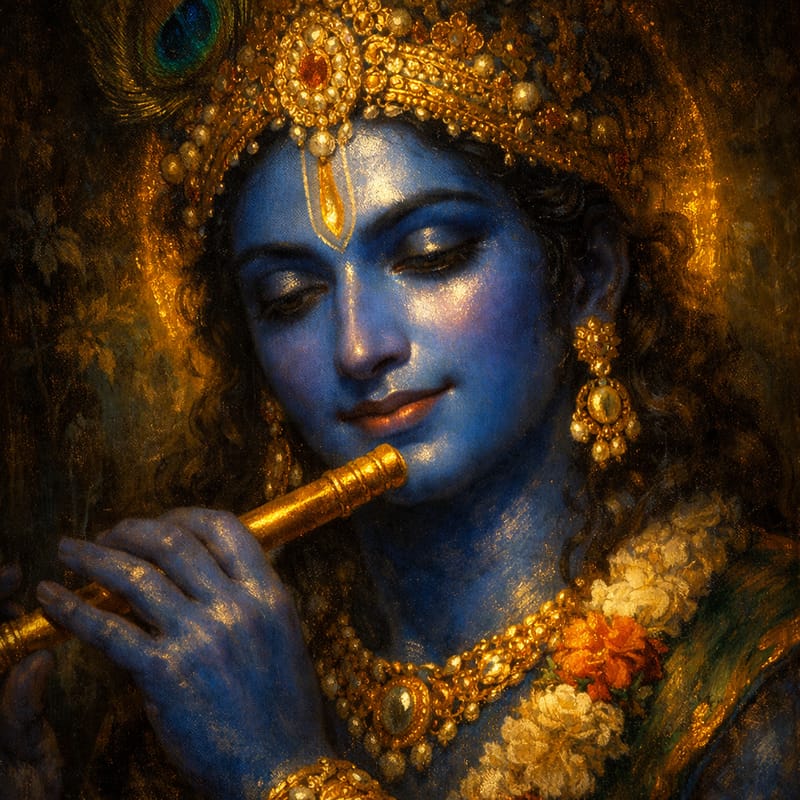
Madhurashtakam — Telugu Lyrics
Madhurashtakam Mantra is a sacred Sanskrit hymn honoring Krishna that awakens devotional emotion and transforms consciousness through divine sweetness.
Madhurashtakam is an eight-verse Sanskrit devotional hymn that systematically celebrates every dimension of Lord Krishna's divine nature through the lens of madhura (sweetness). Each verse progressively honors Krishna's physical beauty—lips, face, eyes, smile—then expands to his actions, attributes, relationships, and cosmic presence. The unifying thread is the refrain 'madhuradhipaterakhilam madhuram' (everything about the Lord of Sweetness is sweet), expressing the non-dual teaching that Krishna's entire being, from his mortal appearance to his infinite nature, radiates transcendent sweetness.
Rooted in the Bhakti tradition of Kashmir Shaivism and Krishna devotionalism, Madhurashtakam embodies the doctrine of divine sweetness (madhura-rasa) central to Gaudiya Vaishnava and broader Krishna worship. Unlike abstract philosophical inquiry, this mantra invites intimate, sensory engagement with Krishna—his flute's enchanting melody, his graceful movements, his playful mischief. This approach transforms Krishna from a distant cosmic principle into a beloved friend whose every action emanates divine love. The Bhagavata Purana portrays Krishna as the ultimate embodiment of ananda (bliss and sweetness), making him accessible to all seekers.
Chant Madhurashtakam during early morning meditation (brahma muhurta), before Krishna worship (puja), or whenever seeking reconnection with divine joy. Recite all eight verses or focus on verses that speak to your heart. Practice with vivid awareness—visualize Krishna's sweetness permeating your consciousness, his flute's music, his graceful dance. Even 9 or 27 repetitions daily cultivates profound shifts in mood, clarity, and devotional depth. Ideal for meditation, kirtan (group chanting), or solitary reflection.
Curated by The Mahakatha Team · Original Composition: Mahakatha · Lyric: Vallabhacharya (15th–16th century CE)
Madhurashtakam
Krishna · Preview · 2:00
Preview ended
Ancient sounds for transformation, carried across 3,000 years.
Get the full version — plus 275 more ancient chants. 80% OFF today only.
Get Ancient Chants Bundle — 80% OFF →3000+ happy customers · Lifetime access · All devices
2.2M people trust Mahakatha
Chant daily with reminders — Get the Mahakatha app
Lyrics
अधरं मधुरं वदनं मधुरं नयनं मधुरं हसितं मधुरं हृदयं मधुरं गमनं मधुरं मधुराधिपतेरखिलं मधुरम्
అధరం మధురం వదనం మధురం నయనం మధురం హసితం మధురం హృదయం మధురం గమనం మధురం మధురాధిపతేరఖిలం మధురమ్
కృష్ణా! నీ పెదవులు మధురం, నీ ముఖం మధురం,
నీ కన్నులు మధురం, నీ నవ్వు మధురం!
నీ హృదయం మధురం, నీ నడక మధురం,
మాధుర్యాధిపతీ, నీ యందంతయు మధురం.
वचनं मधुरं चरितं मधुरं वसनं मधुरं वलितं मधुरं चलितं मधुरं भ्रमितं मधुरं मधुराधिपतेरखिलं मधुरम्
వచనం మధురం చరితం మధురం వసనం మధురం వలితం మధురం చలితం మధురం భ్రమితం మధురం మధురాధిపతేరఖిలం మధురమ్
కృష్ణా! నీ వాక్కు మధురం, నీ స్వభావం మధురం,
నీ వస్త్రాలు మధురం, నీ వంకర భంగిమ మధురం,
నీ నడక మధురం, నీ లీలా మాయలు మధురం,
మాధుర్యాధిపతీ, నీ యందంతయు మధురం.
वेणुर्मधुरो रेणुर्मधुरः पाणिर्मधुरः पादौ मधुरौ नृत्यं मधुरं सख्यं मधुरं मधुराधिपतेरखिलं मधुरम्
వేణుర్మధురో రేణుర్మధురః పాణిర్మధురః పాదౌ మధురౌ నృత్యం మధురం సఖ్యం మధురం మధురాధిపతేరఖిలం మధురమ్
కృష్ణా! నీ వేణువు మధురం, నీ పూలు మధురం,
నీ చేతులు మధురం, నీ పాదాలు మధురం,
నీ నృత్యం మధురం, నీ స్నేహం మధురం;
మాధుర్యాధిపతీ, నీ యందంతయు మధురం.
गीतं मधुरं पीतं मधुरं भुक्तं मधुरं सुप्तं मधुरं रूपं मधुरं तिलकं मधुरं मधुराधिपतेरखिलं मधुरम्
గీతం మధురం పీతం మధురం భుక్తం మధురం సుప్తం మధురం రూపం మధురం తిలకం మధురం మధురాధిపతేరఖిలం మధురమ్
కృష్ణా! నీ గానం మధురం, నీ త్రాగుట మధురం,
నీ భుజించుట మధురం, నీ నిద్ర మధురం,
నీ రూపం మధురం, నీ నుదుట చందనం మధురం;
మాధుర్యాధిపతీ, నీ యందంతయు మధురం.
करणं मधुरं तारणं मधुरं हरणं मधुरं रमणं मधुरं वमितं मधुरं शमितं मधुरं मधुराधिपतेरखिलं मधुरम्
కరణం మధురం తారణం మధురం హరణం మధురం రమణం మధురం వమితం మధురం శమితం మధురం మధురాధిపతేరఖిలం మధురమ్
కృష్ణా! నీ కార్యాలు మధురం, నీ దాటుట మధురం,
నీ చిలిపి దొంగతనం మధురం, నీ రమణీయ లీలలు మధురం,
నీ ఉత్సాహం మధురం, నీ విశ్రాంతి మధురం;
మాధుర్యాధిపతీ, నీ యందంతయు మధురం.
गुञ्ज मधुरा माला मधुरा यमुना मधुरा विचि मधुरा सलिलं मधुरं कमलं मधुरं मधुराधिपतेरखिलं मधुरम्
గుఞ్జ మధురా మాలా మధురా యమునా మధురా విచి మధురా సలిలం మధురం కమలం మధురం మధురాధిపతేరఖిలం మధురమ్
కృష్ణా! నీ గుంజన మధురం, నీ దండ మధురం,
నీ యమునా నది మధురం, దాని అలలు మధురం,
నీ లీలలు మధురం, నీ పద్మం మధురం;
మాధుర్యాధిపతీ, నీ యందంతయు మధురం.
गोपी मधुरा लीला मधुरा युक्तं मधुरं मुक्तं मधुरं दृष्टं मधुरं शिष्टं मधुरं मधुराधिपतेरखिलं मधुरम्
గోపీ మధురా లీలా మధురా యుక్తం మధురం ముక్తం మధురం దృష్టం మధురం శిష్టం మధురం మధురాధిపతేరఖిలం మధురమ్
కృష్ణా! నీ గోపికలు మధురం, నీ దివ్య లీలలు మధురం,
నీ సాన్నిహిత్యం మధురం, నీ విడుదల మధురం,
నీ చూపు మధురం, నీ శిస్తు మధురం;
మాధుర్యాధిపతీ, నీ యందంతయు మధురం.
गोप मधुरा गवो मधुरा यष्टिर्मधुरा सृष्टिर्मधुरा दलितं मधुरं फलितं मधुरं मधुराधिपतेरखिलं मधुरम्
గోప మధురా గవో మధురా యష్టిర్మధురా సృష్టిర్మధురా దలితం మధురం ఫలితం మధురం మధురాధిపతేరఖిలం మధురమ్
కృష్ణా! నీ గోపాలురు మధురం, నీ ఆవులు మధురం,
నీ కర్ర మధురం, నీ సృష్టి మధురం,
నీ సంహారం మధురం, నీ ఫలింపజేయుట మధురం;
మాధుర్యాధిపతీ, నీ యందంతయు మధురం.
How to Chant Madhurashtakam
- 1
Find a quiet, clean space
Sit in a comfortable, undisturbed environment. Face east or north if possible. You may light incense or a candle to set a contemplative atmosphere.
- 2
Settle into a comfortable posture
Sit cross-legged on the floor or upright in a chair. Keep the spine erect and place the hands on the knees with palms facing upward.
- 3
Take three cleansing breaths
Inhale slowly through the nose, hold briefly, and exhale completely. Repeat three times to calm the mind and prepare for mantra recitation.
- 4
Begin chanting Madhurashtakam
Chant the mantra clearly and with devotion — aloud, in a whisper, or silently. Use a mala (108 beads) to count repetitions. Aim for a consistent, unhurried rhythm throughout the session.
- 5
Rest in stillness
After completing your chanting, sit quietly for two to five minutes. Allow the vibration of the mantra to settle within. Close the practice with a moment of gratitude.
Benefits of Madhurashtakam
-
Awakens bhakti-rasa (devotional emotion) and transforms consciousness toward Krishna through sensory-spiritual engagement with divine qualities.
Source: Bhagavata Purana (Tenth Canto) — doctrine of madhura-bhakti
-
Can lift your mood and ease low spirits by redirecting mental focus toward divine sweetness, joy, and cosmic play (lila) rather than personal suffering.
Source: Traditional practice — confirmed in modern bhakti psychology
-
Dissolves mental rigidity and stress by celebrating Krishna's spontaneous, playful freedom as a living model for inner liberation and ease.
Source: Kashmir Shaivism teachings on divine play (lila) and human transformation
-
Deepens meditation by providing concrete focal points—flute, feet, dance, beloved—for vivid contemplative visualization and sustained mental focus.
Source: Upanishads and meditation traditions (dhyana practice)
-
Purifies senses and perception by sanctifying all experience—training the practitioner to recognize divine sweetness in all encounters and relationships.
Source: Bhakti Sutras of Narada — transformation of sensory perception through devotion
Story & Symbolism
Madhurashtakam emerges from the Bhakti devotional tradition, particularly from Kashmir Shaivism and medieval Gaudiya Vaishnavism (Bengal Krishna worship). While its specific historical authorship remains uncertain, the mantra synthesizes the Bhagavata Purana's vivid portrait of Krishna as the supreme embodiment of divine sweetness (madhura-rasa) and bliss (ananda). The eight-verse structure reflects classical Sanskrit compositional mastery in devotional literature, where systematic enumeration of divine qualities intensifies emotional impact. Though not explicitly cited in Vedic texts (Rigveda, Yajurveda, Upanishads), Madhurashtakam represents the natural flowering of the Puranic era's philosophical shift toward intimate, sensory devotion.
The deity symbolism in Madhurashtakam reflects a profound theological understanding: Krishna is not merely a distant cosmic principle but an infinitely playful, beloved friend whose entire being radiates sweetness. Each verse celebrates this sweetness progressively—from his physical lips and eyes to his flute's music, his graceful dance, his playful mischief with gopis (cowherd girls), his relationship with nature, and finally his cosmic presence. This non-dual perspective teaches that the transcendent and the intimate, the infinite and the playful, are one consciousness. The refrain 'madhuradhipaterakhilam madhuram' (everything about the Lord of Sweetness is sweet) encodes this unitary vision: separation between spirit and matter, divine and human, dissolves in Krishna's sweetness.
Today, Madhurashtakam remains central to Krishna worship across India and the global Krishna consciousness movement (ISKCON and related lineages). Its transmission occurs through oral tradition, guru guidance, temple practice, and contemporary recording technology. Modern seekers encounter this mantra through meditation apps, YouTube chanting, and published Sanskrit texts. The mantra's accessibility—requiring no prior philosophical knowledge, no ritual paraphernalia—reflects Krishna's own teaching in the Bhagavata Purana: he responds to pure devotion, to the sincere heart's call, transcending all external conditions.
How to Use in Daily Life
Morning Recitation
Chant Madhurashtakam upon waking to invoke Krishna's divine sweetness. Begin with 3-5 repetitions while facing east, allowing the melodious syllables to awaken your heart and set a devotional tone for the day ahead.
Meditation Practice
During meditation, focus on the sweetness described in each verse. Visualize Krishna's divine form with each attribute—his flute, peacock feather, and lotus feet. Let the mantra deepen your connection with Krishna's transcendent beauty and grace.
Devotional Offering
Recite this mantra while performing puja or offering flowers, incense, and food to Krishna's image. The eight verses naturally complement eight-fold worship practices, making it ideal for complete devotional rituals and prayer ceremonies.
Evening Contemplation
Chant Madhurashtakam before sleep to meditate on Krishna's divine qualities. This practice calms the mind and heart, filling your consciousness with sweetness before rest. Recite softly 3-7 times for peaceful, devotion-filled sleep.