

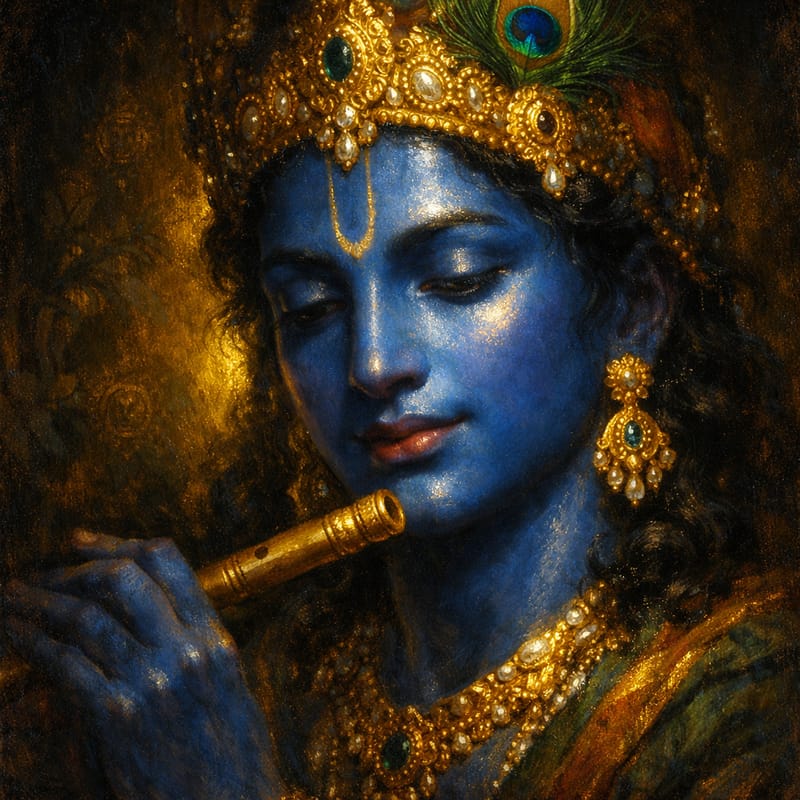
Shri Krishna Ashtakam — Tamil Lyrics
Shri Krishna Ashtakam is an eight-verse Sanskrit hymn honoring Lord Krishna, traditionally believed to purify past wrongs through divine remembrance and to deepen devotional love.
The Krishna Ashtakam is an eight-verse devotional hymn traditionally attributed to Adi Shankaracharya, the founder of Advaita Vedanta philosophy. This sacred composition celebrates Lord Krishna in his multifaceted glory—as the divine son of Vasudeva and Devaki, the vanquisher of demons like Kamsa and Chanura, and the eternal guru of the universe. Rooted in the Shankaracharya tradition, it bridges bhakti (devotion) with jnana (knowledge), making Krishna accessible to sincere seekers.
The spiritual significance of Krishna Ashtakam lies in its non-dual teaching wrapped within heartfelt devotion. While Advaita Vedanta teaches that Brahman (ultimate reality) is formless and attributeless, Shankaracharya recognizes Krishna as the full manifestation of that very Brahman in divine form. Each verse unveils Krishna's cosmic nature—his transcendent beauty, his playful pastimes in Vrindavan, and his supreme consciousness. Reciting this hymn dissolves the distinction between the devotee and the divine, leading to moksha through loving surrender.
In daily practice, devotees chant the Krishna Ashtakam during morning meditation, in temples, or before Krishna worship rituals. This hymn purifies the mind, awakens devotion, grants clarity of purpose, and invokes Krishna's grace upon the practitioner. Regular recitation strengthens the heart's connection to divine consciousness, which devotees see as a step towards liberation.
Curated by The Mahakatha Team · Original Composition: Mahakatha · Lyric: Adi Shankaracharya (8th century CE)
Shri Krishna Ashtakam
Krishna · Preview · 2:00
Preview ended
Ancient sounds for transformation, carried across 3,000 years.
Get the full version — plus 275 more ancient chants. 80% OFF today only.
Get Ancient Chants Bundle — 80% OFF →3000+ happy customers · Lifetime access · All devices
2.2M people trust Mahakatha
Chant daily with reminders — Get the Mahakatha app
Lyrics
वसुदेव सुतं देवं कंस चानूर मर्दनम्। देवकी परमानन्दं कृष्णं वन्दे जगत्गुरुम्॥
வஸுதேவ ஸுதம் தேவம் கம்ஸ சாநூர மர்தநம்। தேவகீ பரமாநந்தம் க்ரு'ஷ்ணம் வந்தே ஜகத்குரும்॥
வசுதேவரின் மகனான, கம்சனையும் சாணூரனையும் அழித்தவரே,
தேவகியின் பேரின்ப மகனே,
அந்த பகவான் கிருஷ்ணனை, பிரபஞ்சத்தின் குருவை வணங்குகிறேன்.
अतसी पुष्प संकाशं हार नूपुर शोभितम्। रत्न कंकन कयूरं कृष्णं वन्दे जगत्गुरुम्॥
அதஸீ புஷ்ப ஸம்காஶம் ஹார நூபுர ஶோபிதம்। ரத்ந கம்கந கயூரம் க்ரு'ஷ்ணம் வந்தே ஜகத்குரும்॥
அத்திப்பூக்களால் சூழப்பட்டவரே,
இரத்தினங்களாலும் ஒளிரும் நகைகளாலும் அலங்கரிக்கப்பட்டவரே,
அந்த பகவான் கிருஷ்ணனை, பிரபஞ்சத்தின் குருவை வணங்குகிறேன்.
कुटिलालक संयुक्तं पूर्ण चन्द्र निभानम्। विलसत् कुण्डल धारं कृष्णं वन्दे जगत्गुरुम्॥
குடிலாலக ஸம்யுக்தம் பூர்ண சந்த்ர நிபாநம்। விலஸத் குண்டல தாரம் க்ரு'ஷ்ணம் வந்தே ஜகத்குரும்॥
சுருண்ட கூந்தலைக் கொண்டவரே,
அழகான பௌர்ணமி நிலவை ஒத்தவரே,
அந்த பகவான் கிருஷ்ணனை, பிரபஞ்சத்தின் குருவை வணங்குகிறேன்.
मन्दार गन्ध संयुक्तं चारुहासं चतुर्भुजम्। बर्हिपिंछाव चूडांगं कृष्णं वन्दे जगत्गुरुम्॥
மந்தார கந்த ஸம்யுக்தம் சாருஹாஸம் சதுர்புஜம்। பர்ஹிபிம்சாவ சூடாம்கம் க்ரு'ஷ்ணம் வந்தே ஜகத்குரும்॥
மந்தார மலர்களைப் போல் இனிமையாக மணக்கும்,
நான்கு கரங்களையும் தெய்வீக புன்னகையையும் கொண்டு மயில் இறகுகளை அணிந்தவரே,
அந்த பகவான் கிருஷ்ணனை, பிரபஞ்சத்தின் குருவை வணங்குகிறேன்.
उत्फुल्ल पद्म पत्राक्षं नीलजीमूत सन्निभम्। यादवानां शिरोरत्नं कृष्णं वन्दे जगत्गुरुम्॥
உத்புல்ல பத்ம பத்ராக்ஷம் நீலஜீமூத ஸந்நிபம்। யாதவாநாம் ஶிரோரத்நம் க்ரு'ஷ்ணம் வந்தே ஜகத்குரும்॥
மலர்ந்த தாமரை இதழ்களை ஒத்த கண்களை உடையவரே,
பெரும் நீல மேகம் போன்று விசாலமானவரே, யாதவர்களில் சிறந்தவரே,
அந்த பகவான் கிருஷ்ணனை, பிரபஞ்சத்தின் குருவை வணங்குகிறேன்.
रुक्मिणी केलि संयुक्तं पीताम्बरं सुशोभितम्। अवाप्त तुलसी गन्धं कृष्णं वन्दे जगत्गुरुम्॥
ருக்மிணீ கேலி ஸம்யுக்தம் பீதாம்பரம் ஸுஶோபிதம்। அவாப்த துலஸீ கந்தம் க்ரு'ஷ்ணம் வந்தே ஜகத்குரும்॥
ருக்மிணியின் அன்பரே, பிரகாசமான பட்டாடைகளில் ஒளிரும்,
துளசியின் புனித மணத்தைச் சுமக்கும்,
அந்த பகவான் கிருஷ்ணனை, பிரபஞ்சத்தின் குருவை வணங்குகிறேன்.
गोपिकानां कुचद्वन्द्वं कुङ्कुमांकित वक्षसम्। श्रीनिकेतं महेश्वासं कृष्णं वन्दे जगत्गुरुम्॥
கோபிகாநாம் குசத்வந்த்வம் குங்குமாம்கித வக்ஷஸம்। ஶ்ரீநிகேதம் மஹேஶ்வாஸம் க்ரு'ஷ்ணம் வந்தே ஜகத்குரும்॥
குங்குமத்தால் பூசப்பட்ட, லட்சுமி தேவியின் வாசஸ்தலமே,
அனைத்து தெய்வீக உயிர்களின் இல்லமே,
அந்த பகவான் கிருஷ்ணனை, பிரபஞ்சத்தின் குருவை வணங்குகிறேன்.
श्रीवत्सांकं महोरस्कं वनमाल विराजितम्। शङ्ख चक्र धरं देवं कृष्णं वन्दे जगत्गुरुम्॥
ஶ்ரீவத்ஸாம்கம் மஹோரஸ்கம் வநமால விராஜிதம்। ஶங்க சக்ர தரம் தேவம் க்ரு'ஷ்ணம் வந்தே ஜகத்குரும்॥
மார்பில் ஸ்ரீவத்சம் கொண்டவரே,
வனமாலையால் அலங்கரிக்கப்பட்டவரே,
புனித சங்கையும் சக்கரத்தையும் ஏந்தியவரே,
அந்த பகவான் கிருஷ்ணனை, பிரபஞ்சத்தின் குருவை வணங்குகிறேன்.
कृष्णाष्टकं इदं पुण्यं प्रातः रुत्थाय यः पठेत्। कोटि जन्म कृतं पापं स्मरणेन विनश्यति॥
க்ரு'ஷ்ணாஷ்டகம் இதம் புண்யம் ப்ராதஃ ருத்தாய யஃ படேத்। கோடி ஜந்ம க்ரு'தம் பாபம் ஸ்மரணேந விநஶ்யதி॥
காலையில் எழுந்தவுடன் இந்த கிருஷ்ண அஷ்டகத்தை பக்தியுடன் ஓதுபவர்,
அவரது கடந்தகால பாவங்கள் அனைத்தும் அழிந்துவிடும்.
कृष्णाष्टकमिदं पुण्यं प्रातरुत्थाय यः पठेत् । कोटिजन्मकृतं पापं स्मरणेन विनश्यति ॥
க்ரு'ஷ்ணாஷ்டகமிதம் புண்யம் ப்ராதருத்தாய யஃ படேத் । கோடிஜந்மக்ரு'தம் பாபம் ஸ்மரணேந விநஶ்யதி ॥
இவ்வாறு கிருஷ்ண அஷ்டகம் நிறைவடைகிறது
How to Chant Shri Krishna Ashtakam
- 1
Find a quiet, clean space
Sit in a comfortable, undisturbed environment. Face east or north if possible. You may light incense or a candle to set a contemplative atmosphere.
- 2
Settle into a comfortable posture
Sit cross-legged on the floor or upright in a chair. Keep the spine erect and place the hands on the knees with palms facing upward.
- 3
Take three cleansing breaths
Inhale slowly through the nose, hold briefly, and exhale completely. Repeat three times to calm the mind and prepare for mantra recitation.
- 4
Begin chanting Shri Krishna Ashtakam
Chant the mantra clearly and with devotion — aloud, in a whisper, or silently. Use a mala (108 beads) to count repetitions. Aim for a consistent, unhurried rhythm throughout the session.
- 5
Rest in stillness
After completing your chanting, sit quietly for two to five minutes. Allow the vibration of the mantra to settle within. Close the practice with a moment of gratitude.
Benefits of Shri Krishna Ashtakam
-
Traditionally believed to purify past wrongs through the power of divine remembrance (smaran).
Source: Phalashruti of Shri Krishna Ashtakam (final verse)
-
Deepens bhakti (devotional love) by engaging all senses in intimate meditation on Krishna's divine form and pastimes.
Source: Traditional Gaudiya Vaishnava practice
-
Grants mukti (liberation) and prema-bhakti (love-filled devotion) through sincere chanting with focus and feeling.
Source: Bhakti Sutras; Traditional ashtakam phalashruti
-
Invokes Krishna's protective grace and removes obstacles through vivid invocation of his divine qualities (gunas).
Source: Traditional practice on Janmashtami and Ekadashi observances
-
Establishes sacred presence in the heart through eight progressive visions of Krishna's cosmic and pastoral forms.
Source: Devotional manual teachings on mantra meditation (upasana)
Story & Symbolism
Shri Krishna Ashtakam belongs to the Gaudiya Vaishnava tradition, a devotional lineage that emerged in medieval India emphasizing Krishna as Svayam Bhagavan—the supreme absolute divine person, not merely an avatar of Vishnu. The specific historical authorship remains a matter of scholarly discussion. Various sources attribute it to Madhusudana Saraswati (16th century), while others trace it to medieval Vaishnava poet-saints or long-standing temple traditions. The ashtakam form itself is ancient, appearing across Sanskrit liturgy as a perfect devotional structure: eight verses allow progressive revelation of the deity's nature, building intimacy through detailed praise. This particular Krishna Ashtakam became especially cherished in Gaudiya communities because its sensory richness—Atasi flowers, peacock feathers, the anklets' tinkling, the gopis' embrace—makes transcendent theology visceral and experiential rather than abstract.
The hymn reflects the Gaudiya emphasis on rasa (emotional taste) and lila (divine play) as pathways to liberation. Rather than approaching Krishna through knowledge (jnana) or ritual action (karma), this ashtakam invites the devotee into intimate relationship through vivid meditation on his form, beauty, and pastimes. Each verse peels back a layer of Krishna's divine nature—his power (defeating Kamsa), his beauty (lotus eyes, moon-like face), his cosmic rulership (holding conch and discus), his intimate beloved nature (with Rukmini and the gopis). The structure honors the principle that comprehensive devotion requires engaging the whole being: intellect, senses, heart, and spirit all surrender together.
Today, Shri Krishna Ashtakam is chanted during personal puja, on Janmashtami (Krishna's birthday), on Ekadashi (lunar days of Vishnu worship), and throughout Gaudiya temples and homes worldwide. It has become foundational practice for Krishna devotees seeking to deepen bhakti (devotional love) and take to heart the promise of the phalashruti: that sincere chanting purifies the heart and leads to both liberation and divine love.
How to Use in Daily Life
Early Morning Chanting
Chant Shri Krishna Ashtakam during Brahma Muhurta (90 minutes before sunrise) for maximum spiritual receptivity. The predawn hours amplify mantra potency. Sit facing east, visualize Krishna's form with each verse, and allow eight minutes for unhurried recitation.
Meditation Focus
Use each verse as a meditation anchor. Recite one verse slowly while visualizing that specific quality—his strength defeating demons, his beauty adorned with flowers, his cosmic form holding sacred weapons. This sensory engagement deepens bhakti beyond intellectual understanding.
Before Krishna Puja
Recite the full ashtakam as an opening invocation when performing Krishna worship. The eight verses function as a complete invocation, calling Krishna's presence into your sacred space and aligning your heart with devotion before ritual offerings.
Evening or Difficult Moments
Chant when facing obstacles, emotional turbulence, or before sleep. The text's phalashruti says that sincere remembrance (smaran) lightens karmic burdens. Even one verse chanted with genuine feeling invokes Krishna's protective grace and inner peace.