

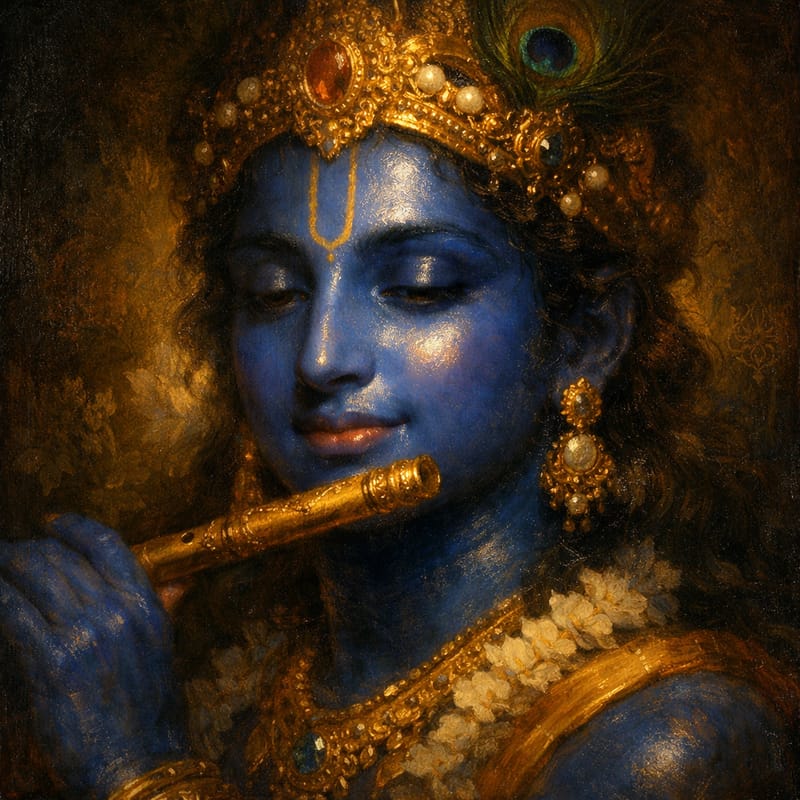
Balamukundashtakam — Kannada Lyrics
Balamukundashtakam Mantra is an ancient Sanskrit hymn honoring Krishna, cultivating heart-centered devotion and emotional peace through divine childhood imagery.
Balamukundashtakam is an eight-verse Sanskrit hymn devoted to Krishna in his infant form (Bala Mukunda). Each verse paints vivid imagery: Krishna's lotus-like hands and feet, his rest upon a banyan leaf containing all worlds, his graceful dark-blue form adored by celestial beings, his playful stealing of milk and butter from cowherd women, his legendary dance upon the serpent Kaliya's hood, his binding at the churning post, and his nursing mother Yashoda. The refrain—"Balam Mukundam Manasa Smarami" (I remember this child Krishna in my mind)—anchors each verse in personal remembrance and devotional intimacy.
This mantra originates from the Bhakti tradition, venerating Krishna not as supreme judge or cosmic force, but as a tender child—vulnerable, playful, mischievous, and infinitely lovable. This approach, called Bala Bhakti (childhood devotion), appears prominently in the Bhagavata Purana and later devotional texts. By meditating on Krishna's childhood leelas (divine acts), the practitioner cultivates Madhura Bhava (sweet, intimate love) and surrenders ego through the lens of a devoted caregiver or witness. The eight verses scaffold a complete portrait: cosmic child, divine thief, serpent-dancer, bound captive, and nursing infant—each facet revealing different dimensions of divine grace accessible through childlike wonder.
Recite Balamukundashtakam during morning meditation (brahma muhurta) or evening practice to cultivate emotional softness and devotional depth. Traditionally chanted 108 times or in multiples of 8 to honor the eight verses, this mantra works best with sincere remembrance rather than mechanical repetition. Mothers and caregivers often find its protective, nurturing tone especially meaningful. Allow the pastoral imagery to anchor you—visualize Krishna's form, his playfulness, his innocent mischief—and let the refrain deepen your connection to divine love.
Curated by The Mahakatha Team · Original Composition: Mahakatha · Lyric: Traditional / Vaishnava
Balamukundashtakam
Krishna · Preview · 2:00
Preview ended
Ancient sounds for transformation, carried across 3,000 years.
Get the full version — plus 275 more ancient chants. 80% OFF today only.
Get Ancient Chants Bundle — 80% OFF →3000+ happy customers · Lifetime access · All devices
2.2M people trust Mahakatha
Chant daily with reminders — Get the Mahakatha app
Lyrics
करारविन्देन पदारविन्दं मुखारविन्दे विनिवेशयन्तम् । वटस्य पत्रस्य पुटे शयानं बालं मुकुन्दं मनसा स्मरामि || 1 ||
ಕರಾರವಿನ್ದೇನ ಪದಾರವಿನ್ದಂ ಮುಖಾರವಿನ್ದೇ ವಿನಿವೇಶಯನ್ತಮ್ । ವಟಸ್ಯ ಪತ್ರಸ್ಯ ಪುಟೇ ಶಯಾನಂ ಬಾಲಂ ಮುಕುನ್ದಂ ಮನಸಾ ಸ್ಮರಾಮಿ || 1 ||
ಅವನ ಕೈಗಳು ಕಮಲದಂತೆ, ಅವನ ಪಾದಗಳು ಕಮಲದಂತೆ,
ಅವನು ತನ್ನ ಕಾಲ್ಬೆರಳನ್ನು ತನ್ನ ಕಮಲದಂತಹ ಬಾಯಿಯಲ್ಲಿ ಇಡುತ್ತಾನೆ,
ಆಲದ ಎಲೆಯ ಮಡಿಕೆಯಲ್ಲಿ ಮಲಗಿರುವ,
ಆ ಚಿಕ್ಕ ಕೃಷ್ಣನು ನನ್ನ ಮನಸ್ಸಿನಲ್ಲಿ ಕೆತ್ತಲಾಗಿದೆ. || 1 ||
संहृत्य लोकान् वटपत्रमध्ये शयानमाद्यन्तविहीनरूपम् । सर्वेश्वरं सर्वहितावतारं बालं मुकुन्दं मनसा स्मरामि || 2 ||
ಸಂಹೃತ್ಯ ಲೋಕಾನ್ ವಟಪತ್ರಮಧ್ಯೇ ಶಯಾನಮಾದ್ಯನ್ತವಿಹೀನರೂಪಮ್ । ಸರ್ವೇಶ್ವರಂ ಸರ್ವಹಿತಾವತಾರಂ ಬಾಲಂ ಮುಕುನ್ದಂ ಮನಸಾ ಸ್ಮರಾಮಿ || 2 ||
ಅವನು ಇಡೀ ಜಗತ್ತನ್ನು ಚಿಕ್ಕ ಆಲದ ಎಲೆಯಲ್ಲಿ ಚಿತ್ರಿಸುತ್ತಾನೆ,
ಅವನು ಅದರಲ್ಲಿ ನಿರಾಕಾರವಾಗಿ ವಿಶ್ರಮಿಸುತ್ತಾನೆ, ಆದಿಯಿಲ್ಲದೆ ಅಂತ್ಯವಿಲ್ಲದೆ,
ಎಲ್ಲರ ದೇವರು, ಎಲ್ಲರ ಕಲ್ಯಾಣ,
ಆ ಚಿಕ್ಕ ಕೃಷ್ಣನು ನನ್ನ ಮನಸ್ಸಿನಲ್ಲಿ ಕೆತ್ತಲಾಗಿದೆ. || 2 ||
इन्दीवरश्यामलकोमलाङ्गं इन्द्रादिदेवार्चितपादपद्मम् । सन्तानकल्पद्रुममाश्रितानां बालं मुकुन्दं मनसा स्मरामि || 3 ||
ಇನ್ದೀವರಶ್ಯಾಮಲಕೋಮಲಾಙ್ಗಂ ಇನ್ದ್ರಾದಿದೇವಾರ್ಚಿತಪಾದಪದ್ಮಮ್ । ಸನ್ತಾನಕಲ್ಪದ್ರುಮಮಾಶ್ರಿತಾನಾಂ ಬಾಲಂ ಮುಕುನ್ದಂ ಮನಸಾ ಸ್ಮರಾಮಿ || 3 ||
ಕಡು ನೀಲಿ ಕಮಲದಂತೆ ಕೋಮಲ ಮತ್ತು ದಿವ್ಯವಾದ,
ಇಂದ್ರ ದೇವರು ಮತ್ತು ಇತರ ದೇವರುಗಳಿಂದ ಪೂಜಿಸಲ್ಪಟ್ಟ ಅವನ ಕಮಲ ಪಾದಗಳು,
ನಾನು ಅವನೆಂಬ ಅನಂತ ಕಲ್ಪವೃಕ್ಷದ ಕೆಳಗೆ ವಿಶ್ರಮಿಸುತ್ತೇನೆ,
ಆ ಚಿಕ್ಕ ಕೃಷ್ಣನು ನನ್ನ ಮನಸ್ಸಿನಲ್ಲಿ ಕೆತ್ತಲಾಗಿದೆ. || 3 ||
लंबालकं लंवितहारयष्टिं शृङ्गारलीलाङ्कितदन्तपङ्क्तिम् । बिंबाधरं चारुविशालनेत्रं बालं मुकुन्दं मनसा स्मरामि || 4 ||
ಲಂಬಾಲಕಂ ಲಂವಿತಹಾರಯಷ್ಟಿಂ ಶೃಙ್ಗಾರಲೀಲಾಙ್ಕಿತದನ್ತಪಙ್ಕ್ತಿಮ್ । ಬಿಂಬಾಧರಂ ಚಾರುವಿಶಾಲನೇತ್ರಂ ಬಾಲಂ ಮುಕುನ್ದಂ ಮನಸಾ ಸ್ಮರಾಮಿ || 4 ||
ಅವನ ಕೂದಲು ಉದ್ದ ಮತ್ತು ಸುರುಳಿಯಾಗಿ, ಹೂವಿನ ಹಾರದಿಂದ ಸುತ್ತುವರಿದ,
ಅವನ ಹಲ್ಲುಗಳು ಅವನ ಲೀಲಾಮಯ ಪ್ರೇಮಪೂರ್ಣ ನಗುವಿನಿಂದ ಪ್ರಕಾಶಮಾನವಾಗಿವೆ,
ಅವನ ಸುಂದರ ಕಣ್ಣುಗಳು ಪ್ರಕಾಶಮಾನ ಮತ್ತು ವಿಶಾಲವಾಗಿವೆ,
ಆ ಚಿಕ್ಕ ಕೃಷ್ಣನು ನನ್ನ ಮನಸ್ಸಿನಲ್ಲಿ ಕೆತ್ತಲಾಗಿದೆ. || 4 ||
शिक्ये निधायाद्य पयोदधीनि बहिर्गतायां व्रजनायिकायाम् । भुक्त्वा यथेष्टं कपटेन सुप्तं बालं मुकुन्दं मनसा स्मरामि || 5 ||
ಶಿಕ್ಯೇ ನಿಧಾಯಾದ್ಯ ಪಯೋದಧೀನಿ ಬಹಿರ್ಗತಾಯಾಂ ವ್ರಜನಾಯಿಕಾಯಾಮ್ । ಭುಕ್ತ್ವಾ ಯಥೇಷ್ಟಂ ಕಪಟೇನ ಸುಪ್ತಂ ಬಾಲಂ ಮುಕುನ್ದಂ ಮನಸಾ ಸ್ಮರಾಮಿ || 5 ||
ಅವನು ತೂಗಾಡುವ ಮಡಕೆಗಳಿಂದ ಹಾಲು ಮತ್ತು ಮೊಸರನ್ನು ಕದ್ದುಕೊಳ್ಳುತ್ತಾನೆ,
ವ್ರಜದ ಗೋಪಿಯರು ಹೊರಗೆ ಹೋದಾಗ,
ಅವನು ತನ್ನ ಇಚ್ಛೆಯಂತೆ ತಿನ್ನುತ್ತಾನೆ, ನಂತರ ನಿದ್ರಿಸುವಂತೆ ನಟಿಸುತ್ತಾನೆ,
ಆ ಚಿಕ್ಕ ಕೃಷ್ಣನು ನನ್ನ ಮನಸ್ಸಿನಲ್ಲಿ ಕೆತ್ತಲಾಗಿದೆ. || 5 ||
कलिन्दजान्तस्थितकालियस्य फणाग्ररङ्गे नटनप्रियन्तम् । तत्पुच्छहस्तं शरदिन्दुवक्त्रं बालं मुकुन्दं मनसा स्मरामि || 6 ||
ಕಲಿನ್ದಜಾನ್ತಸ್ಥಿತಕಾಲಿಯಸ್ಯ ಫಣಾಗ್ರರಙ್ಗೇ ನಟನಪ್ರಿಯನ್ತಮ್ । ತತ್ಪುಚ್ಛಹಸ್ತಂ ಶರದಿನ್ದುವಕ್ತ್ರಂ ಬಾಲಂ ಮುಕುನ್ದಂ ಮನಸಾ ಸ್ಮರಾಮಿ || 6 ||
ಕಲಿಂದಜ ಎಂಬ ಯಮುನಾ ನದಿಯಲ್ಲಿ ವಾಸಿಸುತ್ತಿದ್ದ ಕಾಳಿಯ ಸರ್ಪದ ಬೆನ್ನಿನ ಮೇಲೆ
ಆ ಸರ್ಪದ ಫಣದ ಮೇಲೆ ಅವನು ಲೀಲಾವಿಲಾಸದಿಂದ ನರ್ತಿಸಿದನು,
ಅದರ ಬೃಹತ್ ಬಾಲವನ್ನು ತನ್ನ ಕೈಯಲ್ಲಿ ಹಿಡಿದು, ಅವನ ಮುಖವು ಚಂದ್ರನಂತೆ ಪ್ರಕಾಶಿಸಿತು,
ಆ ಚಿಕ್ಕ ಕೃಷ್ಣನು ನನ್ನ ಮನಸ್ಸಿನಲ್ಲಿ ಕೆತ್ತಲ್ಪಟ್ಟಿದ್ದಾನೆ. || 6 ||
उलुखले बद्धमुदारशौर्यं उत्तुङ्गयुग्मार्जुनमङ्गलीलम् । उत्फुल्लपद्मायतचारुनेत्रं बालं मुकुन्दं मनसा स्मरामि || 7 ||
ಉಲುಖಲೇ ಬದ್ಧಮುದಾರಶೌರ್ಯಂ ಉತ್ತುಙ್ಗಯುಗ್ಮಾರ್ಜುನಮಙ್ಗಲೀಲಮ್ । ಉತ್ಫುಲ್ಲಪದ್ಮಾಯತಚಾರುನೇತ್ರಂ ಬಾಲಂ ಮುಕುನ್ದಂ ಮನಸಾ ಸ್ಮರಾಮಿ || 7 ||
ಅಸಹಾಯಕ ತಾಯಿಯಿಂದ ಉರಲಿಗೆ ಕಟ್ಟಲ್ಪಟ್ಟರೂ, ಅವನ ಮುಖವು ಇನ್ನೂ ವೀರೋಚಿತವಾಗಿ ಮತ್ತು ಪ್ರಕಾಶಮಾನವಾಗಿ ಇತ್ತು,
ಅವನು ಲೀಲಾವಿಲಾಸದಿಂದ ಎರಡು ಬಲಿಷ್ಠ ಅರ್ಜುನ ವೃಕ್ಷಗಳನ್ನು ಕಿತ್ತುಹಾಕಿದನು,
ಕಮಲದ ದಳಗಳಂತೆ ತೆರೆದುಕೊಳ್ಳುವ ಅವನ ಕಣ್ಣುಗಳಿಂದ ಅವನು ನೋಡುತ್ತಾನೆ,
ಆ ಚಿಕ್ಕ ಕೃಷ್ಣನು ನನ್ನ ಮನಸ್ಸಿನಲ್ಲಿ ಕೆತ್ತಲ್ಪಟ್ಟಿದ್ದಾನೆ. || 7 ||
आलोक्य मातुर्मुखमादरेण स्तन्यं पिबन्तं सरसीरुहाक्षम् । सच्चिन्मयं देवमनन्तरूपं बालं मुकुन्दं मनसा स्मरामि || 8 ||
ಆಲೋಕ್ಯ ಮಾತುರ್ಮುಖಮಾದರೇಣ ಸ್ತನ್ಯಂ ಪಿಬನ್ತಂ ಸರಸೀರುಹಾಕ್ಷಮ್ । ಸಚ್ಚಿನ್ಮಯಂ ದೇವಮನನ್ತರೂಪಂ ಬಾಲಂ ಮುಕುನ್ದಂ ಮನಸಾ ಸ್ಮರಾಮಿ || 8 ||
ಅವನು ತನ್ನ ತಾಯಿಯ ಮುಖವನ್ನು ನೋಡುತ್ತಾನೆ,
ಅವಳ ಸ್ತನ್ಯವನ್ನು ಪಾನ ಮಾಡುತ್ತಾ, ಅವನ ಕಣ್ಣುಗಳು ಸರೋವರದಲ್ಲಿನ ಕಮಲದಂತೆ ಶಾಂತವಾಗಿವೆ,
ಅವನ ರೂಪವು ಶುದ್ಧ ಅನಂತ ಚೇತನವಾಗಿದೆ,
ಆ ಚಿಕ್ಕ ಕೃಷ್ಣನು ನನ್ನ ಮನಸ್ಸಿನಲ್ಲಿ ಕೆತ್ತಲ್ಪಟ್ಟಿದ್ದಾನೆ. || 8 ||
इति बालमुकुन्दशतकम् सम्पूर्णम् ||
ಇತಿ ಬಾಲಮುಕುನ್ದಶತಕಮ್ ಸಮ್ಪೂರ್ಣಮ್ ||
ಹೀಗೆ ಬಾಲಮುಕುಂದಾಷ್ಟಕಂ ಸಂಪೂರ್ಣವಾಯಿತು.
How to Chant Balamukundashtakam
- 1
Find a quiet, clean space
Sit in a comfortable, undisturbed environment. Face east or north if possible. You may light incense or a candle to set a contemplative atmosphere.
- 2
Settle into a comfortable posture
Sit cross-legged on the floor or upright in a chair. Keep the spine erect and place the hands on the knees with palms facing upward.
- 3
Take three cleansing breaths
Inhale slowly through the nose, hold briefly, and exhale completely. Repeat three times to calm the mind and prepare for mantra recitation.
- 4
Begin chanting Balamukundashtakam
Chant the mantra clearly and with devotion — aloud, in a whisper, or silently. Use a mala (108 beads) to count repetitions. Aim for a consistent, unhurried rhythm throughout the session.
- 5
Rest in stillness
After completing your chanting, sit quietly for two to five minutes. Allow the vibration of the mantra to settle within. Close the practice with a moment of gratitude.
Benefits of Balamukundashtakam
-
Cultivates Madhura Bhava: Awakens heart-centered devotion and intimate, loving relationship with the divine.
Source: Bhagavata Purana and Bhakti tradition
-
Eases emotional turbulence: The tender imagery of divine childhood dissolves harsh thoughts and restlessness into gentleness.
Source: Traditional practice and Narada Bhakti Sutras
-
Protects children and caregivers: Recitation invokes Krishna's protective grace over the young and vulnerable.
Source: Vrindavan devotional lineage
-
Deepens meditation focus: The eight narrative verses provide structure for sustained visualization and mental clarity.
Source: Traditional practice
-
Dissolves ego-attachment: Channeling devotion through childlike innocence removes barriers to self-surrender.
Source: Bhakti philosophical tradition
Story & Symbolism
The Balamukundashtakam Mantra, traditionally attributed to the sage Shuka or other devotional poets of the medieval period, represents one of Hinduism's most tender expressions of devotion to Lord Krishna in his child form, Balakrishna. This eight-verse composition emerges from the rich tradition of Krishna bhakti that flourished particularly during the medieval era, when poets and saints sought to capture the divine play and innocent charm of the young Lord. According to various Puranic and devotional traditions, the mantra was composed to celebrate Krishna's early years in Gokul and Vrindavan, emphasizing the paradox of infinite divinity residing within the form of a playful, mischievous child who steals butter, herds cattle, and enchants all who encounter him.
Spiritually, the Balamukundashtakam holds profound significance because it bridges the transcendent and the intimate. By meditating on Krishna as a child, practitioners cultivate what is known as vatsalya bhava—the parental love relationship with the divine. This shifts the devotee's consciousness from fear or formality into genuine, tender affection, allowing for a more personal and emotionally authentic connection with the Supreme. The mantra celebrates Krishna's divine beauty, his enchanting flute music, his playful exploits, and his unconditional love for all beings, making it especially powerful for those seeking to awaken childlike wonder and devotion within themselves.
The mantra remains spiritually significant today because it addresses a universal human longing to experience the sacred not as a distant, awesome force but as an intimate, loving presence—like a beloved child who simultaneously contains infinite wisdom and compassion. Devotees who recite the Balamukundashtakam often report that it opens their hearts, brings joy, and deepens their sense of connection to the divine play pervading all existence. In this way, the mantra continues to serve as a bridge between the finite self and the infinite divine, much as young Krishna himself bridged heaven and earth in the spiritual imagination of countless believers.
How to Use in Daily Life
Dawn Meditation
Recite Balamukundashtakam during Brahma Muhurta (pre-dawn) when the mind is most receptive. Sit in a quiet space, visualize Krishna's divine form, and allow the verses to anchor your consciousness in love and devotion before the day begins.
Japa Practice
Use a mala to chant 108 repetitions or multiples of 8. Let each mantra cycle deepen your visualization of Krishna's childhood leelas. This structured practice strengthens focus while cultivating emotional softness and heart-centered awareness.
Healing Recitation
Turn to Balamukundashtakam during emotional turbulence, grief, or restlessness. The tender imagery dissolves hardness and invites gentleness. Chant slowly, allowing genuine emotion to arise as you remember Krishna's innocent, playful form.
Evening Reflection
Recite before sleep to invite protective grace and spiritual dreams. The mantra's nurturing tone can ease tension accumulated throughout the day, preparing you for rest and inner communion with the divine.