

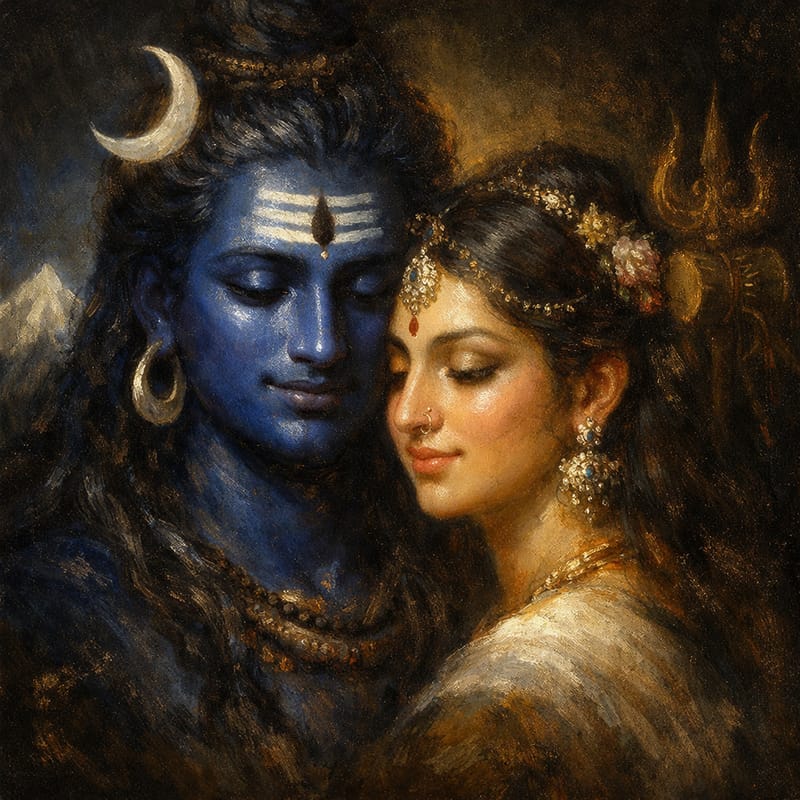
Uma Maheshwara Stotram — Tamil Lyrics
Uma Maheshwara Stotram is a 12-verse Sanskrit hymn devoted to Shiva and Parvati as an inseparable divine couple. Each verse addresses them with specific epithets—eternally youthful, worshipped by the trinity of gods, adorned with ash and sandalwood, seated on Mount Kailash. The stotram celebrates their cosmic roles: Shiva as the destroyer and transformer, Parvati as the creative shakti. The refrain 'namo namah shankaraparvatibhyam' (repeated salutations to Shankara and Parvati) anchors each verse in devotional surrender, emphasizing that their divine union is the source of all creation and cosmic order.
Spiritually, Uma Maheshwara Stotram represents the perfect balance of masculine and feminine divine principles—Shiva's transcendent consciousness paired with Parvati's dynamic creative energy. Their eternal embrace (parasparashlishtavapurdharabhyam) symbolizes how opposing forces—dissolution and creation, stillness and motion—coexist in divine harmony. The mantra invokes their presence across all three worlds and all three functions of existence: srishti (creation), sthiti (sustenance), and samhara (dissolution). Chanting this stotram awakens reverence for the complementary nature of all dualities and the ultimate non-duality underlying existence, as taught in the Shiva Upanishads and Shiva Purana traditions.
Chant Uma Maheshwara Stotram during morning rituals (brahma muhurta) or at sacred times—dawn, dusk, or full moon nights. Ideally recite all 12 verses with focused attention and sincere devotion. Three daily repetitions amplify benefits. This stotram suits practitioners seeking to strengthen relationships, cultivate compassion, or deepen spiritual partnership. It may be chanted individually or in family settings. The concluding verse promises that devotees who recite this 12-verse hymn with faith receive all blessings, long life, and ultimately reach Shiva's celestial realm.
Curated by The Mahakatha Team · Original Composition: Mahakatha · Lyric: Adi Shankaracharya (8th century CE)
Uma Maheshwara Stotram
Shiva · Preview · 2:00
Preview ended
Ancient sounds for transformation, carried across 3,000 years.
Get the full version — plus 275 more ancient chants. 80% OFF today only.
Get Ancient Chants Bundle — 80% OFF →3000+ happy customers · Lifetime access · All devices
2.2M people trust Mahakatha
Chant daily with reminders — Get the Mahakatha app
Lyrics
नमः शिवाभ्यां नवयौवनाभ्यां परस्पराश्लिष्टवपुर्धराभ्याम् । नगेन्द्रकन्यावृषकेतनाभ्यां नमो नमः शङ्करपार्वतीभ्याम् || 1 ||
நமஃ ஶிவாப்யாம் நவயௌவநாப்யாம் பரஸ்பராஶ்லிஷ்டவபுர்தராப்யாம் । நகேந்த்ரகந்யாவ்ரு'ஷகேதநாப்யாம் நமோ நமஃ ஶங்கரபார்வதீப்யாம் || 1 ||
என்றும் இளமையாக விளங்கும் சிவன்-பார்வதிக்கு நான் வணங்குகிறேன்
ஒருவரை ஒருவர் அன்புடன் தழுவியிருக்கும்
மலைமகளும், காளை கொடியுடைய இறைவனும்
சிவனுக்கும் பார்வதிக்கும் மீண்டும் மீண்டும் வணக்கம்! || 1 ||
नमः शिवाभ्यां सरसोत्सवाभ्यां नमस्कृताभीष्टवरप्रदाभ्याम् । नारायणेनार्चितपादुकाभ्यां नमो नमः शङ्करपार्वतीभ्याम् || 2 ||
நமஃ ஶிவாப்யாம் ஸரஸோத்ஸவாப்யாம் நமஸ்க்ரு'தாபீஷ்டவரப்ரதாப்யாம் । நாராயணேநார்சிதபாதுகாப்யாம் நமோ நமஃ ஶங்கரபார்வதீப்யாம் || 2 ||
மகிழ்ச்சியான எண்ணற்ற விழாக்கள் நடத்தப்படும் சிவன்-பார்வதிக்கு நான் வணங்குகிறேன்
ஒரே ஒரு உண்மையான நமஸ்காரம் அவரது அருளைப் பெற்றுத் தரும்
திருவடிகள் நாராயணனால் வணங்கப்படுபவர்
சிவனுக்கும் பார்வதிக்கும் மீண்டும் மீண்டும் வணக்கம்! || 2 ||
नमः शिवाभ्यां वृषवाहनाभ्यां विरिञ्चिविष्ण्विन्द्रसुपूजिताभ्याम् । विभूतिपाटीरविलेपनाभ्यां नमो नमः शङ्करपार्वतीभ्याम् || 3 ||
நமஃ ஶிவாப்யாம் வ்ரு'ஷவாஹநாப்யாம் விரிஞ்சிவிஷ்ண்விந்த்ரஸுபூஜிதாப்யாம் । விபூதிபாடீரவிலேபநாப்யாம் நமோ நமஃ ஶங்கரபார்வதீப்யாம் || 3 ||
புனித காளையில் பயணிக்கும் சிவன்-பார்வதிக்கு நான் வணங்குகிறேன்
பிரம்மா, விஷ்ணு மற்றும் இந்திரனால் வணங்கப்படுபவர்
திருஉடல் திருநீறு மற்றும் சந்தனத்தால் பூசப்பட்டவர்
சிவனுக்கும் பார்வதிக்கும் மீண்டும் மீண்டும் வணக்கம்! || 3 ||
नमः शिवाभ्यां जगदीश्वराभ्यां जगत्पतिभ्यां जयविग्रहाभ्याम् । जम्भारिमुख्यैरभिवन्दिताभ्यां नमो नमः शङ्करपार्वतीभ्याम् || 4 ||
நமஃ ஶிவாப்யாம் ஜகதீஶ்வராப்யாம் ஜகத்பதிப்யாம் ஜயவிக்ரஹாப்யாம் । ஜம்பாரிமுக்யைரபிவந்திதாப்யாம் நமோ நமஃ ஶங்கரபார்வதீப்யாம் || 4 ||
பிரபஞ்சத்தின் தலைவரான சிவன்-பார்வதிக்கு நான் வணங்குகிறேன்
அனைத்து உலகங்களின் காவலர், வெற்றியின் வடிவானவர்
இடி தேவன் உட்பட பிற தேவர்களால் போற்றப்படுபவர்
சிவனுக்கும் பார்வதிக்கும் மீண்டும் மீண்டும் வணக்கம்! || 4 ||
नमः शिवाभ्यां परमौषधाभ्यां पञ्चाक्षरीपञ्जररञ्जिताभ्याम् । प्रपञ्चसृष्टिस्थितिसंहृताभ्यां नमो नमः शङ्करपार्वतीभ्याम् || 5 ||
நமஃ ஶிவாப்யாம் பரமௌஷதாப்யாம் பஞ்சாக்ஷரீபஞ்ஜரரஞ்ஜிதாப்யாம் । ப்ரபஞ்சஸ்ரு'ஷ்டிஸ்திதிஸம்ஹ்ரு'தாப்யாம் நமோ நமஃ ஶங்கரபார்வதீப்யாம் || 5 ||
மிக வலிமையான மருந்தான சிவன்-பார்வதிக்கு நான் வணங்குகிறேன்
பஞ்சாக்ஷர மந்திரத்தின் ஒலிகளிலும் இடைவெளிகளிலும் வசிப்பவர்
இந்த உலகின் படைப்பு, காத்தல் மற்றும் அழிவின் மூலம்
சிவனுக்கும் பார்வதிக்கும் மீண்டும் மீண்டும் வணக்கம்! || 5 ||
नमः शिवाभ्यामतिसुन्दराभ्यां अत्यन्तमासक्तहृदम्बुजाभ्याम् । अशेषलोकैकहितङ्कराभ्यां नमो नमः शङ्करपार्वतीभ्याम् || 6 ||
நமஃ ஶிவாப்யாமதிஸுந்தராப்யாம் அத்யந்தமாஸக்தஹ்ரு'தம்புஜாப்யாம் । அஶேஷலோகைகஹிதங்கராப்யாம் நமோ நமஃ ஶங்கரபார்வதீப்யாம் || 6 ||
மிகவும் அழகான சிவன்-பார்வதிக்கு நான் வணங்குகிறேன்
தாமரை போன்ற இதயங்களுடன் உலகை அன்புடன் நேசிப்பவர்
அனைத்து உலகங்களின் உயிரினங்களுக்கும் நன்மை செய்பவர்
சிவனுக்கும் பார்வதிக்கும் மீண்டும் மீண்டும் வணக்கம்! || 6 ||
नमः शिवाभ्यां कलिनाशनाभ्यां कङ्कालकल्याणवपुर्धराभ्याम् । कैलासशैलस्थितदेवताभ्यां नमो नमः शङ्करपार्वतीभ्याम् || 7 ||
நமஃ ஶிவாப்யாம் கலிநாஶநாப்யாம் கங்காலகல்யாணவபுர்தராப்யாம் । கைலாஸஶைலஸ்திததேவதாப்யாம் நமோ நமஃ ஶங்கரபார்வதீப்யாம் || 7 ||
கலியுகத்தின் தீமைகளை முடிவுக்குக் கொண்டு வரும் சிவன்-பார்வதிக்கு நான் வணங்குகிறேன்
ஒருவர் மண்டையோடுகளை அணிந்தவர், மற்றவர் அழகான ஆடைகள் அணிந்தவர்
கைலாச மலையில் வசிக்கும் மகா தெய்வங்கள்
சிவனுக்கும் பார்வதிக்கும் மீண்டும் மீண்டும் வணக்கம்! || 7 ||
नमः शिवाभ्यामशुभापहाभ्यां अशेषलोकैकविशेषिताभ्याम् । अकुण्ठिताभ्यां स्मृतिसम्भृताभ्यां नमो नमः शङ्करपार्वतीभ्याम् || 8 ||
நமஃ ஶிவாப்யாமஶுபாபஹாப்யாம் அஶேஷலோகைகவிஶேஷிதாப்யாம் । அகுண்டிதாப்யாம் ஸ்ம்ரு'திஸம்ப்ரு'தாப்யாம் நமோ நமஃ ஶங்கரபார்வதீப்யாம் || 8 ||
அசுபத்தை அகற்றும் சிவன்-பார்வதிக்கு நான் வணங்குகிறேன்
அனைத்து உலகங்களிலும் உயிரினங்களிலும் இணையற்ற தகுதியும் மகத்துவமும் கொண்டவர்
எல்லையற்ற சக்திகளைக் கொண்டவர், நல்லொழுக்கமான வாழ்க்கையின் மூலம் அடையக்கூடியவர்
சிவனுக்கும் பார்வதிக்கும் மீண்டும் மீண்டும் வணக்கம்! || 8 ||
नमः शिवाभ्यां रथवाहनाभ्यां रवीन्दुवैश्वानरलोचनाभ्याम् । राकाशशाङ्काभमुखाम्बुजाभ्यां नमो नमः शङ्करपार्वतीभ्याम् || 9 ||
நமஃ ஶிவாப்யாம் ரதவாஹநாப்யாம் ரவீந்துவைஶ்வாநரலோசநாப்யாம் । ராகாஶஶாங்காபமுகாம்புஜாப்யாம் நமோ நமஃ ஶங்கரபார்வதீப்யாம் || 9 ||
தெய்வீக தேரில் அமர்ந்திருக்கும் சிவன்-பார்வதிக்கு நான் வணங்குகிறேன்
சூரியன், சந்திரன் மற்றும் அக்னி கண்களாக உள்ளவர்
பௌர்ணமி சந்திரனைப் போல் ஒளிரும் தாமரை முகம் கொண்டவர்
சிவனுக்கும் பார்வதிக்கும் மீண்டும் மீண்டும் வணக்கம்! || 9 ||
नमः शिवाभ्यां जटिलन्धराभ्यां जरामृतिभ्यां च विवर्जिताभ्याम् । जनार्दनाब्जोद्भवपूजिताभ्यां नमो नमः शङ्करपार्वतीभ्याम् || 10 ||
நமஃ ஶிவாப்யாம் ஜடிலந்தராப்யாம் ஜராம்ரு'திப்யாம் ச விவர்ஜிதாப்யாம் । ஜநார்தநாப்ஜோத்பவபூஜிதாப்யாம் நமோ நமஃ ஶங்கரபார்வதீப்யாம் || 10 ||
சடைமுடி கொண்ட சிவன்-பார்வதிக்கு நான் வணங்குகிறேன்
முதுமை மற்றும் மரணத்திலிருந்து விடுபட்டவர்
விஷ்ணுவால் வணங்கப்பட்டவரும் பிரம்ம தாமரையிலிருந்து பிறந்தவரும்
சிவனுக்கும் பார்வதிக்கும் மீண்டும் மீண்டும் வணக்கம்! || 10 ||
नमः शिवाभ्यां विषमेक्षणाभ्यां बिल्वच्छदामल्लिकदामभृद्भ्याम् । शोभावतीशान्तवतीश्वराभ्यां नमो नमः शङ्करपार्वतीभ्याम् || 11 ||
நமஃ ஶிவாப்யாம் விஷமேக்ஷணாப்யாம் பில்வச்சதாமல்லிகதாமப்ரு'த்ப்யாம் । ஶோபாவதீஶாந்தவதீஶ்வராப்யாம் நமோ நமஃ ஶங்கரபார்வதீப்யாம் || 11 ||
கஷ்ட காலங்களில் நம் ஆறுதலான சிவன்-பார்வதிக்கு நான் வணங்குகிறேன்
வில்வ இலைகள் மற்றும் மல்லிகை மாலைகளால் அலங்கரிக்கப்பட்டவர்
ஒளிமிக்க தேவியும் அவரது ஒளிமிக்க இறைவனும்
சிவனுக்கும் பார்வதிக்கும் மீண்டும் மீண்டும் வணக்கம்! || 11 ||
नमः शिवाभ्यां पशुपालकाभ्यां जगत्रयीरक्षणबद्धहृद्भ्याम् । समस्तदेवासुरपूजिताभ्यां नमो नमः शङ्करपार्वतीभ्याम् || 12 ||
நமஃ ஶிவாப்யாம் பஶுபாலகாப்யாம் ஜகத்ரயீரக்ஷணபத்தஹ்ரு'த்ப்யாம் । ஸமஸ்ததேவாஸுரபூஜிதாப்யாம் நமோ நமஃ ஶங்கரபார்வதீப்யாம் || 12 ||
அனைத்து உயிரினங்களின் காவலரான சிவன்-பார்வதிக்கு நான் வணங்குகிறேன்
மூன்று உலகங்களையும் பாதுகாப்பதில் அர்ப்பணிப்புடன் இருப்பவர்
அனைத்து தேவர்களாலும் அசுரர்களாலும் வணங்கப்படுபவர்
சிவனுக்கும் பார்வதிக்கும் மீண்டும் மீண்டும் வணக்கம்! || 12 ||
स्तोत्रं त्रिसन्ध्यं शिवपार्वतीभ्यां भक्त्या पठेद्द्वादशकं नरो यः । स सर्वसौभाग्यफलानि भुङ्क्ते शतायुरान्ते शिवलोकमेति || 13 ||
ஸ்தோத்ரம் த்ரிஸந்த்யம் ஶிவபார்வதீப்யாம் பக்த்யா படேத்த்வாதஶகம் நரோ யஃ । ஸ ஸர்வஸௌபாக்யபலாநி புங்க்தே ஶதாயுராந்தே ஶிவலோகமேதி || 13 ||
இந்த 12 செய்யுள்களைக் கொண்ட சிவபார்வதி ஸ்தோத்திரத்தை நாளொன்றுக்கு மூன்று வேளை பக்தியுடன் ஓதும் பக்தர்கள்
அனைத்து வகையான செழிப்பையும் பெறுவர்
நீண்ட ஆயுளுக்குப் பின், சிவபார்வதி லோகத்தில் நித்திய வாசஸ்தலத்தை அடைவர். || 13 ||
|| इति श्री शङ्कराचार्य कृत उमामहेश्वर स्तोत्रम सम्पूर्णम् ||
|| இதி ஶ்ரீ ஶங்கராசார்ய க்ரு'த உமாமஹேஶ்வர ஸ்தோத்ரம ஸம்பூர்ணம் ||
இவ்வாறு ஸ்ரீ சங்கராச்சாரியாரால் இயற்றப்பட்ட உமா மகேஸ்வர ஸ்தோத்திரம் நிறைவுற்றது.
How to Chant Uma Maheshwara Stotram
- 1
Find a quiet, clean space
Sit in a comfortable, undisturbed environment. Face east or north if possible. You may light incense or a candle to set a contemplative atmosphere.
- 2
Settle into a comfortable posture
Sit cross-legged on the floor or upright in a chair. Keep the spine erect and place the hands on the knees with palms facing upward.
- 3
Take three cleansing breaths
Inhale slowly through the nose, hold briefly, and exhale completely. Repeat three times to calm the mind and prepare for mantra recitation.
- 4
Begin chanting Uma Maheshwara Stotram
Chant the mantra clearly and with devotion — aloud, in a whisper, or silently. Use a mala (108 beads) to count repetitions. Aim for a consistent, unhurried rhythm throughout the session.
- 5
Rest in stillness
After completing your chanting, sit quietly for two to five minutes. Allow the vibration of the mantra to settle within. Close the practice with a moment of gratitude.
Benefits of Uma Maheshwara Stotram
-
Harmonizes relationships and deepens bonds through the model of divine complementarity that Shiva and Parvati embody.
Source: Shiva Purana — tradition of Uma Maheshwara worship
-
Cultivates compassion and emotional resilience by invoking Parvati's merciful nature and Shiva's protective power.
Source: Traditional practice and Tantric devotional texts
-
Aligns consciousness with cosmic order (rita) by acknowledging the eternal creative-destructive cycle they govern.
Source: Upanishadic philosophy of Shiva as Mahadeva
-
Removes spiritual obstacles and bestows protection, prosperity, and longevity to sincere practitioners.
Source: Concluding verse of Uma Maheshwara Stotram (Verse 12)
-
Brings the Panchakshari mantra (Om Namah Shivaya) into the heart, and is traditionally said to purify the mind and subtle channels.
Source: Shiva Agama texts and Mantra Yoga tradition
Story & Symbolism
The Uma Maheshwara Stotram is traditionally attributed to the great Adi Shankaracharya, one of the most revered seers in Hindu tradition, though scholars suggest the hymn likely emerged during the medieval period when devotional poetry flourished across India. The mantra celebrates the divine union of Uma, the compassionate goddess also known as Parvati, and Maheshwara, the supreme lord Shiva. This stotram belongs to a rich lineage of devotional hymns that seek to invoke the blessings of this cosmic couple, whose interplay represents the dance between divine masculine consciousness and feminine creative energy. The text draws deeply from Puranic tradition, particularly stories found in the Shiva Purana and other sacred texts that narrate the love story of Shiva and Parvati as an embodiment of ultimate spiritual truth.
The spiritual significance of this mantra lies in its recognition that Shiva cannot be fully understood without Uma, just as the transcendent consciousness cannot manifest without creative power. Shiva represents the eternal, unchanging reality—the witness consciousness beyond all form—while Uma embodies the dynamic, nurturing aspect of the divine that sustains and nourishes all creation. By reciting the Uma Maheshwara Stotram, devotees invoke not just individual deities but the principle of complementary wholeness, the recognition that unity encompasses both stillness and movement, silence and expression. This mantra is particularly significant for those seeking harmony in relationships, spiritual awakening, and liberation, as it teaches that the divine dwells in balance and in the sacred bond between complementary forces.
Practitioners traditionally chant this stotram during meditation and worship to cultivate devotion, invoke divine protection, and deepen their understanding of non-dual spirituality. The hymn's poetic beauty and profound philosophical depth have made it a cornerstone of Shaivite practice across centuries, passed down through oral tradition and sacred texts. Whether recited in temples, homes, or during personal sadhana, the Uma Maheshwara Stotram continues to serve as a bridge between the seeker and the divine, a reminder that spiritual realization emerges when we honor both the transcendent stillness of Shiva and the compassionate presence of Uma within ourselves and in all existence.
How to Use in Daily Life
Dawn Chanting
Recite Uma Maheshwara Stotram during brahma muhurta (early morning) when mind is calm and receptive. Light a lamp, sit facing east, and chant all 12 verses mindfully. This creates a protective spiritual atmosphere for your day.
Meditation Anchor
Use the stotram as a meditation focus. After each verse, pause and contemplate its meaning. Visualize Shiva and Parvati in divine embrace, radiating light and compassion. This deepens concentration and emotional openness.
Relationship Healing
Chant Uma Maheshwara Stotram when facing relationship challenges. Their eternal harmony models compassion and balance. Recite with intention for the other person's wellbeing. Three repetitions strengthen emotional bonds and mutual understanding.
Evening Reflection
Close your day with one quiet recitation before sleep. This invokes Shiva-Parvati's protection and blessing as you sleep, fostering peaceful rest and quiet reflection on the day's experiences.