

Mahakatha
80% OFF
M Mahakatha
Mantras
276 sacred chants
Bhagavad Gita
701 verses with audio
Blog
Guides & stories
Get 80% OFF
Nirvana Shatakam Mantra

Nirvana Shatakam Mantra — German Lyrics

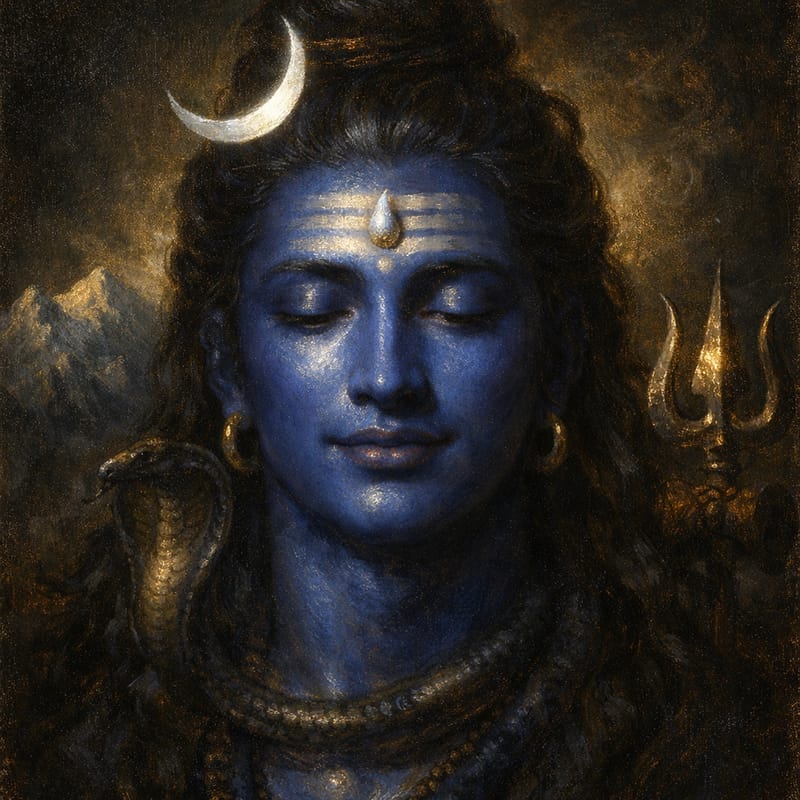
Nirvana Shatakam Mantra is an ancient Sanskrit hymn honoring Shiva that dissolves ego-identification by negating false self-concepts.

Nirvana Shatakam is a six-verse Sanskrit hymn attributed to Adi Shankara, systematically negating the limited ego-self. Each verse declares "I am not the mind, intellect, ego, senses, vital forces, elements, emotions, virtues, vices, death, family, or relationships." Through progressive negation (*neti-neti*, "not this, not this"), the chanter dissolves identification with body, mind, and conditioning. The refrain *Chidananda rupah Shivo'ham* — "I am consciousness-bliss form; I am Shiva" — reveals the witness-consciousness underlying all phenomena.

This mantra embodies Advaita Vedanta philosophy, the non-dual realization central to Shaivism. Shiva represents pure consciousness (*Chit*), untouched by creation, free from bondage and liberation itself. By chanting these negations, the seeker undermines the illusion of separation and gradually realizes their true nature as infinite, eternal consciousness. The mantra dissolves the tyranny of the ego and conditioning, revealing the immutable *Atman* (Self) identical with Brahman (Ultimate Reality). This is not intellectual rejection but experiential disidentification.

Chant Nirvana Shatakam during meditation, preferably at dawn or in quiet evening hours. Begin with 3–7 full recitations, allowing each negation to penetrate your awareness. Rather than mechanical repetition, contemplate what each line negates—feel the release from false identity. Use it when experiencing anxiety, attachment, or ego-driven conflict. Best results come from consistent practice combined with self-inquiry: observe thoughts and emotions without claiming them as "I."

Curated by The Mahakatha Team · Original Composition: Mahakatha · Lyric: Adi Shankaracharya (8th century CE)

Nirvana Shatakam Mantra

Shiva · Preview · 2:00

2:00
1

मनो बुद्धि अहङ्कार चित्तानि नाहं न च श्रोत्रजिह्वे न च घ्राण नेत्रे न च व्योम भूमिर्न तेजो न वायुः चिदानन्द रूपः शिवोऽहं शिवोऽहम्

Mano buddhi ahankara chittani naaham Na cha shrotrajihwe na cha ghranna netre Na cha wyoma bhumir na tejo na waayuh Chidananda rupah Schiwoh'ham Schiwoh'ham

Ich bin nicht der Geist, nicht der Intellekt, nicht das Ego, noch der Gedanke, ich bin nicht die Ohren, die Zunge, noch die Nase oder die Augen, noch der Himmel, die Erde, das Feuer oder die Luft – ich bin die Form von Bewusstsein und Glückseligkeit, ich bin Schiwah, ich bin Schiwah.


2

न च प्राण सङ्ग्यो न वै पञ्च वायुः न व सप्त धातुर्न व पञ्च कोशः न वाक् पणि-पादम्न चोपस्थ पायु चिदानन्द रूपः शिवोऽहं शिवोऽहम्

Na cha prana sangyo na wai pancha wayuh Na wa sapta dhatur na wa pancha koshah Na wak pani-padam na chopastha payu Chidananda rupah Schiwoh'ham Schiwoh'ham

Ich bin nicht das Leben, nicht die fünf Lebensströme, noch die sieben Körpersäfte oder die fünf Hüllen, nicht die Sprache, die Hände, die Füße, noch die Ausscheidungsorgane – ich bin die Form von Bewusstsein und Glückseligkeit, ich bin Schiwah, ich bin Schiwah.


3

न मे द्वेष रागौ न मे लोभ मोहौ मदो नैव मे नैव मत्सर्य भावः न धर्मो न चार्थो न कामो न मोक्षः चिदानन्द रूपः शिवोऽहं शिवोऽहम्

Na me dwescha ragau na me lobha mohau Mado naiwa me naiwa matsarya bhawah Na dharmo na chartho na kamo na mokshah Chidananda rupah Schiwoh'ham Schiwoh'ham

In mir gibt es weder Hass noch Zuneigung, weder Gier noch Täuschung, weder Hochmut noch Eifersucht, und weder Dharma noch Artha, weder Kama noch Moksha – ich bin die Form von Bewusstsein und Glückseligkeit, ich bin Schiwah, ich bin Schiwah.


4

न पुण्यम्न पापम्न सौख्यम्न दुःखम् न मन्त्रो न तीर्थ न वेद न यज्ञः अहं भोजनैवम्न भोज्यम्न भोक्ता चिदानन्द रूपः शिवोऽहं शिवोऽहम्

Na punyam na papam na saukhyam na duhkham Na mantro na teertha na weda na yajnah Aham bhojanaiwam na bhojyam na bhokta Chidananda rupah Schiwoh'ham Schiwoh'ham

In mir gibt es weder Verdienst noch Sünde, weder Vergnügen noch Leid, weder Mantra noch heilige Orte, weder Weda noch Opfer – ich bin das Essen selbst, weder das Essbare noch der Essende, ich bin die Form von Bewusstsein und Glückseligkeit, ich bin Schiwah, ich bin Schiwah.


5

न मृत्युर्न शङ्का न मे जाति भेदः पिता नैव मे नैव माता न जन्म न बन्धुर्न मित्रम्गुरुर्नैव शिष्यः चिदानन्द रूपः शिवोऽहं शिवोऽहम्

Na mrityur na shanka na mejati bhedah Pita naiwa me naiwa mataa na janmah Na bandhur na mitram gurur naiwa shishyah Chidananda rupah Schiwoh'ham Schiwoh'ham

In mir gibt es weder Tod noch Angst, weder Kastenschranken noch einen Vater, weder eine Mutter noch Geburt, weder einen Verwandten noch einen Freund, weder einen Guru noch einen Schüler – ich bin die Form von Bewusstsein und Glückseligkeit, ich bin Schiwah, ich bin Schiwah.


6

अहं निर्विकल्पो निराकार रूपो विभुर्व्याप सर्वत्र सर्वेन्द्रियाणाम् न च सङ्गतम्नैव मुक्तिर्न बन्ध चिदानन्द रूपः शिवोऽहं शिवोऽहम्

Aham nirvikalpo nirakara rupo Wibhur wyaapa sarvatra sarwendriyanam Na cha sangatham naiwa muktir na bandha Chidananda rupah Schiwoh'ham Schiwoh'ham

Ich bin ohne Unterscheidungen, ohne Form, allgegenwärtig und durchdringe alles und alle Sinne, es gibt in mir weder Anhaftung noch Befreiung noch Gebundenheit – ich bin die Form von Bewusstsein und Glückseligkeit, ich bin Schiwah, ich bin Schiwah.

Word-by-Word Meaning

Sanskrit Meaning
Mano Mind; the faculty of thought and mental processes. From root 'man' meaning to think.
buddhi Intellect; the faculty of discernment and rational understanding. From root 'budh' meaning to awaken or perceive.
ahankara Ego; the sense of individual identity and self-assertion. Literally 'I-making' (aham-kara).
chittani Consciousness; the field of awareness and mental impressions. From root 'chit' meaning conscious awareness.
naaham Not I; negation of individual identity. Combination of 'na' (not) and 'aham' (I).
Na Not; negation particle used to deny or refute.
cha And; conjunction used to join words or clauses.
shrotajihve Ears and tongue; the organs of hearing and taste. Compound of 'shrota' (ear) and 'jihva' (tongue).
ghraana Nose; the organ of smell. From root 'ghran' meaning to smell.
netre Eyes; the organs of sight. Plural of 'netra' from root 'nri' meaning to lead or guide vision.
vyoma Space or sky; the ether element representing empty space.
bhumir Earth; the solid element. From root 'bhuj' meaning to support or nourish.
tejo Fire; the element of light and energy. From root 'tej' meaning to shine.
vaayuhu Air or wind; the element of movement and vitality. From root 'va' meaning to blow.
Chidananda Consciousness-Bliss; the nature of pure awareness combined with eternal joy. Compound of 'chit' (consciousness) and 'ananda' (bliss).
rupah Form or appearance; the manifest shape or body. From root 'rup' meaning to shine or appear.
Shivo'ham I am Shiva; assertion of identity with pure consciousness. Compound of 'Shiva' and 'aham' (I am).
prana Life force or vital breath; the cosmic energy animating all life.
vai Certainly; emphatic particle meaning indeed or truly.
pancha Five; the number five representing the five elements.
vayuhu Air or wind; the element of movement and vitality. From root 'va' meaning to blow.
va Or; disjunctive particle offering alternatives.
sapta Seven; the number seven often referring to seven layers or sheaths of existence.
dhatur Element or constituent; the primary substances forming existence. From root 'dha' meaning to support.
koshah Sheath or layer; one of the five coverings of the soul in Vedanta philosophy.
vak Speech or word; the power of utterance and expression. From root 'vac' meaning to speak.
pani-padam Hands and feet; the organs of action. Compound of 'pani' (hand) and 'pada' (foot).
payu Anus; the organ of elimination. From root 'pay' meaning to purify or eliminate.
Chidandanda Consciousness-Bliss; same as 'Chidananda' (variant spelling).
me My or mine; possessive pronoun in first person.
dvesha Aversion or hatred; one of the fundamental afflictions blocking liberation. From root 'dvis' meaning to hate.
ragau Attachment or passion; emotional clinging to objects. Dual form of 'raga'.
lobha Greed; excessive desire for possessions and gain. From root 'lubh' meaning to be confused by desire.
mohau Delusion; ignorance and confusion about true nature. Dual form of 'moha'.
Mado Pride or intoxication; arrogance and false ego. From root 'mad' meaning to be proud or intoxicated.
naiva Not even; emphatic negation combining 'na' (not) and 'eva' (even).
matsarya Jealousy or malice; envious feelings toward others' success.
bhavaha Existence or being; the state of manifestation. From root 'bhav' meaning to become or exist.
dharmo Dharma or righteousness; moral law and cosmic order. From root 'dhr' meaning to support.
chartho Artha or prosperity; material well-being and wealth, one of the four goals of life.
kamo Desire or pleasure; sensory gratification, one of the four goals of life. From root 'kam' meaning to desire.
mokshaha Liberation or freedom; ultimate spiritual emancipation from the cycle of rebirth. From root 'muc' meaning to release.
punyam Merit or virtue; positive karmic accumulation from righteous deeds. From root 'pu' meaning to purify.
papam Sin or demerit; negative karmic consequence of unrighteous actions. From root 'pap' meaning to harm.
saukhyam Happiness or pleasure; comfort and well-being. From root 'sukh' meaning ease.
duhkham Suffering or pain; discomfort and sorrow. From root 'duh' meaning difficulty or distress.
mantro Mantra; a sacred sound, word, or phrase for spiritual practice. From root 'man' meaning mind with 'tra' meaning protection.
teertha Sacred pilgrimage site or holy water; a crossing place to liberation. From root 'tri' meaning to cross.
veda Vedas; the ancient sacred scriptures of Hindu wisdom. From root 'vid' meaning to know.
yajnah Sacrifice or ritual; sacred ceremony for spiritual advancement. From root 'yaj' meaning to worship or honor.
Aham I am; the individual self or ego. From root 'as' meaning to be.
bhojyam Food to be eaten; that which is consumed as nourishment.
bhokta Eater or enjoyer; one who consumes or experiences. From root 'bhuj' meaning to enjoy or eat.
mrityur Death; the ending of the physical body. From root 'mr' meaning to die.
shanka Doubt or fear; uncertainty and apprehension. From root 'shank' meaning to be afraid.
bhedaha Separation or distinction; the sense of duality and difference. From root 'bhid' meaning to divide.
Pita Father; male parent. From root 'pa' meaning to protect.
mataa Mother; female parent. From root 'ma' meaning to measure or create.
janmaha Birth; the coming into existence. From root 'jan' meaning to be born.
bandhur Relative or kinsman; one bound by family ties. From root 'bandh' meaning to bind.
mitram Friend; one who shows affection and goodwill.
gurur Guru or teacher; a spiritual master who dispels ignorance. From 'gu' (darkness) and 'ru' (remover).
shishyaha Student or disciple; one who learns from a teacher. From root 'shis' meaning to instruct.
nirvikalpo Without thought constructs; free from mental modifications and conceptualization. Compound of 'nir' (without) and 'vikalpa' (alternatives/thoughts).
nirakara Formless; without shape or specific form. Compound of 'nir' (without) and 'akara' (form).
rupo Form or appearance; the visible manifestation. From root 'rup' meaning to shine or appear.
Vibhur Pervading or omnipresent; the all-pervading consciousness. From root 'vibh' meaning to tremble or pervade.
vyaapa All-pervasive; spreading throughout all existence. From root 'vyap' meaning to pervade.
sarvatra Everywhere; in all places simultaneously. Compound of 'sarva' (all) and 'tra' (place).
sarvendriyanam All the senses; the totality of sense faculties. Compound of 'sarva' (all) and 'indriya' (senses).
muktir Liberation; freedom from bondage and cycle of rebirth. From root 'muc' meaning to release.
bandha Bondage or binding; imprisonment in ignorance and conditioned existence. From root 'bandh' meaning to bind.

How to Chant Nirvana Shatakam Mantra

  1. 1

    Find a quiet, clean space

    Sit in a comfortable, undisturbed environment. Face east or north if possible. You may light incense or a candle to set a contemplative atmosphere.

  2. 2

    Settle into a comfortable posture

    Sit cross-legged on the floor or upright in a chair. Keep the spine erect and place the hands on the knees with palms facing upward.

  3. 3

    Take three cleansing breaths

    Inhale slowly through the nose, hold briefly, and exhale completely. Repeat three times to calm the mind and prepare for mantra recitation.

  4. 4

    Begin chanting Nirvana Shatakam Mantra

    Chant the mantra clearly and with devotion — aloud, in a whisper, or silently. Use a mala (108 beads) to count repetitions. Aim for a consistent, unhurried rhythm throughout the session.

  5. 5

    Rest in stillness

    After completing your chanting, sit quietly for two to five minutes. Allow the vibration of the mantra to settle within. Close the practice with a moment of gratitude.

Benefits of Nirvana Shatakam Mantra

  • Dissolves ego-identification and false self-concept through systematic negation of limited identities

    Source: Advaita Vedanta philosophy; Adi Shankara's teachings

  • Reduces anxiety and existential fear by anchoring awareness in eternal consciousness beyond death and change

    Source: Traditional practice; Upanishadic wisdom on the deathless Self

  • Liberates from attachment and emotional reactivity (raga-dvesha) by revealing the witness consciousness

    Source: Yoga Sutras (II.7); Advaita Vedanta

  • Cultivates equanimity and detachment from dual emotions—pleasure/pain, praise/blame, gain/loss

    Source: Bhagavad Gita (II.48); Traditional practice

  • Accelerates spiritual maturity by shifting identity from body-mind to infinite consciousness

    Source: Mandukya Upanishad; Aitareya Upanishad

Deity Shiva
Composition Mahakatha (Original) · Adi Shankaracharya (8th century CE) (Lyric)
Also called Nirvana Shatakam · Nirvana Shatak · Adi Shankara Nirvana Shatakam · Nirvana Ashtakam · Atma Shatakam
Shiva also known as Mahadeva · Maheshwara · Shankar · Bholenath · Nataraja

Story & Symbolism

The Nirvana Shatakam, traditionally attributed to the great philosopher-saint Adi Shankaracharya in the 8th century, emerged from a profound spiritual realization rather than scholarly composition. According to tradition, Shankaracharya composed this six-stanza hymn as an expression of direct experiential knowledge of non-duality, the ultimate truth that the individual self (Atman) is inseparable from the universal consciousness (Brahman). Though some scholars suggest the text may have earlier roots within Advaita Vedanta philosophy, it crystallized around Shankaracharya's transformative spiritual insights and became a cornerstone text for understanding the nature of liberation. The mantra's origin is thus rooted not merely in intellectual inquiry but in the lived experience of transcendence that Shankaracharya sought to transmit to seekers.

Dedicated to Shiva, the supreme consciousness in Hindu philosophy, the Nirvana Shatakam embodies the very essence of Shiva's nature as the eternal witness beyond all dualities, desires, and limitations. Shiva represents the principle of pure awareness untouched by the world's constant flux—formless, timeless, and complete in himself. By invoking Shiva through this mantra, the practitioner aligns with the archetype of the liberated being who has transcended the cycles of birth and death, freed from the illusions that bind the mind to temporal existence. The deity symbolism within these verses reflects Shiva's fundamental role as the destroyer of ignorance and the revealer of ultimate truth.

The Nirvana Shatakam remains spiritually significant because it articulates the direct path to liberation through the simple recognition of one's true nature. Rather than prescribing elaborate rituals or ascetic practices, the mantra invites practitioners to contemplate their essential identity as pure consciousness—untouched by thoughts, emotions, the body, or the world. For countless seekers across centuries, chanting these verses has served as a liberating meditation, dissolving the boundaries between the individual and infinite, and kindling the recognition that true freedom lies not in acquiring something external, but in unveiling what has always been present within. This timeless teaching continues to guide spiritual aspirants toward the peace and completeness that Shiva eternally embodies.

How to Use in Daily Life

🌅

Morning Affirmation

Recite verse 0 upon waking to establish non-identification with body and mind. This grounds you in pure consciousness, setting a serene tone for the day ahead.

🧘

Meditation Practice

Chant verse 5 during meditation to internalize the concept of formless, infinite consciousness. Repeat slowly 11 times with focus on breath, allowing ego-dissolution.

🙏

Emotional Release

When attached to desires or fears, recite verse 2 and 3. These verses dissolve attachment to duality, desire, merit, and demerit, liberating you from emotional reactivity.

💤

Evening Reflection

Before sleep, whisper verse 4 softly. This releases fear of death and false relationships, allowing the mind to rest in its natural state of pure consciousness.

Frequently Asked Questions

What is the Nirvana Shatakam Mantra?
The Nirvana Shatakam, also known as Dasa Shloki or the 'Song of Liberation,' is a revered Sanskrit composition traditionally attributed to Adi Shankara, the great Advaita Vedanta philosopher. This sacred mantra consists of six verses (shatakam means 'group of six') that form a profound meditation on non-duality and the nature of the Self. The mantra is dedicated to Lord Shiva and serves as a philosophical declaration of spiritual liberation. Each verse begins with the powerful negation 'Mano Buddhi Ahankara Chittani' and progressively describes what the eternal Self (Atman) is not, ultimately leading to the realization that the individual soul is one with Brahman, the ultimate reality. The text functions both as a mantra for chanting and as a philosophical guide for understanding the illusory nature of the material world and the ego. It represents one of the most concise and accessible teachings of Advaita Vedanta philosophy, making complex spiritual concepts understandable to practitioners of all levels. The Nirvana Shatakam remains widely studied in ashrams and spiritual centers throughout India and the world, serving as a bridge between intellectual understanding and direct spiritual experience.
What are the spiritual benefits of chanting the Nirvana Shatakam Mantra?
According to traditional Hindu philosophy, chanting the Nirvana Shatakam Mantra offers profound spiritual and psychological benefits. Practitioners traditionally believe that regular recitation dissolves the ego and weakens identification with the body and mind, facilitating the recognition of one's true nature as consciousness itself. The mantra is believed to promote mental clarity and peace by repeatedly affirming the illusory nature of worldly concerns, thereby reducing anxiety and fear rooted in material attachment. Many spiritual seekers report experiencing enhanced meditation depth and clarity of thought after consistent practice. The mantra traditionally believed to purify the intellect (buddhi) and remove mental obstacles that obstruct spiritual progress. By contemplating the meaning of each verse, practitioners develop dispassion toward material pursuits and cultivate genuine renunciation. Scholars suggest that the philosophical affirmations within the mantra create a cognitive shift, gradually reorienting consciousness toward the eternal and unchanging Self rather than temporary phenomena. Additionally, chanting is traditionally associated with developing compassion and universal love, as the realization of non-duality naturally extends to recognizing divinity in all beings. Regular practice is believed to accelerate the journey toward self-realization and moksha (liberation), while simultaneously improving emotional resilience and inner stability in daily life.
How should I chant the Nirvana Shatakam Mantra for maximum benefit?
To practice the Nirvana Shatakam Mantra effectively, begin by finding a clean, quiet space where you can sit comfortably in a meditative posture, ideally facing east or north. Traditional guidance suggests practicing early morning hours, particularly during brahma muhurta (before sunrise), when the mind is naturally clearer and spiritual energy is considered most potent. Start by chanting the mantra aloud three to seven times, allowing the vibrations to resonate throughout your body and consciousness. Pronounce each word carefully and deliberately, focusing on the meaning rather than merely reciting mechanically. After chanting aloud, continue silently, allowing the mantra to flow naturally through your mind without forced concentration. Many practitioners benefit from studying the English translation or Sanskrit commentary before or after chanting to deepen intellectual understanding and contemplative awareness. A consistent daily practice of 20-30 minutes is traditionally recommended over sporadic longer sessions. Maintain a sattvic (pure) lifestyle supporting your practice through vegetarian diet, ethical conduct, and limited sensory indulgence. Some practitioners use a meditation mala (108 beads) to count recitations, completing 108 repetitions daily. Regular practice over extended periods—weeks or months—is traditionally believed to produce more significant transformations than occasional practice. Finally, approach the mantra with sincere devotion and genuine desire for spiritual transformation rather than expecting mechanical results.
What is the historical origin and significance of the Nirvana Shatakam Mantra?
The Nirvana Shatakam is traditionally attributed to Adi Shankara (788-820 CE), the legendary philosopher and saint who single-handedly revitalized and systematized Advaita Vedanta philosophy across India. According to traditional accounts, Shankara composed this powerful text as a concise summary of non-dual wisdom, capturing the essence of Vedantic teachings in accessible verse form. The composition emerged during a period of significant spiritual and intellectual activity in medieval India, when Shankara traveled extensively, established four cardinal ashrams, and engaged in philosophical debates defending the Advaita perspective. Scholars suggest that while the text is attributed to Shankara, it may represent a compilation of wisdom teachings that evolved within the Advaita lineage, though his authorship remains the predominant tradition. The mantra draws directly from Upanishadic teachings, particularly the Mandukya and Aitareya Upanishads, presenting their non-dual philosophy in poetic form. Throughout centuries, the Nirvana Shatakam has maintained its status as one of Hinduism's most influential spiritual texts, studied extensively in monasteries and taught by realized masters. Its enduring popularity reflects its remarkable ability to distill complex metaphysical concepts into memorable verses that inspire both intellectual contemplation and direct experience. The text has been translated into numerous languages and remains a cornerstone text in contemporary Advaita Vedanta, continuing Shankara's legacy of liberating consciousness through the power of non-dual wisdom.
What is the correct Sanskrit pronunciation of key phrases in the Nirvana Shatakam Mantra?
Proper pronunciation is essential for experiencing the full vibrational benefits of the Nirvana Shatakam Mantra. The opening phrase 'Mano Buddhi Ahankara Chittani' is pronounced as: MAH-no BOO-dhee AH-hun-KAH-rah CHIT-tah-nee. The 'a' sounds are pronounced as in 'father,' 'u' as in 'put,' and 'i' as in 'see.' The word 'Nirvana' is pronounced NEER-VAH-nah with emphasis on the first syllable. Key verses include 'Na Cha Sangnananda Bandah' (nah chah sung-nah-nahn-dah bun-duh) and 'Chidananda Rupa Shivoham' (CHID-ah-nund-ah ROO-puh SHEE-vo-hum). When chanting, maintain a steady rhythm and allow each syllable to flow naturally without forcing pronunciation. Traditionally, practitioners are encouraged to listen to authentic recordings by experienced Sanskrit scholars or spiritual teachers to calibrate their accent and intonation. Sanskrit pronunciation relies significantly on proper vowel length and nasal sounds (anusvara and visarga), which affect the mantra's energetic resonance. Websites like Mahakatha and reputable spiritual organizations offer audio recordings demonstrating correct pronunciation. Don't be discouraged by initial mispronunciation—sincere effort and consistent practice gradually refine your chanting. Many teachers suggest that genuine devotion and sincere intention matter more than perfect pronunciation, though correct pronunciation is traditionally believed to maximize the mantra's spiritual potency and vibrational benefits.
What happens if we chant Nirvana Shatakam Mantra?
Regular chanting of Nirvana Shatakam Mantra creates measurable shifts in your mental, emotional, and spiritual state. Dissolves ego-identification and false self-concept through systematic negation of limited identities. Reduces anxiety and existential fear by anchoring awareness in eternal consciousness beyond death and change. Liberates from attachment and emotional reactivity (raga-dvesha) by revealing the witness consciousness. Most practitioners notice a tangible difference within the first week of daily practice — start with 108 repetitions using a mala and observe how your inner state transforms.

Related Prayers & Chants

🪘

Ancient Chants — Gold Edition

Get access to ancient meditation mantras. 80% OFF for limited time.

Get 80% OFF →