

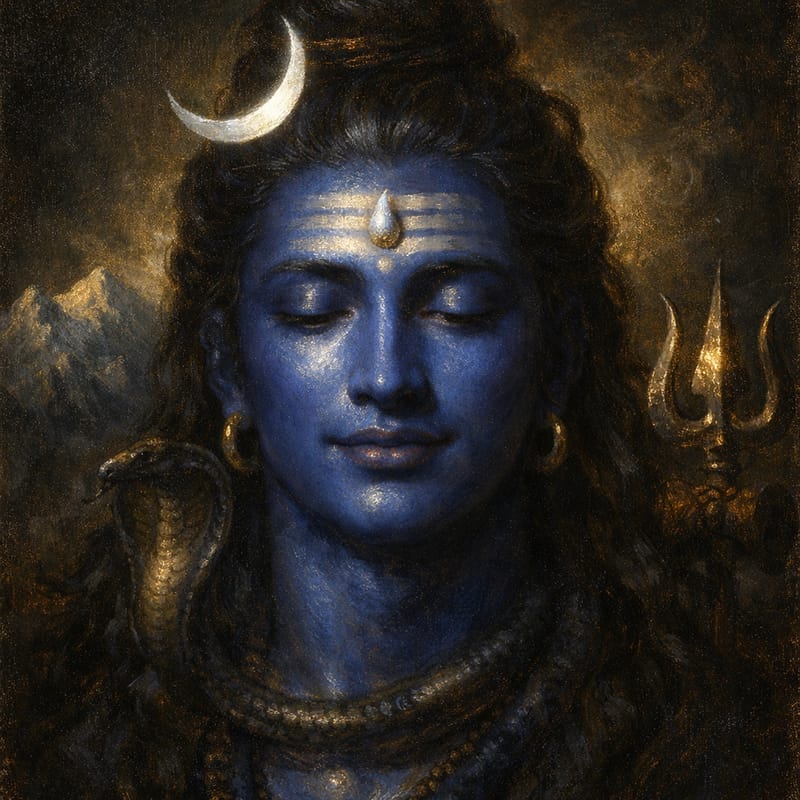
Nirvana Shatakam Mantra — Bengali Lyrics
Nirvana Shatakam Mantra is an ancient Sanskrit hymn honoring Shiva that dissolves ego-identification by negating false self-concepts.
Nirvana Shatakam is a six-verse Sanskrit hymn attributed to Adi Shankara, systematically negating the limited ego-self. Each verse declares "I am not the mind, intellect, ego, senses, vital forces, elements, emotions, virtues, vices, death, family, or relationships." Through progressive negation (neti-neti, "not this, not this"), the chanter dissolves identification with body, mind, and conditioning. The refrain Chidananda rupah Shivo'ham — "I am consciousness-bliss form; I am Shiva" — reveals the witness-consciousness underlying all phenomena.
This mantra embodies Advaita Vedanta philosophy, the non-dual realization central to Shaivism. Shiva represents pure consciousness (Chit), untouched by creation, free from bondage and liberation itself. By chanting these negations, the seeker undermines the illusion of separation and gradually realizes their true nature as infinite, eternal consciousness. The mantra dissolves the tyranny of the ego and conditioning, revealing the immutable Atman (Self) identical with Brahman (Ultimate Reality). This is not intellectual rejection but experiential disidentification.
Chant Nirvana Shatakam during meditation, preferably at dawn or in quiet evening hours. Begin with 3–7 full recitations, allowing each negation to penetrate your awareness. Rather than mechanical repetition, contemplate what each line negates—feel the release from false identity. Use it when experiencing anxiety, attachment, or ego-driven conflict. Best results come from consistent practice combined with self-inquiry: observe thoughts and emotions without claiming them as "I."
Curated by The Mahakatha Team · Original Composition: Mahakatha · Lyric: Adi Shankaracharya (8th century CE)
Nirvana Shatakam Mantra
Shiva · Preview · 2:00
Preview ended
Ancient sounds for transformation, carried across 3,000 years.
Get the full version — plus 275 more ancient chants. 80% OFF today only.
Get Ancient Chants Bundle — 80% OFF →3000+ happy customers · Lifetime access · All devices
2.2M people trust Mahakatha
Chant daily with reminders — Get the Mahakatha app
Lyrics
मनो बुद्धि अहङ्कार चित्तानि नाहं न च श्रोत्रजिह्वे न च घ्राण नेत्रे न च व्योम भूमिर्न तेजो न वायुः चिदानन्द रूपः शिवोऽहं शिवोऽहम्
মনো বুদ্ধি অহঙ্কার চিত্তানি নাহং ন চ শ্রোত্রজিহ্বে ন চ ঘ্রাণ নেত্রে ন চ ব্যোম ভূমির্ন তেজো ন বাযুঃ চিদানন্দ রূপঃ শিবোঽহং শিবোঽহম্
আমি মন নই, বুদ্ধি নই, অহংকার বা স্মৃতি নই
আমি কান নই, ত্বক নই, নাক বা চোখ নই
আমি আকাশ নই, পৃথিবী নই, অগ্নি, জল বা বায়ু নই
আমি চৈতন্য ও আনন্দের রূপ, আমি চিরন্তন শিব
न च प्राण सङ्ग्यो न वै पञ्च वायुः न व सप्त धातुर्न व पञ्च कोशः न वाक् पणि-पादम्न चोपस्थ पायु चिदानन्द रूपः शिवोऽहं शिवोऽहम्
ন চ প্রাণ সঙ্গ্যো ন বৈ পঞ্চ বাযুঃ ন ব সপ্ত ধাতুর্ন ব পঞ্চ কোশঃ ন বাক্ পণি-পাদম্ন চোপস্থ পাযু চিদানন্দ রূপঃ শিবোঽহং শিবোঽহম্
আমি প্রাণ নই, পঞ্চ বায়ু নই
আমি পদার্থ নই, চেতনার পঞ্চ কোষ নই
আমি বাক্য নই, হাত বা পা নই
আমি চৈতন্য ও আনন্দের রূপ, আমি চিরন্তন শিব
न मे द्वेष रागौ न मे लोभ मोहौ मदो नैव मे नैव मत्सर्य भावः न धर्मो न चार्थो न कामो न मोक्षः चिदानन्द रूपः शिवोऽहं शिवोऽहम्
ন মে দ্বেষ রাগৌ ন মে লোভ মোহৌ মদো নৈব মে নৈব মত্সর্য ভাবঃ ন ধর্মো ন চার্থো ন কামো ন মোক্ষঃ চিদানন্দ রূপঃ শিবোঽহং শিবোঽহম্
আমার মধ্যে পছন্দ বা অপছন্দ নেই, লোভ বা মোহ নেই
আমি গর্ব বা হিংসা জানি না
আমার কোনো কর্তব্য নেই, ধন, কাম বা মুক্তির কামনা নেই
আমি চৈতন্য ও আনন্দের রূপ, আমি চিরন্তন শিব
न पुण्यम्न पापम्न सौख्यम्न दुःखम् न मन्त्रो न तीर्थ न वेद न यज्ञः अहं भोजनैवम्न भोज्यम्न भोक्ता चिदानन्द रूपः शिवोऽहं शिवोऽहम्
ন পুণ্যম্ন পাপম্ন সৌখ্যম্ন দুঃখম্ ন মন্ত্রো ন তীর্থ ন বেদ ন যজ্ঞঃ অহং ভোজনৈবম্ন ভোজ্যম্ন ভোক্তা চিদানন্দ রূপঃ শিবোঽহং শিবোঽহম্
পুণ্য বা পাপ নেই, সুখ বা দুঃখ নেই
আমার মন্ত্র, তীর্থ, শাস্ত্র বা অনুষ্ঠানের প্রয়োজন নেই
আমি অনুভূতকারী নই, অনুভূতিও নই
আমি চৈতন্য ও আনন্দের রূপ, আমি চিরন্তন শিব
न मृत्युर्न शङ्का न मे जाति भेदः पिता नैव मे नैव माता न जन्म न बन्धुर्न मित्रम्गुरुर्नैव शिष्यः चिदानन्द रूपः शिवोऽहं शिवोऽहम्
ন মৃত্যুর্ন শঙ্কা ন মে জাতি ভেদঃ পিতা নৈব মে নৈব মাতা ন জন্ম ন বন্ধুর্ন মিত্রম্গুরুর্নৈব শিষ্যঃ চিদানন্দ রূপঃ শিবোঽহং শিবোঽহম্
আমার মৃত্যু নেই, মৃত্যুর ভয় নেই, জাতি বা ধর্ম নেই
আমার পিতা নেই, মাতা নেই, কারণ আমি কখনো জন্মাইনি
আমি আত্মীয় নই, বন্ধু নই, শিক্ষক বা ছাত্র নই
আমি চৈতন্য ও আনন্দের রূপ, আমি চিরন্তন শিব
अहं निर्विकल्पो निराकार रूपो विभुर्व्याप सर्वत्र सर्वेन्द्रियाणाम् न च सङ्गतम्नैव मुक्तिर्न बन्ध चिदानन्द रूपः शिवोऽहं शिवोऽहम्
অহং নির্বিকল্পো নিরাকার রূপো বিভুর্ব্যাপ সর্বত্র সর্বেন্দ্রিযাণাম্ ন চ সঙ্গতম্নৈব মুক্তির্ন বন্ধ চিদানন্দ রূপঃ শিবোঽহং শিবোঽহম্
আমি দ্বৈততাহীন, আমার রূপ নিরাকার
আমি সর্বত্র বিদ্যমান, সকল ইন্দ্রিয়ে ব্যাপ্ত
আমি সংযুক্ত নই, মুক্ত বা বন্দী নই
আমি চৈতন্য ও আনন্দের রূপ, আমি চিরন্তন শিব
How to Chant Nirvana Shatakam Mantra
- 1
Find a quiet, clean space
Sit in a comfortable, undisturbed environment. Face east or north if possible. You may light incense or a candle to set a contemplative atmosphere.
- 2
Settle into a comfortable posture
Sit cross-legged on the floor or upright in a chair. Keep the spine erect and place the hands on the knees with palms facing upward.
- 3
Take three cleansing breaths
Inhale slowly through the nose, hold briefly, and exhale completely. Repeat three times to calm the mind and prepare for mantra recitation.
- 4
Begin chanting Nirvana Shatakam Mantra
Chant the mantra clearly and with devotion — aloud, in a whisper, or silently. Use a mala (108 beads) to count repetitions. Aim for a consistent, unhurried rhythm throughout the session.
- 5
Rest in stillness
After completing your chanting, sit quietly for two to five minutes. Allow the vibration of the mantra to settle within. Close the practice with a moment of gratitude.
Benefits of Nirvana Shatakam Mantra
-
Dissolves ego-identification and false self-concept through systematic negation of limited identities
Source: Advaita Vedanta philosophy; Adi Shankara's teachings
-
Reduces anxiety and existential fear by anchoring awareness in eternal consciousness beyond death and change
Source: Traditional practice; Upanishadic wisdom on the deathless Self
-
Liberates from attachment and emotional reactivity (raga-dvesha) by revealing the witness consciousness
Source: Yoga Sutras (II.7); Advaita Vedanta
-
Cultivates equanimity and detachment from dual emotions—pleasure/pain, praise/blame, gain/loss
Source: Bhagavad Gita (II.48); Traditional practice
-
Supports spiritual maturity by shifting identity from body-mind to infinite consciousness
Source: Mandukya Upanishad; Aitareya Upanishad
Story & Symbolism
The Nirvana Shatakam, traditionally attributed to the great philosopher-saint Adi Shankaracharya in the 8th century, emerged from a profound spiritual realization rather than scholarly composition. According to tradition, Shankaracharya composed this six-stanza hymn as an expression of direct experiential knowledge of non-duality, the ultimate truth that the individual self (Atman) is inseparable from the universal consciousness (Brahman). Though some scholars suggest the text may have earlier roots within Advaita Vedanta philosophy, it crystallized around Shankaracharya's transformative spiritual insights and became a cornerstone text for understanding the nature of liberation. The mantra's origin is thus rooted not merely in intellectual inquiry but in the lived experience of transcendence that Shankaracharya sought to transmit to seekers.
Dedicated to Shiva, the supreme consciousness in Hindu philosophy, the Nirvana Shatakam embodies the very essence of Shiva's nature as the eternal witness beyond all dualities, desires, and limitations. Shiva represents the principle of pure awareness untouched by the world's constant flux—formless, timeless, and complete in himself. By invoking Shiva through this mantra, the practitioner aligns with the archetype of the liberated being who has transcended the cycles of birth and death, freed from the illusions that bind the mind to temporal existence. The deity symbolism within these verses reflects Shiva's fundamental role as the destroyer of ignorance and the revealer of ultimate truth.
The Nirvana Shatakam remains spiritually significant because it articulates the direct path to liberation through the simple recognition of one's true nature. Rather than prescribing elaborate rituals or ascetic practices, the mantra invites practitioners to contemplate their essential identity as pure consciousness—untouched by thoughts, emotions, the body, or the world. For countless seekers across centuries, chanting these verses has served as a liberating meditation, dissolving the boundaries between the individual and infinite, and kindling the recognition that true freedom lies not in acquiring something external, but in unveiling what has always been present within. This timeless teaching continues to guide spiritual aspirants toward the peace and completeness that Shiva eternally embodies.
How to Use in Daily Life
Morning Affirmation
Recite Verse 1 upon waking to establish non-identification with body and mind. This grounds you in pure consciousness, setting a serene tone for the day ahead.
Meditation Practice
Chant verse 5 during meditation to internalize the concept of formless, infinite consciousness. Repeat slowly 11 times with focus on breath, allowing ego-dissolution.
Emotional Release
When attached to desires or fears, recite verse 2 and 3. These verses dissolve attachment to duality, desire, merit, and demerit, liberating you from emotional reactivity.
Evening Reflection
Before sleep, whisper verse 4 softly. This releases fear of death and false relationships, allowing the mind to rest in its natural state of pure consciousness.