

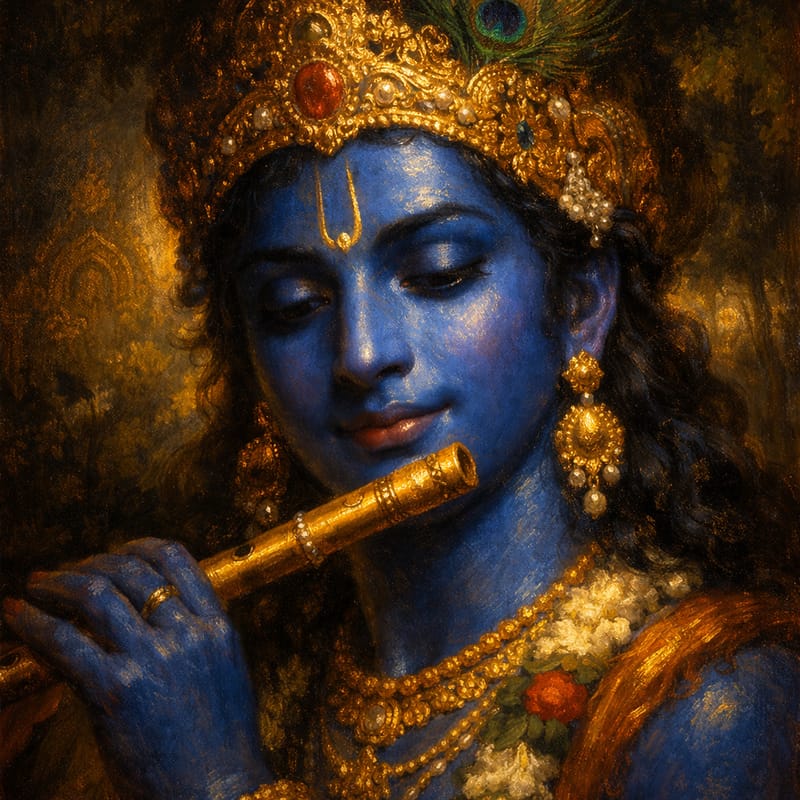
108 Names of Shri Krishna Chant — Spanish Lyrics
The 108 Names of Shri Krishna is a sacred enumeration of Krishna's divine attributes, epithets, and roles across Vedic literature and Puranic tradition. Each name encodes a specific aspect of Krishna's cosmic nature—from 'Krishnaya' (the dark one, symbolic of the infinite) to 'Parabrahmane' (the supreme absolute reality). These names span his incarnation stories: his birth as Devaki's son, his childhood exploits in Brindavan, his role as charioteer in the Bhagavad Gita, and his divine governance as Dwarka's king. Chanting them systematically creates a complete spiritual portrait of the deity.
Krishna represents the divine play (leela) of the Absolute—the reconciliation of transcendence and immanence. In Bhagavata Purana and Brahma Samhita, Krishna is recognized as Param Brahman (ultimate reality) who freely descends into human form to guide humanity. His 108 names reflect both his cosmic grandeur ('Ananta'—infinite, 'Kotisuryasamaprabhaya'—brilliant as a billion suns) and his intimate accessibility ('Yashodavatsalaya'—beloved of Yashoda, 'Govinda'—nourisher of cows). This duality—supreme power expressed through personal devotion—makes Krishna worship uniquely transformative across Hindu spiritual traditions.
Chant the 108 Names daily, ideally after sunrise or during evening meditation, as part of your sadhana (spiritual practice). Each repetition opens deeper layers of Krishna consciousness. Begin with 3 rounds and gradually increase to 27 or 108 repetitions. Use mala beads for counting. The practice works best with sincere devotion (bhakti) rather than mechanical recitation. Many traditions recommend pairing the chant with Krishna's image or deity for enhanced focus. Morning chanting energizes your day with divine grace; evening practice purifies the mind before sleep.
Curated by The Mahakatha Team · Original Composition: Mahakatha · Lyric: Traditional / Vaishnava
108 Names of Shri Krishna Chant
Krishna · Preview · 2:00
Preview ended
Ancient sounds for transformation, carried across 3,000 years.
Get the full version — plus 275 more ancient chants. 80% OFF today only.
Get Ancient Chants Bundle — 80% OFF →3000+ happy customers · Lifetime access · All devices
2.2M people trust Mahakatha
Chant daily with reminders — Get the Mahakatha app
ॐ कृष्णाय नमः। ॐ कमलानाथाय नमः। ॐ वासुदेवाय नमः। ॐ सनातनाय नमः।
om krishnaya namah| om kamalanathaya namah| om vasudevaya namah| om sanatanaya namah|
Aquel que tiene la tez oscura
El Consorte de la Diosa Lakshmi
El Hijo de Vasudeva
La Presencia Divina en las tres eras del tiempo
ॐ वसुदेवात्मजाय नमः। ॐ पुण्याय नमः। ॐ लीलामानुषविग्रहाय नमः। ॐ श्रीवत्सकौस्तुभधराय नमः।
om vasudevatmajaya namah| om punyaya namah| om lilamanushavigrahaya namah| om shrivatsakaustubhadharaya namah|
El Hijo de Vasudeva
El altamente virtuoso
Aquel que tomó forma humana para mostrar su juego divino
Aquel que lleva las gemas Shrivatsa y Kaustubha
ॐ यशोदावत्सलाय नमः। ॐ हरिये नमः। ॐ चतुर्भुजात्तचक्रासिगदा नमः। ॐ सङ्खाम्बुजायुदायुधाय नमः।
om yashodavatsalaya namah| om hariye namah| om chaturbhujattachakrasigada namah| om shankhambujayudayudhaya namah|
El amado Hijo de Yashoda
El Señor de la naturaleza
Cuyos cuatro brazos portan armas divinas como el disco, la espada,
La maza y la caracola
ॐ देवकीनन्दनाय नमः। ॐ श्रीशाय नमः। ॐ नन्दगोपप्रियात्मजाय नमः। ॐ यमुनावेगसंहारिणे नमः।
om devakinandanaya namah| om shriyaya namah| om nandagopapriyatmajaya namah| om yamunavegasamharine namah|
El Hijo de Devaki
El Consorte de la Diosa Lakshmi
El amado Hijo del Rey Nanda
El Domador del río Yamuna
ॐ बलभद्रप्रियानुजाय नमः। ॐ पूतनाजीवितहराय नमः। ॐ शकटासुरभञ्जनाय नमः। ॐ नन्दव्रजजनानन्दिने नमः।
om balabhadrapriyanujaya namah| om putanajivitaharaya namah| om shakatasurabhanjanaya namah| om nandavrajajananandine namah|
El hermano menor de Balarama
Aquel que drena la vida de la Demonia Putana
El Destructor del Demonio Shakatasura
La Alegría de Nanda y la gente de Braja
ॐ सच्चिदानन्दविग्रहाय नमः। ॐ नवनीतविलिप्ताङ्गाय नमः। ॐ नवनीतनटाय नमः। ॐ मुचुकुन्दप्रसादकाय नमः।
om sachchidanandavigrahaya namah| om navanitaviliptangaya namah| om navanitanatanaya namah| om muchukundaprasadakaya namah|
El Eterno, Inmortal e Indestructible
Aquel con el cuerpo untado de mantequilla
Aquel que danza con alegría por la mantequilla
El que bendice al Rey Muchukunda
ॐ षोडशस्त्रीसहस्रेशाय नमः। ॐ त्रिभङ्गिने नमः। ॐ मधुराकृतये नमः। ॐ शुकवागमृताब्धीन्दवे नमः।
om shodashastrisahasreshaya namah| om tribhangine namah| om madhurakritaye namah| om shukavagamritabdhindave namah|
El Señor de dieciséis mil mujeres
Aquel con tres hermosas curvas
Aquel con una forma encantadora
El 'Océano de Néctar' en las palabras del Sabio Shuka
ॐ गोविन्दाय नमः। ॐ योगिनां पतये नमः। ॐ वत्सवाटचराय नमः। ॐ अनन्ताय नमः।
om govindaya namah| om yoginam pataye namah| om vatsavatacharaya namah| om anantaya namah|
El Amado de las vacas
El Señor de los Yoguis
El amoroso Pastor de terneros
El Infinito
ॐ धेनुकासुरभञ्जनाय नमः। ॐ तृणीकृततृणावर्ताय नमः। ॐ यमलार्जुनभञ्जनाय नमः। ॐ उत्तलोत्तालभेत्रे नमः।
om dhenukasurabhanjanaya namah| om trinikritatrinavartaya namah| om yamalarjunabhanjanaya namah| om uttalottalabhetre namah|
El Asesino del Demonio Dhenuka
El Asesino del Demonio Trinivarta
Aquel que rompió Yamala y Arjuna, los árboles gemelos malditos
El Destructor de los altísimos árboles Tala
ॐ तमालश्यामलाकृतिये नमः। ॐ गोपगोपीश्वराय नमः। ॐ योगिने नमः। ॐ कोटिसूर्यसमप्रभाय नमः।
om tamalashyamalakritiye namah| om gopagopishvaraya namah| om yogine namah| om kotisuryasamaprabhaya namah|
Aquel de piel tan oscura como el árbol Tamala
El Señor de todos los pastores y pastoras
El Supremo Yogui
Aquel que irradia como millones de soles
ॐ इलापतये नमः। ॐ परंज्योतिषे नमः। ॐ यादवेन्द्राय नमः। ॐ यदूद्वहाय नमः।
om ilapataye namah| om paramjyotishe namah| om yadavendraya namah| om yadudvahaya namah|
El Maestro del Conocimiento
La Fuente Suprema de Luz
El Señor de los Yadavas
El Líder de los Yadus
ॐ वनमालिने नमः। ॐ पीतवसने नमः। ॐ पारिजातापहारकाय नमः। ॐ गोवर्धनाचलोद्धर्त्रे नमः।
om vanamaline namah| om pitavasane namah| om parijatapaharakaya namah| om govarthanachaloddhartre namah|
Aquel que lleva una guirnalda de flores silvestres
Aquel envuelto en brillantes ropas amarillas
Aquel que robó un árbol Parijata
Aquel que levantó la Colina Govardhana
ॐ गोपालाय नमः। ॐ सर्वपालकाय नमः। ॐ अजाय नमः। ॐ निरञ्जनाय नमः।
om gopalaya namah| om sarvapalakaya namah| om ajaya namah| om niranjanaya namah|
El Guardián de las vacas
El Guardián del Universo
Aquel que está más allá del nacimiento
Aquel que está inmaculado
ॐ कामजनकाय नमः। ॐ कञ्जलोचनाय नमः। ॐ मधुघ्ने नमः। ॐ मथुरानाथाय नमः।
om kamajanakaya namah| om kanjalochanaya namah| om madhughne namah| om mathuranathaya namah|
Aquel que crea deseos en la mente
Aquel con ojos de loto
El Asesino del Demonio Madhu
El Señor de Mathura
ॐ द्वारकानायकाय नमः। ॐ बलिने नमः। ॐ बृन्दावनान्तसञ्चारिणे नमः। ॐ तुलसीदामभूषणाय नमः।
om dvarakanayakaya namah| om baline namah| om brindavanantasancharine namah| om tulasidamabhushanaya namah|
El Héroe de Dwaraka
El Más Poderoso de todos
Aquel que pasea por Vrindavana
Aquel que lleva una guirnalda de hojas de Tulsi
ॐ स्यमन्तकमणेर्हर्त्रे नमः। ॐ नरनारायणात्मकाय नमः। ॐ कुब्जाकृष्णाम्बरधराय नमः। ॐ मायिने नमः।
om syamantakamanerhartre namah| om naranarayanatmakaya namah| om kubjakrishnambaradharaya namah| om mayine namah|
Aquel que robó la gema Syamantaka
Aquel que es humano y dios
Aquel a quien Kubja untó con sándalo
Aquel que es elusivo
ॐ परमपूरुषाय नमः। ॐ मुष्टिकासुरचाणूरमल्लयुद्धविशारदाय नमः। ॐ संसारवैरिणे नमः। ॐ कंसारये नमः।
om paramapurushaya namah| om mushtikasurachanuramallayuddhavisharadaya namah| om sansaravairine namah| om kansaraye namah|
El Ser Supremo
El Valiente Asesino de los Demonios Mushtika y Chanura
El Enemigo de los confines mundanos
El Enemigo del Rey Kamsa
ॐ मुरारये नमः। ॐ नाराकान्तकाय नमः। ॐ अनादिब्रह्मचारिणे नमः। ॐ कृष्णाव्यसनकर्षकाय नमः।
om muraraye namah| om narakantakaya namah| om anadibrahmacharine namah| om krishnavyasanakarshakaya namah|
El Asesino del Demonio Mura
El que acabó con el Demonio Naraka
El Célibe Eterno
El Salvador de Draupadi
ॐ शिशुपालशिरश्छेत्रे नमः। ॐ दुर्योधनकुलान्तकाय नमः। ॐ विदुराक्रूरवरदाय नमः। ॐ विश्वरूपप्रदर्शकाय नमः।
om shishupalashirashchhetre namah| om duryodhanakulantakaya namah| om vidurakruravaradaya namah| om vishvarupapradarshakaya namah|
Aquel que decapitó a Shishupala
El que acabó con la Dinastía de Duryodhana
El Otorgador de bendiciones a Vidura y Akrura
Aquel que revela su forma cósmica
ॐ सत्यवाचे नमः। ॐ सत्यसङ्कल्पाय नमः। ॐ सत्यभामारताय नमः। ॐ जयिने नमः।
om satyavache namah| om satyasankalpaya namah| om satyabhamarataya namah| om jayine namah|
El Portavoz de la Verdad
Aquel con Verdadera Resolución
El Amado de Satyabhama
El Siempre Victorioso
ॐ सुभद्रापूर्वजाय नमः। ॐ विष्णवे नमः। ॐ भीष्ममुक्तिप्रदायकाय नमः। ॐ जगद्गुरवे नमः।
om subhadrapurvajaya namah| om vishnave namah| om bhishmamuktipradayakaya namah| om jagadgurave namah|
El Hermano de Subhadra
El Maestro del Universo
Aquel que Liberó a Bhishma
El Gurú del Universo
ॐ जगन्नाथाय नमः। ॐ वेणुनाद विशारदाय नमः। ॐ वृषभासुरविध्वंसिने नमः। ॐ बाणासुरकरान्तकाय नमः।
om jagannathaya namah| om venunada visharadaya namah| om vrishabhasuravidhvansine namah| om banasurakarantakaya namah|
El Señor de todo el Universo
El Divino Maestro de la Flauta
El Destructor del Demonio Vrishabha
El Destructor de Banasura
ॐ युधिष्ठिरप्रतिष्ठात्रे नमः। ॐ बर्हिबर्हावतंसकाय नमः। ॐ पार्थसारथये नमः। ॐ अव्यक्ताय नमः।
om yudhishthirapratishthatre namah| om barhibarhavatamsakaya namah| om parthasarathaye namah| om avyaktaya namah|
El hacedor de reyes de Yudhishthira
Aquel que adorna plumas de pavo real
Aquel que conduce el carro de Arjuna
El Sin Forma
ॐ गीतामृतमहोदधये नमः। ॐ कालीयफणिमाणिक्यरञ्जितश्रीपदाम्बुजाय नमः। ॐ दामोदराय नमः। ॐ यज्ञभोक्त्रे नमः।
om gitamritamahodadhaye namah| om kaliyaphanimanikyaranjitashripadambujaya namah| om damodaraya namah| om yajnabhoktre namah|
El Océano de sabiduría del Bhagavad Gita
Aquel cuyos pies de loto portan las gemas de la serpiente Kaliya
Aquel que no puede ser contenido
El Aceptador y Bendecidor de ofrendas sagradas
ॐ दानवेन्द्रविनाशकाय नमः। ॐ नारायणाय नमः। ॐ परब्रह्मणे नमः। ॐ पन्नगाशनवाहनाय नमः।
om danavendravinashakaya namah| om narayanaya namah| om parabrahmane namah| om pannagashanavahanaya namah|
El Asesino del Señor de los Demonios
El Alma Suprema
El Dios Supremo
Aquel que tiene a Garuda como su montura
ॐ तीर्थकृते नमः। ॐ जलक्रीडा समासक्त गॊपीवस्त्रापहाराकाय नमः। ॐ पुण्यश्लोकाय नमः ॐ वॆदवॆद्याय नमः।
om tirthakrite namah| om jalakrida samasakta gopivastrapaharakaya namah| om punyashlokaya namah om vedavedyaya namah|
El Creador de todos los lugares sagrados
El Travieso que esconde las ropas de las Gopis mientras se bañan en el río
Aquel cuyos cantos traen bendiciones
Aquel venerado en los Vedas
ॐ दयानिधये नमः। ॐ सर्वभूतात्मकाय नमः। ॐ सर्वग्रहरूपिणे नमः। ॐ परात्पराय नमः।
om dayanidhaye namah| om sarvabhutatmakaya namah| om sarvagraharupine namah| om paratparaya namah|
El océano de compasión
El origen de todo lugar de peregrinación
El que Todo lo Encarna
El Supremo
॥ इति श्रीकृष्ण अष्टोत्तरशतनामावलिः सम्पूर्णा ॥
|| iti shrikrishna ashtottarashatanamavalih sampurna ||
Así termina el canto de los 108 nombres de Krishna.
How to Chant 108 Names of Shri Krishna Chant
- 1
Find a quiet, clean space
Sit in a comfortable, undisturbed environment. Face east or north if possible. You may light incense or a candle to set a contemplative atmosphere.
- 2
Settle into a comfortable posture
Sit cross-legged on the floor or upright in a chair. Keep the spine erect and place the hands on the knees with palms facing upward.
- 3
Take three cleansing breaths
Inhale slowly through the nose, hold briefly, and exhale completely. Repeat three times to calm the mind and prepare for mantra recitation.
- 4
Begin chanting 108 Names of Shri Krishna Chant
Chant the mantra clearly and with devotion — aloud, in a whisper, or silently. Use a mala (108 beads) to count repetitions. Aim for a consistent, unhurried rhythm throughout the session.
- 5
Rest in stillness
After completing your chanting, sit quietly for two to five minutes. Allow the vibration of the mantra to settle within. Close the practice with a moment of gratitude.
Benefits of 108 Names of Shri Krishna Chant
-
Awakens divine love (bhakti) and emotional connection to Krishna consciousness, transforming the chanter's heart toward devotion and surrender.
Source: Bhagavata Purana, Book 10
-
Removes fear and negative thought patterns by invoking Krishna's constant protection and cosmic oversight of all beings.
Source: Bhagavad Gita 18.66 — Traditional interpretation
-
Traditionally chanted to purify the mind and intellect (sattva guna), easing mental agitation and bringing a sense of inner peace.
Source: Upanishads & Mantra Shastra traditions
-
Attracts divine grace (prasada) and blessings by aligning personal consciousness with Krishna's omniscient presence.
Source: Traditional practice across Vaishnavism
-
Deepens meditation and concentration by anchoring the mind on Krishna's 108 divine names and cosmic roles.
Source: Yoga Sutras & devotional sadhana texts
Story & Symbolism
The 108 Names of Shri Krishna crystallize across multiple layers of Vedic and Puranic literature, with roots stretching back to the Upanishads and Bhagavata Purana. While the Bhagavata Purana (10th Book) narrates Krishna's life in exquisite detail, generating the basis for these epithets, the formal enumeration of 108 sacred names developed through medieval Vaishnavite theology and devotional literature. Scholars and saints like Adi Shankara, Ramanuja, and later bhakti poets systematized these names, drawing from Krishna's diverse roles: the dark infinite ('Krishnaya'), the butter-thief of Brindavan ('Navanitanatha'), the cosmic charioteer ('Parthasarathaye'), and the supreme absolute ('Parabrahmane'). This systematic organization reflects a comprehensive spiritual map of Krishna consciousness.
Krishna himself embodies the paradox of transcendence and immanence—simultaneously the supreme, formless Brahman and the intimate, playful deity accessible to all seekers. The Brahma Samhita explicitly declares Krishna as Param Brahman, the ultimate source of all existence. The 108 names honor this duality by encompassing both cosmic grandeur (his dominion over infinite universes, his four-armed divine form) and tender intimacy (his love for Radha, his childhood pranks, his protection of Arjuna). Each name functions as a meditation gateway, inviting the chanter to contemplate one facet of divine reality. The number 108 itself amplifies this spiritual intention: 1 represents existence, 0 symbolizes the infinite void and potential, and 8 denotes infinity and cosmic cycles. Together, 108 encodes the complete spiritual journey from individual consciousness to cosmic unity.
Over centuries, the 108 Names practice became standardized across Vaishnavite traditions—from Gaudiya Vaishnavism emphasizing Krishna's rasa lila (divine play) to Sri Vaishnavism focusing on his role as Narayana. Today, this chant remains a cornerstone of Hindu devotional practice globally, appearing in temples, ashrams, and homes as both a worship ritual and a meditation tool for spiritual transformation.
How to Use in Daily Life
Morning Devotion
Chant the 108 Names immediately after sunrise while facing east, ideally before sunrise meditation. This energizes your day with Krishna's protective grace and aligns your consciousness with divine intelligence for 24 hours of clarity and compassion.
Meditation Practice
Use the chant as your primary meditation anchor, sitting quietly with mala beads. Focus intently on each name's meaning and Krishna's presence. This deepens mental focus, purifies chakras, and opens intuitive channels for spiritual insight and self-realization.
Evening Gratitude
Recite the names during evening prayer, reflecting on Krishna's presence throughout your day. This practice purifies mental impressions, transforms negativity into devotion, and prepares your consciousness for restful sleep infused with divine grace.
Before Sleep
Chant softly 3-7 times before bed to calm your mind and invoke Krishna's protective presence during sleep. This practice can help you feel calmer before sleep and keeps your last thoughts of the day on Krishna.