

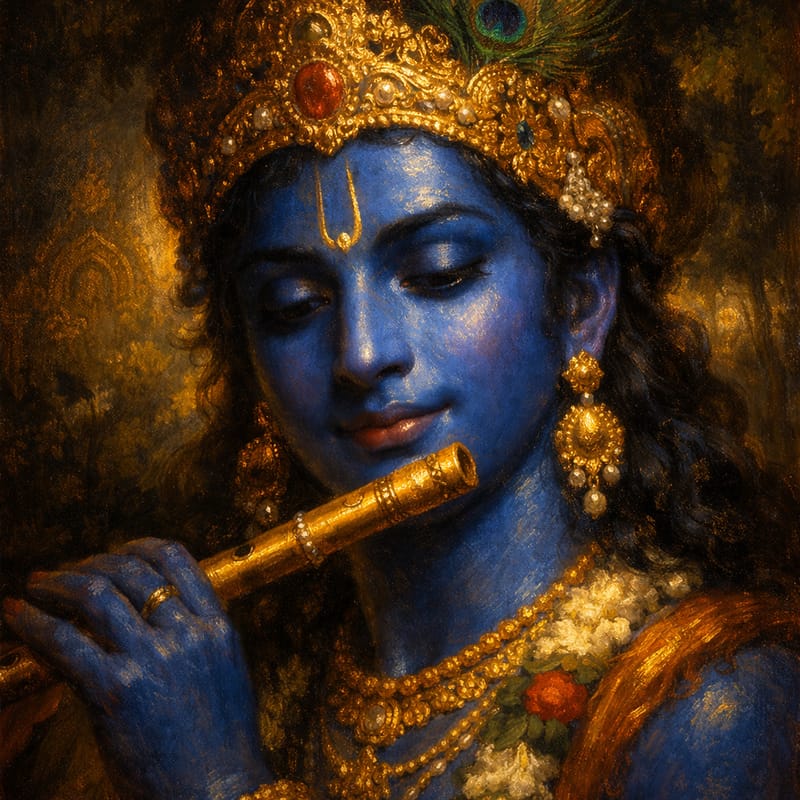
108 Names of Shri Krishna Chant — Kannada Lyrics
The 108 Names of Shri Krishna is a sacred enumeration of Krishna's divine attributes, epithets, and roles across Vedic literature and Puranic tradition. Each name encodes a specific aspect of Krishna's cosmic nature—from 'Krishnaya' (the dark one, symbolic of the infinite) to 'Parabrahmane' (the supreme absolute reality). These names span his incarnation stories: his birth as Devaki's son, his childhood exploits in Brindavan, his role as charioteer in the Bhagavad Gita, and his divine governance as Dwarka's king. Chanting them systematically creates a complete spiritual portrait of the deity.
Krishna represents the divine play (leela) of the Absolute—the reconciliation of transcendence and immanence. In Bhagavata Purana and Brahma Samhita, Krishna is recognized as Param Brahman (ultimate reality) who freely descends into human form to guide humanity. His 108 names reflect both his cosmic grandeur ('Ananta'—infinite, 'Kotisuryasamaprabhaya'—brilliant as a billion suns) and his intimate accessibility ('Yashodavatsalaya'—beloved of Yashoda, 'Govinda'—nourisher of cows). This duality—supreme power expressed through personal devotion—makes Krishna worship uniquely transformative across Hindu spiritual traditions.
Chant the 108 Names daily, ideally after sunrise or during evening meditation, as part of your sadhana (spiritual practice). Each repetition opens deeper layers of Krishna consciousness. Begin with 3 rounds and gradually increase to 27 or 108 repetitions. Use mala beads for counting. The practice works best with sincere devotion (bhakti) rather than mechanical recitation. Many traditions recommend pairing the chant with Krishna's image or deity for enhanced focus. Morning chanting energizes your day with divine grace; evening practice purifies the mind before sleep.
Curated by The Mahakatha Team · Original Composition: Mahakatha · Lyric: Traditional / Vaishnava
108 Names of Shri Krishna Chant
Krishna · Preview · 2:00
Preview ended
Ancient sounds for transformation, carried across 3,000 years.
Get the full version — plus 275 more ancient chants. 80% OFF today only.
Get Ancient Chants Bundle — 80% OFF →3000+ happy customers · Lifetime access · All devices
2.2M people trust Mahakatha
Chant daily with reminders — Get the Mahakatha app
Lyrics
ॐ कृष्णाय नमः। ॐ कमलानाथाय नमः। ॐ वासुदेवाय नमः। ॐ सनातनाय नमः।
ಓಂ ಕೃಷ್ಣಾಯ ನಮಃ। ಓಂ ಕಮಲಾನಾಥಾಯ ನಮಃ। ಓಂ ವಾಸುದೇವಾಯ ನಮಃ। ಓಂ ಸನಾತನಾಯ ನಮಃ।
ಕಪ್ಪು ವರ್ಣದವನು
ಲಕ್ಷ್ಮೀದೇವಿಯ ಪತಿ
ವಸುದೇವನ ಮಗ
ಮೂರು ಕಾಲಗಳಲ್ಲಿಯೂ ಇರುವ ದೈವಿಕ ಸನ್ನಿಧಿ
ॐ वसुदेवात्मजाय नमः। ॐ पुण्याय नमः। ॐ लीलामानुषविग्रहाय नमः। ॐ श्रीवत्सकौस्तुभधराय नमः।
ಓಂ ವಸುದೇವಾತ್ಮಜಾಯ ನಮಃ। ಓಂ ಪುಣ್ಯಾಯ ನಮಃ। ಓಂ ಲೀಲಾಮಾನುಷವಿಗ್ರಹಾಯ ನಮಃ। ಓಂ ಶ್ರೀವತ್ಸಕೌಸ್ತುಭಧರಾಯ ನಮಃ।
ವಸುದೇವನ ಮಗ
ಅತ್ಯಂತ ಸದ್ಗುಣವಂತ
ತನ್ನ ದೈವಿಕ ಲೀಲೆಯನ್ನು ತೋರಿಸಲು ಮಾನವ ರೂಪ ತಾಳಿದವನು
ಶ್ರೀವತ್ಸ ಮತ್ತು ಕೌಸ್ತುಭ ರತ್ನಗಳನ್ನು ಧರಿಸಿದವನು
ॐ यशोदावत्सलाय नमः। ॐ हरिये नमः। ॐ चतुर्भुजात्तचक्रासिगदा नमः। ॐ सङ्खाम्बुजायुदायुधाय नमः।
ಓಂ ಯಶೋದಾವತ್ಸಲಾಯ ನಮಃ। ಓಂ ಹರಿಯೇ ನಮಃ। ಓಂ ಚತುರ್ಭುಜಾತ್ತಚಕ್ರಾಸಿಗದಾ ನಮಃ। ಓಂ ಸಙ್ಖಾಮ್ಬುಜಾಯುದಾಯುಧಾಯ ನಮಃ।
ಯಶೋದೆಯ ಪ್ರಿಯ ಮಗ
ಪ್ರಕೃತಿಯ ಒಡೆಯ
ಯಾರ ನಾಲ್ಕು ಕೈಗಳು ಚಕ್ರ, ಖಡ್ಗದಂತಹ ದೈವಿಕ ಆಯುಧಗಳನ್ನು ಹೊಂದಿವೆ
ಗದೆ ಮತ್ತು ಶಂಖ
ॐ देवकीनन्दनाय नमः। ॐ श्रीशाय नमः। ॐ नन्दगोपप्रियात्मजाय नमः। ॐ यमुनावेगसंहारिणे नमः।
ಓಂ ದೇವಕೀನನ್ದನಾಯ ನಮಃ। ಓಂ ಶ್ರೀಶಾಯ ನಮಃ। ಓಂ ನನ್ದಗೋಪಪ್ರಿಯಾತ್ಮಜಾಯ ನಮಃ। ಓಂ ಯಮುನಾವೇಗಸಂಹಾರಿಣೇ ನಮಃ।
ದೇವಕಿಯ ಮಗ
ಲಕ್ಷ್ಮೀದೇವಿಯ ಪತಿ
ನಂದ ಮಹಾರಾಜನ ಪ್ರಿಯ ಮಗ
ಯಮುನಾ ನದಿಯನ್ನು ಶಾಂತಗೊಳಿಸಿದವನು
ॐ बलभद्रप्रियानुजाय नमः। ॐ पूतनाजीवितहराय नमः। ॐ शकटासुरभञ्जनाय नमः। ॐ नन्दव्रजजनानन्दिने नमः।
ಓಂ ಬಲಭದ್ರಪ್ರಿಯಾನುಜಾಯ ನಮಃ। ಓಂ ಪೂತನಾಜೀವಿತಹರಾಯ ನಮಃ। ಓಂ ಶಕಟಾಸುರಭಞ್ಜನಾಯ ನಮಃ। ಓಂ ನನ್ದವ್ರಜಜನಾನನ್ದಿನೇ ನಮಃ।
ಬಲರಾಮನ ತಮ್ಮ
ಪೂತನಾ ರಾಕ್ಷಸಿಯ ಪ್ರಾಣವನ್ನು ಹರಿಸಿದವನು
ಶಕಟಾಸುರನನ್ನು ನಾಶಮಾಡಿದವನು
ನಂದ ಮತ್ತು ಬ್ರಜದ ಜನರ ಆನಂದ
ॐ सच्चिदानन्दविग्रहाय नमः। ॐ नवनीतविलिप्ताङ्गाय नमः। ॐ नवनीतनटाय नमः। ॐ मुचुकुन्दप्रसादकाय नमः।
ಓಂ ಸಚ್ಚಿದಾನನ್ದವಿಗ್ರಹಾಯ ನಮಃ। ಓಂ ನವನೀತವಿಲಿಪ್ತಾಙ್ಗಾಯ ನಮಃ। ಓಂ ನವನೀತನಟಾಯ ನಮಃ। ಓಂ ಮುಚುಕುನ್ದಪ್ರಸಾದಕಾಯ ನಮಃ।
ಶಾಶ್ವತ, ಅಮರ ಮತ್ತು ಅವಿನಾಶಿ
ಬೆಣ್ಣೆ ಬಳಿದ ದೇಹವುಳ್ಳವನು
ಬೆಣ್ಣೆಗಾಗಿ ಸಂತೋಷದಿಂದ ನೃತ್ಯ ಮಾಡುವವನು
ರಾಜ ಮುಚುಕುಂದನಿಗೆ ಆಶೀರ್ವಾದ ನೀಡಿದವನು
ॐ षोडशस्त्रीसहस्रेशाय नमः। ॐ त्रिभङ्गिने नमः। ॐ मधुराकृतये नमः। ॐ शुकवागमृताब्धीन्दवे नमः।
ಓಂ ಷೋಡಶಸ್ತ್ರೀಸಹಸ್ರೇಶಾಯ ನಮಃ। ಓಂ ತ್ರಿಭಙ್ಗಿನೇ ನಮಃ। ಓಂ ಮಧುರಾಕೃತಯೇ ನಮಃ। ಓಂ ಶುಕವಾಗಮೃತಾಬ್ಧೀನ್ದವೇ ನಮಃ।
ಹದಿನಾರು ಸಾವಿರ ಸ್ತ್ರೀಯರ ಪತಿ
ಮೂರು ಸುಂದರ ವಕ್ರತೆಗಳುಳ್ಳವನು
ಮೋಹಕ ರೂಪವುಳ್ಳವನು
ಶುಕ ಮುನಿಯ ಮಾತುಗಳಲ್ಲಿ 'ಅಮೃತದ ಸಾಗರ'
ॐ गोविन्दाय नमः। ॐ योगिनां पतये नमः। ॐ वत्सवाटचराय नमः। ॐ अनन्ताय नमः।
ಓಂ ಗೋವಿನ್ದಾಯ ನಮಃ। ಓಂ ಯೋಗಿನಾಂ ಪತಯೇ ನಮಃ। ಓಂ ವತ್ಸವಾಟಚರಾಯ ನಮಃ। ಓಂ ಅನನ್ತಾಯ ನಮಃ।
ಗೋವುಗಳ ಪ್ರಿಯತಮ
ಯೋಗಿಗಳ ಪ್ರಭು
ಕರುಗಳನ್ನು ಪ್ರೀತಿಯಿಂದ ಮೇಯಿಸುವವನು
ಅನಂತ
ॐ धेनुकासुरभञ्जनाय नमः। ॐ तृणीकृततृणावर्ताय नमः। ॐ यमलार्जुनभञ्जनाय नमः। ॐ उत्तलोत्तालभेत्रे नमः।
ಓಂ ಧೇನುಕಾಸುರಭಞ್ಜನಾಯ ನಮಃ। ಓಂ ತೃಣೀಕೃತತೃಣಾವರ್ತಾಯ ನಮಃ। ಓಂ ಯಮಲಾರ್ಜುನಭಞ್ಜನಾಯ ನಮಃ। ಓಂ ಉತ್ತಲೋತ್ತಾಲಭೇತ್ರೇ ನಮಃ।
ಧೇನುಕಾಸುರನ ಸಂಹಾರಕ
ತೃಣಾವರ್ತ ರಾಕ್ಷಸನ ಸಂಹಾರಕ
ಶಾಪಗ್ರಸ್ತ ಯಮಳ ಮತ್ತು ಅರ್ಜುನ ಅವಳಿ ಮರಗಳನ್ನು ಮುರಿದವನು
ಎತ್ತರದ ತಾಳ ಮರಗಳ ವಿನಾಶಕ
ॐ तमालश्यामलाकृतिये नमः। ॐ गोपगोपीश्वराय नमः। ॐ योगिने नमः। ॐ कोटिसूर्यसमप्रभाय नमः।
ಓಂ ತಮಾಲಶ್ಯಾಮಲಾಕೃತಿಯೇ ನಮಃ। ಓಂ ಗೋಪಗೋಪೀಶ್ವರಾಯ ನಮಃ। ಓಂ ಯೋಗಿನೇ ನಮಃ। ಓಂ ಕೋಟಿಸೂರ್ಯಸಮಪ್ರಭಾಯ ನಮಃ।
ತಮಾಲ ಮರದಂತೆ ಕಪ್ಪು ಚರ್ಮವುಳ್ಳವನು
ಎಲ್ಲಾ ಗೋಪ ಮತ್ತು ಗೋಪಿಯರ ಪ್ರಭು
ಪರಮ ಯೋಗಿ
ಲಕ್ಷಾಂತರ ಸೂರ್ಯರಂತೆ ಪ್ರಕಾಶಿಸುವವನು
ॐ इलापतये नमः। ॐ परंज्योतिषे नमः। ॐ यादवेन्द्राय नमः। ॐ यदूद्वहाय नमः।
ಓಂ ಇಲಾಪತಯೇ ನಮಃ। ಓಂ ಪರಂಜ್ಯೋತಿಷೇ ನಮಃ। ಓಂ ಯಾದವೇನ್ದ್ರಾಯ ನಮಃ। ಓಂ ಯದೂದ್ವಹಾಯ ನಮಃ।
ಜ್ಞಾನದ ಒಡೆಯ
ಪರಮ ಜ್ಯೋತಿಯ ಮೂಲ
ಯಾದವರ ಪ್ರಭು
ಯದುವಂಶದ ನಾಯಕ
ॐ वनमालिने नमः। ॐ पीतवसने नमः। ॐ पारिजातापहारकाय नमः। ॐ गोवर्धनाचलोद्धर्त्रे नमः।
ಓಂ ವನಮಾಲಿನೇ ನಮಃ। ಓಂ ಪೀತವಸನೇ ನಮಃ। ಓಂ ಪಾರಿಜಾತಾಪಹಾರಕಾಯ ನಮಃ। ಓಂ ಗೋವರ್ಧನಾಚಲೋದ್ಧರ್ತ್ರೇ ನಮಃ।
ಕಾಡುಹೂವಿನ ಮಾಲೆ ಧರಿಸಿದವನು
ಹೊಳೆಯುವ ಹಳದಿ ವಸ್ತ್ರಗಳನ್ನು ಧರಿಸಿದವನು
ಪಾರಿಜಾತ ವೃಕ್ಷವನ್ನು ಕದ್ದವನು
ಗೋವರ್ಧನ ಪರ್ವತವನ್ನು ಎತ್ತಿದವನು
ॐ गोपालाय नमः। ॐ सर्वपालकाय नमः। ॐ अजाय नमः। ॐ निरञ्जनाय नमः।
ಓಂ ಗೋಪಾಲಾಯ ನಮಃ। ಓಂ ಸರ್ವಪಾಲಕಾಯ ನಮಃ। ಓಂ ಅಜಾಯ ನಮಃ। ಓಂ ನಿರಞ್ಜನಾಯ ನಮಃ।
ಹಸುಗಳ ರಕ್ಷಕ
ವಿಶ್ವದ ರಕ್ಷಕ
ಜನನವನ್ನು ಮೀರಿದವನು
ನಿರ್ಮಲನಾದವನು
ॐ कामजनकाय नमः। ॐ कञ्जलोचनाय नमः। ॐ मधुघ्ने नमः। ॐ मथुरानाथाय नमः।
ಓಂ ಕಾಮಜನಕಾಯ ನಮಃ। ಓಂ ಕಞ್ಜಲೋಚನಾಯ ನಮಃ। ಓಂ ಮಧುಘ್ನೇ ನಮಃ। ಓಂ ಮಥುರಾನಾಥಾಯ ನಮಃ।
ಮನಸ್ಸಿನಲ್ಲಿ ಆಸೆಗಳನ್ನು ಸೃಷ್ಟಿಸುವವನು
ಕಮಲ ನೇತ್ರಗಳುಳ್ಳವನು
ಮಧು ರಾಕ್ಷಸನ ವಧೆಗಾರ
ಮಥುರೆಯ ಪ್ರಭು
ॐ द्वारकानायकाय नमः। ॐ बलिने नमः। ॐ बृन्दावनान्तसञ्चारिणे नमः। ॐ तुलसीदामभूषणाय नमः।
ಓಂ ದ್ವಾರಕಾನಾಯಕಾಯ ನಮಃ। ಓಂ ಬಲಿನೇ ನಮಃ। ಓಂ ಬೃನ್ದಾವನಾನ್ತಸಞ್ಚಾರಿಣೇ ನಮಃ। ಓಂ ತುಲಸೀದಾಮಭೂಷಣಾಯ ನಮಃ।
ದ್ವಾರಕೆಯ ನಾಯಕ
ಎಲ್ಲರಿಗಿಂತ ಶಕ್ತಿಶಾಲಿ
ವೃಂದಾವನದಾದ್ಯಂತ ವಿಹರಿಸುವವನು
ತುಳಸಿ ಎಲೆಗಳ ಮಾಲೆ ಧರಿಸಿದವನು
ॐ स्यमन्तकमणेर्हर्त्रे नमः। ॐ नरनारायणात्मकाय नमः। ॐ कुब्जाकृष्णाम्बरधराय नमः। ॐ मायिने नमः।
ಓಂ ಸ್ಯಮನ್ತಕಮಣೇರ್ಹರ್ತ್ರೇ ನಮಃ। ಓಂ ನರನಾರಾಯಣಾತ್ಮಕಾಯ ನಮಃ। ಓಂ ಕುಬ್ಜಾಕೃಷ್ಣಾಮ್ಬರಧರಾಯ ನಮಃ। ಓಂ ಮಾಯಿನೇ ನಮಃ।
ಸ್ಯಮಂತಕ ರತ್ನವನ್ನು ಕದ್ದವನು
ಮನುಷ್ಯ ಮತ್ತು ದೇವರಾಗಿರುವವನು
ಕುಬ್ಜೆಯು ಚಂದನವನ್ನು ಹಚ್ಚಿದವನು
ಮಾಯಾಮಯನಾಗಿರುವವನು
ॐ परमपूरुषाय नमः। ॐ मुष्टिकासुरचाणूरमल्लयुद्धविशारदाय नमः। ॐ संसारवैरिणे नमः। ॐ कंसारये नमः।
ಓಂ ಪರಮಪೂರುಷಾಯ ನಮಃ। ಓಂ ಮುಷ್ಟಿಕಾಸುರಚಾಣೂರಮಲ್ಲಯುದ್ಧವಿಶಾರದಾಯ ನಮಃ। ಓಂ ಸಂಸಾರವೈರಿಣೇ ನಮಃ। ಓಂ ಕಂಸಾರಯೇ ನಮಃ।
ಪರಮಪುರುಷನು
ಮುಷ್ಟಿಕ ಮತ್ತು ಚಾಣೂರ ರಾಕ್ಷಸರನ್ನು ಸಂಹರಿಸಿದ ಪರಾಕ್ರಮಿ
ಸಂಸಾರದ ಶತ್ರು
ಕಂಸನ ಶತ್ರು
ॐ मुरारये नमः। ॐ नाराकान्तकाय नमः। ॐ अनादिब्रह्मचारिणे नमः। ॐ कृष्णाव्यसनकर्षकाय नमः।
ಓಂ ಮುರಾರಯೇ ನಮಃ। ಓಂ ನಾರಾಕಾನ್ತಕಾಯ ನಮಃ। ಓಂ ಅನಾದಿಬ್ರಹ್ಮಚಾರಿಣೇ ನಮಃ। ಓಂ ಕೃಷ್ಣಾವ್ಯಸನಕರ್ಷಕಾಯ ನಮಃ।
ಮುರಾಸುರನನ್ನು ಸಂಹರಿಸಿದವನು
ನರಕಾಸುರನನ್ನು ಸಂಹರಿಸಿದವನು
ಶಾಶ್ವತ ಬ್ರಹ್ಮಚಾರಿ
ದ್ರೌಪದಿಯನ್ನು ರಕ್ಷಿಸಿದವನು
ॐ शिशुपालशिरश्छेत्रे नमः। ॐ दुर्योधनकुलान्तकाय नमः। ॐ विदुराक्रूरवरदाय नमः। ॐ विश्वरूपप्रदर्शकाय नमः।
ಓಂ ಶಿಶುಪಾಲಶಿರಶ್ಛೇತ್ರೇ ನಮಃ। ಓಂ ದುರ್ಯೋಧನಕುಲಾನ್ತಕಾಯ ನಮಃ। ಓಂ ವಿದುರಾಕ್ರೂರವರದಾಯ ನಮಃ। ಓಂ ವಿಶ್ವರೂಪಪ್ರದರ್ಶಕಾಯ ನಮಃ।
ಶಿಶುಪಾಲನ ತಲೆಯನ್ನು ಕತ್ತರಿಸಿದವನು
ದುರ್ಯೋಧನನ ವಂಶವನ್ನು ನಾಶಪಡಿಸಿದವನು
ವಿದುರ ಮತ್ತು ಅಕ್ರೂರರಿಗೆ ವರವನ್ನು ನೀಡಿದವನು
ವಿಶ್ವರೂಪವನ್ನು ಪ್ರದರ್ಶಿಸಿದವನು
ॐ सत्यवाचे नमः। ॐ सत्यसङ्कल्पाय नमः। ॐ सत्यभामारताय नमः। ॐ जयिने नमः।
ಓಂ ಸತ್ಯವಾಚೇ ನಮಃ। ಓಂ ಸತ್ಯಸಙ್ಕಲ್ಪಾಯ ನಮಃ। ಓಂ ಸತ್ಯಭಾಮಾರತಾಯ ನಮಃ। ಓಂ ಜಯಿನೇ ನಮಃ।
ಸತ್ಯವಾದಿ
ಸತ್ಯಸಂಕಲ್ಪವುಳ್ಳವನು
ಸತ್ಯಭಾಮೆಯ ಪ್ರಿಯತಮ
ಸದಾ ವಿಜಯಿ
ॐ सुभद्रापूर्वजाय नमः। ॐ विष्णवे नमः। ॐ भीष्ममुक्तिप्रदायकाय नमः। ॐ जगद्गुरवे नमः।
ಓಂ ಸುಭದ್ರಾಪೂರ್ವಜಾಯ ನಮಃ। ಓಂ ವಿಷ್ಣವೇ ನಮಃ। ಓಂ ಭೀಷ್ಮಮುಕ್ತಿಪ್ರದಾಯಕಾಯ ನಮಃ। ಓಂ ಜಗದ್ಗುರವೇ ನಮಃ।
ಸುಭದ್ರೆಯ ಅಣ್ಣ
ವಿಶ್ವದ ಒಡೆಯ
ಭೀಷ್ಮರನ್ನು ಮೋಕ್ಷಕ್ಕೆ ಕರೆದೊಯ್ದವನು
ವಿಶ್ವದ ಗುರು
ॐ जगन्नाथाय नमः। ॐ वेणुनाद विशारदाय नमः। ॐ वृषभासुरविध्वंसिने नमः। ॐ बाणासुरकरान्तकाय नमः।
ಓಂ ಜಗನ್ನಾಥಾಯ ನಮಃ। ಓಂ ವೇಣುನಾದ ವಿಶಾರದಾಯ ನಮಃ। ಓಂ ವೃಷಭಾಸುರವಿಧ್ವಂಸಿನೇ ನಮಃ। ಓಂ ಬಾಣಾಸುರಕರಾನ್ತಕಾಯ ನಮಃ।
ಸಮಸ್ತ ವಿಶ್ವದ ನಾಥ
ದಿವ್ಯ ಕೊಳಲು ವಾದಕ
ವೃಷಭಾಸುರನ ಸಂಹಾರಕ
ಬಾಣಾಸುರನ ನಾಶಕ
ॐ युधिष्ठिरप्रतिष्ठात्रे नमः। ॐ बर्हिबर्हावतंसकाय नमः। ॐ पार्थसारथये नमः। ॐ अव्यक्ताय नमः।
ಓಂ ಯುಧಿಷ್ಠಿರಪ್ರತಿಷ್ಠಾತ್ರೇ ನಮಃ। ಓಂ ಬರ್ಹಿಬರ್ಹಾವತಂಸಕಾಯ ನಮಃ। ಓಂ ಪಾರ್ಥಸಾರಥಯೇ ನಮಃ। ಓಂ ಅವ್ಯಕ್ತಾಯ ನಮಃ।
ಯುಧಿಷ್ಠಿರನನ್ನು ರಾಜನನ್ನಾಗಿ ಮಾಡಿದವನು
ನವಿಲ ಗರಿಯನ್ನು ಧರಿಸಿದವನು
ಅರ್ಜುನನ ರಥವನ್ನು ನಡೆಸುವವನು
ನಿರಾಕಾರ
ॐ गीतामृतमहोदधये नमः। ॐ कालीयफणिमाणिक्यरञ्जितश्रीपदाम्बुजाय नमः। ॐ दामोदराय नमः। ॐ यज्ञभोक्त्रे नमः।
ಓಂ ಗೀತಾಮೃತಮಹೋದಧಯೇ ನಮಃ। ಓಂ ಕಾಲೀಯಫಣಿಮಾಣಿಕ್ಯರಞ್ಜಿತಶ್ರೀಪದಾಮ್ಬುಜಾಯ ನಮಃ। ಓಂ ದಾಮೋದರಾಯ ನಮಃ। ಓಂ ಯಜ್ಞಭೋಕ್ತ್ರೇ ನಮಃ।
ಭಗವದ್ಗೀತಾ ಜ್ಞಾನದ ಸಾಗರ
ಕಾಳಿಯ ಸರ್ಪದ ರತ್ನಗಳಿಂದ ಶೋಭಿಸುವ ಪಾದಪದ್ಮಗಳುಳ್ಳವನು
ಹೊಟ್ಟೆಗೆ ಕಟ್ಟಲ್ಪಟ್ಟವನು
ಯಜ್ಞಗಳನ್ನು ಸ್ವೀಕರಿಸಿ ಆಶೀರ್ವದಿಸುವವನು
ॐ दानवेन्द्रविनाशकाय नमः। ॐ नारायणाय नमः। ॐ परब्रह्मणे नमः। ॐ पन्नगाशनवाहनाय नमः।
ಓಂ ದಾನವೇನ್ದ್ರವಿನಾಶಕಾಯ ನಮಃ। ಓಂ ನಾರಾಯಣಾಯ ನಮಃ। ಓಂ ಪರಬ್ರಹ್ಮಣೇ ನಮಃ। ಓಂ ಪನ್ನಗಾಶನವಾಹನಾಯ ನಮಃ।
ದಾನವೇಂದ್ರನ ವಿನಾಶಕ
ಪರಮಾತ್ಮ
ಪರಬ್ರಹ್ಮ
ಗರುಡನನ್ನು ವಾಹನವಾಗಿ ಹೊಂದಿರುವವನು
ॐ तीर्थकृते नमः। ॐ जलक्रीडा समासक्त गॊपीवस्त्रापहाराकाय नमः। ॐ पुण्यश्लोकाय नमः ॐ वॆदवॆद्याय नमः।
ಓಂ ತೀರ್ಥಕೃತೇ ನಮಃ। ಓಂ ಜಲಕ್ರೀಡಾ ಸಮಾಸಕ್ತ ಗೊಪೀವಸ್ತ್ರಾಪಹಾರಾಕಾಯ ನಮಃ। ಓಂ ಪುಣ್ಯಶ್ಲೋಕಾಯ ನಮಃ ಓಂ ವೆದವೆದ್ಯಾಯ ನಮಃ।
ಎಲ್ಲಾ ಪವಿತ್ರ ಸ್ಥಳಗಳ ಸೃಷ್ಟಿಕರ್ತ
ನದಿಯಲ್ಲಿ ಸ್ನಾನ ಮಾಡುವಾಗ ಗೋಪಿಯರ ಬಟ್ಟೆಗಳನ್ನು ಮರೆಮಾಡುವ ಚಂಚಲ
ಯಾರ ಪಠಣವು ವರಗಳನ್ನು ತರುತ್ತದೆಯೋ ಆತನು
ವೇದಗಳಲ್ಲಿ ಪೂಜಿಸಲ್ಪಟ್ಟವನು
ॐ दयानिधये नमः। ॐ सर्वभूतात्मकाय नमः। ॐ सर्वग्रहरूपिणे नमः। ॐ परात्पराय नमः।
ಓಂ ದಯಾನಿಧಯೇ ನಮಃ। ಓಂ ಸರ್ವಭೂತಾತ್ಮಕಾಯ ನಮಃ। ಓಂ ಸರ್ವಗ್ರಹರೂಪಿಣೇ ನಮಃ। ಓಂ ಪರಾತ್ಪರಾಯ ನಮಃ।
ಕರುಣೆಯ ಸಾಗರ
ಎಲ್ಲಾ ತೀರ್ಥ ಸ್ಥಳಗಳ ಮೂಲ
ಎಲ್ಲವನ್ನೂ ಒಳಗೊಂಡವನು
ಪರಮೋಚ್ಚನು
॥ इति श्रीकृष्ण अष्टोत्तरशतनामावलिः सम्पूर्णा ॥
॥ ಇತಿ ಶ್ರೀಕೃಷ್ಣ ಅಷ್ಟೋತ್ತರಶತನಾಮಾವಲಿಃ ಸಮ್ಪೂರ್ಣಾ ॥
ಹೀಗೆ ಶ್ರೀಕೃಷ್ಣನ 108 ನಾಮಗಳ ಪಠಣ ಸಂಪೂರ್ಣವಾಯಿತು
How to Chant 108 Names of Shri Krishna Chant
- 1
Find a quiet, clean space
Sit in a comfortable, undisturbed environment. Face east or north if possible. You may light incense or a candle to set a contemplative atmosphere.
- 2
Settle into a comfortable posture
Sit cross-legged on the floor or upright in a chair. Keep the spine erect and place the hands on the knees with palms facing upward.
- 3
Take three cleansing breaths
Inhale slowly through the nose, hold briefly, and exhale completely. Repeat three times to calm the mind and prepare for mantra recitation.
- 4
Begin chanting 108 Names of Shri Krishna Chant
Chant the mantra clearly and with devotion — aloud, in a whisper, or silently. Use a mala (108 beads) to count repetitions. Aim for a consistent, unhurried rhythm throughout the session.
- 5
Rest in stillness
After completing your chanting, sit quietly for two to five minutes. Allow the vibration of the mantra to settle within. Close the practice with a moment of gratitude.
Benefits of 108 Names of Shri Krishna Chant
-
Awakens divine love (bhakti) and emotional connection to Krishna consciousness, transforming the chanter's heart toward devotion and surrender.
Source: Bhagavata Purana, Book 10
-
Removes fear and negative thought patterns by invoking Krishna's constant protection and cosmic oversight of all beings.
Source: Bhagavad Gita 18.66 — Traditional interpretation
-
Traditionally chanted to purify the mind and intellect (sattva guna), easing mental agitation and bringing a sense of inner peace.
Source: Upanishads & Mantra Shastra traditions
-
Attracts divine grace (prasada) and blessings by aligning personal consciousness with Krishna's omniscient presence.
Source: Traditional practice across Vaishnavism
-
Deepens meditation and concentration by anchoring the mind on Krishna's 108 divine names and cosmic roles.
Source: Yoga Sutras & devotional sadhana texts
Story & Symbolism
The 108 Names of Shri Krishna crystallize across multiple layers of Vedic and Puranic literature, with roots stretching back to the Upanishads and Bhagavata Purana. While the Bhagavata Purana (10th Book) narrates Krishna's life in exquisite detail, generating the basis for these epithets, the formal enumeration of 108 sacred names developed through medieval Vaishnavite theology and devotional literature. Scholars and saints like Adi Shankara, Ramanuja, and later bhakti poets systematized these names, drawing from Krishna's diverse roles: the dark infinite ('Krishnaya'), the butter-thief of Brindavan ('Navanitanatha'), the cosmic charioteer ('Parthasarathaye'), and the supreme absolute ('Parabrahmane'). This systematic organization reflects a comprehensive spiritual map of Krishna consciousness.
Krishna himself embodies the paradox of transcendence and immanence—simultaneously the supreme, formless Brahman and the intimate, playful deity accessible to all seekers. The Brahma Samhita explicitly declares Krishna as Param Brahman, the ultimate source of all existence. The 108 names honor this duality by encompassing both cosmic grandeur (his dominion over infinite universes, his four-armed divine form) and tender intimacy (his love for Radha, his childhood pranks, his protection of Arjuna). Each name functions as a meditation gateway, inviting the chanter to contemplate one facet of divine reality. The number 108 itself amplifies this spiritual intention: 1 represents existence, 0 symbolizes the infinite void and potential, and 8 denotes infinity and cosmic cycles. Together, 108 encodes the complete spiritual journey from individual consciousness to cosmic unity.
Over centuries, the 108 Names practice became standardized across Vaishnavite traditions—from Gaudiya Vaishnavism emphasizing Krishna's rasa lila (divine play) to Sri Vaishnavism focusing on his role as Narayana. Today, this chant remains a cornerstone of Hindu devotional practice globally, appearing in temples, ashrams, and homes as both a worship ritual and a meditation tool for spiritual transformation.
How to Use in Daily Life
Morning Devotion
Chant the 108 Names immediately after sunrise while facing east, ideally before sunrise meditation. This energizes your day with Krishna's protective grace and aligns your consciousness with divine intelligence for 24 hours of clarity and compassion.
Meditation Practice
Use the chant as your primary meditation anchor, sitting quietly with mala beads. Focus intently on each name's meaning and Krishna's presence. This deepens mental focus, purifies chakras, and opens intuitive channels for spiritual insight and self-realization.
Evening Gratitude
Recite the names during evening prayer, reflecting on Krishna's presence throughout your day. This practice purifies mental impressions, transforms negativity into devotion, and prepares your consciousness for restful sleep infused with divine grace.
Before Sleep
Chant softly 3-7 times before bed to calm your mind and invoke Krishna's protective presence during sleep. This practice can help you feel calmer before sleep and keeps your last thoughts of the day on Krishna.