

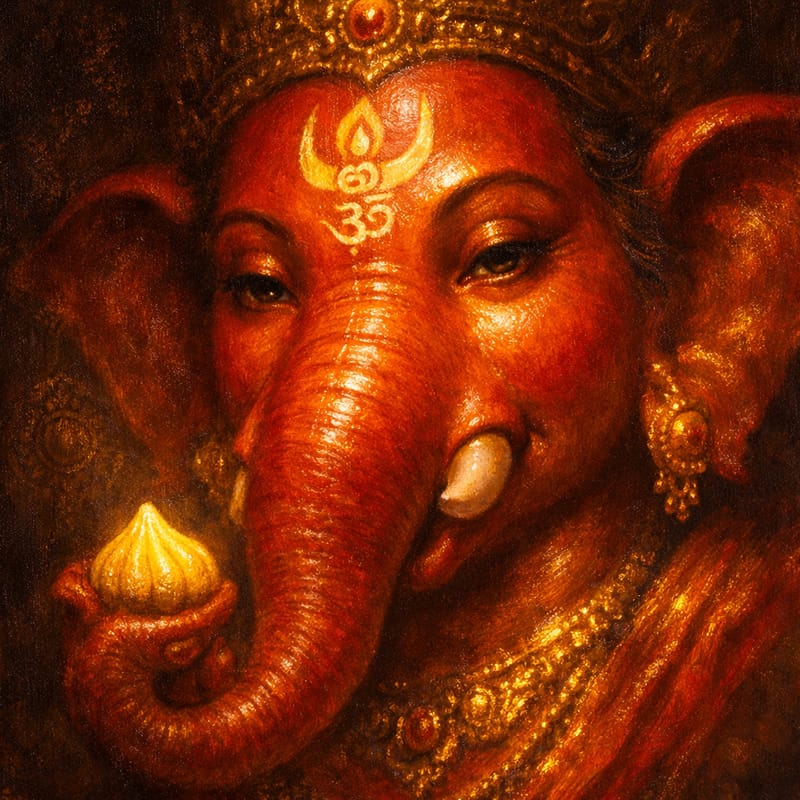
Ganesha Atharvashirsha Mantra — Bengali Lyrics
The Ganesha Atharvashirsha is a sacred Upanishad that declares Lord Ganesha as the supreme reality — the creator, sustainer, and destroyer of the universe. It begins with a Shanti mantra praying for auspiciousness, then systematically reveals Ganesha as identical with Brahman (absolute reality), the source of all creation, beyond the three qualities and three states of being. The text describes Ganesha's mantra form (the syllable "Gam"), contains his Gayatri verse, a meditation verse describing his physical form, and concludes with the benefits it ascribes to reciting this text — from destroying sins to attaining the highest knowledge.
This is not a simple prayer but a philosophical treatise declaring that the elephant-headed deity is the ultimate truth behind all existence.
Curated by The Mahakatha Team · Original Composition: Mahakatha · Lyric: Traditional / Vedic (Atharva Veda)
Chant daily with reminders — Get the Mahakatha app
Lyrics
ॐ भद्रं कर्णेभिः शृणुयाम देवाः । भद्रं पश्येमाक्षभिर्यजत्राः । स्थिरैरङ्गैस्तुष्टुवाग्ँसस्तनूभिः । व्यशेम देवहितं यदायूः ।
ওঁ ভদ্রং কর্ণেভিঃ শৃণুযাম দেবাঃ । ভদ্রং পশ্যেমাক্ষভির্যজত্রাঃ । স্থিরৈরঙ্গৈস্তুষ্টুবাগ্ঁসস্তনূভিঃ । ব্যশেম দেবহিতং যদাযূঃ ।
হে ঈশ্বর, আমাদের কান যেন শুভ বিষয় শ্রবণ করে
আমাদের চোখ যেন শুভ বিষয় দর্শন করে
স্থির বাহু ও দেহ দিয়ে, আমরা এই জীবনের জন্য আপনার প্রশংসা ও ধন্যবাদ জানাই
আমরা যেন আনন্দে জীবন কাটাই, এবং আমাদের কর্ম যেন ঈশ্বরকে সন্তুষ্ট করে
ॐ स्वस्ति न इन्द्रो वृद्धश्रवाः । स्वस्ति नः पूषा विश्ववेदाः । स्वस्ति नस्तार्क्ष्यो अरिष्टनेमिः । स्वस्ति नो बृहस्पतिर्दधातु ॥ ॐ शान्तिः शान्तिः शान्तिः ॥
ওঁ স্বস্তি ন ইন্দ্রো বৃদ্ধশ্রবাঃ । স্বস্তি নঃ পূষা বিশ্ববেদাঃ । স্বস্তি নস্তার্ক্ষ্যো অরিষ্টনেমিঃ । স্বস্তি নো বৃহস্পতির্দধাতু ॥ ওঁ শান্তিঃ শান্তিঃ শান্তিঃ ॥
মহাশক্তিশালী ইন্দ্র দেব আমাদের মঙ্গল করুন
সর্বজ্ঞ পূষা দেব আমাদের মঙ্গল করুন
প্রচণ্ড চক্রধারী তার্ক্ষ্য দেব আমাদের মঙ্গল করুন
জ্ঞানী বৃহস্পতি দেব আমাদের মঙ্গল করুন
हरि ॐ ||
হরি ওঁ ||
नमस्ते गणपतये ॥ त्वमेव प्रत्यक्षं तत्त्वमसि ॥ त्वमेव केवलं कर्तासि ॥ त्वमेव केवलं धर्तासि ॥ त्वमेव केवलं हर्तासि ॥ त्वमेव सर्वं खल्विदं ब्रम्हासि ॥ त्वं साक्षादात्मासि नित्यम् ॥ १ ॥
নমস্তে গণপতযে ॥ ত্বমেব প্রত্যক্ষং তত্ত্বমসি ॥ ত্বমেব কেবলং কর্তাসি ॥ ত্বমেব কেবলং ধর্তাসি ॥ ত্বমেব কেবলং হর্তাসি ॥ ত্বমেব সর্বং খল্বিদং ব্রম্হাসি ॥ ত্বং সাক্ষাদাত্মাসি নিত্যম্ ॥ ১ ॥
ওঁ, হে গণপতি, আপনাকে প্রণাম
একমাত্র আপনিই পরম সত্যের মূর্ত রূপ
একমাত্র আপনিই সৃষ্টিকর্তা
একমাত্র আপনিই ধারণকর্তা
একমাত্র আপনিই সংহারকর্তা
আপনিই সমস্ত, এবং সমস্তই ব্রহ্ম
আপনিই নিত্য আত্মা ॥ ১ ॥
ऋतं वच्मि ॥ सत्यं वच्मि ॥ २ ॥
ঋতং বচ্মি ॥ সত্যং বচ্মি ॥ ২ ॥
আমি বিশ্বজনীন শৃঙ্খলার কথা বলি
আমি সত্য বলি ॥ ২ ॥
अव त्वं माम् ॥ अव वक्तारम् ॥ अव श्रोतारम् ॥ अव दातारम् ॥ अव धातारम् ॥ अवानूचानमव शिष्यम् ॥ अव पश्चात्तात् ॥ अव पुरस्तात् ॥ अवोत्तरात्तात् ॥ अव दक्षिणात्तात् ॥ अव चोर्ध्वात्तात् ॥ अवाधरात्तात् ॥ सर्वतो मां पाहि पाहि समंतात् ॥ ३ ॥
অব ত্বং মাম্ ॥ অব বক্তারম্ ॥ অব শ্রোতারম্ ॥ অব দাতারম্ ॥ অব ধাতারম্ ॥ অবানূচানমব শিষ্যম্ ॥ অব পশ্চাত্তাত্ ॥ অব পুরস্তাত্ ॥ অবোত্তরাত্তাত্ ॥ অব দক্ষিণাত্তাত্ ॥ অব চোর্ধ্বাত্তাত্ ॥ অবাধরাত্তাত্ ॥ সর্বতো মাং পাহি পাহি সমংতাত্ ॥ ৩ ॥
আমাকে রক্ষা করুন।
বক্তাকে রক্ষা করুন।
শ্রোতাকে রক্ষা করুন।
দাতা, শিক্ষক এবং শিষ্যকে রক্ষা করুন।
পেছন থেকে আমাদের রক্ষা করুন।
সামনে থেকে আমাদের রক্ষা করুন।
উত্তর দিক থেকে আমাদের রক্ষা করুন।
দক্ষিণ দিক থেকে আমাদের রক্ষা করুন।
উপর থেকে আমাদের রক্ষা করুন।
নিচ থেকে আমাদের রক্ষা করুন।
সকল দিক থেকে সমানভাবে আমাকে রক্ষা করুন। ॥ ৩ ॥
त्वं वाग्ड़मयस्त्वं चिन्मयः ॥ त्वं आनंदमयस्त्वं ब्रम्हमयः ॥ त्वं सच्चिदानंदाद्वितीयोसि ॥ त्वं प्रत्यक्षं ब्रम्हासि ॥ त्वं ज्ञानमयो विज्ञानमयोसि ॥ ४ ॥
ত্বং বাগ্ড়মযস্ত্বং চিন্মযঃ ॥ ত্বং আনংদমযস্ত্বং ব্রম্হমযঃ ॥ ত্বং সচ্চিদানংদাদ্বিতীযোসি ॥ ত্বং প্রত্যক্ষং ব্রম্হাসি ॥ ত্বং জ্ঞানমযো বিজ্ঞানমযোসি ॥ ৪ ॥
আপনি বাক্, আপনি চিৎ।
আপনি আনন্দ, আপনি সৃষ্টি।
আপনি সৎ, চিৎ, আনন্দ, অদ্বিতীয়।
আপনি ব্রহ্ম এবং তার অনুভূতি।
আপনি জ্ঞান এবং বিজ্ঞানের মূর্ত প্রতীক। ॥ ৪ ॥
सर्वं जगदिदं त्वत्तो जायते ॥ सर्वं जगदिदं त्वत्तस्तिष्ठति ॥ सर्वं जगदिदं त्वयि लयमेष्यति ॥ सर्वं जगदिदं त्वयि प्रत्येति ॥ त्वं भूमिरापो नलो निलो नभः ॥ त्वं चत्वारि वाक्पदानि ॥ ५ ॥
সর্বং জগদিদং ত্বত্তো জাযতে ॥ সর্বং জগদিদং ত্বত্তস্তিষ্ঠতি ॥ সর্বং জগদিদং ত্বযি লযমেষ্যতি ॥ সর্বং জগদিদং ত্বযি প্রত্যেতি ॥ ত্বং ভূমিরাপো নলো নিলো নভঃ ॥ ত্বং চত্বারি বাক্পদানি ॥ ৫ ॥
সমগ্র বিশ্ব আপনার থেকে উৎপন্ন হয়।
সমগ্র বিশ্ব আপনার মধ্যে টিকে আছে।
সমগ্র বিশ্ব আপনার মধ্যে বিলীন হবে।
আপনি পৃথিবী, জল, অগ্নি, বায়ু এবং আকাশ।
সমগ্র বিশ্ব আপনার মধ্যে ফিরে আসে।
আপনি চার প্রকার বাক্। ॥ ৫ ॥
त्वं गुणत्रयातीतः ॥ त्वमवस्थात्रयातीतः || त्वं देहत्रयातीतः ॥ त्वं कालत्रयातीतः ॥ त्वं मूलाधारः स्थितोसि नित्यम॥ त्वं शक्ति त्रयात्मकः ॥ त्वां योगिनो ध्यायन्ती नित्यम ॥
ত্বং গুণত্রযাতীতঃ ॥ ত্বমবস্থাত্রযাতীতঃ || ত্বং দেহত্রযাতীতঃ ॥ ত্বং কালত্রযাতীতঃ ॥ ত্বং মূলাধারঃ স্থিতোসি নিত্যম॥ ত্বং শক্তি ত্রযাত্মকঃ ॥ ত্বাং যোগিনো ধ্যাযন্তী নিত্যম ॥
আপনি প্রকৃতির তিনটি গুণের ঊর্ধ্বে এবং অতীত।
আপনি চেতনার তিনটি অবস্থার ঊর্ধ্বে এবং অতীত।
আপনি অস্তিত্বের তিনটি রূপের ঊর্ধ্বে এবং অতীত।
আপনি কালের তিনটি পর্যায়ের ঊর্ধ্বে এবং অতীত।
আপনি মূলাধার চক্রে অবস্থিত।
আপনি তিন দিব্য শক্তি।
আপনি যোগীদের নিত্য ধ্যানের বিষয়।
त्वं ब्रम्हास्त्वंविष्णुस्त्वंरुद्रस्त्वंइंद्रस्त्वंअग्निस्त्वंवायुस्त्वंसूर्यस्त्वंचंद्रमास्त्वं ब्रम्हभूर्भुवस्वरोम् ॥ ६ ॥
ত্বং ব্রম্হাস্ত্বংবিষ্ণুস্ত্বংরুদ্রস্ত্বংইংদ্রস্ত্বংঅগ্নিস্ত্বংবাযুস্ত্বংসূর্যস্ত্বংচংদ্রমাস্ত্বং ব্রম্হভূর্ভুবস্বরোম্ ॥ ৬ ॥
আপনি ব্রহ্মা, বিষ্ণু, রুদ্র, ইন্দ্র, অগ্নি, বায়ু, সূর্য, চন্দ্র এবং তিন লোকের সার। ॥ ৬ ॥
गणादिं पूर्वमुच्चार्यं वर्णादिं तदनंतरम् ॥ अनुस्वारः परतरः ॥ अर्धेंदुलसितम् ॥ तारेण ऋध्दम् ॥ एतत्तव मनुस्वरुपम् ॥ गकारः पूर्वरुपम् ॥ अकारो मध्यमरुपम् ॥ अनुस्वारश्चान्त्यरुपम् ॥ बिन्दुरुत्तररुपम् ॥ नादःसंधानम् ॥ संहितासंधीः ॥ सैषा गणेश विद्या ॥ गणकऋषिः निछॄद् गायत्री छंदः ॥ गणपतीर्देवता ॥ ॐ गं गणपतये नमः ॥ ७ ॥
গণাদিং পূর্বমুচ্চার্যং বর্ণাদিং তদনংতরম্ ॥ অনুস্বারঃ পরতরঃ ॥ অর্ধেংদুলসিতম্ ॥ তারেণ ঋধ্দম্ ॥ এতত্তব মনুস্বরুপম্ ॥ গকারঃ পূর্বরুপম্ ॥ অকারো মধ্যমরুপম্ ॥ অনুস্বারশ্চান্ত্যরুপম্ ॥ বিন্দুরুত্তররুপম্ ॥ নাদঃসংধানম্ ॥ সংহিতাসংধীঃ ॥ সৈষা গণেশ বিদ্যা ॥ গণকঋষিঃ নিছৄদ্ গাযত্রী ছংদঃ ॥ গণপতীর্দেবতা ॥ ওঁ গং গণপতযে নমঃ ॥ ৭ ॥
প্রথমে 'গ' ধ্বনি উচ্চারণ করুন তারপর স্বরবর্ণ 'অ'।
অনুস্বার (নাসিক্য ধ্বনি বিন্দু) তাৎপর্যপূর্ণ।
বিন্দুতে অর্ধচন্দ্র আকৃতি যোগ করুন, এটিকে পূর্ণ নাসিক্য ধ্বনি প্রদান করে।
এটিকে 'তার' ধ্বনি, ওঁ ধ্বনি দিয়ে সমৃদ্ধ করুন।
এটি আপনার রূপ, আপনার মন্ত্র স্বরূপ, ধ্বনিতে প্রকাশিত।
'গ' আপনার প্রথম রূপ, 'অ' আপনার মধ্যম রূপ।
বিন্দু আপনার উর্ধ্ব রূপ।
এগুলি ধ্বনি দ্বারা সংযুক্ত।
এই ধ্বনি সংযোজন গণেশের বিদ্যা।
ঋষি হলেন গণক ঋষি, ছন্দ হল নিচৃদ্ গায়ত্রী।
দেবতা হলেন ভগবান গণেশ।
'গং' ধ্বনি সহ, আমরা ভগবান গণেশকে প্রণাম করি। ॥ ৭ ॥
एकदंताय विद्महे वक्रतुंडाय धीमहि ॥ तन्नो दंतिः प्रचोदयात् ॥ ८ ॥
একদংতায বিদ্মহে বক্রতুংডায ধীমহি ॥ তন্নো দংতিঃ প্রচোদযাত্ ॥ ৮ ॥
আমি একদন্ত গণেশের ধ্যান করি
আমি বক্রতুণ্ডকে দর্শন করি
তিনি আমাকে আলোকিত করুন। ॥ ৮ ॥
एकदंतं चतुर्हस्तं पाशमंकुशधारिणम् ॥ रदं च वरदं हस्तै बिभ्राणं मूषकध्वजम् ॥ रक्तं लंबोदरं शूर्पकर्णकं रक्तवाससम् ॥ रक्तगंधानुलिप्तांगं रक्तपुष्पैः सुपूजितम् ॥ भक्तानुकंपिनं देवं जगत्कारणमच्युतम् ॥ आविर्भूतं च सृष्ट्यादो प्रकॄतेः पुरुषात्परम् ॥ एवं ध्यायति यो नित्यम् स योगी योगिनां वरः ॥ ९ ॥
একদংতং চতুর্হস্তং পাশমংকুশধারিণম্ ॥ রদং চ বরদং হস্তৈ বিভ্রাণং মূষকধ্বজম্ ॥ রক্তং লংবোদরং শূর্পকর্ণকং রক্তবাসসম্ ॥ রক্তগংধানুলিপ্তাংগং রক্তপুষ্পৈঃ সুপূজিতম্ ॥ ভক্তানুকংপিনং দেবং জগত্কারণমচ্যুতম্ ॥ আবির্ভূতং চ সৃষ্ট্যাদো প্রকৄতেঃ পুরুষাত্পরম্ ॥ এবং ধ্যাযতি যো নিত্যম্ স যোগী যোগিনাং বরঃ ॥ ৯ ॥
একদন্ত ও চতুর্হস্ত বিশিষ্ট প্রভু
পাশ ও অঙ্কুশ ধারণকারী
তাঁর দন্ত আশীর্বাদের প্রতীক হিসেবে ধারণ করেন
মূষিক চিহ্নিত পতাকা বহনকারী
তাঁর বর্ণ গাঢ় রক্তিম, তাঁর উদর বিশাল
তাঁর কর্ণ বৃহৎ, এবং তিনি গাঢ় রক্তিম বস্ত্র পরিহিত
তাঁর দেহ রক্ত চন্দন লেপে অনুলিপ্ত
তিনি রক্ত পুষ্প দ্বারা পূজিত।
করুণা প্রদানকারী দেব
বিশ্বের অবিনশ্বর কারণ
সমস্ত সৃষ্টির আদি
প্রকৃতি ও পুরুষের অতীত
যিনি তাঁকে এভাবে ধ্যান করেন তিনি যোগীদের মধ্যে শ্রেষ্ঠ। ॥ ৯ ॥
नमो व्रातपतये । नमो गणपतये । नमः प्रमथपतये । नमस्ते अस्तु लंबोदराय एकदंताय ॥ विघ्ननाशिने शिवसुताय ॥ श्री वरदमूर्तये नमः ॥ १० ॥
নমো ব্রাতপতযে । নমো গণপতযে । নমঃ প্রমথপতযে । নমস্তে অস্তু লংবোদরায একদংতায ॥ বিঘ্ননাশিনে শিবসুতায ॥ শ্রী বরদমূর্তযে নমঃ ॥ ১০ ॥
সকল প্রাণীর অধিপতিকে প্রণাম,
দেবগণের অধিপতিকে প্রণাম,
প্রমথগণের অধিপতিকে প্রণাম,
আপনাকে প্রণাম, হে লম্বোদর, হে একদন্ত, হে বিঘ্ননাশক, হে শিবপুত্র।
বরদানকারী মূর্তিকে বারংবার প্রণাম। ॥ ১০ ॥
एतदथर्वशीर्षं योऽधीते स ब्रह्मभूयाय कल्पते । स सर्वविघ्नैर्न बाध्यते । स सर्वत्र सुखमेधते । स पञ्चमहापापात्प्रमुच्यते ।
এতদথর্বশীর্ষং যোঽধীতে স ব্রহ্মভূযায কল্পতে । স সর্ববিঘ্নৈর্ন বাধ্যতে । স সর্বত্র সুখমেধতে । স পঞ্চমহাপাপাত্প্রমুচ্যতে ।
যিনি এই অথর্বশীর্ষ পাঠ করেন তিনি সত্য লাভের যোগ্য হন,
তিনি বিঘ্নমুক্ত হন এবং সর্বদিক থেকে সুখ লাভ করেন।
सायमधीयानो दिवसकृतं पापं नाशयति । प्रातरधीयानो रात्रिकृतं पापं नाशयति । सायं प्रातः प्रयुञ्जानो अपापो भवति । सर्वत्राधीयानोऽपविघ्नो भवति । धर्मार्थकाममोक्षं च विन्दति ॥
সাযমধীযানো দিবসকৃতং পাপং নাশযতি । প্রাতরধীযানো রাত্রিকৃতং পাপং নাশযতি । সাযং প্রাতঃ প্রযুঞ্জানো অপাপো ভবতি । সর্বত্রাধীযানোঽপবিঘ্নো ভবতি । ধর্মার্থকামমোক্ষং চ বিন্দতি ॥
Reciting this in the evening washes away the sins of the day.
Reciting this in the morning washes away the sins of the night.
Reciting this both times guides one's life away from sin.
One who recites this everywhere is free from obstacles.
They imbibe the gifts of righteousness, wealth, joy, and salvation. || 11 ||
इदमथर्वशीर्षमशिष्याय न देयम् । यो यदि मोहाद्दास्यति स पापीयान् भवति । सहस्रावर्तनाद्यं यं काममधीते तं तमनेन साधयेत् ॥११॥
ইদমথর্বশীর্ষমশিষ্যায ন দেযম্ । যো যদি মোহাদ্দাস্যতি স পাপীযান্ ভবতি । সহস্রাবর্তনাদ্যং যং কামমধীতে তং তমনেন সাধযেত্ ॥১১॥
This Atharvasirsha shouldn't be given to those who aren't spiritually ready
Giving it so is considered sinful.
When this text is recited with deep and sincere study, all desires will be attained.
अनेन गणपतिमभिषिञ्चति स वाग्मी भवति । चतुर्थ्यामनश्नन् जपति स विद्यावान् भवति । इत्यथर्वणवाक्यम् । ब्रह्माद्यावरणं विद्यान्न बिभेति कदाचनेति ॥१२॥
অনেন গণপতিমভিষিঞ্চতি স বাগ্মী ভবতি । চতুর্থ্যামনশ্নন্ জপতি স বিদ্যাবান্ ভবতি । ইত্যথর্বণবাক্যম্ । ব্রহ্মাদ্যাবরণং বিদ্যান্ন বিভেতি কদাচনেতি ॥১২॥
One who offers this ritual to Lord Ganesha is blessed with eloquence.
One who recites this and fasts on Chaturthi is blessed with knowledge.
This is the divine word of Rishi Atharvana
One who practices this gains true knowledge of the universe, and is freed of fear. || 12 ||
यो दूर्वाङ्कुरैर्यजति स वैश्रवणोपमो भवति । यो लाजैर्यजति स यशोवान् भवति । स मेधावान् भवति । यो मोदकसहस्रेण यजति स वाञ्छितफलमवाप्नोति । यः साज्यसमिद्भिर्यजति स सर्वं लभते स सर्वं लभते ॥१३॥
যো দূর্বাঙ্কুরৈর্যজতি স বৈশ্রবণোপমো ভবতি । যো লাজৈর্যজতি স যশোবান্ ভবতি । স মেধাবান্ ভবতি । যো মোদকসহস্রেণ যজতি স বাঞ্ছিতফলমবাপ্নোতি । যঃ সাজ্যসমিদ্ভির্যজতি স সর্বং লভতে স সর্বং লভতে ॥১৩॥
One who offers tender Durva grass to Lord Ganesha becomes as prosperous as Kubera
One who offers Him rice will attain glory and mental prowess
One who offers Him a thousand modaks will attain the desired outcome
One who offers Him ghee-dipped twigs will attain everything, he will attain everything! || 13 ||
अष्टौ ब्राह्मणान् सम्यग् ग्राहयित्वा सूर्यवर्चस्वी भवति । सूर्यग्रहेमहानद्यां प्रतिमासन्निधौ वा जप्त्वा सिद्धमन्त्रो भवति महाविघ्नात् प्रमुच्यते । महादोषात् प्रमुच्यते । महापापात् प्रमुच्यते । स सर्वविद् भवति स सर्वविद् भवति । य एवं वेद । इत्युपनिषत् ॥
অষ্টৌ ব্রাহ্মণান্ সম্যগ্ গ্রাহযিত্বা সূর্যবর্চস্বী ভবতি । সূর্যগ্রহেমহানদ্যাং প্রতিমাসন্নিধৌ বা জপ্ত্বা সিদ্ধমন্ত্রো ভবতি মহাবিঘ্নাত্ প্রমুচ্যতে । মহাদোষাত্ প্রমুচ্যতে । মহাপাপাত্ প্রমুচ্যতে । স সর্ববিদ্ ভবতি স সর্ববিদ্ ভবতি । য এবং বেদ । ইত্যুপনিষত্ ॥
One who recites this mantra with eight Brahmins becomes as brilliant as the Sun,
One who recites it during the solar eclipse accesses deeper consciousness
They are freed of obstacles
They are freed of vice
They are freed of sin
They receive ultimate knowledge
This is the statement of the Veda.
Thus ends the Upanishad. ||
ॐ सहनाववतु सह नौ भुनक्तु सह वीर्यं करवावहै तेजस्वि नावधीतमस्तु मा विद्विषावहै ॐ शान्तिश्शान्तिश्शान्तिः ॥
ওঁ সহনাববতু সহ নৌ ভুনক্তু সহ বীর্যং করবাবহৈ তেজস্বি নাবধীতমস্তু মা বিদ্বিষাবহৈ ওঁ শান্তিশ্শান্তিশ্শান্তিঃ ॥
শান্তি, শান্তি, শান্তি।
How to Chant Ganesha Atharvashirsha Mantra
- 1
Prepare the Space
Place a Ganesha murti or image on a clean surface. Offer Durva grass (21 blades), modaks or sweets, and red flowers. Light a ghee lamp and incense. Sit comfortably facing east or north.
- 2
Begin with Shanti Mantra
Start with "Om Bhadram Karnebhih Shrinuyama Devah" — the opening peace invocation. This prayer for auspiciousness in hearing, seeing, and living sets the sacred space for the recitation.
- 3
Recite with Understanding
Move through each section slowly. The Atharvashirsha is a philosophical text — it is meant to be contemplated, not rushed through. Pause at each verse number and let the meaning sink in before continuing.
- 4
Chant Om Gam Ganapataye Namah
When you reach verse 7, chant "Om Gam Ganapataye Namah" three times separately. This is Ganesha's bija mantra, and the Atharvashirsha has just revealed how it was constructed from his very essence.
- 5
Close with Triple Shanti
End with "Om Shantih Shantih Shantih" — peace for body, mind, and spirit. Sit in silence for 2-3 minutes. The post-recitation silence is when the text's transformative power integrates into your consciousness.
Benefits of Ganesha Atharvashirsha Mantra
-
Chanted to ask for obstacles and barriers to be cleared in all endeavors, for smooth progress toward goals
Source: Ganesha Atharvashirsha: 'sa sarvatra vighnairna badhyate' (protected from all obstacles)
-
Grants wisdom, intellectual clarity, and mastery of knowledge; enhances memory and learning capacity
Source: Ganesha Atharvashirsha, Verse 12: 'chaturthyamanashnan japati sa vidyavan bhavati' (becomes learned through dedicated practice)
-
Invokes divine protection from all directions and from spiritual harm, as the text itself asks
Source: Ganesha Atharvashirsha, Verse 3: 'sarvato mam pahi pahi samantat' (protect me from all directions)
-
A prayer for prosperity, abundance, and auspicious timing, and for good outcomes and fulfillment
Source: Ganesha Atharvashirsha, Verse 12: 'yo modakasahasrena yajati sa vanchhitaphalamavapnoti' (obtains desired fruits)
-
Traditionally believed to purify past wrongs and their effects; devotees chant it to ask forgiveness and freedom from sin
Source: Ganesha Atharvashirsha, Verse 11: 'sa panchamahapapatpramuchyate' (freed from great sins)
-
Develops eloquence, right speech, and persuasive communication; enhances vocal and written expression
Source: Ganesha Atharvashirsha, Verse 12: 'anena ganapatimabhishinchati sa vagmi bhavati' (becomes eloquent)
-
Facilitates spiritual awakening and direct experience of Brahman; leads to liberation and self-realization
Source: Ganesha Atharvashirsha, Verse 11: 'yo'dhite sa brahmabhuyaya kalpate' (becomes fit for Brahman)
-
Purifies the mind from negative patterns; dissolves mental obstacles and anxiety
Source: Traditional practice: Daily recitation purifies the antahkarana (inner instrument)
Story & Symbolism
The Ganesha Atharvashirsha belongs to the Atharvaveda, the fourth Veda, and is classified as a minor Upanishad — a philosophical text that reveals the nature of ultimate reality. Unlike devotional hymns, Upanishads are instruments of knowledge (upa = near, ni = down, shad = sit — "sitting near the teacher to receive wisdom"). This text sits the devotee near Ganesha to receive the highest truth: that Ganesha IS the absolute reality.
The text is structured as a systematic philosophical argument. It begins with a Shanti mantra, then declares Ganesha identical with Brahman (verses 1-2), asks for his protection from all directions (verse 3), describes his nature as consciousness and bliss (verses 4-5), identifies him with all gods and cosmic elements (verse 6), reveals his mantra form (verse 7), provides his Gayatri verse (verse 8), describes his meditation form (verse 9), offers salutations (verse 10), and concludes with the benefits and rules of recitation (verses 11-13).
The Ganapatya sect — worshippers who consider Ganesha the supreme deity — regard this text as their primary scripture. Even within the broader Hindu tradition, the Atharvashirsha holds a special place because it bridges the gap between popular devotion (Ganesha as the friendly obstacle-remover) and the highest philosophy (Ganesha as Brahman, the absolute truth). It is recited millions of times during Ganesh Chaturthi celebrations across India.
How to Use in Daily Life
Morning-Evening Recitation
Recite the complete Atharvashirsha once in the morning and once in the evening. The text itself promises that morning recitation destroys sins of the night, and evening recitation destroys sins of the day.
Chaturthi Observance
On Ganesh Chaturthi (4th day of each lunar fortnight, twice monthly), recite the Atharvashirsha while fasting. Verse 12 specifically states that fasting and chanting on Chaturthi brings knowledge and eloquence.
Durva Grass Offering
Offer 21 blades of Durva grass to a Ganesha image while reciting. Verse 13 promises that one who offers Durva becomes as prosperous as Kubera, the god of wealth. Durva grass is Ganesha's most beloved offering.
Deep Study Practice
Once a week, read the Atharvashirsha slowly with its meaning, contemplating each philosophical declaration. This is not just recitation but "adhyayana" (study) — the deeper practice that leads to "sarvavid" (complete knowledge) as promised in the text.