

Mahakatha
80% OFF
M Mahakatha
Mantras
276 sacred chants
Bhagavad Gita
701 verses with audio
Blog
Guides & stories
Get 80% OFF
Karacharana Kritam Vaa Shiva Mantra

Karacharana Kritam Vaa Shiva Mantra — Telugu Lyrics

Karacharana Kritam Vaa is a two-verse kshamapana shloka (forgiveness prayer) that systematically acknowledges all categories of transgression. The first verse addresses sins committed through the body's actions (hands, feet, physical deeds), sins arising from the body itself (kaya-jam), and sins of perception through the senses—inappropriate hearing and seeing. It then turns inward to confess mental transgressions: harmful thoughts, ego, jealousy, and intentions. This comprehensive enumeration recognizes that sin is not merely external action but encompasses intention, attention, and the subtle realm of consciousness itself.

The second verse expands the confession to include both vihita (prescribed duties omitted) and avihita (forbidden acts committed)—addressing the entire spectrum of moral transgression. By invoking Shiva as Karunabdhe (ocean of compassion) and Shambho (source of auspiciousness), the prayer activates his most forgiving aspect. Shiva, the great destroyer and transformer of all obstacles, is uniquely suited to receive and transmute these confessions. In Shaivite tradition, Shiva's compassion is boundless; seeking his forgiveness is not about punishment but about dissolution of karmic burden and spiritual rebirth. The double 'Jaya' amplifies devotion and invokes grace.

This mantra is traditionally chanted at the conclusion of daily puja, meditation, or ritual practice to absolve unintentional errors—mispronunciation, lapses in focus, or incomplete offerings. However, it transcends ritual use: many practitioners recite it as an evening prayer to release the day's accumulated transgressions before sleep, or whenever guilt or remorse arises. It requires no formal initiation and can be chanted silently or aloud, making it accessible to all seekers. Sincere repetition cultivates humility and self-honesty—foundations of authentic spiritual progress.

Curated by The Mahakatha Team · Original Composition: Mahakatha · Lyric: Traditional / Shaivite

Karacharana Kritam Vaa Shiva Mantra

Shiva · Preview · 2:00

2:00
1

करचरणकृतं वा कायजं कर्मजं वा श्रवणनयनजं वा मानसं वापराधम्

కరచరణకృతం వా కాయజం కర్మజం వా శ్రవణనయనజం వా మానసం వాపరాధమ్

చేతులు, పాదాలు, శరీరం, కర్మ, శ్రవణ, చక్షువులు లేదా మనస్సు ద్వారా చేసిన పాపాలను ఈ శ్లోకం క్షమించుకుంటుంది.


2

विहितमविहितं वा सर्वमे तत्क्षमस्व जय जय करुणाब्धे श्रीमहादेव शम्भो

విహితమవిహితం వా సర్వమే తత్క్షమస్వ జయ జయ కరుణాబ్ధే శ్రీమహాదేవ శంభో

నిషిద్ధమైనవి లేదా నిషిద్ధం కాని అన్ని పాపాలను క్షమించండి, కరుణ యొక్క సమुద్రమైన శ్రీమహాదేవ శంభోకు విజయ విజయ.

Word-by-Word Meaning

Sanskrit Meaning
Karacharana Hands and feet; from 'kara' (hand) and 'charana' (foot), referring to actions performed by limbs.
Kritam Done, made, or created; past participle of 'kri' (to do).
Vaa Or; a conjunction used to present alternatives.
Kaayajam Born of or arising from the body; from 'kaya' (body) and 'jam' (born).
Karmajam Born of or arising from actions; from 'karma' (action) and 'jam' (born).
Shravana Hearing or listening; the sense of sound, also referring to the ear.
Nayanjam Born of or arising from the eyes; from 'nayan' (eye) and 'jam' (born).
Maansam Mental or of the mind; from 'manas' (mind), referring to thoughts or mental actions.
Vaaparadham Transgressions or offenses; from 'vaa' (or) and 'paradham' (crime/transgression).
Vihitam Prohibited or forbidden; referring to acts that are against rules or dharma.
Avihitam Not prescribed or unlawful; from 'a' (not) and 'vihitam' (prescribed), referring to improper acts.
Sarva All or entire; a comprehensive term meaning everything or the totality.
Me My or mine; first person possessive pronoun in Sanskrit.
Tat That; a demonstrative pronoun referring to something mentioned or implied.
Kshamasva Please forgive or pardon; imperative form of 'kshama' (to forgive).
Jaya Victory or triumph; an exclamation of praise or glory.
Karunaabdhe Ocean of compassion; from 'karuna' (compassion) and 'abdhi' (ocean), a poetic epithet.
Shree Radiance, prosperity, or majesty; a title of respect and reverence.
Mahadeva Great God; from 'maha' (great) and 'deva' (god), a primary epithet of Shiva.
Shambho The auspicious one; an epithet of Shiva derived from 'shambhu', meaning giver of prosperity.

How to Chant Karacharana Kritam Vaa Shiva Mantra

  1. 1

    Find a quiet, clean space

    Sit in a comfortable, undisturbed environment. Face east or north if possible. You may light incense or a candle to set a contemplative atmosphere.

  2. 2

    Settle into a comfortable posture

    Sit cross-legged on the floor or upright in a chair. Keep the spine erect and place the hands on the knees with palms facing upward.

  3. 3

    Take three cleansing breaths

    Inhale slowly through the nose, hold briefly, and exhale completely. Repeat three times to calm the mind and prepare for mantra recitation.

  4. 4

    Begin chanting Karacharana Kritam Vaa Shiva Mantra

    Chant the mantra clearly and with devotion — aloud, in a whisper, or silently. Use a mala (108 beads) to count repetitions. Aim for a consistent, unhurried rhythm throughout the session.

  5. 5

    Rest in stillness

    After completing your chanting, sit quietly for two to five minutes. Allow the vibration of the mantra to settle within. Close the practice with a moment of gratitude.

Benefits of Karacharana Kritam Vaa Shiva Mantra

  • Dissolves accumulated guilt and psychological burden by placing transgressions into Shiva's compassionate presence, enabling emotional and spiritual release.

    Source: Traditional Shaivite practice

  • Activates Shiva's Karunabdhe aspect (ocean of compassion), transforming fear of judgment into trust in divine forgiveness and grace.

    Source: Shaiva Agama tradition

  • Completes spiritual practice by systematically addressing sins of body, speech, mind, and omission, preventing residual karmic impressions from embedding in consciousness.

    Source: Vedantic understanding of karma and purification

  • Cultivates humility, self-honesty, and moral accountability—essential virtues for advancement on the spiritual path and deepening of devotion.

    Source: Bhakti and Tantra philosophy

  • Protects practitioners from the accumulation of subtle vasanas (karmic imprints) that obstruct meditation and self-realization.

Deity Shiva
Composition Mahakatha (Original) · Traditional / Shaivite (Lyric)
Also called Shiva Kavach Mantra
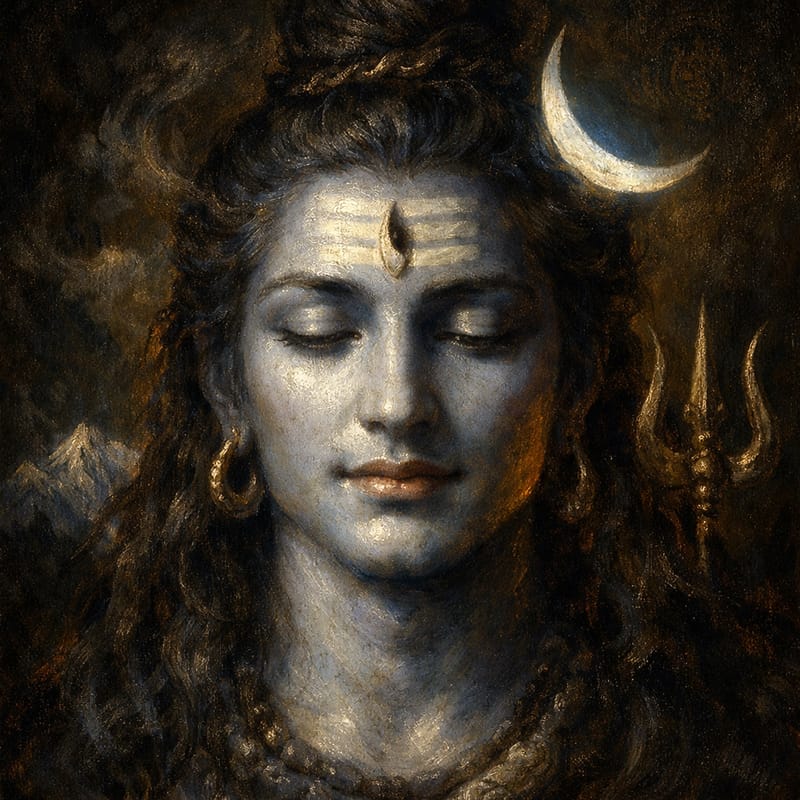
Shiva also known as Mahadeva · Maheshwara · Shankar · Bholenath · Nataraja

Story & Symbolism

The Karacharana Kritam Vaa shloka emerges from the Puranic tradition, particularly in the context of Shaivite devotion where confession and forgiveness are understood as paths to liberation. While some traditions attribute it to the Bhagavata Purana—where Daksha or other devotees invoke Shiva's mercy—the shloka itself has transcended its original textual home to become a universal prayer within Hinduism. Its structure reflects the sophisticated understanding of karma found in Vedantic and Tantric philosophy: that sin is not merely external act but encompasses intention, perception, and mental state. The shloka's comprehensive enumeration of transgression demonstrates deep psychological and spiritual insight, acknowledging that the path to purification requires honesty about all levels of wrongdoing.

Shiva, as the deity invoked, occupies a unique place in Hindu theology as both the fierce destroyer of obstacles and the gentle ocean of compassion. By naming him Karunabdhe (ocean of compassion) and Shambho (source of auspiciousness), the mantra presents Shiva not as a punishing judge but as a transformative force capable of dissolving karmic impressions and restoring spiritual innocence. This reflects a fundamental truth of Shaivite doctrine: that even transgressions, when acknowledged with sincere devotion, become pathways to deeper communion with the divine. The shloka's power lies in its recognition that forgiveness is not a transaction but a grace—an act of divine compassion that dissolves the burden of past actions and allows the practitioner to begin anew.

In contemporary spiritual practice, the Karacharana Kritam Vaa has become a cornerstone ritual across all Hindu traditions, irrespective of sectarian affiliation. It is standard in pujas, meditation practices, and personal sadhana because it addresses a universal human need: the need to release guilt, acknowledge mistakes, and experience forgiveness. Modern practitioners recognize its therapeutic value—it externalizes internal shame and places the burden into the hands of a compassionate, infinite power. This democratization of the shloka, from esoteric Shaivite practice to universal daily chant, reflects its essential truth: that forgiveness and purification are not privileges of the elite but inherent rights of all sincere seekers.

How to Use in Daily Life

🌅

After Morning Sadhana

Chant once at the conclusion of your daily meditation, puja, or mantra practice. This immediately purifies any errors made during the ritual and prevents karmic accumulation before the day begins.

🧘

During Meditation

Use as a closing prayer after deep meditation. The transition from silence to words helps ground your experience and offers any lingering attachments or distractions to Shiva's compassionate care.

🙏

When Guilt Arises

Chant whenever you feel remorse, shame, or guilt about past actions. This immediate invocation of divine forgiveness dissolves the emotional weight and restores inner peace.

💤

Evening Release

Recite before sleep to release the day's accumulated transgressions, mistakes, and regrets. This prepares the subconscious for restorative rest and prevents negative impressions from embedding overnight.

Frequently Asked Questions

What is the Karacharana Kritam Vaa Shiva Mantra?
Karacharana Kritam Vaa is a sacred kshamapana (forgiveness) prayer to Lord Shiva, traditionally chanted to seek absolution from all sins—those of body, speech, and mind, whether intentional or unintentional. It is a two-verse shloka that acknowledges transgression comprehensively and invokes Shiva as an ocean of compassion. This prayer is central to Shaivite spiritual practice and is commonly recited at the end of daily puja, meditation, or ritual to cleanse oneself of errors and karmic residue. It recognizes that sin extends beyond external actions to include perception, intention, and thought. By naming Shiva as Karunabdhe (ocean of compassion) and Shambho (the auspicious), the mantra activates his merciful, transformative power. Unlike confession traditions in other faiths, this mantra does not seek punishment but rather the dissolution and transmutation of karmic impressions through divine grace. The shloka is profound yet simple enough for daily chanting by seekers of all levels.
What are the main benefits of chanting this mantra?
The primary benefit is the release of karmic burden through sincere confession and divine forgiveness, enabling emotional lightness and spiritual renewal. Chanting activates Shiva's compassionate aspect, transforming fear into trust and shame into self-acceptance. Secondary benefits include prevention of karmic accumulation that otherwise blocks meditation and self-realization; cultivation of humility and moral accountability essential for genuine spiritual growth; and completion of ritual practice by addressing errors of commission, omission, and distracted attention. Regular chanting creates a daily practice of accountability and purification, reducing the psychological weight of guilt and regret. For advanced practitioners, it serves as a mirror—revealing blind spots and patterns of transgression—and accelerates inner transformation. Many report experiencing a profound sense of renewal and lightness after sincere repetition, along with deepened devotion to Shiva and increased compassion for themselves and others.
When and how often should I chant this mantra?
The most traditional time is at the conclusion of daily puja or meditation practice, immediately after completion, to absolve any errors made during the ritual. This ensures that unintentional mistakes do not accumulate as karmic impressions. Many practitioners also chant it as an evening prayer before sleep, releasing the day's transgressions and preparing the mind for restorative rest. Frequency depends on your practice: if you perform daily sadhana (spiritual practice), include it once per day at the end. If you meditate or chant other mantras, follow with this shloka. Some seekers chant it whenever guilt, remorse, or moral disturbance arises, using it as an immediate purification tool. There is no maximum limit—more frequent chanting enhances its transformative effect. For best results, chant with sincere intention, acknowledging your transgressions honestly rather than mechanically. Even 3-11 repetitions with full awareness are more powerful than hundreds performed without presence. Consistency matters more than quantity.
What is the scriptural origin of this mantra?
This shloka appears in the Bhagavata Purana as a prayer of the sage Daksha or, in some traditions, as a universal kshamapana (forgiveness prayer) endorsed by Shiva himself. It is not from the Vedas proper but belongs to the Puranic literature that elaborates on Vedic truths. The mantra is classified as a kshamapana shloka—a category of devotional verse specifically designed for seeking forgiveness and release from karmic burden. Its structure reflects the Tantric principle of comprehensive acknowledgment: it names all categories of sin (body, speech, sense, mind) and all types of transgression (prescribed duties omitted, forbidden acts committed). This methodical approach aligns with the Shaiva Agama tradition, which emphasizes that spiritual purification must address all levels of being. In modern practice, it is found in virtually every Hindu ritual manual and is considered essential to both formal puja and personal sadhana. Its universal accessibility and power have made it a cornerstone of contemporary Hindu spiritual life across all Shaivite schools.
How do I pronounce this mantra correctly for a beginner?
Pronunciation is important but sincere intention matters more than perfect accent. Key syllables: kah-rah-CHAH-rah-NAH KRIH-tuhm VAH | KAH-yah-jahm KAHR-mah-jahm VAH | SHRAH-vah-nah NAH-yan-jahm VAH | MAHN-sahm VAH-pah-RAH-dhahm. Second verse: vih-HEE-tuhm ah-vih-HEE-tuhm VAH | SAHR-vah MAY taht KSHAH-mah-svah | JAH-yah JAH-yah kah-roo-NAH-bdhay | SHREE mah-hah-DAY-vah SHAHM-bho. Stress the capitals lightly. Devanagari script ensures accuracy; listening to authentic recordings is invaluable for beginners. The mantra flows as a prayer, not a mechanical chant—allow pauses between verses. Mispronunciation does not diminish its power if your heart is sincere, but proper pronunciation honors the lineage and deepens meditative absorption. Practice slowly at first; speed comes naturally with familiarity. Record yourself and compare to traditional sources. Within weeks, correct pronunciation becomes effortless, and the mantra becomes part of your inner rhythm.
What happens if we chant Karacharana Kritam Vaa Shiva Mantra?
Regular chanting of Karacharana Kritam Vaa Shiva Mantra creates measurable shifts in your mental, emotional, and spiritual state. Dissolves accumulated guilt and psychological burden by placing transgressions into Shiva's compassionate presence, enabling emotional and spiritual release.. Activates Shiva's Karunabdhe aspect (ocean of compassion), transforming fear of judgment into trust in divine forgiveness and grace.. Completes spiritual practice by systematically addressing sins of body, speech, mind, and omission, preventing residual karmic impressions from embedding in consciousness.. Most practitioners notice a tangible difference within the first week of daily practice — start with 108 repetitions using a mala and observe how your inner state transforms.

Related Prayers & Chants

🪘

Ancient Chants — Gold Edition

Get access to ancient meditation mantras. 80% OFF for limited time.

Get 80% OFF →