

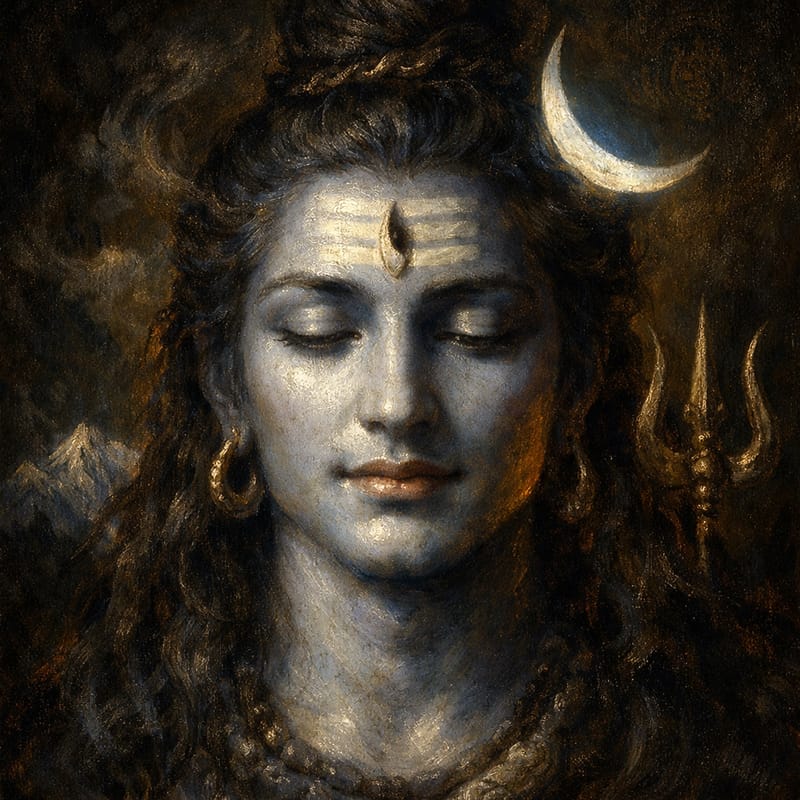
Karacharana Kritam Vaa Shiva Mantra — Spanish Lyrics
Karacharana Kritam Vaa is a two-verse kshamapana shloka (forgiveness prayer) that systematically acknowledges all categories of transgression. The first verse addresses sins committed through the body's actions (hands, feet, physical deeds), sins arising from the body itself (kaya-jam), and sins of perception through the senses—inappropriate hearing and seeing. It then turns inward to confess mental transgressions: harmful thoughts, ego, jealousy, and intentions. This comprehensive enumeration recognizes that sin is not merely external action but encompasses intention, attention, and the subtle realm of consciousness itself.
The second verse expands the confession to include both vihita (prescribed duties omitted) and avihita (forbidden acts committed)—addressing the entire spectrum of moral transgression. By invoking Shiva as Karunabdhe (ocean of compassion) and Shambho (source of auspiciousness), the prayer activates his most forgiving aspect. Shiva, the great destroyer and transformer of obstacles, is seen as uniquely suited to receive and transmute these confessions. In Shaivite tradition, Shiva's compassion is boundless; seeking his forgiveness is not about punishment but about dissolution of karmic burden and spiritual rebirth. The double 'Jaya' amplifies devotion and invokes grace.
This mantra is traditionally chanted at the conclusion of daily puja, meditation, or ritual practice to absolve unintentional errors—mispronunciation, lapses in focus, or incomplete offerings. However, it transcends ritual use: many practitioners recite it as an evening prayer to release the day's accumulated transgressions before sleep, or whenever guilt or remorse arises. It requires no formal initiation and can be chanted silently or aloud, making it accessible to all seekers. Sincere repetition cultivates humility and self-honesty—foundations of authentic spiritual progress.
Curated by The Mahakatha Team · Original Composition: Mahakatha · Lyric: Traditional / Shaivite
Karacharana Kritam Vaa Shiva Mantra
Shiva · Preview · 2:00
Preview ended
This mantra has healed for 3,000 years
Get the full version — plus 275 more ancient chants. 80% OFF today only.
Get Ancient Chants Bundle — 80% OFF →3000+ happy customers · Instant download · All devices
2.2M people trust Mahakatha
Chant offline with daily reminders — Get the Mahakatha app
करचरणकृतं वा कायजं कर्मजं वा श्रवणनयनजं वा मानसं वापराधम्
Karacharana Kritam Vaa Kaayajam Karmajam Vaa Shravana Nayanjam Vaa Maansam Vaaparadham
Busco tus bendiciones, Señor Shiva, que me sean perdonados los pecados de mis manos, pies, palabra, acciones, oídos, ojos o mente.
विहितमविहितं वा सर्वमे तत्क्षमस्व जय जय करुणाब्धे श्रीमहादेव शम्भो
Vihitam Avihitam Vaa Sarva Me Tat Kshamasva Jaya Jaya Karunaabdhe Shree Mahadeva Shambho
Que mi cuerpo, mente y espíritu sean purificados, oh misericordioso Señor Shiva
How to Chant Karacharana Kritam Vaa Shiva Mantra
- 1
Find a quiet, clean space
Sit in a comfortable, undisturbed environment. Face east or north if possible. You may light incense or a candle to set a contemplative atmosphere.
- 2
Settle into a comfortable posture
Sit cross-legged on the floor or upright in a chair. Keep the spine erect and place the hands on the knees with palms facing upward.
- 3
Take three cleansing breaths
Inhale slowly through the nose, hold briefly, and exhale completely. Repeat three times to calm the mind and prepare for mantra recitation.
- 4
Begin chanting Karacharana Kritam Vaa Shiva Mantra
Chant the mantra clearly and with devotion — aloud, in a whisper, or silently. Use a mala (108 beads) to count repetitions. Aim for a consistent, unhurried rhythm throughout the session.
- 5
Rest in stillness
After completing your chanting, sit quietly for two to five minutes. Allow the vibration of the mantra to settle within. Close the practice with a moment of gratitude.
Benefits of Karacharana Kritam Vaa Shiva Mantra
-
Dissolves accumulated guilt and psychological burden by placing transgressions into Shiva's compassionate presence, enabling emotional and spiritual release.
Source: Traditional Shaivite practice
-
Activates Shiva's Karunabdhe aspect (ocean of compassion), transforming fear of judgment into trust in divine forgiveness and grace.
Source: Shaiva Agama tradition
-
Rounds off spiritual practice by asking forgiveness for wrongs of body, speech, mind, and omission, so that, as devotees believe, no residual karmic impressions remain.
Source: Vedantic understanding of karma and purification
-
Cultivates humility, self-honesty, and moral accountability—essential virtues for advancement on the spiritual path and deepening of devotion.
Source: Bhakti and Tantra philosophy
-
Traditionally believed to protect practitioners from the build-up of subtle vasanas (karmic imprints) that obstruct meditation and self-realization.
Story & Symbolism
The Karacharana Kritam Vaa shloka emerges from the Puranic tradition, particularly in the context of Shaivite devotion where confession and forgiveness are understood as paths to liberation. This verse is from the Shiva Aparadha Kshamapana Stotram, a prayer of repentance composed by Adi Shankaracharya, seeking forgiveness for all acts done knowingly or unknowingly against Shiva. Its structure reflects the sophisticated understanding of karma found in Vedantic and Tantric philosophy: that sin is not merely external act but encompasses intention, perception, and mental state. The shloka's comprehensive enumeration of transgression demonstrates deep psychological and spiritual insight, acknowledging that the path to purification requires honesty about all levels of wrongdoing.
Shiva, as the deity invoked, occupies a unique place in Hindu theology as both the fierce destroyer of obstacles and the gentle ocean of compassion. By naming him Karunabdhe (ocean of compassion) and Shambho (source of auspiciousness), the mantra presents Shiva not as a punishing judge but as a transformative force believed to dissolve karmic impressions and restore spiritual innocence. This reflects a fundamental truth of Shaivite doctrine: that even transgressions, when acknowledged with sincere devotion, become pathways to deeper communion with the divine. The shloka's power lies in its recognition that forgiveness is not a transaction but a grace—an act of divine compassion that dissolves the burden of past actions and allows the practitioner to begin anew.
In contemporary spiritual practice, the Karacharana Kritam Vaa has become a cornerstone ritual across all Hindu traditions, irrespective of sectarian affiliation. It is standard in pujas, meditation practices, and personal sadhana because it addresses a universal human need: the need to release guilt, acknowledge mistakes, and experience forgiveness. Modern practitioners find it emotionally freeing—it externalizes internal shame and places the burden into the hands of a compassionate, boundless divine presence. This democratization of the shloka, from esoteric Shaivite practice to universal daily chant, reflects its essential truth: that forgiveness and purification are not privileges of the elite but inherent rights of all sincere seekers.
How to Use in Daily Life
After Morning Sadhana
Chant once at the conclusion of your daily meditation, puja, or mantra practice. This is traditionally said to make good any errors made during the ritual before the day begins.
During Meditation
Use as a closing prayer after deep meditation. The transition from silence to words helps ground your experience and offers any lingering attachments or distractions to Shiva's compassionate care.
When Guilt Arises
Chant whenever you feel remorse, shame, or guilt about past actions. This immediate invocation of divine forgiveness dissolves the emotional weight and restores inner peace.
Evening Release
Recite before sleep to release the day's accumulated transgressions, mistakes, and regrets. This helps settle the mind for restful sleep and lets go of the day's heavier impressions.