

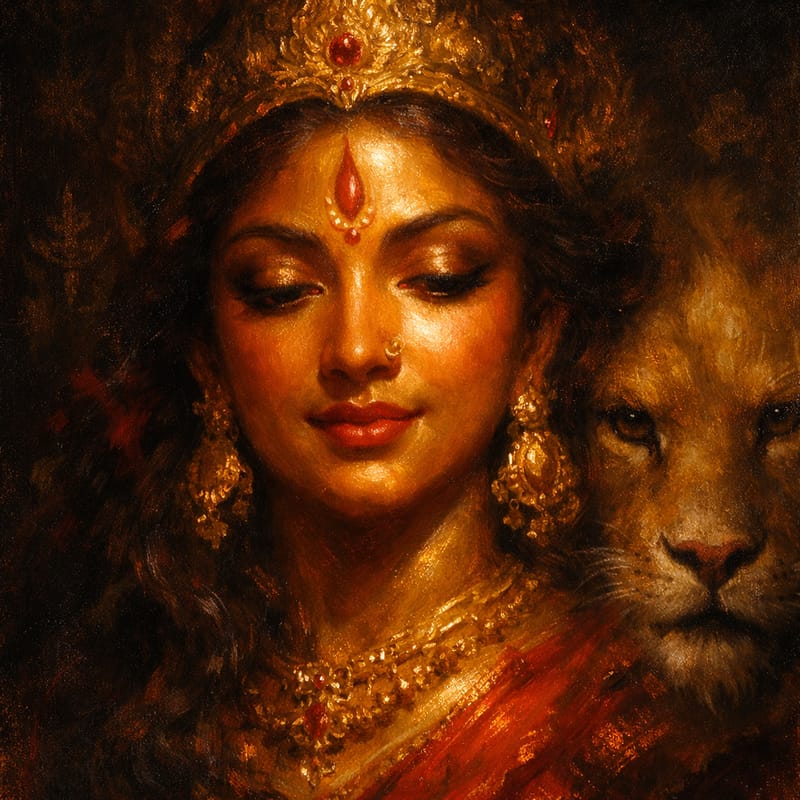
Aigiri Nandini – Mahishasura Mardini Stotram — Telugu Lyrics
The Mahishasura Mardini Mantra is a 21-verse hymn composed by the 8th-century Sanskrit poet Adi Shankaracharya, invoking Goddess Durga. Each verse addresses the Divine Mother through her multiple names and cosmic functions—from her role as daughter of the Himalayas to her manifestation as destroyer of demons. The mantra progresses from invocations of her transcendent power (Shakti) through detailed descriptions of her divine beauty, martial prowess, and boundless compassion. The refrain "Jaya Jaya He Mahishasuramardini" (Victory to the Slayer of Mahishasura) anchors each verse, celebrating her triumph over the buffalo demon and all forces of ignorance.
Durga in this mantra embodies Prakriti (cosmic creative force) manifesting as both the gentle nurturer of the universe and the fierce warrior who destroys ego and illusion. The text draws from the Devi Mahatmya (Markandeya Purana), where Durga defeats Mahishasura—a demon symbolizing tamas (inertia) and ahamkara (ego). Each verse reveals layers of her divinity: her dwelling in the Vindhyas, her enchanting beauty that subdues even celestial beings, her cosmic dance (Tandava), and her ultimate transcendence as the substratum of reality. The mantra celebrates not merely a deity but the inner divine principle that devotees see as overcoming obstacles, making her both accessible to devotional worship and supreme beyond form.
This mantra is traditionally chanted during Navratri (the nine nights of Durga worship), especially on Vijayadashami—the day celebrating victory over Mahishasura. Practitioners begin with one complete recitation daily, progressing to 11 or 108 repetitions for deeper spiritual transformation. Ideally chant in morning hours after meditation or before bed to invoke protection and courage. The mantra works synergistically with visualization of Durga's fierce and compassionate forms, strengthening intention to overcome inner obstacles. Devotees report heightened clarity, emotional resilience, and a sense of divine protection when practicing with sincere devotion.
Curated by The Mahakatha Team · Original Composition: Mahakatha · Lyric: Traditional / Shakta
Aigiri Nandini – Mahishasura Mardini Stotram
Durga · Preview · 2:00
Preview ended
Ancient sounds for transformation, carried across 3,000 years.
Get the full version — plus 275 more ancient chants. 80% OFF today only.
Get Ancient Chants Bundle — 80% OFF →3000+ happy customers · Lifetime access · All devices
2.2M people trust Mahakatha
Chant daily with reminders — Get the Mahakatha app
Lyrics
अयि गिरि नन्दिनी नन्दितमेदिनि विश्वविनोदिनि नंदनुते गिरिवर विन्ध्यशिरोधिनिवासिनी विष्णुविलासिनि जिष्णुनुते । भगवति हे शितिकण्ठकुटुम्बिनि भूरिकुटुम्बिनि भूरिकृते जय जय हे महिषासुरमर्दिनि रम्यकपर्दिनि शैलसुते ॥१॥
అయి గిరి నన్దినీ నన్దితమేదిని విశ్వవినోదిని నందనుతే గిరివర విన్ధ్యశిరోధినివాసినీ విష్ణువిలాసిని జిష్ణునుతే । భగవతి హే శితికణ్ఠకుటుమ్బిని భూరికుటుమ్బిని భూరికృతే జయ జయ హే మహిషాసురమర్దిని రమ్యకపర్దిని శైలసుతే ॥౧॥
ఓ పర్వత రాజ కుమారీ, విశ్వానికి ఆనంద స్వరూపిణి, నందునిచే స్తుతింపబడినదానా,
వింధ్య పర్వత శిఖరాగ్రములందు నివసించునది, విష్ణువు ప్రీతిపాత్రురాలు, ఇంద్రుని భక్తిపాత్రురాలు,
ఓ భగవతీ, శివుని దివ్య సహచరి, విశ్వ మాత, సమృద్ధి కర్త్రి,
జయము కలుగు గాక, ఓ మహిషాసుర మర్దిని, సుందర జటాధారిణి, పర్వత రాజ సుతా.
सुरवर वर्षिणि दुर्धर धर्षिणि दुर्मुख मर्षिणि हर्षरते त्रिभुवनपोषिणि शङ्करतोषिणि किल्बिष मोषिणि घोषरते। दनुजनिरोषिणि दितिसुतरोषिणि दुर्मदशोषिणि सिन्धुसुते जय जय हे महिषासुरमर्दिनि रम्यकपर्दिनि शैलसुते ॥२॥
సురవర వర్షిణి దుర్ధర ధర్షిణి దుర్ముఖ మర్షిణి హర్షరతే త్రిభువనపోషిణి శఙ్కరతోషిణి కిల్బిష మోషిణి ఘోషరతే। దనుజనిరోషిణి దితిసుతరోషిణి దుర్మదశోషిణి సిన్ధుసుతే జయ జయ హే మహిషాసురమర్దిని రమ్యకపర్దిని శైలసుతే ॥౨॥
ఓ దేవతలకు వరములనిచ్చునది, దుర్ధర రాక్షసుని అణచునది, దుర్ముఖ రాక్షసుని సంహరించినది, సదా ఆనందమయమైనది,
ఓ త్రిలోకములను పోషించునది, శివుని ఆనందము కలిగించునది, పాపములను మరియు వాని దుష్ప్రభావములను నివారించునది,
దానవులను శాంతింపజేయునది, దైత్యుల పట్ల కోపించునది, రాక్షసుల అహంకారమును నశింపజేయునది, ఓ సముద్ర రాజ సుతా,
జయము కలుగు గాక, ఓ మహిషాసుర మర్దిని, సుందర జటాధారిణి, పర్వత రాజ సుతా.
अयि जगदम्ब मदम्ब कदम्ब वनप्रिय वासिनि हासरते शिखरि शिरोमणि तुङ्गहिमालय शृङ्गनिजालय मध्यगते। मधुमधुरेमधुकैटभ गञ्जिनि कैटभ भञ्जिनि रासरते जय जय हे महिषासुरमर्दिनि रम्यकपर्दिनि शैलसुते ॥३॥
అయి జగదమ్బ మదమ్బ కదమ్బ వనప్రియ వాసిని హాసరతే శిఖరి శిరోమణి తుఙ్గహిమాలయ శృఙ్గనిజాలయ మధ్యగతే। మధుమధురేమధుకైటభ గఞ్జిని కైటభ భఞ్జిని రాసరతే జయ జయ హే మహిషాసురమర్దిని రమ్యకపర్దిని శైలసుతే ॥౩॥
ఓ జగన్మాత, సర్వాత్మల మాత, కదంబ వృక్ష వనములలో ఆనందముగా నివసించునది,
హిమాలయ పర్వత శిఖరాగ్రమునందు నిలుపుగా కలది,
తేనెవలె మధురమైనది, మధు కైటభ రాక్షసుల అహంకారమును నాశనము చేసినది, రాసానందములో మునిగియుండునది,
జయము కలుగు గాక, ఓ మహిషాసుర మర్దిని, సుందర జటాధారిణి, పర్వత రాజ సుతా.
अयि शतखण्ड विखण्डित रुण्ड वितुण्डित शुंड गजाधिपते रिपुगजगण्ड विदारणचण्ड पराक्रमशुण्ड मृगाधिपते। निजभुजदण्ड निपातितखण्ड विपातितमुण्ड भटाधिपते जय जय हे महिषासुरमर्दिनि रम्यकपर्दिनि शैलसुते ॥४॥
అయి శతఖణ్డ విఖణ్డిత రుణ్డ వితుణ్డిత శుండ గజాధిపతే రిపుగజగణ్డ విదారణచణ్డ పరాక్రమశుణ్డ మృగాధిపతే। నిజభుజదణ్డ నిపాతితఖణ్డ విపాతితముణ్డ భటాధిపతే జయ జయ హే మహిషాసురమర్దిని రమ్యకపర్దిని శైలసుతే ॥౪॥
శత్రువులను వేల ముక్కలుగా ఛిన్నభిన్నము చేసినది, వారి శిరస్సులను ఖండించినది, వారి ఏనుగుల సొండలను తెగగొట్టినది,
వారి భయంకర మృగముల ముఖములను చీల్చి చెండాడినది,
చండ ముండ రాక్షసులను ఓడించినది, వారి యోధులను జయించినది,
జయము కలుగు గాక, ఓ మహిషాసుర మర్దిని, సుందర జటాధారిణి, పర్వత రాజ సుతా.
अयि रणदुर्मद शत्रुवधोदित दुर्धरनिर्जर शक्तिभृते चतुरविचार धुरीणमहाशिव दूतकृत प्रमथाधिपते। दुरितदुरीह दुराशयदुर्मति दानवदूत कृतान्तमते जय जय हे महिषासुरमर्दिनि रम्यकपर्दिनि शैलसुते ॥५॥
అయి రణదుర్మద శత్రువధోదిత దుర్ధరనిర్జర శక్తిభృతే చతురవిచార ధురీణమహాశివ దూతకృత ప్రమథాధిపతే। దురితదురీహ దురాశయదుర్మతి దానవదూత కృతాన్తమతే జయ జయ హే మహిషాసురమర్దిని రమ్యకపర్దిని శైలసుతే ॥౫॥
ఓ దివ్య దేవీ, యుద్ధరంగము నుండి పరాక్రమముతో ఆవిర్భవించినది, అనంత శాశ్వత శక్తి కలది,
మహా శివుని దూత, సర్వజ్ఞురాలు, శివుడు నిన్ను తన గణముల నాయకురాలిగా నియమించినాడు,
సమస్త పాపములను, శత్రువుల దుర్మనస్సులను నాశనము చేయునది, వారి దూతలను సంహరించునది, నీ సంకల్పమే పరమము,
జయము కలుగు గాక, ఓ మహిషాసుర మర్దిని, సుందర జటాధారిణి, పర్వత రాజ సుతా.
अयि शरणागत वैरिवधुवर वीरवराभय दायकरे त्रिभुवनमस्तक शुलविरोधि शिरोधिकृतामल शुलकरे। दुमिदुमितामर धुन्दुभिनाद महोमुखरीकृत दिङ्मकरे जय जय हे महिषासुरमर्दिनि रम्यकपर्दिनि शैलसुते ॥६॥
అయి శరణాగత వైరివధువర వీరవరాభయ దాయకరే త్రిభువనమస్తక శులవిరోధి శిరోధికృతామల శులకరే। దుమిదుమితామర ధున్దుభినాద మహోముఖరీకృత దిఙ్మకరే జయ జయ హే మహిషాసురమర్దిని రమ్యకపర్దిని శైలసుతే ॥౬॥
ఓ దివ్య మాతా, శత్రువుల ప్రియమైన వారిలో కూడా శరణు కోరువారికి రక్షణ ప్రసాదించే దేవి
నీ నుదుటిపై ఉన్న పవిత్రమైన త్రిశూలం నీ దివ్య శక్తిని వ్యతిరేకించే పాలకులను ఓడిస్తుంది
నీ గర్జన ఉరుము మ్రోత వంటి భేరీల శబ్దం, శత్రువులపై దాడి చేసేటప్పుడు బిగ్గరగా మరియు భయంకరంగా ఉంటుంది
మహిషాసుర మర్దిని కు జయము, అందమైన జడలతో కూడిన పర్వత పుత్రికకు జయము
अयि निजहुङ्कृति मात्रनिराकृत धूम्रविलोचन धूम्रशते समरविशोषित शोणितबीज समुद्भव शोणित बीजलते। शिवशिवशुम्भ निशुम्भमहाहव तर्पितभूत पिशाचरते जय जय हे महिषासुरमर्दिनि रम्यकपर्दिनि शैलसुते ॥७॥
అయి నిజహుఙ్కృతి మాత్రనిరాకృత ధూమ్రవిలోచన ధూమ్రశతే సమరవిశోషిత శోణితబీజ సముద్భవ శోణిత బీజలతే। శివశివశుమ్భ నిశుమ్భమహాహవ తర్పితభూత పిశాచరతే జయ జయ హే మహిషాసురమర్దిని రమ్యకపర్దిని శైలసుతే ॥౭॥
ఓ దివ్య మాతా, కేవలం గర్జనతోనే ధూమ్రలోచన రాక్షసుడిని పొగగా మార్చిన దేవి
నువ్వు రక్తబీజ రాక్షసుడిని మరియు అతని రక్త బిందువుల నుండి పుట్టిన అతని ప్రతిరూపాలను నాశనం చేశావు
నువ్వు యుద్ధంలో శుంభ మరియు నిశుంభుల ఆత్మలను విముక్తి చేసి, వారిని భూతాలుగా మారకుండా రక్షించావు
మహిషాసుర మర్దిని కు జయము, అందమైన జడలతో కూడిన పర్వత పుత్రికకు జయము
धनुरनुषङ्ग रणक्षणसङ्ग परिस्फुरदङ्ग नटत्कटके कनकपिशङ्ग पृषत्कनिषङ्ग रसद्भटशृङ्ग हतावटुके। कृतचतुरङ्ग बलक्षितिरङ्ग घटद्बहुरङ्ग रटद्बटुके जय जय हे महिषासुरमर्दिनि रम्यकपर्दिनि शैलसुते ॥८॥
ధనురనుషఙ్గ రణక్షణసఙ్గ పరిస్ఫురదఙ్గ నటత్కటకే కనకపిశఙ్గ పృషత్కనిషఙ్గ రసద్భటశృఙ్గ హతావటుకే। కృతచతురఙ్గ బలక్షితిరఙ్గ ఘటద్బహురఙ్గ రటద్బటుకే జయ జయ హే మహిషాసురమర్దిని రమ్యకపర్దిని శైలసుతే ॥౮॥
యుద్ధంలో నీ విల్లు మరియు బాణాల కదలికలకు తగ్గట్టు నీ కంకణాలు నృత్యం చేస్తూ మెరుస్తాయి
నీ బంగారు బాణాలతో నువ్వు సమతుల్యతతో దాడి చేసి శత్రువులను కూల్చివేస్తావు
నువ్వు ఒంటరిగా నాలుగు సైన్యాలతో పోరాడావు, నీ నుండి ప్రసరించే శక్తి వారిని బలహీనపరచి ఓడించింది
మహిషాసుర మర్దిని కు జయము, అందమైన జడలతో కూడిన పర్వత పుత్రికకు జయము
सुरललना ततथेयि तथेयि कृताभिनयोदर नृत्यरते कृत कुकुथः कुकुथो गडदादिकताल कुतूहल गानरते। धुधुकुट धुक्कुट धिंधिमित ध्वनि धीर मृदंग निनादरते जय जय हे महिषासुरमर्दिनि रम्यकपर्दिनि शैलसुते॥९॥
సురలలనా తతథేయి తథేయి కృతాభినయోదర నృత్యరతే కృత కుకుథః కుకుథో గడదాదికతాల కుతూహల గానరతే। ధుధుకుట ధుక్కుట ధింధిమిత ధ్వని ధీర మృదంగ నినాదరతే జయ జయ హే మహిషాసురమర్దిని రమ్యకపర్దిని శైలసుతే॥౯॥
దివ్య మాతా, నువ్వు దివ్య సుందరుల భయంకర లయబద్ధ నృత్య ప్రదర్శనలలో ఆనందిస్తావు
మరియు దివ్య సంగీత విద్వాంసులు చేసే దివ్య గానం మరియు వాద్య ప్రదర్శనలను ఆస్వాదిస్తావు
మృదంగాల లోతైన శబ్దాలు నీ విజయానికి మరియు యుద్ధ సమాప్తికి తోడుగా ఉంటాయి
మహిషాసుర మర్దిని కు జయము, అందమైన జడలతో కూడిన పర్వత పుత్రికకు జయము
जय जय जप्य जयेजयशब्द परस्तुति तत्परविश्वनुते भणभण भिंजिमि भिंगृती नूपुर शिञ्जितमोहित भूतपते। नटित नटार्ध नटी नट नायक नाटितनाट्य सुगानरते जय जय हे महिषासुरमर्दिनि रम्यकपर्दिनि शैलसुते ॥१०॥
జయ జయ జప్య జయేజయశబ్ద పరస్తుతి తత్పరవిశ్వనుతే భణభణ భింజిమి భింగృతీ నూపుర శిఞ్జితమోహిత భూతపతే। నటిత నటార్ధ నటీ నట నాయక నాటితనాట్య సుగానరతే జయ జయ హే మహిషాసురమర్దిని రమ్యకపర్దిని శైలసుతే ॥౧౦॥
దివ్య మాతా, భక్తులు నీ పేరు జపిస్తూ కేకలు వేస్తారు, మరియు నీ శక్తి మరియు నృత్యంతో మోహితులవుతారు
నీ గజ్జల జలజల శబ్దం ప్రాణుల మర్మమైన ప్రభువు శివుడిని ఆకర్షిస్తుంది
నువ్వు శివుని సగభాగంగా నృత్యం చేస్తావు, ఒక పాదం భూమిపై, మరొకటి ఆకాశం వైపు, విస్మయంతో ఉన్న నర్తకులచే చుట్టుముట్టబడి
మహిషాసుర మర్దిని కు జయము, అందమైన జడలతో కూడిన పర్వత పుత్రికకు జయము
अयि सुमनःसुमनःसुमनः सुमनःसुमनोहरकान्तियुते श्रितरजनी रजनीरजनी रजनीरजनी करवक्त्रवृते। सुनयनविभ्रमर भ्रमरभ्रमर भ्रमरभ्रमर भ्रमराधिपते जय जय हे महिषासुरमर्दिनि रम्यकपर्दिनि शैलसुते ॥११॥
అయి సుమనఃసుమనఃసుమనః సుమనఃసుమనోహరకాన్తియుతే శ్రితరజనీ రజనీరజనీ రజనీరజనీ కరవక్త్రవృతే। సునయనవిభ్రమర భ్రమరభ్రమర భ్రమరభ్రమర భ్రమరాధిపతే జయ జయ హే మహిషాసురమర్దిని రమ్యకపర్దిని శైలసుతే ॥౧౧॥
ఓ దివ్యమాతా, నీ సుందరమైన మనస్సు నీ ఆకర్షణీయ రూపంతో సామరస్యంగా ఉంది
నీ ప్రకాశవంతమైన ముఖం చంద్రకాంతిని తన తేజస్సుతో మించిపోతుంది
నీ కన్నులు తమ మోహకరమైన సౌందర్యంతో తుమ్మెదల అందాన్ని మించిపోతాయి
మహిషాసురమర్దినీ, అందమైన జటలు గల పర్వతరాజపుత్రీ, నీకు జయము
सहितमहाहव मल्लमतल्लिक मल्लितरल्लक मल्लरते विरचितवल्लिक पल्लिकमल्लिक भिल्लिकभिल्लिक वर्गवृते। शितकृतफुल्ल समुल्लसितारुण तल्लजपल्लव सल्ललिते जय जय हे महिषासुरमर्दिनि रम्यकपर्दिनि शैलसुते ॥१२॥
సహితమహాహవ మల్లమతల్లిక మల్లితరల్లక మల్లరతే విరచితవల్లిక పల్లికమల్లిక భిల్లికభిల్లిక వర్గవృతే। శితకృతఫుల్ల సముల్లసితారుణ తల్లజపల్లవ సల్లలితే జయ జయ హే మహిషాసురమర్దిని రమ్యకపర్దిని శైలసుతే ॥౧౨॥
ఓ దివ్యమాతా, నీవు నైపుణ్యం గల శత్రువులతో యుద్ధ విహారాన్ని ఆస్వాదిస్తావు
నీవు జ్ఞానవృక్షం చుట్టూ, పుష్పించే అరణ్యాల మధ్య నివసించడం ఇష్టపడతావు
నీవు తీగలు మరియు మొక్కల మధ్య నడుస్తూ, వాటి మొగ్గలను వికసింపజేయడం ఇష్టపడతావు
మహిషాసురమర్దినీ, అందమైన జటలు గల పర్వతరాజపుత్రీ, నీకు జయము
अविरलगण्ड गलन्मदमेदुर मत्तमतङ्ग जराजपते त्रिभुवनभूषण भूतकलानिधि रूपपयोनिधि राजसुते। अयि सुदतीजन लालसमानस मोहन मन्मथराजसुते जय जय हे महिषासुरमर्दिनि रम्यकपर्दिनि शैलसुते ॥ १३॥
అవిరలగణ్డ గలన్మదమేదుర మత్తమతఙ్గ జరాజపతే త్రిభువనభూషణ భూతకలానిధి రూపపయోనిధి రాజసుతే। అయి సుదతీజన లాలసమానస మోహన మన్మథరాజసుతే జయ జయ హే మహిషాసురమర్దిని రమ్యకపర్దిని శైలసుతే ॥ ౧౩॥
దివ్యమాతా, నీవు శక్తివంతమైన ఏనుగుల కళ్ళ మధ్య 'మద' ప్రవాహాన్ని ప్రేరేపించి వాటిని మత్తెక్కిస్తావు
నీవు త్రైలోక్యాలకు భూషణం, కళల నిధివి, సౌందర్య సాగరం, రాజపుత్రివి
మన్మథుడు, ప్రేమ దేవుడు వలె, నీవు ప్రజల మనస్సులలో మోహం మరియు కోరికను రేకెత్తిస్తావు
మహిషాసురమర్దినీ, అందమైన జటలు గల పర్వతరాజపుత్రీ, నీకు జయము
कमलदलामल कोमलकान्ति कलाकलितामल भाललते सकलविलास कलानिलयक्रम केलिचलत्कल हंसकुले। अलिकुलसङ्कुल कुवलयमण्डल मौलिमिलद्बकुलालिकुले जय जय हे महिषासुरमर्दिनि रम्यकपर्दिनि शैलसुते ॥ १४॥
కమలదలామల కోమలకాన్తి కలాకలితామల భాలలతే సకలవిలాస కలానిలయక్రమ కేలిచలత్కల హంసకులే। అలికులసఙ్కుల కువలయమణ్డల మౌలిమిలద్బకులాలికులే జయ జయ హే మహిషాసురమర్దిని రమ్యకపర్దిని శైలసుతే ॥ ౧౪॥
ఓ దివ్యమాతా, నీ నుదుట నిర్మలమైన కమల దళం యొక్క సున్నితమైన సౌందర్యంతో ప్రకాశిస్తుంది
నీవు అన్ని కళా రూపాలకు ప్రేరణనిస్తావు, మరియు నీ కదలికలు హంసల కదలికలకు ప్రేరణనిస్తాయి
నీ అల్లిన జుట్టు నీలోత్పలాలు మరియు బకుల పుష్పాల సౌందర్యం మరియు మాధుర్యాన్ని కలిగి ఉంది
మహిషాసురమర్దినీ, అందమైన జటలు గల పర్వతరాజపుత్రీ, నీకు జయము
करमुरलीरव वीजितकूजित लज्जितकोकिल मञ्जुमते मिलितपुलिन्द मनोहरगुञ्जित रञ्जितशैल निकुञ्जगते। निजगुणभूत महाशबरीगण सद्गुणसम्भृत केलितले जय जय हे महिषासुरमर्दिनि रम्यकपर्दिनि शैलसुते ॥ १५॥
కరమురలీరవ వీజితకూజిత లజ్జితకోకిల మఞ్జుమతే మిలితపులిన్ద మనోహరగుఞ్జిత రఞ్జితశైల నికుఞ్జగతే। నిజగుణభూత మహాశబరీగణ సద్గుణసమ్భృత కేలితలే జయ జయ హే మహిషాసురమర్దిని రమ్యకపర్దిని శైలసుతే ॥ ౧౫॥
ఓ దివ్యమాతా, నీ స్వరం వేణువును మించిపోతుంది మరియు కోయిల మాధుర్యాన్ని సిగ్గుపరుస్తుంది
నీవు ప్రకాశవంతమైన రంగుల పర్వత తోపుల మధ్య నడుస్తూ మంత్రముగ్ధమైన పాటలు పాడతావు
నీవు నీ సహవాసంలో ఉన్న సద్గుణవంతమైన గిరిజన స్త్రీలతో ఆనందంగా ఆడుకుంటావు
మహిషాసురమర్దినీ, అందమైన జటలు గల పర్వతరాజపుత్రీ, నీకు జయము
कटितटपीत दुकूलविचित्र मयुखतिरस्कृत चन्द्ररुचे प्रणतसुरासुर मौलिमणिस्फुर दंशुलसन्नख चन्द्ररुचे। जितकनकाचल मौलिपदोर्जित निर्भरकुञ्जर कुम्भकुचे जय जय हे महिषासुरमर्दिनि रम्यकपर्दिनि शैलसुते ॥ १६॥
కటితటపీత దుకూలవిచిత్ర మయుఖతిరస్కృత చన్ద్రరుచే ప్రణతసురాసుర మౌలిమణిస్ఫుర దంశులసన్నఖ చన్ద్రరుచే। జితకనకాచల మౌలిపదోర్జిత నిర్భరకుఞ్జర కుమ్భకుచే జయ జయ హే మహిషాసురమర్దిని రమ్యకపర్దిని శైలసుతే ॥ ౧౬॥
ఓ దివ్య మాతా, నీ నడుము చంద్రుని కంటే ప్రకాశవంతమైన రంగుల పట్టు వస్త్రాలతో చుట్టబడి ఉంది
నీ ప్రకాశవంతమైన కాలి గోళ్ళు దేవతలు మరియు అసురుల కిరీటాల నుండి వచ్చే మెరుపును ప్రతిబింబిస్తాయి
నీ వక్షస్థలం బంగారు పర్వత శిఖరాల వలె మరియు శక్తివంతమైన ఏనుగు నుదుటి కిరీటం వలె ప్రకాశిస్తుంది
మహిషాసుర సంహారిణికి జయము; అందమైన జడలతో కూడిన పర్వత పుత్రికకు జయము
विजितसहस्रकरैक सहस्रकरैक सहस्रकरैकनुते कृतसुरतारक सङ्गरतारक सङ्गरतारक सूनुसुते। सुरथसमाधि समानसमाधि समाधिसमाधि सुजातरते जय जय हे महिषासुरमर्दिनि रम्यकपर्दिनि शैलसुते ॥ १७॥
విజితసహస్రకరైక సహస్రకరైక సహస్రకరైకనుతే కృతసురతారక సఙ్గరతారక సఙ్గరతారక సూనుసుతే। సురథసమాధి సమానసమాధి సమాధిసమాధి సుజాతరతే జయ జయ హే మహిషాసురమర్దిని రమ్యకపర్దిని శైలసుతే ॥ ౧౭॥
ఓ దివ్య మాతా, నువ్వు వేయి చేతులతో శత్రువులను ఓడిస్తావు, వేయి సూర్య కిరణాలను మించిపోయావు
నువ్వు దేవతలను రక్షించడానికి కార్తికేయుడిని సృష్టించి, తారకాసురుడితో యుద్ధం చేయమని ప్రేరేపించావు
నువ్వు రాజు సురథుడు మరియు వ్యాపారి సమాధి యొక్క భక్తి మనస్సులను అన్ని ప్రాపంచిక బాధల నుండి విముక్తి చేశావు
మహిషాసుర సంహారిణికి జయము; అందమైన జడలతో కూడిన పర్వత పుత్రికకు జయము
पदकमलं करुणानिलये वरिवस्यति योनुदिनं सुशिवे अयि कमले कमलानिलये कमलानिलयः स कथं न भवेत्। तव पदमेव परम्पदमित्यनुशीलयतो मम किं न शिवे जय जय हे महिषासुरमर्दिनि रम्यकपर्दिनि शैलसुते ॥ १८॥
పదకమలం కరుణానిలయే వరివస్యతి యోనుదినం సుశివే అయి కమలే కమలానిలయే కమలానిలయః స కథం న భవేత్। తవ పదమేవ పరమ్పదమిత్యనుశీలయతో మమ కిం న శివే జయ జయ హే మహిషాసురమర్దిని రమ్యకపర్దిని శైలసుతే ॥ ౧౮॥
ప్రతిదినం నీ కరుణామయ పద్మ పాదాలను పూజించేవారు ధన్యులు
వారు పద్మము వంటి లక్ష్మీదేవిని సేవిస్తారు, వారికి సంపద లభించకుండా ఎలా ఉంటుంది?
నేను నీ పాదాల వద్ద శరణు కోరుతున్నాను, పరమ శరణ్యమైన నీ పాదాలు, నాకు ఇంకేమి కావాలి?
మహిషాసుర సంహారిణికి జయము; అందమైన జడలతో కూడిన పర్వత పుత్రికకు జయము
कनकलसत्कल सिन्धुजलैरनु षिञ्चति ते गुण रङ्गभुवम् भजति स किं न शचीकुचकुम्भ तटीपरिरम्भ सुखानुभवम्। तव चरणं शरणं करवाणि नतामरवाणि निवासि शिवम् जय जय हे महिषासुरमर्दिनि रम्यकपर्दिनि शैलसुते ॥ १९॥
కనకలసత్కల సిన్ధుజలైరను షిఞ్చతి తే గుణ రఙ్గభువమ్ భజతి స కిం న శచీకుచకుమ్భ తటీపరిరమ్భ సుఖానుభవమ్। తవ చరణం శరణం కరవాణి నతామరవాణి నివాసి శివమ్ జయ జయ హే మహిషాసురమర్దిని రమ్యకపర్దిని శైలసుతే ॥ ౧౯॥
దివ్య మాతా, బంగారు పాత్రలో సముద్ర జలాన్ని నీకు అర్పించి భక్తితో స్తుతించే ఎవరైనా
వారు నీ స్వర్ణ పాత్ర నుండి - నీ జ్ఞానం మరియు ధైర్యం మరియు ఆనందం - ఆశీర్వాదాలను పొందుతారు
నేను నీ శాశ్వత పాదాల వద్ద నమస్కరిస్తున్నాను, ఓ మహాసరస్వతీ, సమస్త మంగళాలకు మూలం
మహిషాసుర సంహారిణికి జయము; అందమైన జడలతో కూడిన పర్వత పుత్రికకు జయము
तव विमलेन्दुकुलं वदनेन्दुमलं सकलं ननु कूलयते किमु पुरुहूतपुरीन्दुमुखी सुमुखीभिरसौ विमुखीक्रियते। मम तु मतं शिवनामधने भवती कृपया किमुत क्रियते जय जय हे महिषासुरमर्दिनि रम्यकपर्दिनि शैलसुते ॥ २०॥
తవ విమలేన్దుకులం వదనేన్దుమలం సకలం నను కూలయతే కిము పురుహూతపురీన్దుముఖీ సుముఖీభిరసౌ విముఖీక్రియతే। మమ తు మతం శివనామధనే భవతీ కృపయా కిముత క్రియతే జయ జయ హే మహిషాసురమర్దిని రమ్యకపర్దిని శైలసుతే ॥ ౨౦॥
దివ్య మాతా, నీ చంద్రుని వంటి పవిత్ర ముఖం వైపు ఆకర్షితులైన వారు మరొకరి వైపు ఎలా ఆకర్షితులవుతారు?
నీ కృప మనస్సును ప్రాపంచిక ఆకర్షణల నుండి, ఇంద్రలోకపు అత్యుత్తమ సౌందర్యాల నుండి కూడా దూరం చేస్తుంది
నీ కృప లేకుండా, శివ నామ రూపమైన నిధిని ఎలా అన్లాక్ చేయగలరు?
మహిషాసుర సంహారిణికి జయము; అందమైన జడలతో కూడిన పర్వత పుత్రికకు జయము
अयि मयि दीन दयालुतया कृपयैव त्वया भवितव्यमुमे अयि जगतो जननी कृपयासि यथासि तथानुमितासिरते। यदुचितमत्र भवत्युररी कुरुतादुरुतापमपाकुरुते जय जय हे महिषासुरमर्दिनि रम्यकपर्दिनि शैलसुते ॥ २१॥
అయి మయి దీన దయాలుతయా కృపయైవ త్వయా భవితవ్యముమే అయి జగతో జననీ కృపయాసి యథాసి తథానుమితాసిరతే। యదుచితమత్ర భవత్యురరీ కురుతాదురుతాపమపాకురుతే జయ జయ హే మహిషాసురమర్దిని రమ్యకపర్దిని శైలసుతే ॥ ౨౧॥
ఓ దైవ మాత, బాధపడే వారిపై దయ చూపేది మరియు అందరికీ రక్షకురాలు
విశ్వ జన్మ దాత్రి, నీ కృపా వర్షం నీ బాణాల వర్షం వలె శక్తివంతమైనది
ఓ తల్లీ, భరించలేని దుఃఖాలను మరియు బాధలను తొలగించు
మహిషాసుర సంహారిణికి జయము; అందమైన జడలు కలిగిన పర్వత కుమార్తెకు జయము
How to Chant Aigiri Nandini – Mahishasura Mardini Stotram
- 1
Find a quiet, clean space
Sit in a comfortable, undisturbed environment. Face east or north if possible. You may light incense or a candle to set a contemplative atmosphere.
- 2
Settle into a comfortable posture
Sit cross-legged on the floor or upright in a chair. Keep the spine erect and place the hands on the knees with palms facing upward.
- 3
Take three cleansing breaths
Inhale slowly through the nose, hold briefly, and exhale completely. Repeat three times to calm the mind and prepare for mantra recitation.
- 4
Begin chanting Aigiri Nandini – Mahishasura Mardini Stotram
Chant the mantra clearly and with devotion — aloud, in a whisper, or silently. Use a mala (108 beads) to count repetitions. Aim for a consistent, unhurried rhythm throughout the session.
- 5
Rest in stillness
After completing your chanting, sit quietly for two to five minutes. Allow the vibration of the mantra to settle within. Close the practice with a moment of gratitude.
Benefits of Aigiri Nandini – Mahishasura Mardini Stotram
-
Cultivates inner strength and courage to overcome obstacles, fears, and self-limiting beliefs.
Source: Devi Mahatmya (Markandeya Purana) — battle of Durga with Mahishasura symbolizes victory over ignorance
-
Traditionally chanted as a prayer for protection from harm, and for a sense of being held safe by the Divine Mother.
Source: Traditional practice — devotees report feeling safer and more grounded
-
Helps devotees let go of ego patterns and inner obstacles through invocation of divine feminine wisdom (Shakti).
Source: Shakta Tantra philosophy and Upanishadic teachings on Brahman-Shakti unity
-
Activates divine compassion and unconditional love by connecting with Durga's nurturing aspect.
Source: Devi Bhagavata Purana — Durga as universal mother (Jagad-Amba)
-
Supports steady spiritual progress through sustained devotional practice.
Story & Symbolism
The Mahishasura Mardini Mantra originates from two profound scriptural sources: the Devi Mahatmya (800 BCE, embedded in the Markandeya Purana) and the 8th-century poetic genius of Adi Shankaracharya. The Devi Mahatmya recounts how Mahishasura—a buffalo-demon granted invincibility against gods and men—ravaged the cosmos. Celestial beings approached Brahma, Vishnu, and Shiva in desperation. From their combined divine radiance emerged Durga, the supreme Shakti, who engaged the buffalo-demon in a legendary nine-day battle. On the tenth day (Vijayadashami), she vanquished Mahishasura, restoring cosmic order. This mythological narrative encodes psychological truth: Mahishasura symbolizes ego-driven illusion (ahamkara), and Durga embodies the transcendent consciousness that dissolves it.
Adi Shankaracharya, the non-dual philosopher who established the Advaita school, recognized that devotion to the Divine Mother (Shakti) and knowledge of Brahman are not opposed but complementary paths. He composed the Mahishasura Mardini Mantra as a supreme devotional tool that simultaneously honors Durga's myth and teaches her transcendent identity. Each of the 21 verses functions on three levels: literal praise of the goddess's cosmic actions, mystical invocation of divine power within the practitioner, and philosophical instruction on the nature of ultimate reality. The mantra became the liturgical heart of Shakta worship, particularly in Tantra and Bhakti traditions.
Today, this mantra forms the centerpiece of Navratri celebrations across India—especially in Bengal, where Durga Puja is the grandest festival. Millions of devotees chant it during the nine nights, with climax on Vijayadashami. The mantra has been passed through unbroken lineages of gurus, recorded in texts, and preserved in oral tradition (Shruti Parampara). Its modern transmission includes both temple recitations and individual sadhana, making it accessible to seekers worldwide seeking both spiritual protection and divine grace.
How to Use in Daily Life
Dawn Invocation
Chant one complete round at sunrise (Brahma Muhurta, (pre-dawn)) to invoke Durga's protective energy for the day ahead. This timing aligns with natural prana flow and prepares your mind for clarity and courage.
Meditation Focus
After your meditation practice, chant slowly with eyes closed, visualizing Durga's fierce golden radiance dissolving your inner obstacles and fears. Let the Sanskrit sounds settle in your heart as you chant.
Navratri Sadhana
During the nine nights of Durga worship, complete 9 full recitations (one per night) or 108 repetitions on Vijayadashami. This intensive practice is traditionally undertaken for spiritual transformation and karmic resolution.
Evening Protection
Chant before bed to invoke divine protection during sleep and let go of the day's worries and unease. This creates a shield of Shakti energy around you through the night.