

Shri Hari Stotram — Tamil Lyrics
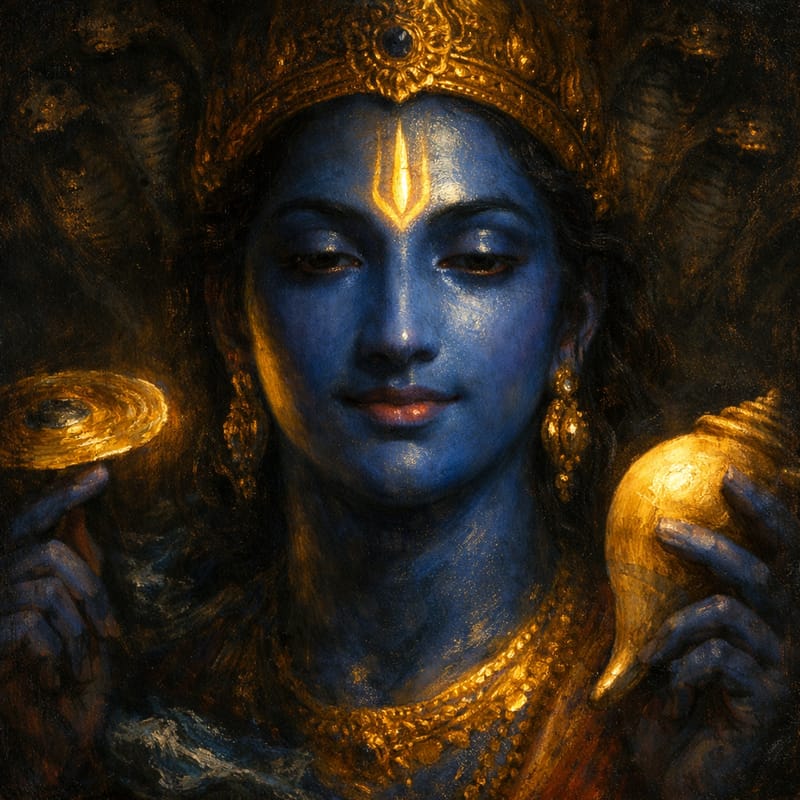
Shri Hari Stotram is an eight-verse devotional hymn that celebrates Lord Vishnu as the cosmic protector and sustainer. Each verse paints vivid metaphysical imagery: Vishnu as the guardian of creation wearing celestial garlands, dwelling eternally in the cosmic ocean, bearing divine weapons (mace and discus), and manifesting in infinite forms. The recurring refrain 'bhajeham bhajeham' (I bow, I bow) transforms the hymn into a personal act of surrender. The verses progressively reveal Vishnu's attributes—from his radiant golden form to his role as liberator of the bound soul.
Spiritually, this stotram represents the Vedantic principle that Vishnu is both transcendent (beyond form, beyond time—'jarajanmahinam' / free from age and birth) and immanent (present in creation as its root and sustenance). The imagery of Vishnu as the tree's root ('jagadvrukshamulam') echoes Bhagavad Gita 15.1, where Krishna describes himself as the eternal Ashvattha tree. Worshippers recognize in this hymn the eternal promise of Vishnu Sahasranama (Thousand Names of Vishnu)—that devotion to Hari dissolves worldly illusion and grants access to Vaikuntha (the divine realm). The stotram bridges philosophy and feeling, making abstract truth intimate.
Practitioners traditionally chant Shri Hari Stotram during morning meditation (brahma muhurta) for mental clarity, or during evening prayers for protection and peace. Chanting slowly with focus on meaning amplifies its effect. Beginners may start with one verse daily, progressing to the full eight verses. The mantra works best when recited with genuine devotion rather than mechanical repetition. Many seekers find that consistent chanting for 40 days shifts perception from fear-based to faith-based living, aligning consciousness with Vishnu's infinite compassion.
Curated by The Mahakatha Team · Original Composition: Mahakatha · Lyric: Adi Shankaracharya (8th century CE)
Shri Hari Stotram
Vishnu · Preview · 2:00
Preview ended
Ancient sounds for transformation, carried across 3,000 years.
Get the full version — plus 275 more ancient chants. 80% OFF today only.
Get Ancient Chants Bundle — 80% OFF →3000+ happy customers · Lifetime access · All devices
2.2M people trust Mahakatha
Chant daily with reminders — Get the Mahakatha app
Lyrics
जगज्जालपालं चलत्कण्ठमालं शरच्चन्द्रभालं महादैत्यकालं नभोनीलकायं दुरावारमायं सुपद्मासहायम् भजेहं भजेहं॥1॥
ஜகஜ்ஜாலபாலம் சலத்கண்டமாலம் ஶரச்சந்த்ரபாலம் மஹாதைத்யகாலம் நபோநீலகாயம் துராவாரமாயம் ஸுபத்மாஸஹாயம் பஜேஹம் பஜேஹம்॥1॥
பிரபஞ்ச வலையின் பாதுகாவலர், அசையும் மாலையை அணிந்து, இலையுதிர் கால சந்திரனைப் போன்ற பிரகாசமான நெற்றியுடன், அரக்கர்களை அழிப்பவர்,
வானம் போன்ற நிறமுடைய உடலுடன், அவர் வெல்ல முடியாத மாயைகளைப் படைப்பவர், பத்மாவின் துணைவர், அந்த ஸ்ரீஹரியை நான் வணங்குகிறேன்!
सदाम्भोधिवासं गलत्पुष्पहासं जगत्सन्निवासं शतादित्यभासं गदाचक्रशस्त्रं लसत्पीतवस्त्रं हसच्चारुवक्त्रं भजेहं भजेहं॥2॥
ஸதாம்போதிவாஸம் கலத்புஷ்பஹாஸம் ஜகத்ஸந்நிவாஸம் ஶதாதித்யபாஸம் கதாசக்ரஶஸ்த்ரம் லஸத்பீதவஸ்த்ரம் ஹஸச்சாருவக்த்ரம் பஜேஹம் பஜேஹம்॥2॥
அவர் என்றும் பாற்கடலில் வாழ்பவர், அவரது பற்கள் மலர்களைப் போல் வெண்மையானவை, நன்மையின் பாதுகாவலர், நூறு சூரியன்களைப் போல் ஒளிர்பவர்,
கதையும் சக்கரமும் ஏந்தி, அவர் பிரகாசிக்கும் மஞ்சள் ஆடைகளை அணிந்து, நிலையான ஒளிரும் புன்னகையுடன் இருக்கிறார், அந்த ஸ்ரீஹரியை நான் வணங்குகிறேன்!
रमाकण्ठहारं श्रुतिव्रातसारं जलान्तर्विहारं धराभारहारं चिदानन्दरूपं मनोज्ञस्वरूपं ध्रुतानेकरूपं भजेहं भजेहं॥3॥
ரமாகண்டஹாரம் ஶ்ருதிவ்ராதஸாரம் ஜலாந்தர்விஹாரம் தராபாரஹாரம் சிதாநந்தரூபம் மநோஜ்ஞஸ்வரூபம் த்ருதாநேகரூபம் பஜேஹம் பஜேஹம்॥3॥
ரமாவின் கரங்களில் அணிகலன், அனைத்து வேதங்களின் சாரம், பிரபஞ்சமே விளையாட்டுத் தளம், பூமியின் சுமைகளை நீக்குபவர்,
மகிழ்ச்சியான உணர்வுடையவர், மனதை மகிழ்விக்கும் தோற்றமுடையவர், பல உருவங்களை ஏற்பவர், அந்த ஸ்ரீஹரியை நான் வணங்குகிறேன்!
जराजन्महीनं परानन्दपीनं समाधानलीनं सदैवानवीनं जगज्जन्महेतुं सुरानीककेतुं त्रिलोकैकसेतुं भजेहं भजेहं॥4॥
ஜராஜந்மஹீநம் பராநந்தபீநம் ஸமாதாநலீநம் ஸதைவாநவீநம் ஜகஜ்ஜந்மஹேதும் ஸுராநீககேதும் த்ரிலோகைகஸேதும் பஜேஹம் பஜேஹம்॥4॥
முதுமை மற்றும் பிறப்பில் இருந்து விடுபட்டவர், நித்திய ஆனந்தத்தின் மூலம், ஆன்மாவின் சாரம், எப்போதும் புதியவர்,
உலகின் படைப்பாளர், தேவர்களின் படையின் நட்சத்திரம், மூன்று உலகங்களின் பாலம், அந்த ஸ்ரீஹரியை நான் வணங்குகிறேன்!
कृताम्नायगानं खगाधीशयानं विमुक्तेर्निदानं हरारातिमानं स्वभक्तानुकूलं जगद्व्रुक्षमूलं निरस्तार्तशूलं भजेहं भजेहं॥5॥
க்ரு'தாம்நாயகாநம் ககாதீஶயாநம் விமுக்தேர்நிதாநம் ஹராராதிமாநம் ஸ்வபக்தாநுகூலம் ஜகத்வ்ருக்ஷமூலம் நிரஸ்தார்தஶூலம் பஜேஹம் பஜேஹம்॥5॥
வேதங்களில் பாடப்படுபவர், பறவைகளின் அரசன் வாகனமாகக் கொண்டவர், மோட்சத்தின் காரணம், பகைவர்களின் அகங்காரத்தை அழிப்பவர்,
பக்தர்களுக்கு ஆசீர்வாதம் அளிப்பவர், பிரபஞ்சம் என்ற மரத்தின் வேர், உலக துன்பத்தை அகற்றுபவர், அந்த ஸ்ரீஹரியை நான் வணங்குகிறேன்!
समस्तामरेशं द्विरेफाभकेशं जगद्विम्बलेशं ह्रुदाकाशदेशं सदा दिव्यदेहं विमुक्ताखिलेहं सुवैकुण्ठगेहं भजेहं भजेहं॥6॥
ஸமஸ்தாமரேஶம் த்விரேபாபகேஶம் ஜகத்விம்பலேஶம் ஹ்ருதாகாஶதேஶம் ஸதா திவ்யதேஹம் விமுக்தாகிலேஹம் ஸுவைகுண்டகேஹம் பஜேஹம் பஜேஹம்॥6॥
அமரர்களின் தெய்வம், வண்டுகள் போன்ற நிறமுடைய கூந்தலுடன், அவர் பிரபஞ்சத்தின் மிகச்சிறிய அணு, வானம் போன்ற பரந்த ஆத்மாவுடன்,
எப்போதும் தெய்வீக உடலுடையவர், அனைத்து உலகியல்களிலிருந்தும் விடுபட்டவர், வைகுண்டத்தில் வசிப்பவர், நான் அந்த ஸ்ரீஹரியை வணங்குகிறேன்!
सुरालिबलिष्ठं त्रिलोकीवरिष्ठं गुरूणां गरिष्ठं स्वरूपैकनिष्ठं सदा युद्धधीरं महावीरवीरं महाम्भोधितीरं भजेहं भजेहं॥7॥
ஸுராலிபலிஷ்டம் த்ரிலோகீவரிஷ்டம் குரூணாம் கரிஷ்டம் ஸ்வரூபைகநிஷ்டம் ஸதா யுத்ததீரம் மஹாவீரவீரம் மஹாம்போதிதீரம் பஜேஹம் பஜேஹம்॥7॥
அசுர எதிரிகளை விட வலிமையானவர், மகான்களை விட மேலானவர், அவர் ஒரே உண்மையான வடிவத்தில் இருக்கிறார்,
போரில் எப்போதும் உறுதியானவர், வீரர்களை விட துணிச்சலானவர், பரந்த கடலின் கரையில் அமர்ந்திருப்பவர், நான் அந்த ஸ்ரீஹரியை வணங்குகிறேன்!
रमावामभागं तलानग्रनागं कृताधीनयागं गतारागरागं मुनीन्द्रैः सुगीतं सुरैः संपरीतं गुणौधैरतीतं भजेहं भजेहं॥8॥
ரமாவாமபாகம் தலாநக்ரநாகம் க்ரு'தாதீநயாகம் கதாராகராகம் முநீந்த்ரைஃ ஸுகீதம் ஸுரைஃ ஸம்பரீதம் குணௌதைரதீதம் பஜேஹம் பஜேஹம்॥8॥
இடப்பக்கத்தில் ரமையுடன், முன்னால் பாம்பின் தலையுடன், புனித சடங்குகளை ஏற்பவர், நிறம் மற்றும் ஆசைக்கு அப்பாற்பட்டவர், முனிவர்களின் பாடல்களில் புகழப்பட்டவர், தேவர்களால் சூழப்பட்டவர், கற்பனை செய்யக்கூடிய அனைத்து குணங்களையும் தாண்டியவர், நான் அந்த ஸ்ரீஹரியை வணங்குகிறேன்!
इदं यस्तु नित्यं समाधाय चित्तंपठेदष्टकं कण्ठहारम् मुरारेः स विष्णोर्विशोकं ध्रुवं याति लोकंजराजन्मशोकं पुनर्विन्दते नो॥9॥
இதம் யஸ்து நித்யம் ஸமாதாய சித்தம்படேதஷ்டகம் கண்டஹாரம் முராரேஃ ஸ விஷ்ணோர்விஶோகம் த்ருவம் யாதி லோகம்ஜராஜந்மஶோகம் புநர்விந்ததே நோ॥9॥
தினமும் கவனத்துடன் இந்த தெய்வீக மாலை போன்ற வசனங்களை ஓதுபவர்,
சந்தேகம் மற்றும் துன்பம் இல்லாத, முதுமை மற்றும் மறுபிறப்பின் வலியிலிருந்து விடுபட்ட, விஷ்ணுவின் உலகத்திற்கு தெய்வீக நுழைவு வழங்கப்படுகிறது.
ॐ नमो भगवते वासुदेवाय!
ௐ நமோ பகவதே வாஸுதேவாய!
தெய்வீக இறைவன் விஷ்ணுவிற்கு நான் வணங்குகிறேன்!
How to Chant Shri Hari Stotram
- 1
Find a quiet, clean space
Sit in a comfortable, undisturbed environment. Face east or north if possible. You may light incense or a candle to set a contemplative atmosphere.
- 2
Settle into a comfortable posture
Sit cross-legged on the floor or upright in a chair. Keep the spine erect and place the hands on the knees with palms facing upward.
- 3
Take three cleansing breaths
Inhale slowly through the nose, hold briefly, and exhale completely. Repeat three times to calm the mind and prepare for mantra recitation.
- 4
Begin chanting Shri Hari Stotram
Chant the mantra clearly and with devotion — aloud, in a whisper, or silently. Use a mala (108 beads) to count repetitions. Aim for a consistent, unhurried rhythm throughout the session.
- 5
Rest in stillness
After completing your chanting, sit quietly for two to five minutes. Allow the vibration of the mantra to settle within. Close the practice with a moment of gratitude.
Benefits of Shri Hari Stotram
-
Removes fear and anxiety through remembrance of Vishnu as the supreme protector ('duravaramayam'—creator of invincible illusions). Regular chanting anchors consciousness in divine security rather than ego-based worry.
Source: Bhagavad Gita 18.66 & Traditional practice
-
Purifies the mind and elevates consciousness toward liberation (moksha). The stotram's rhythmic recitation can steady the mind and attention, which many devotees find opens the way to quieter, intuitive reflection.
Source: Vaishnava devotional tradition
-
Invokes Vishnu's grace for protection against obstacles, both internal (ego, delusion) and external (harm, calamity). Strengthens spiritual resilience and moral courage.
Source: Vishnu Sahasranama & Bhagavata Purana
-
Cultivates devotional surrender (bhakti), the path to liberation. Chanting 'bhajeham bhajeham' (I bow) dissolves the illusion of separation between self and divine.
Source: Bhakti Sutras of Narada & Traditional Sadhana
-
Brings harmony in relationships and family life by removing jealousy and resentment, replacing them with cosmic compassion modeled on Vishnu's unconditional protection.
Source: Traditional practice & Vedic astrology
Story & Symbolism
Shri Hari Stotram emerges from the living tradition of Vaishnava devotion that flows through millennia of Hindu spiritual practice. While its exact human author remains unknown—characteristic of oral traditions where individual ego dissolves into collective dharma—the stotram synthesizes themes from the Rig Veda's Hymn to Vishnu (1.154), the Upanishads' revelation of Narayana as ultimate reality, and the Bhagavata Purana's ecstatic vision of divine play. The stotram likely crystallized during the medieval Bhakti renaissance (12th–18th centuries) when saint-poets like Tulsidas, Kabir, and Chaitanya Mahaprabhu revitalized Vishnu worship through vernacular and Sanskrit devotional poetry. Its eight verses follow the classical stotram structure—each verse completing a full meditation on one divine attribute, building toward the final revelation of Vaikuntha (the divine realm). The work was preserved and transmitted through ashrams, temples, and householder traditions across the Indian subcontinent, particularly in Vaishnava communities of South India and the Mathura-Vrindavan region.
Theologically, Shri Hari Stotram embodies the Vedantic revelation that Vishnu is simultaneously Saguna Brahman (God with attributes, accessible through form and devotion) and Nirguna Brahman (formless, attributeless ultimate reality). The stotram's opening verse—'jagajjalapalam' (protector of the cosmic waters)—echoes Rig Veda's vision of Vishnu striding across the universe in three cosmic steps. Its closing verses carry a hope familiar to Vaishnava devotees: that surrender to Vishnu frees one from karma and grants liberation (moksha). The recurring invocation 'bhajeham bhajeham' (I bow, I bow) transforms intellectual knowledge (jnana) into lived experience through devotional repetition. This movement from philosophy to feeling, from concept to surrender, marks the stotram as a complete spiritual technology suitable for both scholars and simple householders.
Today, Shri Hari Stotram survives and thrives through global spiritual communities—chanted in temples from Singapore to New York, preserved in digital archives, and taught through online platforms. Its transmission has shifted from Sanskrit-educated brahminical circles to democratized, multi-language accessibility. Modern seekers find in its verses a bridge between ancient wisdom and contemporary existential needs: a hymn that speaks to timeless human hunger for protection, meaning, and reunion with the sacred. The stotram remains 'alive'—constantly reinterpreted through sincere practice—because it addresses the eternal struggle between ego-fear and divine faith.
How to Use in Daily Life
Morning Meditation
Chant Shri Hari Stotram during brahma muhurta (pre-dawn) before sunrise. Begin with three deep breaths, then recite verses 1–4 slowly, focusing on meaning. This anchors your day in Vishnu's protection and sets a sattvic tone for all actions ahead.
During Anxiety
When fear or worry arises, pause and chant the refrain 'bhajeham bhajeham' (I bow) 9 or 21 times with hand on heart. Feel the mantra's sound easing tension. This invokes immediate remembrance of divine support beyond ego-mind.
Evening Offering
At dusk or before dinner, recite verses 5–8 as a gratitude offering. Light a candle or incense if possible. This consecrates your evening and transitions consciousness from worldly concerns toward inner divinity, preparing for quality sleep.
Before Sleep
Lie in bed and mentally recite the full stotram slowly, visualizing Vishnu's golden form surrounding you protectively. This quietens day-mind chatter, invites peaceful dreams, and lets the mantra stay with you as you drift into sleep.