

Shri Hari Stotram — Russian Lyrics
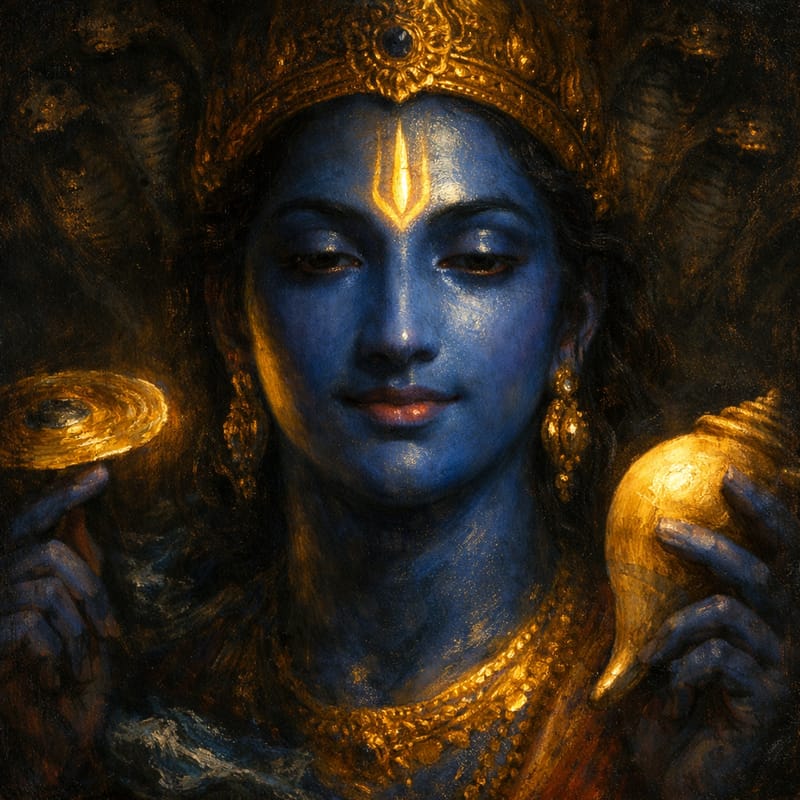
Shri Hari Stotram is an eight-verse devotional hymn that celebrates Lord Vishnu as the cosmic protector and sustainer. Each verse paints vivid metaphysical imagery: Vishnu as the guardian of creation wearing celestial garlands, dwelling eternally in the cosmic ocean, bearing divine weapons (mace and discus), and manifesting in infinite forms. The recurring refrain 'bhajeham bhajeham' (I bow, I bow) transforms the hymn into a personal act of surrender. The verses progressively reveal Vishnu's attributes—from his radiant golden form to his role as liberator of the bound soul.
Spiritually, this stotram represents the Vedantic principle that Vishnu is both transcendent (beyond form, beyond time—'jarajanmahinam' / free from age and birth) and immanent (present in creation as its root and sustenance). The imagery of Vishnu as the tree's root ('jagadvrukshamulam') echoes Bhagavad Gita 15.1, where Krishna describes himself as the eternal Ashvattha tree. Worshippers recognize in this hymn the eternal promise of Vishnu Sahasranama (Thousand Names of Vishnu)—that devotion to Hari dissolves worldly illusion and grants access to Vaikuntha (the divine realm). The stotram bridges philosophy and feeling, making abstract truth intimate.
Practitioners traditionally chant Shri Hari Stotram during morning meditation (brahma muhurta) for mental clarity, or during evening prayers for protection and peace. Chanting slowly with focus on meaning amplifies its effect. Beginners may start with one verse daily, progressing to the full eight verses. The mantra works best when recited with genuine devotion rather than mechanical repetition. Many seekers find that consistent chanting for 40 days shifts perception from fear-based to faith-based living, aligning consciousness with Vishnu's infinite compassion.
Curated by The Mahakatha Team · Original Composition: Mahakatha · Lyric: Adi Shankaracharya (8th century CE)
Shri Hari Stotram
Vishnu · Preview · 2:00
Preview ended
Ancient sounds for transformation, carried across 3,000 years.
Get the full version — plus 275 more ancient chants. 80% OFF today only.
Get Ancient Chants Bundle — 80% OFF →3000+ happy customers · Lifetime access · All devices
2.2M people trust Mahakatha
Chant daily with reminders — Get the Mahakatha app
जगज्जालपालं चलत्कण्ठमालं शरच्चन्द्रभालं महादैत्यकालं नभोनीलकायं दुरावारमायं सुपद्मासहायम् भजेहं भजेहं॥1॥
джагаджджалапалам чалаткантхамалам шараччандрабхалам махадайтьякалам набхонилакаям дураварамаям супадмасахаям бхаджехам бхаджехам॥1॥
Защитник космической сети, носящий движущуюся гирлянду, с челом, сияющим как осенняя луна, Уничтожитель демонов,
С телом цвета неба, Он — Создатель непобедимых иллюзий, супруг Падмы, я поклоняюсь тому Шрихари!
सदाम्भोधिवासं गलत्पुष्पहासं जगत्सन्निवासं शतादित्यभासं गदाचक्रशस्त्रं लसत्पीतवस्त्रं हसच्चारुवक्त्रं भजेहं भजेहं॥2॥
садамбходхивасам галатпушпахасам джагатсаннивасам шатадитьябхасам гадачакрашастрам ласатпитавастрам хасаччарувактрам бхаджехам бхаджехам॥2॥
Он вечно пребывает в океане, Его зубы белы как цветы, Хранитель добра, сияющий как сотня солнц,
Держащий булаву и диск, Он носит сверкающие жёлтые одежды и неизменную светящуюся улыбку, я поклоняюсь тому Шрихари!
रमाकण्ठहारं श्रुतिव्रातसारं जलान्तर्विहारं धराभारहारं चिदानन्दरूपं मनोज्ञस्वरूपं ध्रुतानेकरूपं भजेहं भजेहं॥3॥
рамакантхахарам шрутивратасарам джалантарвихарам дхарабхарахарам чиданандарупам маноджнясварупам дхританекарупам бхаджехам бхаджехам॥3॥
Украшение в объятиях Рамы, сущность всех писаний, чья игровая площадка — вселенная, Избавитель от бремени земли,
Тот, кто есть блаженное сознание, чей облик услаждает ум, Носящий множество форм, я поклоняюсь тому Шрихари!
जराजन्महीनं परानन्दपीनं समाधानलीनं सदैवानवीनं जगज्जन्महेतुं सुरानीककेतुं त्रिलोकैकसेतुं भजेहं भजेहं॥4॥
джараджанмахинам паранандапинам самадханалинам садайванавинам джагаджджанмахетум сураникакетум трилокайкасетум бхаджехам бхаджехам॥4॥
Тот, кто свободен от старости и рождения, и является Источником вечного блаженства, Сущность духа, всегда новый,
Творец мира, Звезда армии богов, Мост трёх миров, я поклоняюсь тому Шрихари!
कृताम्नायगानं खगाधीशयानं विमुक्तेर्निदानं हरारातिमानं स्वभक्तानुकूलं जगद्व्रुक्षमूलं निरस्तार्तशूलं भजेहं भजेहं॥5॥
критамнаяганам кхагадхишаянам вимуктерниданам хараратиманам свабхактанукулам джагадвриксхамулам нирастарташулам бхаджехам бхаджехам॥5॥
Тот, о ком поётся в Ведах, чья ездовая птица — царь птиц, Причина освобождения, Уничтожитель эго врагов,
Благословляющий преданных, Корень древа вселенной, Изгоняющий мирскую боль, я поклоняюсь тому Шрихари!
समस्तामरेशं द्विरेफाभकेशं जगद्विम्बलेशं ह्रुदाकाशदेशं सदा दिव्यदेहं विमुक्ताखिलेहं सुवैकुण्ठगेहं भजेहं भजेहं॥6॥
самастамарешам двирепхабхакешам джагадвимбалешам хрудакашадешам сада дивьядехам вимуктакхилехам сувайкунтхагехам бхаджехам бхаджехам
Бог бессмертных, с волосами цвета шмелей, Он - мельчайший атом вселенной, с душой обширной как небо,
Чьё тело всегда божественно, Тот, кто свободен от всего мирского, Обитатель Вайкунтхи, я почитаю того Шрихари!
सुरालिबलिष्ठं त्रिलोकीवरिष्ठं गुरूणां गरिष्ठं स्वरूपैकनिष्ठं सदा युद्धधीरं महावीरवीरं महाम्भोधितीरं भजेहं भजेहं॥7॥
суралибалиштхам трилокиvariштхам гурунам гариштхам сварупайкаништхам сада юддхадхирам махавиравирам махамбходхитирам бхаджехам бхаджехам
Могущественнее врагов-демонов, величайший из великих, Он присутствует в одной истинной форме,
Всегда стойкий в битве, храбрейший из храбрых, восседающий на берегу безбрежного океана, я почитаю того Шрихари!
रमावामभागं तलानग्रनागं कृताधीनयागं गतारागरागं मुनीन्द्रैः सुगीतं सुरैः संपरीतं गुणौधैरतीतं भजेहं भजेहं॥8॥
рамавамабхагам таланагранагам критадхинаягам гатарагарагам муниндрайх сугитам сурайх сампаритам гунаудхайратитам бхаджехам бхаджехам
С Рамой по левую сторону, с головой змея впереди, принимающий священные ритуалы, Тот, кто за пределами цвета и страсти, Воспеваемый в песнях мудрецов, окружённый полубогами, превосходящий все мыслимые качества, я почитаю того Шрихари!
इदं यस्तु नित्यं समाधाय चित्तंपठेदष्टकं कण्ठहारम् मुरारेः स विष्णोर्विशोकं ध्रुवं याति लोकंजराजन्मशोकं पुनर्विन्दते नो॥9॥
идам ясту нитьям самадхая читтам патхедаштакам кантхахарам мурарех са вишнорвишокам дхрувам яти локам джараджанмашокам пунарвиндате но
Всякий, кто читает эти божественные стихи, подобные гирлянде, с сосредоточением,
получает божественный вход в мир Господа Вишну, свободный от сомнений и печали, свободный от боли старости и перерождения.
ॐ नमो भगवते वासुदेवाय!
ом намо бхагавате васудевайа
Я склоняюсь пред божественным Господом Вишну!
How to Chant Shri Hari Stotram
- 1
Find a quiet, clean space
Sit in a comfortable, undisturbed environment. Face east or north if possible. You may light incense or a candle to set a contemplative atmosphere.
- 2
Settle into a comfortable posture
Sit cross-legged on the floor or upright in a chair. Keep the spine erect and place the hands on the knees with palms facing upward.
- 3
Take three cleansing breaths
Inhale slowly through the nose, hold briefly, and exhale completely. Repeat three times to calm the mind and prepare for mantra recitation.
- 4
Begin chanting Shri Hari Stotram
Chant the mantra clearly and with devotion — aloud, in a whisper, or silently. Use a mala (108 beads) to count repetitions. Aim for a consistent, unhurried rhythm throughout the session.
- 5
Rest in stillness
After completing your chanting, sit quietly for two to five minutes. Allow the vibration of the mantra to settle within. Close the practice with a moment of gratitude.
Benefits of Shri Hari Stotram
-
Removes fear and anxiety through remembrance of Vishnu as the supreme protector ('duravaramayam'—creator of invincible illusions). Regular chanting anchors consciousness in divine security rather than ego-based worry.
Source: Bhagavad Gita 18.66 & Traditional practice
-
Purifies the mind and elevates consciousness toward liberation (moksha). The stotram's rhythmic recitation can steady the mind and attention, which many devotees find opens the way to quieter, intuitive reflection.
Source: Vaishnava devotional tradition
-
Invokes Vishnu's grace for protection against obstacles, both internal (ego, delusion) and external (harm, calamity). Strengthens spiritual resilience and moral courage.
Source: Vishnu Sahasranama & Bhagavata Purana
-
Cultivates devotional surrender (bhakti), the path to liberation. Chanting 'bhajeham bhajeham' (I bow) dissolves the illusion of separation between self and divine.
Source: Bhakti Sutras of Narada & Traditional Sadhana
-
Brings harmony in relationships and family life by removing jealousy and resentment, replacing them with cosmic compassion modeled on Vishnu's unconditional protection.
Source: Traditional practice & Vedic astrology
Story & Symbolism
Shri Hari Stotram emerges from the living tradition of Vaishnava devotion that flows through millennia of Hindu spiritual practice. While its exact human author remains unknown—characteristic of oral traditions where individual ego dissolves into collective dharma—the stotram synthesizes themes from the Rig Veda's Hymn to Vishnu (1.154), the Upanishads' revelation of Narayana as ultimate reality, and the Bhagavata Purana's ecstatic vision of divine play. The stotram likely crystallized during the medieval Bhakti renaissance (12th–18th centuries) when saint-poets like Tulsidas, Kabir, and Chaitanya Mahaprabhu revitalized Vishnu worship through vernacular and Sanskrit devotional poetry. Its eight verses follow the classical stotram structure—each verse completing a full meditation on one divine attribute, building toward the final revelation of Vaikuntha (the divine realm). The work was preserved and transmitted through ashrams, temples, and householder traditions across the Indian subcontinent, particularly in Vaishnava communities of South India and the Mathura-Vrindavan region.
Theologically, Shri Hari Stotram embodies the Vedantic revelation that Vishnu is simultaneously Saguna Brahman (God with attributes, accessible through form and devotion) and Nirguna Brahman (formless, attributeless ultimate reality). The stotram's opening verse—'jagajjalapalam' (protector of the cosmic waters)—echoes Rig Veda's vision of Vishnu striding across the universe in three cosmic steps. Its closing verses carry a hope familiar to Vaishnava devotees: that surrender to Vishnu frees one from karma and grants liberation (moksha). The recurring invocation 'bhajeham bhajeham' (I bow, I bow) transforms intellectual knowledge (jnana) into lived experience through devotional repetition. This movement from philosophy to feeling, from concept to surrender, marks the stotram as a complete spiritual technology suitable for both scholars and simple householders.
Today, Shri Hari Stotram survives and thrives through global spiritual communities—chanted in temples from Singapore to New York, preserved in digital archives, and taught through online platforms. Its transmission has shifted from Sanskrit-educated brahminical circles to democratized, multi-language accessibility. Modern seekers find in its verses a bridge between ancient wisdom and contemporary existential needs: a hymn that speaks to timeless human hunger for protection, meaning, and reunion with the sacred. The stotram remains 'alive'—constantly reinterpreted through sincere practice—because it addresses the eternal struggle between ego-fear and divine faith.
How to Use in Daily Life
Morning Meditation
Chant Shri Hari Stotram during brahma muhurta (pre-dawn) before sunrise. Begin with three deep breaths, then recite verses 1–4 slowly, focusing on meaning. This anchors your day in Vishnu's protection and sets a sattvic tone for all actions ahead.
During Anxiety
When fear or worry arises, pause and chant the refrain 'bhajeham bhajeham' (I bow) 9 or 21 times with hand on heart. Feel the mantra's sound easing tension. This invokes immediate remembrance of divine support beyond ego-mind.
Evening Offering
At dusk or before dinner, recite verses 5–8 as a gratitude offering. Light a candle or incense if possible. This consecrates your evening and transitions consciousness from worldly concerns toward inner divinity, preparing for quality sleep.
Before Sleep
Lie in bed and mentally recite the full stotram slowly, visualizing Vishnu's golden form surrounding you protectively. This quietens day-mind chatter, invites peaceful dreams, and lets the mantra stay with you as you drift into sleep.