

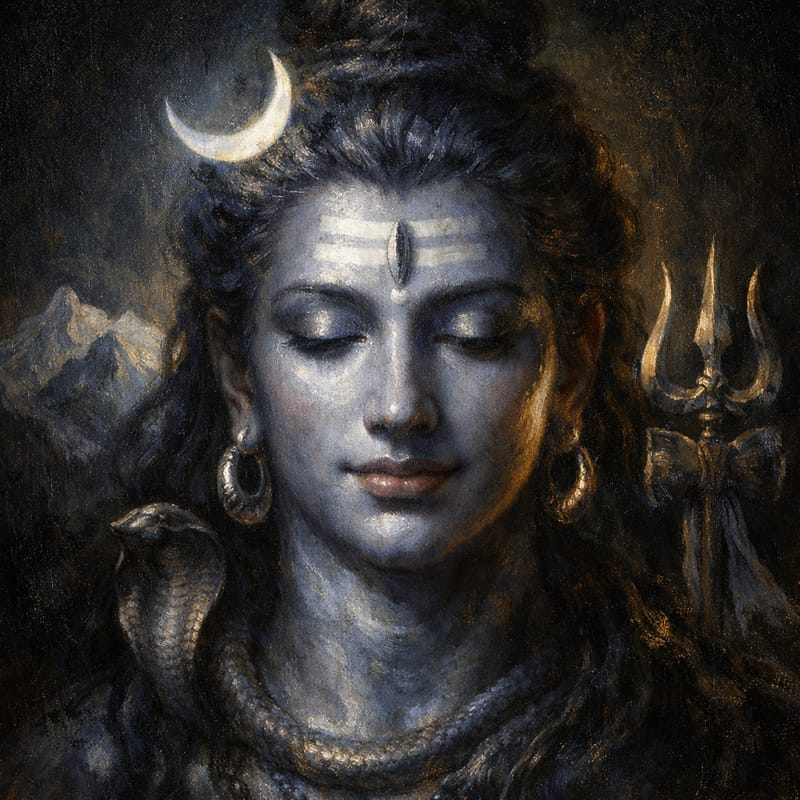
Panchakshari Mantra — Telugu Lyrics
Panchakshari Mantra is an ancient Sanskrit mantra honoring Shiva that activates and balances the five elemental energies within the subtle body.
The Panchakshari Mantra—'Na-Ma-Shi-Va-Ya'—is a five-syllable invocation to Lord Shiva, the supreme deity of Hindu philosophy. Each verse addresses Shiva through different epithets and cosmic functions. The first praises Him as the eternal serpent-bearer with three divine eyes, body adorned in sacred ash. The second celebrates His connection to sacred rivers and celestial flowers. The third honors His role as the auspicious destroyer of evil and embodiment of cosmic consciousness. The fourth acknowledges the great sages who worship Him. The fifth recognizes Him as the eternal, all-pervading reality underlying all existence.
Spiritually, this mantra encodes the five elemental principles of creation (Pancha Tattva): Na (earth), Ma (water), Shi (fire), Va (air), and Ya (ether). In Tantric tradition, each syllable is linked with a cosmic force and a centre within the subtle body. Shiva, as the 'Eternal Transformer,' governs the dissolution and renewal of all existence. Chanting this mantra aligns the practitioner with these primal energies, facilitating profound inner transformation. According to Tantric traditions, the Panchakshari is among the most revered Shiva mantras, said to awaken kundalini and ease the burden of past karma when practiced with sincere devotion.
Practitioners traditionally chant the Panchakshari during early morning (brahma muhurta) or during meditation on Shiva. Begin with 108 repetitions using a mala (prayer beads), gradually increasing to 1,008 for deeper results. Chant slowly, synchronizing each syllable with breath—inhale on 'Na-Ma-Shi-Va,' exhale on 'Ya.' Maintain a clear, meditative focus on Shiva's form, the five elements, or the chakras. This mantra is suitable for beginners and advanced practitioners alike, requiring no special prerequisites beyond sincere intention.
Curated by The Mahakatha Team · Original Composition: Mahakatha · Lyric: Traditional / Shaivite
Panchakshari Mantra
Shiva · Preview · 2:00
Preview ended
Ancient sounds for transformation, carried across 3,000 years.
Get the full version — plus 275 more ancient chants. 80% OFF today only.
Get Ancient Chants Bundle — 80% OFF →3000+ happy customers · Lifetime access · All devices
2.2M people trust Mahakatha
Chant daily with reminders — Get the Mahakatha app
Lyrics
नगेन्द्रहराय त्रिलोचनाय भस्मांगरागाय महेश्वराय नित्याय शुद्धाय दिगम्बराय तस्मै 'न' कराय नमः शिवाय
నగేన్ద్రహరాయ త్రిలోచనాయ భస్మాంగరాగాయ మహేశ్వరాయ నిత్యాయ శుద్ధాయ దిగమ్బరాయ తస్మై 'న' కరాయ నమః శివాయ
సర్పాల రాజు అయిన వాసుకిని హారంగా ధరించిన వాడు, మూడు దివ్య నేత్రాలు కలవాడు
పవిత్రమైన భస్మంతో శరీరం అంతా కప్పబడిన వాడు, సర్వశక్తిమంతుడు
శాశ్వతుడు, పరమ పవిత్రుడు, విశాలమైన ఆకాశాన్నీ అన్ని దిక్కులనూ వస్త్రాలుగా ధరించిన వాడు
'న' అనే అక్షరంలో వ్యక్తమయ్యే ఆ శివ భగవానుని ఆశీస్సులను కోరుకుంటున్నాను
मन्दाकिनी सलिल चन्दन चर्चिताय नन्दीश्वर प्रमथनाथ महेश्वराय मन्दार पुष्प बहुपुष्प सुपूजिताय तस्मै 'म' कराय नमः शिवाय
మన్దాకినీ సలిల చన్దన చర్చితాయ నన్దీశ్వర ప్రమథనాథ మహేశ్వరాయ మన్దార పుష్ప బహుపుష్ప సుపూజితాయ తస్మై 'మ' కరాయ నమః శివాయ
పవిత్రమైన మందాకిని నదిచే పూజించబడిన వాడు, సువాసనగల చందన లేపనంతో అలంకరించబడిన వాడు
నందీశ్వరుని ప్రభువు, అన్ని రకాల భూత గణాలకు అధిపతి, అపార మహిమాన్వితుడు
మందార పుష్పాలతో మరియు అనేక ఇతర పుష్పాలతో ఆరాధించబడిన వాడు, ప్రేమతో పూజించబడిన వాడు
'మ' అనే అక్షరంలో వ్యక్తమయ్యే ఆ శివ భగవానుని ఆశీస్సులను కోరుకుంటున్నాను
शिवाय गौरी वन्दनाब्ज ब्रुन्द सूर्याय दक्षध्वर नसकाय श्री निलकण्ठाय वृषभध्वजाय तस्मै 'शि' कराय नमः शिवाय
శివాయ గౌరీ వన్దనాబ్జ బ్రున్ద సూర్యాయ దక్షధ్వర నసకాయ శ్రీ నిలకణ్ఠాయ వృషభధ్వజాయ తస్మై 'శి' కరాయ నమః శివాయ
మంగళకరుడు, సూర్యుని వలె ప్రకాశవంతుడు, పార్వతీ దేవి యొక్క పద్మము వంటి ముఖం వికసించడానికి కారణుడు
అన్ని చెడును నాశనం చేసి మంచిని రక్షించే వాడు
నీలకంఠుడు, శక్తివంతమైన వృషభం చిహ్నంగా కలవాడు
'శి' అనే అక్షరంలో వ్యక్తమయ్యే ఆ శివ భగవానుని ఆశీస్సులను కోరుకుంటున్నాను
वसिष्ठ कुम्भोद्भव गौतमार्य मुनीन्द्र देवार्चित सेखराय चन्द्रार्क वैश्वनर लोचनाय तस्मै 'व' कराय नमः शिवाय
వసిష్ఠ కుమ్భోద్భవ గౌతమార్య మునీన్ద్ర దేవార్చిత సేఖరాయ చన్ద్రార్క వైశ్వనర లోచనాయ తస్మై 'వ' కరాయ నమః శివాయ
వశిష్ఠుడు, అగస్త్యుడు, గౌతముడు వంటి మహర్షులచే ఆరాధించబడిన వాడు
దేవతలకు ప్రభువు, విశ్వానికి శిఖరము
చంద్రుడు, సూర్యుడు మరియు అగ్ని నేత్రాలుగా కలవాడు
'వ' అనే అక్షరంలో వ్యక్తమయ్యే ఆ శివ భగవానుని ఆశీస్సులను కోరుకుంటున్నాను
यज्ञ स्वरूपाय जटाधराय पिनाक हस्ताय सनातनाय दिव्य देवाय दिगम्बराय तस्मै 'य' कराय नमः शिवाय
యజ్ఞ స్వరూపాయ జటాధరాయ పినాక హస్తాయ సనాతనాయ దివ్య దేవాయ దిగమ్బరాయ తస్మై 'య' కరాయ నమః శివాయ
పవిత్ర యజ్ఞాగ్నిలో అవతరించిన వాడు
జటాధారి, తన చేతిలో శక్తివంతమైన త్రిశూలాన్ని ధరించిన వాడు
దివ్యుడు, ప్రకాశవంతుడు, శాశ్వతుడు
'య' అనే అక్షరంలో వ్యక్తమయ్యే ఆ శివ భగవానుని ఆశీస్సులను కోరుకుంటున్నాను
|| पंचाक्षरमिदम् पुण्यम यह पठेच्छिवसन्निधौ शिवलोकमावाप्नोति शिवेना सहा मोड़ते ||
|| పంచాక్షరమిదమ్ పుణ్యమ యహ పఠేచ్ఛివసన్నిధౌ శివలోకమావాప్నోతి శివేనా సహా మోడ़తే ||
ఈ పంచాక్షరీ మంత్రాన్ని శివుని సన్నిధిలో పఠించేవారు శివలోకాన్ని పొంది శివునితో కలిసి ఆనందాన్ని అనుభవిస్తారు
How to Chant Panchakshari Mantra
- 1
Find a quiet, clean space
Sit in a comfortable, undisturbed environment. Face east or north if possible. You may light incense or a candle to set a contemplative atmosphere.
- 2
Settle into a comfortable posture
Sit cross-legged on the floor or upright in a chair. Keep the spine erect and place the hands on the knees with palms facing upward.
- 3
Take three cleansing breaths
Inhale slowly through the nose, hold briefly, and exhale completely. Repeat three times to calm the mind and prepare for mantra recitation.
- 4
Begin chanting Panchakshari Mantra
Chant the mantra clearly and with devotion — aloud, in a whisper, or silently. Use a mala (108 beads) to count repetitions. Aim for a consistent, unhurried rhythm throughout the session.
- 5
Rest in stillness
After completing your chanting, sit quietly for two to five minutes. Allow the vibration of the mantra to settle within. Close the practice with a moment of gratitude.
Benefits of Panchakshari Mantra
-
Activates and balances the five elemental energies (earth, water, fire, air, ether) within the subtle body, creating integrated awareness across all dimensions of self.
Source: Shiva Samhita, Tantric traditions
-
Slow, rhythmic chanting can ease mental fatigue and stress and leave you feeling calmer and more balanced for a while.
Source: Traditional practice, Yoga philosophy
-
In yogic tradition, linked with kundalini and with the throat and heart centres, associated with divine expression and compassion.
Source: Kundalini Tantra, Kula Arnava Tantra
-
Facilitates liberation (moksha) by attenuating ego-centered consciousness and aligning individual awareness with Shiva's transcendent, unchanging nature.
Source: Upanishadic philosophy, Advaita Vedanta
-
A prayer for protection and for obstacles to be cleared, invoking Shiva as the power that removes ignorance.
Source: Traditional practice, Puranic literature
Story & Symbolism
The Panchakshari Mantra, consisting of the five sacred syllables "Na-Ma-Shi-Va-Ya," is traditionally attributed to the ancient sage Lakulisha, though some Shaiva texts suggest its origins trace even deeper into the pre-Vedic traditions of Shaivism. According to Puranic tradition, this mantra emerged as the distilled essence of Shiva's infinite nature, captured in five syllables that correspond to the five cosmic elements: earth, water, fire, air, and ether. The mantra appears prominently in classical texts like the Shiva Purana and various Upanishads, where it is presented not merely as a prayer, but as a direct pathway to understanding the fundamental reality of existence. Scholars suggest that its systematic organization into five distinct sounds reflects the sophisticated metaphysical philosophy developed within Shaivism, where everything in the universe can be understood through the lens of these elemental principles.
Spiritually, the Panchakshari Mantra holds extraordinary significance because each syllable is believed to carry Shiva's presence. When practitioners chant "Na-Ma-Shi-Va-Ya," they are not simply invoking a deity; they are aligning themselves with the universal principle of transformation, dissolution, and renewal that Shiva represents. The mantra is understood as a meditation on the eternal cycle of creation and destruction, on consciousness itself. For devotees, recitation of this mantra is said to purify the mind, dissolve the ego, and gradually reveal the eternal, unchanging reality that underlies all phenomenal experience.
What makes the Panchakshari Mantra particularly accessible and beloved across Hindu traditions is its perfect balance of simplicity and depth. Whether whispered silently during meditation, chanted aloud in ritual settings, or simply held in the heart throughout daily life, the mantra serves as both a spiritual tool and a philosophical statement. It reminds practitioners that the Divine is not distant or abstract, but present in every breath, every moment of awareness, woven into the very fabric of existence itself.
How to Use in Daily Life
Dawn Practice
Chant 108 repetitions during Brahma Muhurta (pre-sunrise hours) when cosmic energies are most conducive to spiritual work. Face east or north, sit with spine erect, and begin with three conscious breaths before starting.
Meditation Focus
Use the Panchakshari as your primary mantra during seated meditation. Synchronize each syllable with breath, visualizing Shiva's form or focusing on the heart chakra. Allow the mantra to flow naturally, becoming one with your inner rhythm.
Devotional Ritual
Incorporate into daily puja (worship) or evening practice with a mala. Chant 324 repetitions slowly and reverently, dedicating the practice to spiritual awakening or specific intentions aligned with Shiva's grace.
Sleep Integration
Chant softly before sleep to calm the mind and purify consciousness during dreams. This makes for a calmer end to the day and supports a steady inner practice. Use 27–54 repetitions gently.