

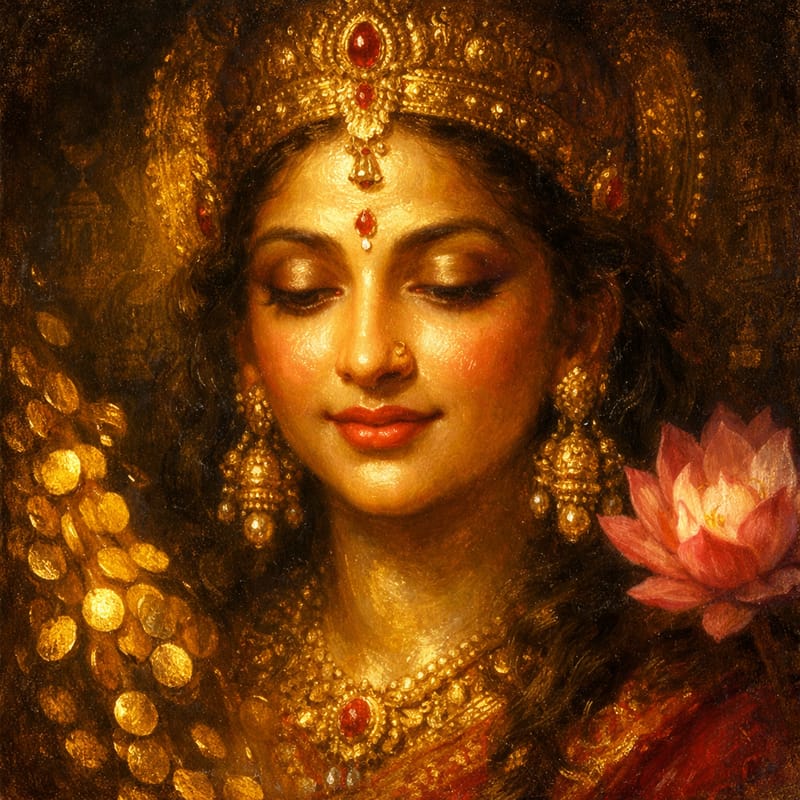
Mahalakshmi Stotram — Tamil Lyrics
The Mahalakshmi Stotram, composed by Lord Indra, is an eight-verse devotional hymn celebrating Goddess Mahalakshmi in her infinite forms. Each verse addresses the Goddess with reverence, describing her divine attributes: she who rides the Garuda, holds the conch and discus, sits upon a lotus throne, and embodies both subtle and cosmic power. The stotram culminates in verses on the traditional fruits of its recitation—removing sin, granting prosperity, destroying enemies, and conferring spiritual and worldly fulfillment upon sincere devotees.
Mahalakshmi represents not mere worldly wealth, but Lakshmi as the primordial Shakti (cosmic energy) underlying all prosperity, knowledge, and liberation. She is Adi Shakti (primordial power), Maheshvari (supreme sovereign), and the embodiment of yoga itself. In Hindu philosophy, Lakshmi's blessings are said to encompass bhukti (worldly enjoyment) and mukti (spiritual liberation). The Stotram invokes her as the knower of all (Sarvajne), bestower of all boons (Sarvavarade), and the one who takes away suffering of every kind (Sarva Duhkha Hare). This positions her as the cosmic mother nurturing all creation toward dharma and fulfillment.
Practitioners traditionally chant the Mahalakshmi Stotram during morning hours or during Lakshmi Puja (worship rituals). The text itself lists benefits for reciting it once, twice or three times a day: once daily removes great sins; twice daily brings wealth and grain; thrice daily destroys enemies and brings constant blessing. Begin with focused intention, pronounce each Sanskrit syllable clearly, and allow the meanings to settle in your mind. Consistency and devotion matter more than elaborate ritual.
Curated by The Mahakatha Team · Original Composition: Mahakatha · Lyric: Adi Shankaracharya (8th century CE)
Mahalakshmi Stotram
Lakshmi · Preview · 2:00
Preview ended
Ancient sounds for transformation, carried across 3,000 years.
Get the full version — plus 275 more ancient chants. 80% OFF today only.
Get Ancient Chants Bundle — 80% OFF →3000+ happy customers · Lifetime access · All devices
2.2M people trust Mahakatha
Chant daily with reminders — Get the Mahakatha app
Lyrics
नमस्तेऽस्तु महामाये श्रीपीठे सुरपूजिते । शङ्खचक्रगदाहस्ते महालक्ष्मि नमोऽस्तु ते || 1 ||
நமஸ்தேஸ்து மஹாமாயே ஶ்ரீபீடே ஸுரபூஜிதே । ஶங்கசக்ரகதாஹஸ்தே மஹாலக்ஷ்மி நமோஸ்து தே || 1 ||
இவ்வாறு இந்திர தேவரால் இயற்றப்பட்ட மகாலட்சுமி அஷ்டகம் தொடங்குகிறது.
விநாயகருக்கு வணக்கம்!
செழிப்பின் தெய்வமே, தெய்வீக மாயையே, அனைவராலும் வணங்கப்படுபவளே, வணக்கம்,
சங்கு, கதை மற்றும் சக்கரம் ஏந்தியவளே, அந்த லட்சுமி தேவிக்கு நான் வணங்குகிறேன். || 1 ||
नमस्ते गरुडारूढे कोलासुरभयङ्करि । सर्वपापहरे देवि महालक्ष्मि नमोऽस्तु ते || 2 ||
நமஸ்தே கருடாரூடே கோலாஸுரபயங்கரி । ஸர்வபாபஹரே தேவி மஹாலக்ஷ்மி நமோஸ்து தே || 2 ||
கருடன் மீது அமர்ந்து, கோலாசுரன் என்ற அசுரனை அச்சுறுத்துபவளே,
அனைத்து பாவங்களையும் போக்குபவளே, அந்த லட்சுமி தேவிக்கு நான் வணங்குகிறேன். || 2 ||
सर्वज्ञे सर्ववरदे सर्वदुष्टभयङ्करि । सर्वदुःखहरे देवि महालक्ष्मि नमोऽस्तु ते || 3 ||
ஸர்வஜ்ஞே ஸர்வவரதே ஸர்வதுஷ்டபயங்கரி । ஸர்வதுஃகஹரே தேவி மஹாலக்ஷ்மி நமோஸ்து தே || 3 ||
அனைத்தையும் அறிந்தவளே, அனைத்தையும் அருள்பவளே, தீயவர்களுக்கு அச்சம் ஊட்டுபவளே,
அனைத்து துன்பங்களையும் நீக்குபவளே, அந்த லட்சுமி தேவிக்கு நான் வணங்குகிறேன். || 3 ||
सिद्धिबुद्धिप्रदे देवि भुक्तिमुक्तिप्रदायिनि । मन्त्रमूर्ते सदा देवि महालक्ष्मि नमोऽस्तु ते || 4 ||
ஸித்திபுத்திப்ரதே தேவி புக்திமுக்திப்ரதாயிநி । மந்த்ரமூர்தே ஸதா தேவி மஹாலக்ஷ்மி நமோஸ்து தே || 4 ||
செல்வத்தையும் ஞானத்தையும், பக்தியையும் முக்தியையும் அருள்பவளே,
மந்திரமாக விளங்குபவளே, அந்த லட்சுமி தேவிக்கு நான் வணங்குகிறேன். || 4 ||
आद्यन्तरहिते देवि आदिशक्ति महेश्वरि । योगजे योगसम्भूते महालक्ष्मि नमोऽस्तु ते || 5 ||
ஆத்யந்தரஹிதே தேவி ஆதிஶக்தி மஹேஶ்வரி । யோகஜே யோகஸம்பூதே மஹாலக்ஷ்மி நமோஸ்து தே || 5 ||
ஆதி சக்தியே, தொடக்கமும் முடிவும் இல்லாதவளே, மகேஸ்வரியே,
யோகத்தில் இருந்து தோன்றி யோகத்தில் ஐக்கியமாகுபவளே, அந்த லட்சுமி தேவிக்கு நான் வணங்குகிறேன். || 5 ||
स्थूलसूक्ष्ममहारौद्रे महाशक्ति महोदरे । महापापहरे देवि महालक्ष्मि नमोऽस्तु ते || 6 ||
ஸ்தூலஸூக்ஷ்மமஹாரௌத்ரே மஹாஶக்தி மஹோதரே । மஹாபாபஹரே தேவி மஹாலக்ஷ்மி நமோஸ்து தே || 6 ||
பெரியவளே, நுட்பமானவளே, கொடூரமானவளே, பிரபஞ்ச கர்ப்பமே,
அனைத்து தீமைகளையும் நீக்குபவளே, அந்த லட்சுமி தேவிக்கு நான் வணங்குகிறேன். || 6 ||
पद्मासनस्थिते देवि परब्रह्मस्वरूपिणि । परमेशि जगन्मातर्महालक्ष्मि नमोऽस्तु ते || 7 ||
பத்மாஸநஸ்திதே தேவி பரப்ரஹ்மஸ்வரூபிணி । பரமேஶி ஜகந்மாதர்மஹாலக்ஷ்மி நமோஸ்து தே || 7 ||
தாமரை மலரில் அமர்ந்து, முழு பிரபஞ்சத்தின் உருவமாக விளங்குபவளே,
பிரபஞ்சத்தின் தாயே, அந்த லட்சுமி தேவிக்கு நான் வணங்குகிறேன். || 7 ||
श्वेताम्बरधरे देवि नानालङ्कारभूषिते । जगत्स्थिते जगन्मातर्महालक्ष्मि नमोऽस्तु ते || 8 ||
ஶ்வேதாம்பரதரே தேவி நாநாலங்காரபூஷிதே । ஜகத்ஸ்திதே ஜகந்மாதர்மஹாலக்ஷ்மி நமோஸ்து தே || 8 ||
வெண்ணிற ஆடை அணிந்து, பல்வேறு ஆபரணங்களால் அலங்கரிக்கப்பட்டவளே,
இந்த உலகில் வாழ்பவளே, இந்த உலகின் தாயே, அந்த லட்சுமி தேவிக்கு நான் வணங்குகிறேன். || 8 ||
महालक्ष्म्यष्टकस्तोत्रं यः पठेद्भक्तिमान्नरः । सर्वसिद्धिमवाप्नोति राज्यं प्राप्नोति सर्वदा || 9 ||
மஹாலக்ஷ்ம்யஷ்டகஸ்தோத்ரம் யஃ படேத்பக்திமாந்நரஃ । ஸர்வஸித்திமவாப்நோதி ராஜ்யம் ப்ராப்நோதி ஸர்வதா || 9 ||
இந்த மகாலட்சுமி ஸ்தோத்திரத்தை பக்தியுடன் ஓதும் மனிதர்கள்
எப்போதும் விரும்பிய அனைத்து வகையான செல்வங்களாலும் ஆசீர்வதிக்கப்படுவார்கள். || 9 ||
एककाले पठेन्नित्यं महापापविनाशनम् । द्विकालं यः पठेन्नित्यं धनधान्यसमन्वितः || 10 ||
ஏககாலே படேந்நித்யம் மஹாபாபவிநாஶநம் । த்விகாலம் யஃ படேந்நித்யம் தநதாந்யஸமந்விதஃ || 10 ||
ஒரு நாளைக்கு ஒரு முறை ஓதினால், மிகப்பெரிய பாவங்கள் கூட கழுவப்படும்.
ஒரு நாளைக்கு இரண்டு முறை ஓதினால், செல்வமும் நல்வாழ்வும் ஏராளமாக பெருகும். || 10 ||
त्रिकालं यः पठेन्नित्यं महाशत्रुविनाशनम् । महालक्ष्मीर्भवेन्नित्यं प्रसन्ना वरदा शुभा || 11 ||
த்ரிகாலம் யஃ படேந்நித்யம் மஹாஶத்ருவிநாஶநம் । மஹாலக்ஷ்மீர்பவேந்நித்யம் ப்ரஸந்நா வரதா ஶுபா || 11 ||
ஒரு நாளைக்கு மூன்று முறை ஓதினால், மிகப்பெரிய எதிரிகளும் தடைகளும் கூட அழிக்கப்படும்.
ஆசிகளை அருளும் மகாலட்சுமி தேவி மகிழ்ச்சியடைவாள். || 11 ||
॥ इति इन्द्रकृतं श्रीमहालक्ष्म्यष्टकं सम्पूर्णम् ॥
॥ இதி இந்த்ரக்ருதம் ஶ்ரீமஹாலக்ஷ்ம்யஷ்டகம் ஸம்பூர்ணம் ॥
இவ்வாறு இந்திர தேவரால் இயற்றப்பட்ட மகாலட்சுமி அஷ்டகம் முடிகிறது.
How to Chant Mahalakshmi Stotram
- 1
Find a quiet, clean space
Sit in a comfortable, undisturbed environment. Face east or north if possible. You may light incense or a candle to set a contemplative atmosphere.
- 2
Settle into a comfortable posture
Sit cross-legged on the floor or upright in a chair. Keep the spine erect and place the hands on the knees with palms facing upward.
- 3
Take three cleansing breaths
Inhale slowly through the nose, hold briefly, and exhale completely. Repeat three times to calm the mind and prepare for mantra recitation.
- 4
Begin chanting Mahalakshmi Stotram
Chant the mantra clearly and with devotion — aloud, in a whisper, or silently. Use a mala (108 beads) to count repetitions. Aim for a consistent, unhurried rhythm throughout the session.
- 5
Rest in stillness
After completing your chanting, sit quietly for two to five minutes. Allow the vibration of the mantra to settle within. Close the practice with a moment of gratitude.
Benefits of Mahalakshmi Stotram
-
A prayer for prosperity, wealth, and abundance in all areas of life
Source: Mahalakshmi Stotram verses 9-11 (phaladyana)
-
Traditionally said to grant siddhis (spiritual accomplishments) and buddhi (wisdom and intellect)
Source: Verse 4: Siddhibuddhiprade Devi
-
Devotees chant it to ask forgiveness for past wrongs and for obstacles to be cleared
Source: Verse 9: Sarvasiddimavapnoti (all accomplishments obtained)
-
Bestows both material enjoyment (bhukti) and spiritual liberation (mukti)
Source: Verse 4: Bhuktimukti Pradayini
-
Traditionally recited as a prayer for protection from enemies and adversaries
Source: Verses 2, 3: Kolasura Bhayankari, Sarvadushta Bhayankari
-
Aligns consciousness with universal abundance and divine grace
Source: Traditional practice and Lakshmi Tantra texts
Story & Symbolism
The Mahalakshmi Stotram emerges from the celestial realms through Lord Indra, king of the Devatas (divine beings). According to Hindu tradition, the Ashtakam (eight-verse form) represents a distilled, potent prayer structure favored by devas themselves for invoking divine grace. Indra, despite his rank among the gods, recognized Mahalakshmi's supremacy in bestowing all forms of prosperity and spiritual advancement. The composition likely crystallized within the Bhagavata Purana tradition and related Shakti-focused texts, where Lakshmi's veneration reached unprecedented depth. The fact that even the king of heaven composed this hymn underscores a crucial theological principle: all beings, regardless of status, depend upon the Goddess's grace for fulfillment.
Theologically, Mahalakshmi represents a profound evolution in understanding Lakshmi beyond simple wealth. She is regarded as Adi Shakti (primordial cosmic energy), Maheshvari (supreme sovereign), and the unifying principle connecting worldly prosperity to spiritual liberation. The Stotram's verses systematically unveil her infinite forms: she who rides Garuda, she who holds weapons of protection, she who dwells in all beings as yoga itself, she who transcends beginning and end. This multidimensional portrayal acknowledges that true abundance encompasses health, wisdom, dharma, protection from harm, and ultimately, moksha (liberation). The Goddess isn't merely petitioned for worldly gain but revered as the conscious principle animating all creation toward excellence.
Today, the Mahalakshmi Stotram remains a cornerstone of domestic and temple worship, particularly during Diwali season and Lakshmi Puja celebrations. Hindu families chant it seeking blessings, while serious practitioners use it as a sadhana (spiritual discipline) for transforming consciousness. Its transmission occurred orally through gurus, temple priests, and devotional communities before appearing in written liturgical texts. The Stotram's enduring relevance reflects timeless wisdom: a life rooted in devotion, ethical living, and respect for cosmic order is seen as the ground in which abundance can grow.
How to Use in Daily Life
Dawn Recitation
Chant during brahma muhurta (pre-dawn hours) when energy is pristine. Light a ghee lamp, sit facing east, and recite with focused intention. Even 5 minutes of sincere practice sets a prosperous tone for your entire day.
Meditative Practice
Use the Stotram as a meditation anchor. Chant slowly, contemplating each verse's meaning. Visualize Mahalakshmi seated on her lotus, radiating golden light, and offer your prayer for obstacles to be cleared and for abundance in your life.
Puja Ritual
Incorporate into daily Lakshmi Puja or household altar worship. Offer flowers, incense, or food while reciting. This transforms ordinary actions into sacred communion, deepening your connection with the Goddess's grace.
Evening Reflection
Chant before sleep to invoke protective blessings overnight. The slow, steady sound can calm the mind and quieten busy thoughts before you drift into deep rest.