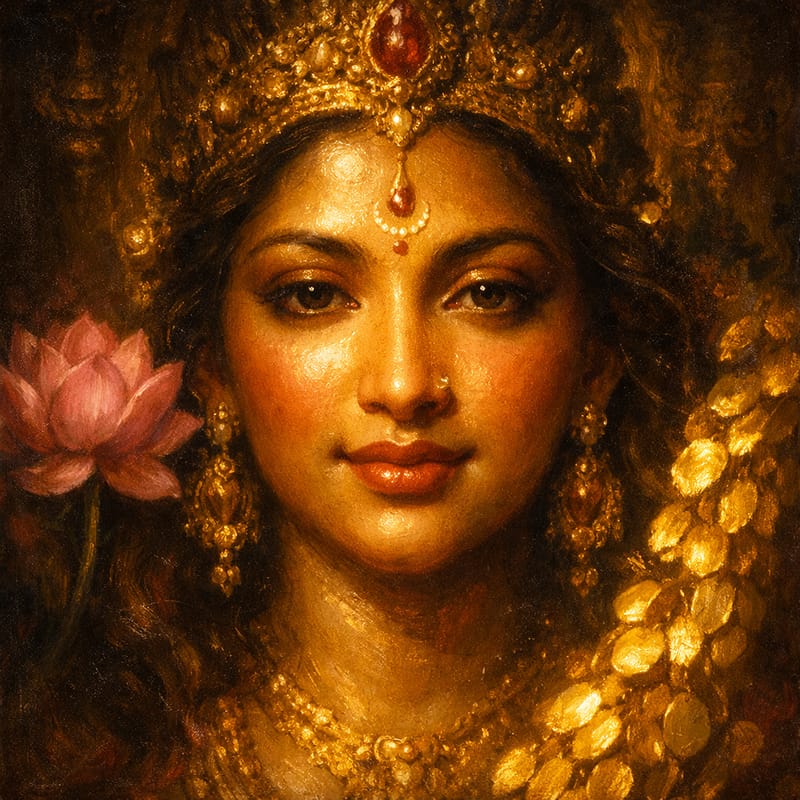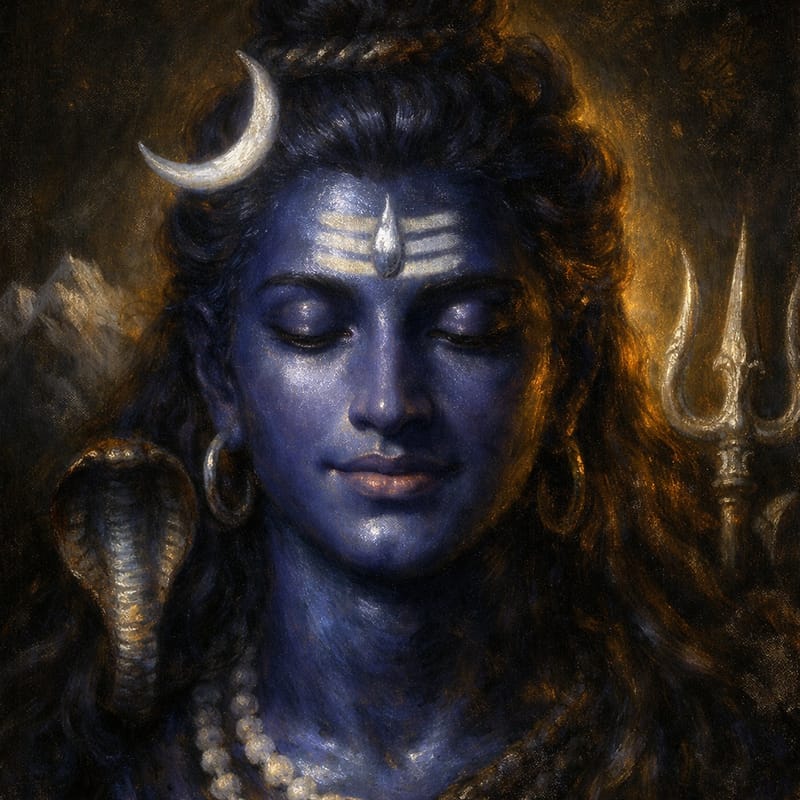


Goddess Lakshmi is the Hindu goddess of fortune, beauty and well-being. She is the wife of Vishnu. In the old story she rises from the ocean of milk on a lotus. Devotees see her gifts as more than money. They include food and courage. They include family and a calm heart. Many homes light a lamp for her on Fridays and at Diwali.
Who is Goddess Lakshmi?
Lakshmi is the goddess of shri. Shri means radiance, good fortune and the grace that makes a life feel full.
Her name is often linked to the Sanskrit word lakshya. Lakshya means an aim or a sign. So Lakshmi can be read as the one who shows us what is good.
She is the wife of Vishnu, the keeper of the world. Tradition holds that wherever he goes she goes too. Her many names show her many sides.
Shri
Her oldest name. Shri means splendour. It is also the word of respect written before names and on the first page of a new account book.
Mahalakshmi
The great Lakshmi. In goddess traditions Mahalakshmi is the highest mother and the source of every form.
Padma and Kamala
Both names mean lotus. She sits on a lotus and holds lotuses in her hands.
Vishnupriya
The beloved of Vishnu. Our Lakshmi Pooja Mantra calls her by this name.
Lokkhi
The Bengali form of her name. In Bengal she is a gentle goddess of the home and the harvest.
Ambabai
The loving name devotees use for the goddess at Kolhapur in Maharashtra.
Stories of Goddess Lakshmi
Lakshmi has many stories. They change from text to text and from home to home. Each one shows a different side of grace.
Born from the ocean of milk
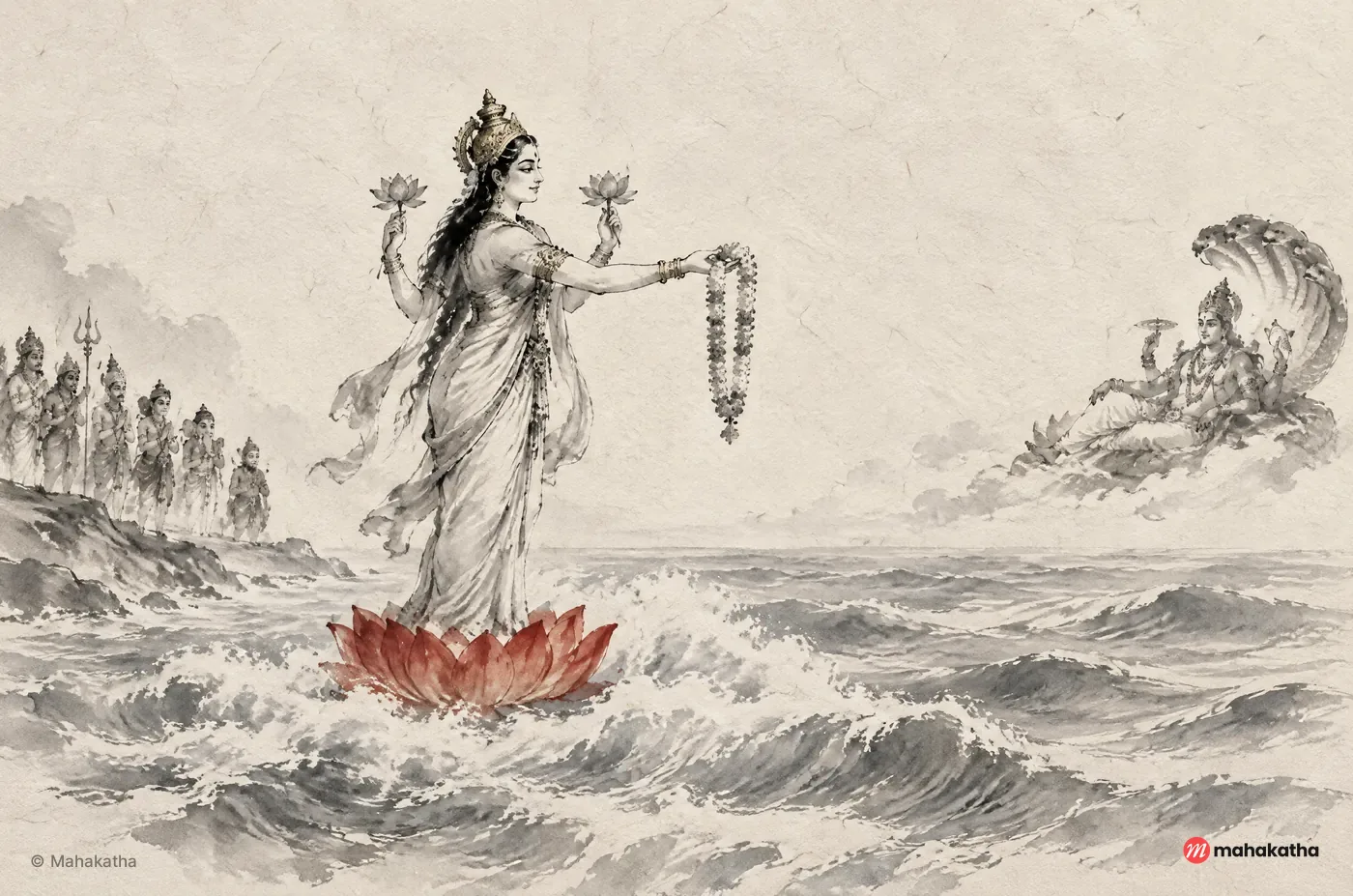
The story says the gods once lost their shine. A sage's curse had made fortune leave heaven. In the Vishnu Purana that sage is Durvasa. The gods and the asuras churned the ocean of milk to find the nectar of life. Asuras are the rivals of the gods in these stories. Many treasures rose from the waves. Then Lakshmi rose on a lotus. She looked at all who stood there. In the Bhagavata Purana she chooses Vishnu and places a garland around his neck. The gods grew bright again under her gaze.
She comes with Vishnu every time
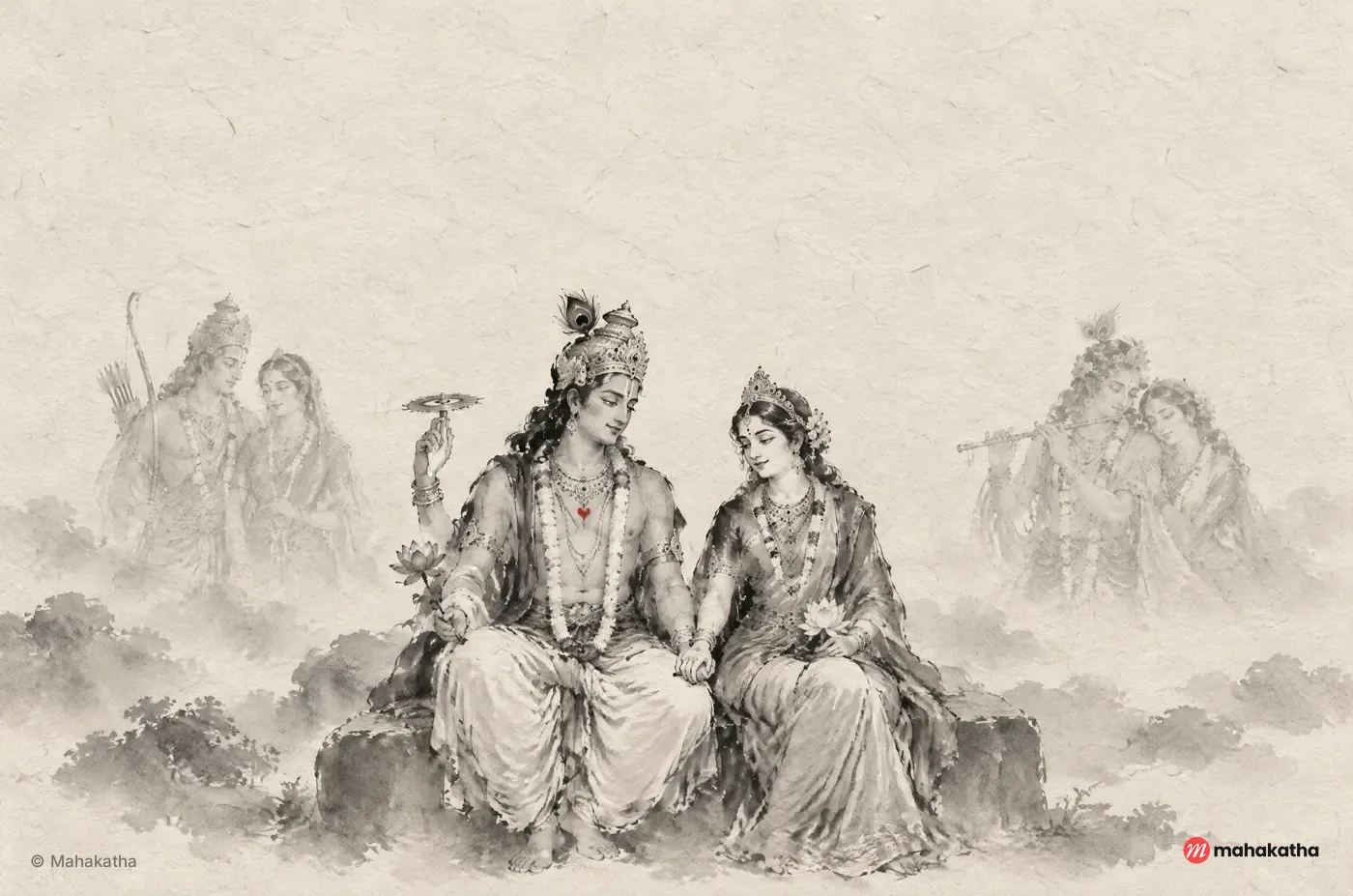
Tradition holds that Lakshmi never leaves Vishnu. When he came as Rama she came as Sita. When he came as Krishna she came as Rukmini. Many say she lives on his chest as the mark called Srivatsa. In these stories love means staying close through every life.
The rain of golden fruit
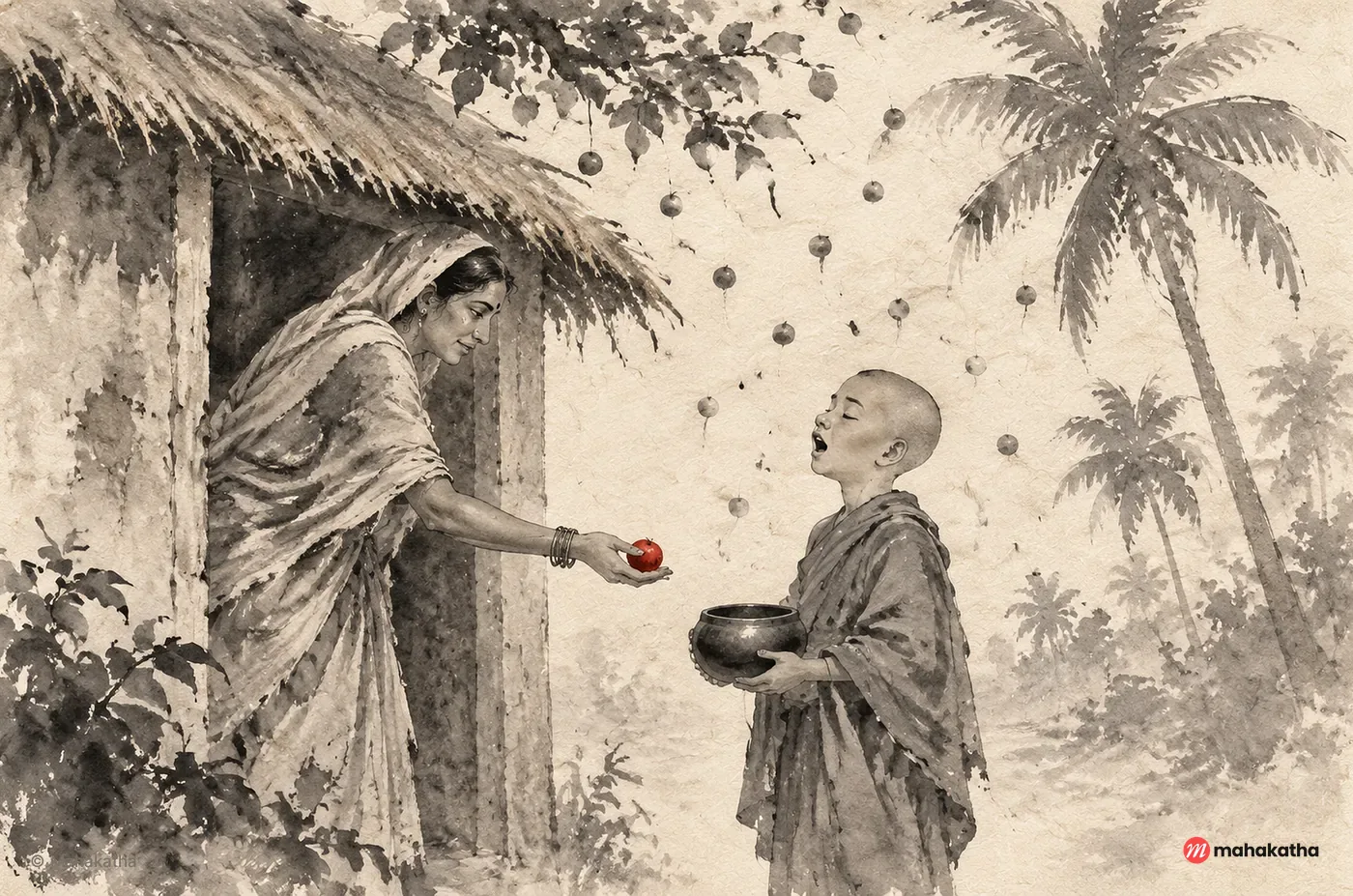
A story from Kerala tells of the young Adi Shankara. He went to a poor woman's door to beg for food. She had only one dry amla to give. An amla is a small sour gooseberry. She gave it with love. The boy sang a hymn to Lakshmi for her. The story says golden fruit then fell like rain on her home. That hymn is the Kanakadhara Stotram.
Lakshmi visits Shriya
Odisha tells this story in the Lakshmi Purana. It is a 15th-century Odia poem by Balarama Dasa. Lakshmi visits the home of Shriya, a poor outcaste woman who prays to her. Jagannath's brother Balarama is angry. The brothers will not let Lakshmi back into the temple. She leaves. Soon the brothers have no food and no home. At last they eat from her hands and learn humility. Devotees read it as a lesson that grace sees no caste.
Padmavati of the seven hills
A Tirumala story says Lakshmi left Vaikuntha after a sage struck Vishnu's chest. Vaikuntha is Vishnu's heaven. In one telling she went to Kolhapur. Vishnu came to earth as Venkateshwara to find her. Many devotees see Princess Padmavati as Lakshmi born again. Their wedding is still sung about at Tirupati.
How the worship of Lakshmi grew
Lakshmi grew from a Vedic idea of shining fortune into one of the most loved goddesses in India. Here are the broad steps.
The Vedic hymns
Fortune and shri are praised across the Vedas. A fuller hymn called the Sri Suktam sits among the khila hymns attached to the Rig Veda. Khila means supplement. It calls a radiant goddess who lives in the lotus.
Early images
Some of the oldest carvings of a lotus goddess appear on Buddhist stupas at Sanchi and Bharhut. Two elephants pour water over her. Scholars often read her as Gaja Lakshmi. These carvings are usually placed in the last centuries before the Common Era.
The epics
The Mahabharata and the Ramayana both tell of the churning of the ocean. Scholars place the epics over several centuries. In these years Shri and Lakshmi slowly become one goddess beside Vishnu.
Coins and kings
Many gold coins of the Gupta age show a seated goddess with a lotus. She is usually read as Lakshmi. Good fortune and good rule were seen as one.
The Puranas
The Vishnu Purana and the Bhagavata Purana tell her story in full. In Shakta texts Mahalakshmi is the great mother of all. Shakta means devoted to the goddess as the highest power.
The bhakti poets
In the South the Sri Vaishnava path grew around the Alvar poet-saints and the teacher Ramanuja. Sri Vaishnava means those who worship Vishnu together with Shri. Here Lakshmi is the kind mother who speaks for us before the Lord.
Lakshmi across the regions of India
Every region welcomes Lakshmi in its own way. The love is the same.
North
In the North Lakshmi is the queen of Diwali. Families clean the house and light clay lamps at dusk. Small footprints are drawn walking into the home to invite her in. She is worshipped with Ganesha on that night.
South
In the South many women keep Varalakshmi Vratam. A vratam is a vow kept with prayer and fasting. A pot is dressed as the goddess with a face and a sari. Tamil homes draw a kolam at the door each dawn. A kolam is a rice-flour pattern that welcomes her.
East
In Bengal and Odisha she is a gentle household goddess. Bengali homes hold Kojagari Lakshmi Puja on a bright full moon night. Kojagari is said to mean who is awake. Families draw alpana on the floor. Alpana is a pattern made with rice paste. In Odisha women honour her on the Thursdays of the month of Margashira.
West
In Maharashtra she is Ambabai of Kolhapur. Many devotees there see her as the great goddess herself. Gujarati traders open new account books at Diwali with a puja called Chopda Pujan. They write shubh labh on the first page. It means goodness and gain.
Beyond India
In Nepal the festival of Tihar keeps a night for Laxmi Puja. Lakshmi also travelled east with Buddhism. Many scholars link the Japanese goddess Kichijoten to her.
Lakshmi temples across India
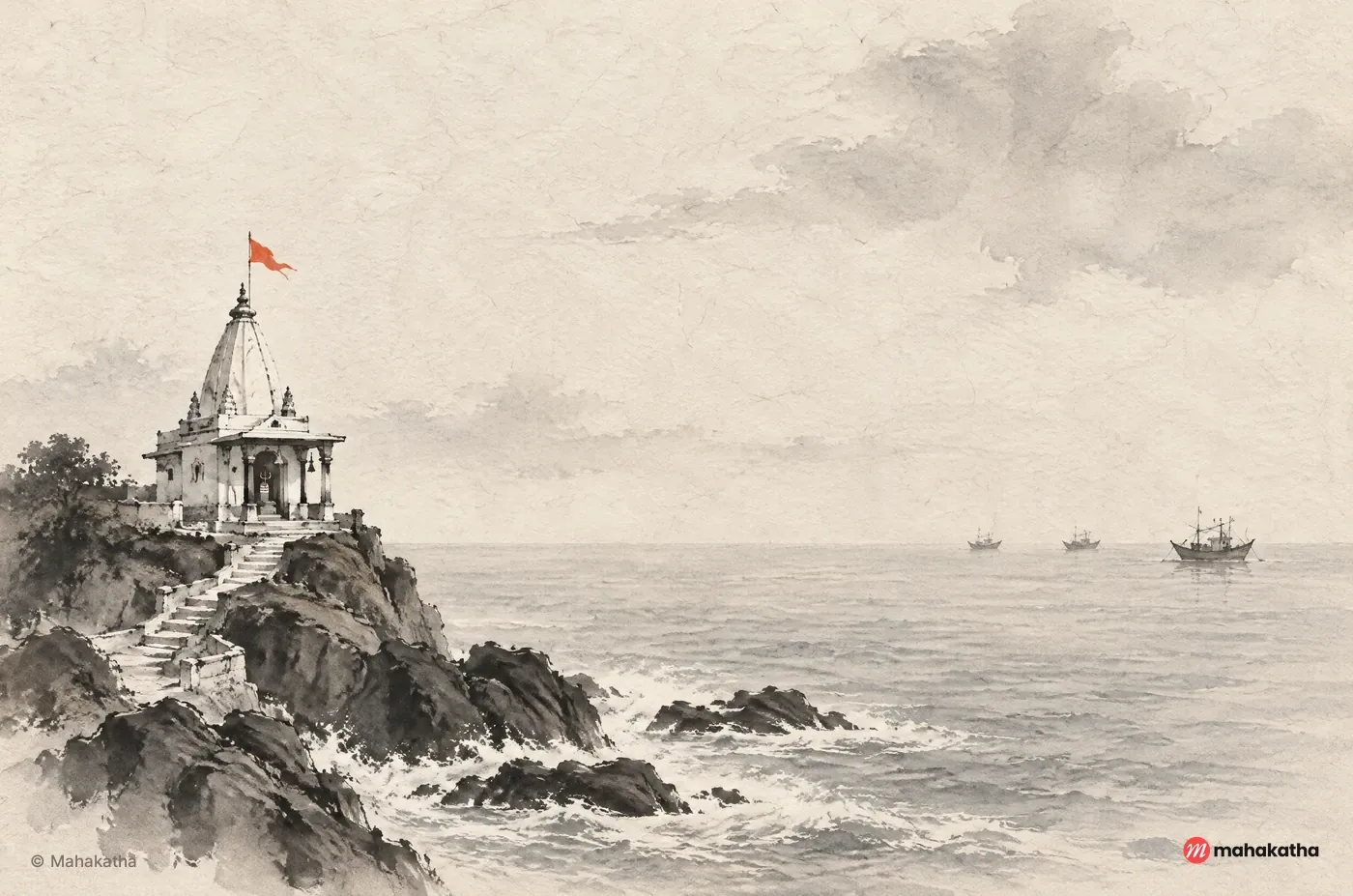
These are some of the best-known shrines where Lakshmi is the heart of worship.
Mahalakshmi Temple, Kolhapur (Maharashtra)
Here the goddess is called Ambabai. Several lists of Shakti Peethas include this temple. The lists differ from text to text. On a few days each year the setting sun lights the image. Devotees call this Kiranotsav, the festival of rays.
Mahalakshmi Temple, Mumbai (Maharashtra)
This temple stands by the sea in south Mumbai. Mahalakshmi sits here with Mahakali and Mahasaraswati. It is one of the busiest shrines in the city.
Padmavati Ammavari Temple, Tiruchanur (Andhra Pradesh)
Tiruchanur lies close to Tirupati. Many pilgrims visit Padmavati as part of the Tirumala journey.
Ranganathaswamy Temple, Srirangam (Tamil Nadu)
Lakshmi lives here as Ranganayaki in her own shrine. Tradition holds that her festival image never leaves that shrine. Ranganatha's image is carried to her instead. Devotees go to her too.
Ashtalakshmi Temple, Chennai (Tamil Nadu)
This temple stands near the beach at Besant Nagar. It has shrines for all eight forms of Lakshmi on several levels.
Sripuram Golden Temple, Vellore (Tamil Nadu)
A recent temple covered in gold. It sits in a garden laid out like a star. Its main shrine is for Sri Lakshmi Narayani.
Lakshmi Narayan Temple, New Delhi (Delhi)
Most people know it as Birla Mandir. It honours Lakshmi with Vishnu as Narayan. Mahatma Gandhi opened it.
Symbols of Lakshmi and what they mean
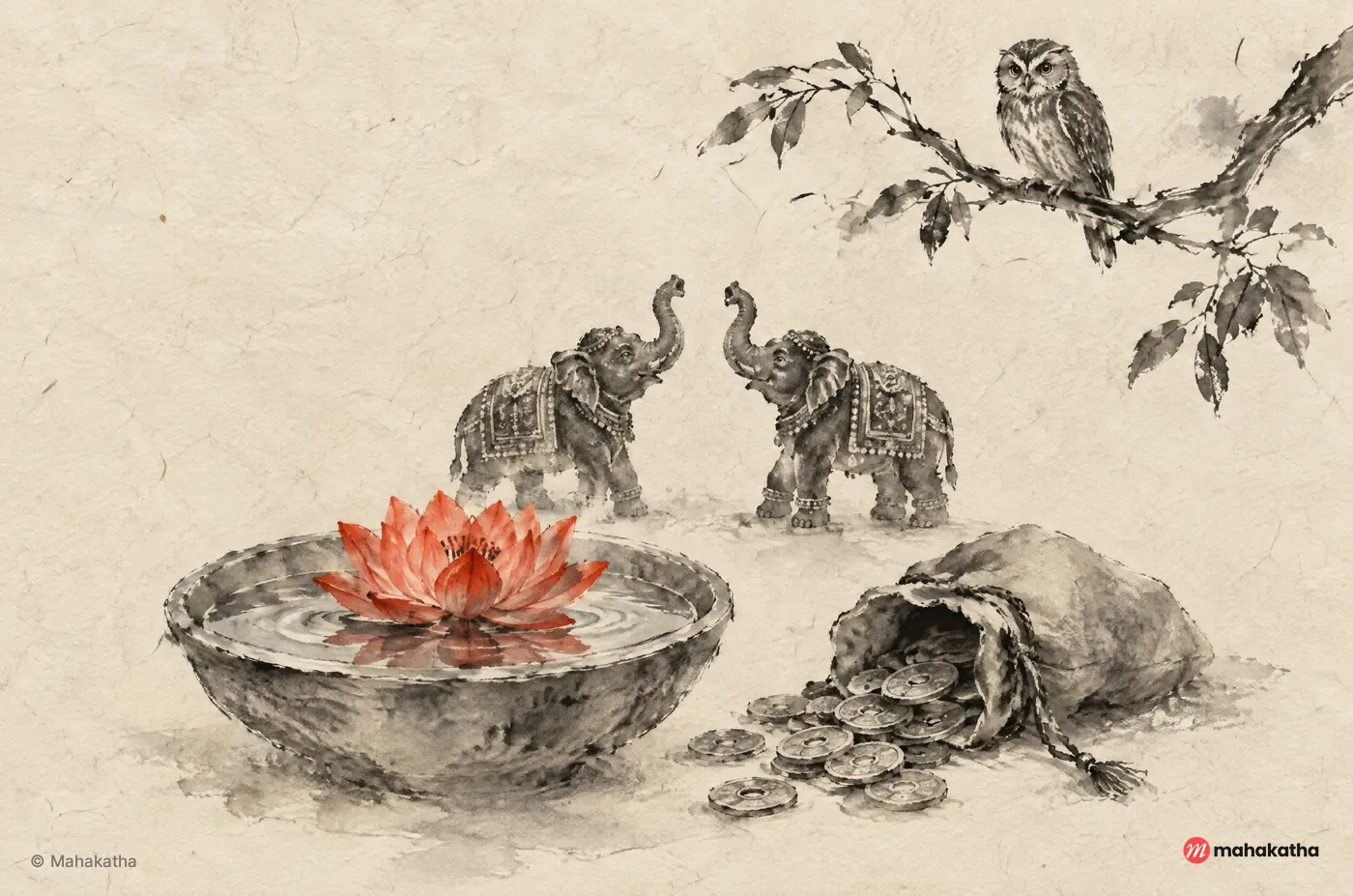
Every part of her picture carries an idea. Read slowly and it becomes a quiet teaching.
The lotus
The lotus grows in mud yet stays clean. It shows grace that the world cannot stain. For us it is a reminder to stay kind in messy places.
Two elephants
In the Gaja Lakshmi form two elephants pour water over her. Gaja means elephant. They stand for rain and strength. For farming people rain was the first wealth.
Coins from her hand
Gold flows from her open palm. Many read it as generosity. Wealth that keeps moving stays alive.
The owl
Her vahana is often an owl. This is strongest in Bengal. A vahana is the animal a deity rides. The owl sees in the dark. Some say it warns us not to be blinded by wealth.
Four hands
Her four hands are often explained as the four aims of life. Dharma is right living and artha is the means to live. Kama is joy and moksha is freedom.
Eight forms
Ashtalakshmi means the eight Lakshmis. They include grain and courage. They include children, victory and learning. Each shows a different kind of plenty.
Lakshmi mantras and hymns
These lines come from our own recordings. Chant them slowly. Let the sound settle before you ask for anything.
Karagre Vasate Lakshmi
Many people say this on waking while looking at their palms. It opens with “Karaagre Vasate Lakshmi,” which places her at the fingertips. It ends with “Prabhaate Karadarshanam” which means seeing the hands at dawn.
Lakshmi Gayatri Mantra
It begins “Om Shree Mahalakshmyai Cha Vidmahe” and closes with “Tanno Lakshmi Prachodayat”. It asks the goddess to light up the mind.
Lakshmi Beeja Mantra
A short chant built on her seed sound: “Om Hreem Shreem Lakshmibhyo Namah”. A beeja is a seed syllable. Shreem is hers.
Kamale Kamalalaye Mantra
The heart of it is “kamale kamalalaye prasida prasida”. It calls her the lotus one who lives in the lotus. Prasida means be pleased with me.
Lakshmi Pooja Mantra
A simple chant of her names used in daily puja. One line is “om vishnupriyayai namo namah” which bows to the beloved of Vishnu.
Ashtalakshmi Stotram
Each verse of this hymn honours one of the eight Lakshmis. Every verse ends with a call for her care.
24 Names of Lakshmi
A gentle chant of her names. It starts with “Om Shriyai Namah” and bows to her again and again.
Lakshmi festivals
Lakshmi festivals are about light and cleanliness. They are also about welcome.
Diwali
On the new moon night of Diwali homes glow with lamps. Families worship Lakshmi with Ganesha. Many leave a door open so she can walk in.
Dhanteras
This day opens the Diwali season. Many families buy a new metal pot or lamp as a sign of welcome.
Varalakshmi Vratam
Women in the South pray for the well-being of the whole family. They tie a sacred thread on the wrist and share sweets with neighbours.
Kojagari Lakshmi Puja
Bengal and Odisha worship her on a bright full moon night after Durga Puja. Families stay up late with stories and sweets.
Ways to bring Lakshmi into your day
You do not need a big ritual. Small acts done with care are an old way to welcome her.
Look at your palms on waking
Say Karagre Vasate before you reach for your phone. See your hands as tools for good work.
Light one lamp at dusk
A small ghee or oil lamp near the door is an old welcome. Sit with it for one slow breath.
Keep one clean corner
Tradition holds that Lakshmi stays where there is order and peace. Some tellings say her sister Alakshmi lives in quarrels and clutter. Tidy one shelf with care. Let it feel like an offering.
Give something on Friday
Share food or help someone in a small way. Many devotees believe Lakshmi loves an open hand.
Count what you already have
Before sleep name three things that feel like plenty. This is Lakshmi as gratitude.
What Lakshmi can teach us
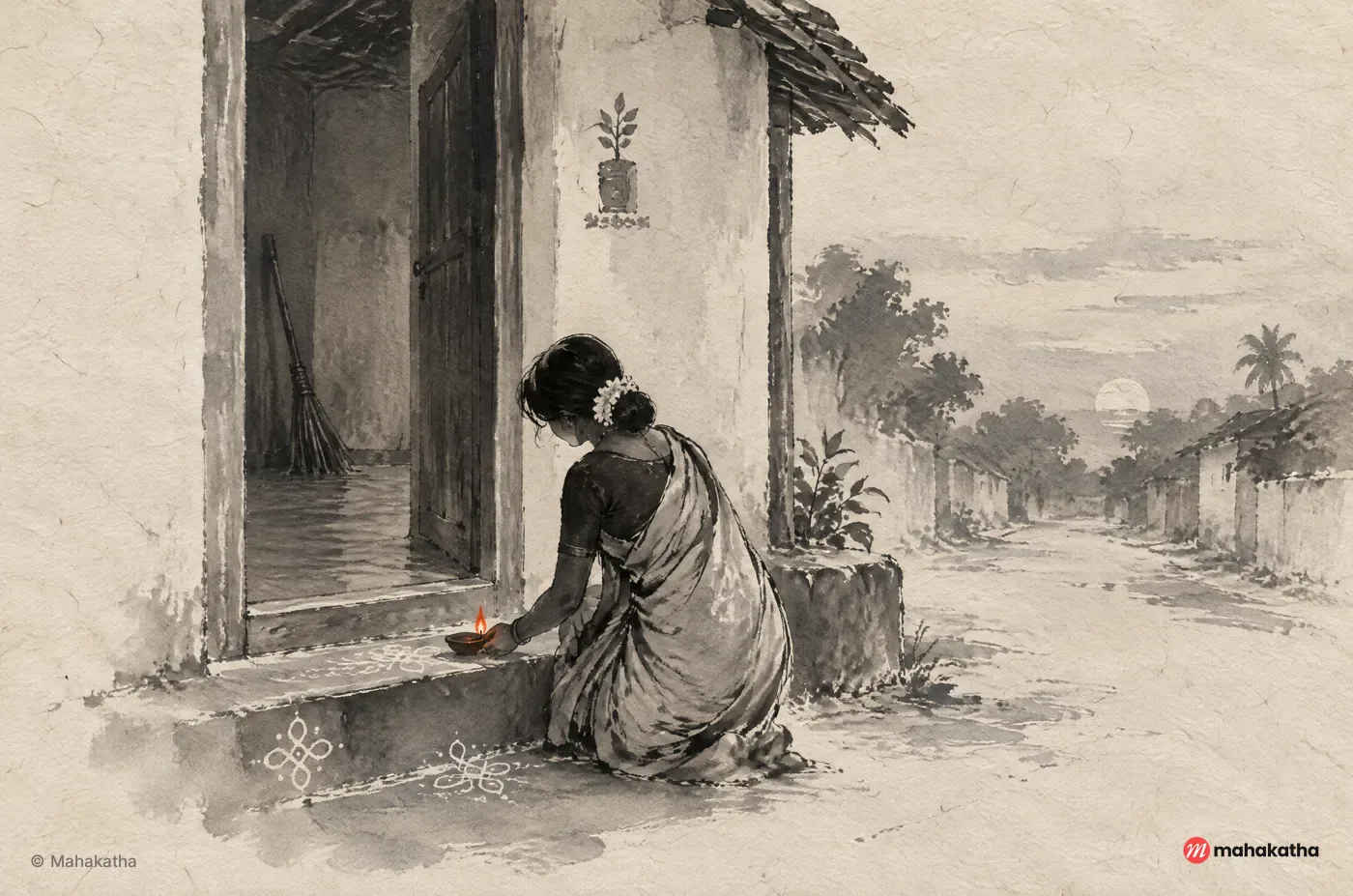
Lakshmi is often painted in gold. Yet in her oldest hymn she is light and fullness. Fortune here means a life that feels whole. It means food on the table and peace at the door.
Her stories show that grace leaves where there is pride. It returns where there is care. When you feel lack you can start small. A clean room is a welcome. A kind word is a welcome too.
The yogis speak of shri as an inner glow. It shows when the breath is slow and the mind stops grasping. Sit for a moment and feel your breath. That quiet fullness is also Lakshmi.
In this tradition wealth is a trust and not a trophy. It must keep moving to stay alive. Whatever you have can become a gift for someone else.
Questions people ask
Who is Goddess Lakshmi?
Lakshmi is the goddess of fortune, beauty and well-being. She is the wife of Vishnu and is also called Shri. The story says she rose from the ocean of milk on a lotus. Devotees see her blessings as more than money. Food is her gift. So are courage, family and a peaceful home.
Why is Lakshmi worshipped on Diwali?
Diwali is a festival of light on a dark new moon night. Families clean their homes and light lamps to welcome Lakshmi. Tradition holds that she enters homes that are bright and peaceful. In many regions she is worshipped with Ganesha that night. In Bengal the same night belongs to Kali.
Which day of the week is for Goddess Lakshmi?
Friday is widely kept as Lakshmi's day. Many homes light a lamp and chant her names on Friday evenings. In the South women keep Varalakshmi Vratam on a Friday. In Odisha the Thursdays of Margashira are also special to her. Local customs differ a little from home to home.
What are the eight forms of Lakshmi?
The eight forms are called Ashtalakshmi. Adi Lakshmi is the first and original form. Dhanya Lakshmi is grain and Dhairya Lakshmi is courage. Gaja Lakshmi is the form with elephants. Santana Lakshmi blesses children and Vijaya Lakshmi blesses victory. Vidya Lakshmi is learning and Dhana Lakshmi is wealth. Lists differ a little from place to place. The Ashtalakshmi Stotram praises all eight.
Which mantra is chanted for Goddess Lakshmi?
Many people begin with Karagre Vasate on waking. Others chant the Lakshmi Gayatri Mantra or the short beeja chant built on the sound Shreem. The Sri Suktam is one of the oldest hymns to her. The Kanakadhara Stotram is loved across the South. Choose one and chant it slowly with a calm mind.
Why does Lakshmi sit on a lotus?
The lotus grows out of mud but its petals stay clean. Her lotus seat shows grace that the world cannot stain. Her names Padma and Kamala both mean lotus. The Sri Suktam calls her the one who lives in the lotus. For devotees it is a reminder to bloom where they are planted.