

Mahakatha
80% OFF
M Mahakatha
Mantras
276 sacred chants
Bhagavad Gita
701 verses with audio
Blog
Guides & stories
Get 80% OFF
Lakshmi Dhanaprapti Mantra

Lakshmi Dhanaprapti Mantra — Tamil Lyrics

The Lakshmi Dhanaprapti Mantra is a direct invocation to Mahalakshmi, the supreme goddess of wealth, prosperity, and abundance. 'Om Hreem Shreem Kreem' establishes the cosmic foundation and awakens the divine feminine principle. 'Mahagruhe' means 'in my home,' while 'Dhanam Puraya Puraya' translates to 'fill, fill with wealth and prosperity.' The mantra requests Lakshmi to abundantly fill one's home, life, and consciousness with material and spiritual prosperity. 'Chintaayai Duraya Duraya' means 'remove, remove my anxieties'—recognizing that true wealth includes freedom from worry, fear, and mental disturbance. 'Swaha' completes the sacred offering, surrendering the invocation to divine grace.

In Vedic philosophy, Lakshmi embodies far more than material riches—she represents holistic prosperity encompassing health, harmony, righteous livelihood, and spiritual evolution. The Lakshmi Upanishad and Devi Mahatmya describe her as the supreme shakti (divine energy) sustaining all creation and the consort of Vishnu, representing the principle that enduring wealth flows only through dharma (righteous action). This mantra resonates with the Vedic truth that financial anxiety blocks spiritual growth and that sincere devotion to Lakshmi aligns the seeker with natural abundance. The bija mantras (Hreem, Shreem, Kreem, Kleem) are sacred sound frequencies believed to attune consciousness to Lakshmi's energy, transforming the practitioner into a magnetic vessel for prosperity and inner peace.

Chant this mantra 108 times daily, ideally at dawn or during evening puja, in a clean, sacred space. Use a mala (prayer beads) to maintain focus and count repetitions. Begin with authentic gratitude and the sincere intention to manifest abundance while uplifting others. This practice rewires the subconscious mind toward prosperity consciousness, dissolving scarcity beliefs and fear. Consistency over weeks and months yields the deepest transformation.

Curated by The Mahakatha Team · Original Composition: Mahakatha · Lyric: Traditional / Vaishnava

Lakshmi Dhanaprapti Mantra

Lakshmi · Preview · 2:00

2:00

ॐ ह्रीं श्रीं क्रीं श्रीं क्रीं क्लीं श्रीं महालक्ष्मी मामग्रुहे धनं पुरय पुरय चिन्तायै दुरय दुरय स्वाहा

ஓம் ஹ்रீம் ஸ்ரீம் க்रீம் ஸ்ரீம் க்रீம் க்லீம் ஸ்ரீம் மஹாலக்ஷ்மீ மாமக்ருஹே தனம் புரய புரய சிந்தாயை துரய துரய ஸ்வாஹா

ஓம் என்ற பிரணவ மந்திரத்துடன் மஹாலக்ஷ்மியை வணங்கி செல்வ வளத்தை அருளும்படி வேண்டுகிறோம்.

Word-by-Word Meaning

Sanskrit Meaning
Om The primordial sound and sacred syllable representing ultimate reality and consciousness in Hindu philosophy. Root: from Vedic traditions as the sound of the universe itself.
Hreem A bija (seed) mantra associated with the heart chakra and divine feminine energy, often used to invoke inner power and consciousness.
Shreem A bija mantra connected to wealth, prosperity, and abundance; derived from Shri, meaning beauty and auspiciousness.
Kreem A bija mantra associated with divine creative power and transformation; often used in shakti-related practices.
Kleem A bija mantra linked to attraction, desire, and magnetism; connected to the divine feminine and love energy.
Mahalakshmi The supreme form of Lakshmi, the goddess of wealth, prosperity, fortune, and abundance in Hindu tradition. Root: Maha (great) + Lakshmi.
Dhanam Wealth, riches, or prosperity; from the root Dha (to hold/sustain). Accusative case form indicating 'wealth' as the object.
Swaha A ritual offering mantra word meaning 'I offer' or 'so be it'; used to conclude mantras and signify dedication of the chant to the divine. Root: from Sva (self) + Ha (offer).

How to Chant Lakshmi Dhanaprapti Mantra

  1. 1

    Find a quiet, clean space

    Sit in a comfortable, undisturbed environment. Face east or north if possible. You may light incense or a candle to set a contemplative atmosphere.

  2. 2

    Settle into a comfortable posture

    Sit cross-legged on the floor or upright in a chair. Keep the spine erect and place the hands on the knees with palms facing upward.

  3. 3

    Take three cleansing breaths

    Inhale slowly through the nose, hold briefly, and exhale completely. Repeat three times to calm the mind and prepare for mantra recitation.

  4. 4

    Begin chanting Lakshmi Dhanaprapti Mantra

    Chant the mantra clearly and with devotion — aloud, in a whisper, or silently. Use a mala (108 beads) to count repetitions. Aim for a consistent, unhurried rhythm throughout the session.

  5. 5

    Rest in stillness

    After completing your chanting, sit quietly for two to five minutes. Allow the vibration of the mantra to settle within. Close the practice with a moment of gratitude.

Benefits of Lakshmi Dhanaprapti Mantra

  • Attracts financial abundance and prosperity by aligning personal energy with Lakshmi's divine vibration and abundance frequency.

    Source: Lakshmi Upanishad; Traditional Tantric practice

  • Reduces financial anxiety, worry, and fear by calming the nervous system and restoring mental clarity and confidence.

    Source: Traditional practice; Vedic psychology

  • Cultivates consciousness of dharmik sampatti (righteous abundance), ensuring wealth manifests through ethical means and righteous action.

    Source: Devi Mahatmya; Vedic dharma philosophy

  • Enhances decision-making wisdom regarding finances, investments, and resource management through heightened intuition and discernment.

    Source: Traditional practice

  • Creates a vibrational shift that magnetizes opportunities, beneficial relationships, and circumstances supporting genuine prosperity and growth.

    Source: Mantra science; Traditional practice

Deity Lakshmi
Composition Mahakatha (Original) · Traditional / Vaishnava (Lyric)
Also called Lakshmi Wealth Mantra · Lakshmi Prosperity Mantra · Lakshmi Stotram · Lakshmi Kavach · Lakshmi Dhan Prapti Mantra
Lakshmi also known as Mahalakshmi · Shri · Padma · Kamala

Story & Symbolism

The Lakshmi Dhanaprapti Mantra, meaning "mantra for the attainment of wealth," is traditionally attributed to the Tantric and Vedic traditions that developed over centuries of Hindu spiritual practice. While no single text definitively claims authorship, scholars suggest the mantra emerged from the synthesis of Puranic devotion to Lakshmi and the systematic sound technologies of Tantric philosophy, likely gaining formalized structure between the medieval period and early modern era. The mantra's development reflects a natural evolution in Hindu spirituality, where practitioners sought direct methods to invoke the blessings of Lakshmi, the goddess of prosperity, fortune, and abundance. Rather than appearing suddenly, it crystallized from generations of devoted practitioners refining their invocations through experience and spiritual insight.

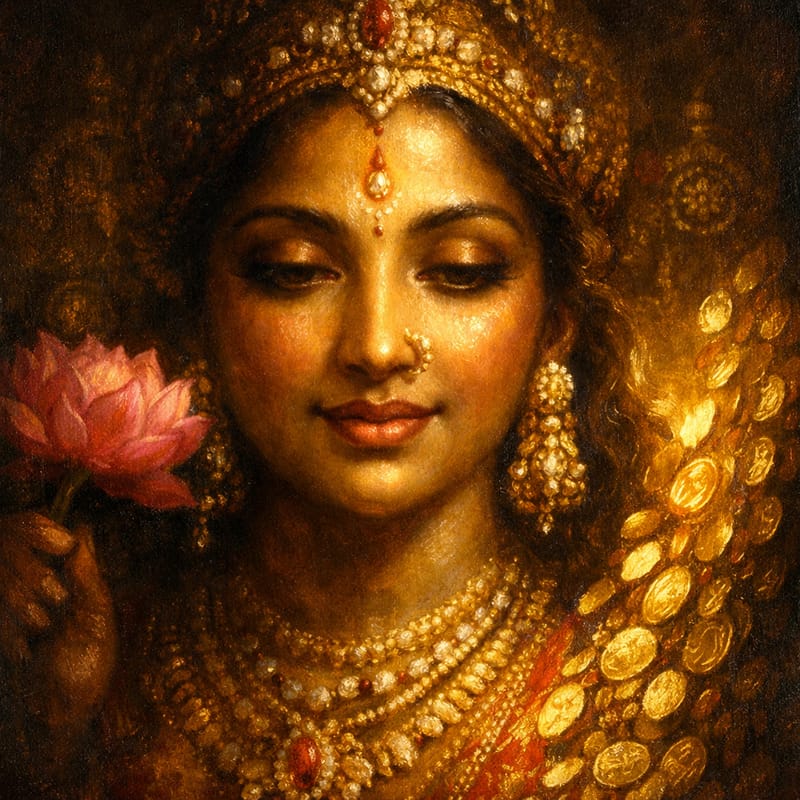
Lakshmi herself represents far more than material wealth in the Hindu tradition. She embodies prosperity in its broadest sense—encompassing health, spiritual fulfillment, beauty, grace, and the harmonious flow of life's blessings. Depicted adorned with lotus flowers and coins, seated upon her lotus throne with elephants trumpeting her arrival, Lakshmi symbolizes the divine abundance that flows through the universe and into the lives of those who cultivate receptivity and gratitude. She is the consort of Vishnu, the preserver, and her presence maintains cosmic order and balance. When devotees chant the Dhanaprapti Mantra, they align themselves not merely with material gain, but with the sacred principle of righteous abundance and divine grace that Lakshmi represents.

The Lakshmi Dhanaprapti Mantra holds deep spiritual significance because it operates on the understanding that sound itself carries vibrational power capable of shifting consciousness and attracting corresponding energies. By repeatedly chanting the mantra with sincere intention and a pure heart, practitioners are believed to remove obstacles to prosperity, purify their minds of scarcity consciousness, and open themselves to receiving the goddess's blessings. The practice honors an ancient principle: that devotion combined with focused intention can transform one's relationship with abundance, drawing forth not just material prosperity but the inner wealth of peace, wisdom, and spiritual fulfillment. This mantra thus serves as both a practical invocation and a profound spiritual practice, reminding seekers that true prosperity flows when the heart aligns with divine generosity.

How to Use in Daily Life

🌅

Morning Recitation

Chant this mantra 108 times each morning after bathing. Face east or north for maximum spiritual benefit. Use a mala to count rounds accurately and maintain focus throughout the practice.

🧘

Meditation Practice

Sit in a quiet space with spine upright. Visualize golden light surrounding you with each recitation. Maintain steady breathing and allow the mantra's vibrations to align your energy with prosperity consciousness.

🙏

Devotional Offering

Light a ghee lamp or incense before chanting. Offer flowers or fruits to Lakshmi's image. Recite with sincere gratitude and pure intention, focusing on spiritual wealth rather than material gain alone.

💤

Evening Gratitude

Chant before sleep to imprint abundance consciousness in your subconscious mind. Recite 21 or 54 times with calm awareness. This practice helps attract prosperity while releasing daily worries and stress.

Frequently Asked Questions

What is the Lakshmi Dhanaprapti Mantra?
The Lakshmi Dhanaprapti Mantra is a sacred Sanskrit invocation dedicated to Lakshmi, the Hindu goddess of wealth, prosperity, and abundance. The term 'Dhanaprapti' literally means 'acquisition of wealth' or 'gaining prosperity.' This mantra is traditionally believed to invoke the blessings of Lakshmi to attract financial abundance, material prosperity, and well-being into one's life. Unlike mantras that focus on spiritual liberation alone, the Lakshmi Dhanaprapti Mantra specifically addresses material and financial aspects of life, acknowledging that prosperity can support spiritual growth and dharmic living. The mantra operates on the principle that sincere devotion and rhythmic recitation create a vibrational resonance that aligns the practitioner with the energy of abundance. According to Puranic texts, Lakshmi is not merely a deity of material wealth but represents all forms of prosperity—health, knowledge, relationships, and spiritual grace. This mantra serves as a bridge between the devotee and these divine blessings, making it a practical tool for those seeking to improve their financial circumstances while maintaining spiritual integrity. The practice is rooted in the understanding that requesting divine assistance for worldly needs is legitimate when approached with respect, purity, and gratitude.
What are the main benefits of chanting the Lakshmi Dhanaprapti Mantra?
Practitioners of the Lakshmi Dhanaprapti Mantra traditionally report several benefits associated with consistent recitation. The primary benefit is the attraction of financial prosperity and improved economic circumstances. Devotees believe that regular chanting aligns their consciousness with the energy of abundance, potentially opening new opportunities for income, business success, and financial stability. Beyond material wealth, the mantra is said to cultivate a mindset of abundance rather than scarcity, reducing anxiety about financial insecurity. According to Hindu philosophy, this positive psychological shift can actually influence decision-making and actions that lead to better financial outcomes. Additionally, scholars suggest the mantra may enhance clarity and focus, qualities necessary for professional success and wise financial management. The practice is also traditionally believed to purify negative karma related to wealth, removing psychological blocks that might prevent one from accepting or maintaining prosperity. Some practitioners report experiencing increased confidence, improved relationships with family regarding finances, and a greater sense of control over their economic destiny. The mantra may also cultivate gratitude and generosity, as Lakshmi is said to favor those who share their wealth with others. Regular chanting is traditionally believed to create a protective aura that guards against financial loss, fraud, and misfortune while inviting auspicious circumstances and beneficial connections into one's life.
How should I chant the Lakshmi Dhanaprapti Mantra correctly?
To chant the Lakshmi Dhanaprapti Mantra effectively, begin by finding a clean, quiet space where you won't be disturbed. Ideally, face east or north, directions traditionally associated with prosperity and divine energy. Sit comfortably in a meditative posture, keeping your spine straight to allow energy to flow freely. Before beginning, take a few deep breaths and set a clear intention regarding your desire for prosperity—this focused intention amplifies the mantra's effectiveness. Most practitioners use a mala (prayer beads with 108 beads) to count repetitions, chanting the mantra 108 times in one sitting. This number is considered sacred in Hindu tradition and creates a complete vibrational cycle. Recite the mantra at a steady, moderate pace—not too fast or too slow. Your pronunciation should be clear and deliberate, allowing each syllable to resonate fully. Traditionally, chanting in the early morning hours, particularly during Brahma Muhurta (before sunrise), is believed to be most potent. Friday is traditionally associated with Lakshmi, making it an auspicious day for practice. Some practitioners prefer chanting during the waxing moon phase, symbolizing growth and increase. Consistency matters more than duration; daily practice of even 10-15 minutes is more beneficial than sporadic intense sessions. End your practice by sitting quietly for a few moments, absorbing the vibrational energy before resuming daily activities.
What is the origin and historical significance of the Lakshmi Dhanaprapti Mantra?
The Lakshmi Dhanaprapti Mantra emerges from the rich tradition of Hindu devotional practices documented in ancient Sanskrit texts and Puranic literature. According to scholars, mantras dedicated to Lakshmi have existed for thousands of years, with references appearing in the Rigveda, which contains hymns addressing prosperity and abundance. The Lakshmi Tantra and various Upanishads discuss methods of invoking Lakshmi's blessings, establishing a foundation for later mantra-based practices. The tradition became more formalized during the medieval period, when mantra science was systematically documented by Hindu philosophers and spiritual masters. The specific formulation of prosperity-focused mantras reflects the Hindu understanding that seeking material well-being is dharmic when pursued ethically and coupled with generosity. Lakshmi worship gained particular prominence during the Diwali festival season, which celebrates the goddess of wealth and the victory of light over darkness. Historical texts suggest that merchants, business communities, and householders have traditionally practiced Lakshmi mantras to ensure business success and family welfare. This practice transcended geographical and temporal boundaries, becoming integral to Hindu culture across India and among diaspora communities. The mantra tradition represents a sophisticated understanding of sound vibration and consciousness developed over millennia. Modern scholars suggest that these practices reflect both spiritual wisdom and practical psychology, offering practitioners both devotional satisfaction and measurable improvements in their approach to prosperity.
What is the proper pronunciation of the Lakshmi Dhanaprapti Mantra and practical tips for practice?
While there are several variations of Lakshmi Dhanaprapti Mantras, a commonly practiced version begins with 'Om Shreem Mahalakshmiyai Namaha,' though specific formulations may vary. Proper pronunciation is crucial, as Sanskrit mantras operate through precise sound vibrations. 'Om' should be chanted as a single, continuous sound resonating from deep within your being. 'Shreem' (also spelled 'Shrim') is the seed syllable associated with Lakshmi's energy and should be pronounced with a long 'ee' sound. 'Mahalakshmiyai' means 'to the great Lakshmi,' with emphasis on clear articulation of each syllable. 'Namaha' means 'I bow to' or 'I salute,' and should be spoken with reverence. For practical implementation, consider these tips: record an authentic pronunciation guide from a qualified Sanskrit teacher or reputable spiritual resource and practice listening before chanting aloud. Begin slowly, ensuring each sound is clear before increasing speed. Maintain a consistent daily practice, ideally at the same time each morning. Keep a journal of your practice frequency and any opportunities or blessings that manifest, which helps maintain motivation and awareness. Create a small altar with an image of Lakshmi and perhaps a lamp, making your practice space sacred. Combine mantra chanting with ethical action—pursue honest work and share generously with others. This integration of spiritual practice with right action traditionally produces the most potent results and aligns with Lakshmi's principles of dharmic prosperity.
What happens if we chant Lakshmi Dhanaprapti Mantra?
Regular chanting of Lakshmi Dhanaprapti Mantra creates measurable shifts in your mental, emotional, and spiritual state. Attracts financial abundance and prosperity by aligning personal energy with Lakshmi's divine vibration and abundance frequency.. Reduces financial anxiety, worry, and fear by calming the nervous system and restoring mental clarity and confidence.. Cultivates consciousness of dharmik sampatti (righteous abundance), ensuring wealth manifests through ethical means and righteous action.. Most practitioners notice a tangible difference within the first week of daily practice — start with 108 repetitions using a mala and observe how your inner state transforms.

Related Prayers & Chants

🪘

Ancient Chants — Gold Edition

Get access to ancient meditation mantras. 80% OFF for limited time.

Get 80% OFF →