

Lakshmi Dhanaprapti Mantra — Russian Lyrics
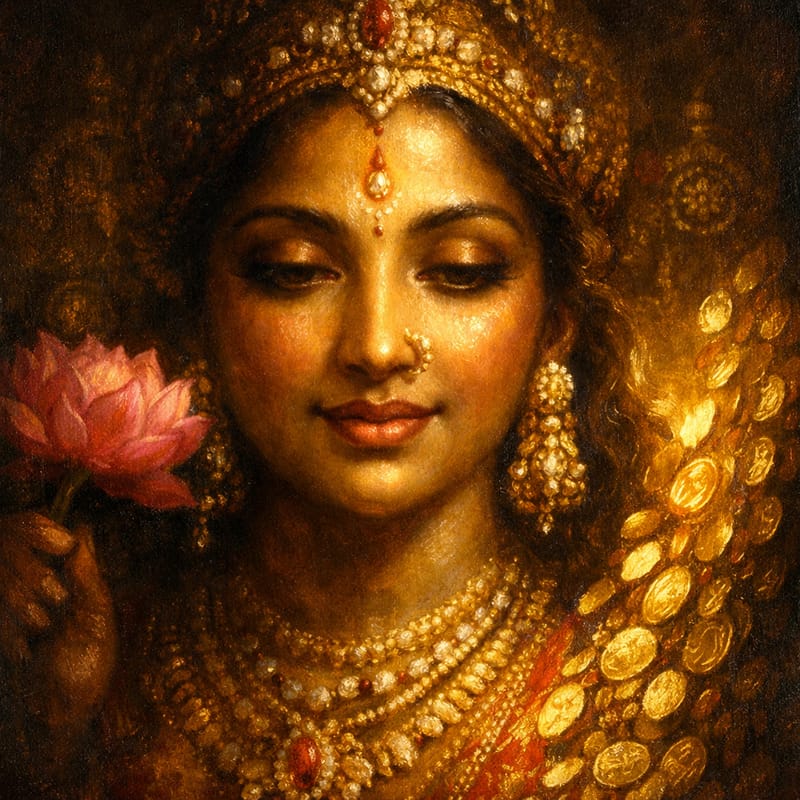
The Lakshmi Dhanaprapti Mantra is a direct invocation to Mahalakshmi, the supreme goddess of wealth, prosperity, and abundance. 'Om Hreem Shreem Kreem' establishes the cosmic foundation and awakens the divine feminine principle. 'Mahagruhe' means 'in my home,' while 'Dhanam Pooraya Pooraya' translates to 'fill, fill with wealth and prosperity.' The mantra requests Lakshmi to abundantly fill one's home, life, and consciousness with material and spiritual prosperity. 'Chintaayai Dooraya Dooraya' means 'remove, remove my anxieties'—recognizing that true wealth includes freedom from worry, fear, and mental disturbance. 'Swaha' completes the sacred offering, surrendering the invocation to divine grace.
In Vedic philosophy, Lakshmi embodies far more than material riches—she represents holistic prosperity encompassing health, harmony, righteous livelihood, and spiritual evolution. The Lakshmi Upanishad and Devi Mahatmya describe her as the supreme shakti (divine energy) sustaining all creation and the consort of Vishnu, representing the principle that enduring wealth flows only through dharma (righteous action). This mantra reflects the traditional view that anxiety over wealth hinders spiritual growth and that sincere devotion to Lakshmi brings the seeker closer to natural abundance. The bija mantras (Hreem, Shreem, Kreem, Kleem) are sacred sounds believed to attune the mind to Lakshmi, opening the practitioner to prosperity and inner peace.
Chant this mantra 108 times daily, ideally at dawn or during evening puja, in a clean, sacred space. Use a mala (prayer beads) to maintain focus and count repetitions. Begin with authentic gratitude and the sincere intention to invite abundance while uplifting others. This practice gently turns the mind toward a sense of prosperity, easing scarcity beliefs and fear. Consistency over weeks and months yields the deepest transformation.
Curated by The Mahakatha Team · Original Composition: Mahakatha · Lyric: Traditional / Vaishnava
Lakshmi Dhanaprapti Mantra
Lakshmi · Preview · 2:00
Preview ended
Ancient sounds for transformation, carried across 3,000 years.
Get the full version — plus 275 more ancient chants. 80% OFF today only.
Get Ancient Chants Bundle — 80% OFF →3000+ happy customers · Lifetime access · All devices
2.2M people trust Mahakatha
Chant daily with reminders — Get the Mahakatha app
ॐ ह्रीं श्रीं क्रीं श्रीं क्रीं क्लीं श्रीं महालक्ष्मी मम गृहे धनं पूरय पूरय चिन्तायै दूरय दूरय स्वाहा
Ом Хрим Шрим Крим Шрим Крим Клим Шрим Махалакшми Мама Грихе Дханам Пурая Пурая Чинтаяй Дурая Дурая Сваха
О, Богиня Лакшми! Привлеки ко мне изобилие богатства
И удали от меня все мои заботы
How to Chant Lakshmi Dhanaprapti Mantra
- 1
Find a quiet, clean space
Sit in a comfortable, undisturbed environment. Face east or north if possible. You may light incense or a candle to set a contemplative atmosphere.
- 2
Settle into a comfortable posture
Sit cross-legged on the floor or upright in a chair. Keep the spine erect and place the hands on the knees with palms facing upward.
- 3
Take three cleansing breaths
Inhale slowly through the nose, hold briefly, and exhale completely. Repeat three times to calm the mind and prepare for mantra recitation.
- 4
Begin chanting Lakshmi Dhanaprapti Mantra
Chant the mantra clearly and with devotion — aloud, in a whisper, or silently. Use a mala (108 beads) to count repetitions. Aim for a consistent, unhurried rhythm throughout the session.
- 5
Rest in stillness
After completing your chanting, sit quietly for two to five minutes. Allow the vibration of the mantra to settle within. Close the practice with a moment of gratitude.
Benefits of Lakshmi Dhanaprapti Mantra
-
Traditionally chanted as a prayer for abundance and prosperity, with personal effort and devotion to Lakshmi.
Source: Lakshmi Upanishad; Traditional Tantric practice
-
Slow chanting can ease anxiety, worry, and fear about wealth, helping restore mental clarity and confidence.
Source: Traditional practice
-
Cultivates consciousness of dharmik sampatti (righteous abundance), so that wealth is sought through ethical means and righteous action.
Source: Devi Mahatmya; Vedic dharma philosophy
-
Enhances decision-making wisdom regarding finances, investments, and resource management through heightened intuition and discernment.
Source: Traditional practice
-
Asks for opportunities, beneficial relationships, and circumstances that support genuine prosperity and growth.
Source: Mantra Shastra; Traditional practice
Story & Symbolism
The Lakshmi Dhanaprapti Mantra, meaning "mantra for the attainment of wealth," is traditionally attributed to the Tantric and Vedic traditions that developed over centuries of Hindu spiritual practice. While no single text definitively claims authorship, scholars suggest the mantra emerged from the synthesis of Puranic devotion to Lakshmi and the systematic sound technologies of Tantric philosophy, likely gaining formalized structure between the medieval period and early modern era. The mantra's development reflects a natural evolution in Hindu spirituality, where practitioners sought direct methods to invoke the blessings of Lakshmi, the goddess of prosperity, fortune, and abundance. Rather than appearing suddenly, it crystallized from generations of devoted practitioners refining their invocations through experience and spiritual insight.
Lakshmi herself represents far more than material wealth in the Hindu tradition. She embodies prosperity in its broadest sense—encompassing health, spiritual fulfillment, beauty, grace, and the harmonious flow of life's blessings. Depicted adorned with lotus flowers and coins, seated upon her lotus throne with elephants trumpeting her arrival, Lakshmi symbolizes the divine abundance that flows through the universe and into the lives of those who cultivate receptivity and gratitude. She is the consort of Vishnu, the preserver, and her presence maintains cosmic order and balance. When devotees chant the Dhanaprapti Mantra, they align themselves not merely with material gain, but with the sacred principle of righteous abundance and divine grace that Lakshmi represents.
The Lakshmi Dhanaprapti Mantra holds deep spiritual significance because it rests on the traditional belief that sound itself carries power capable of shifting consciousness and drawing corresponding blessings. By repeatedly chanting the mantra with sincere intention and a pure heart, practitioners are believed to remove obstacles to prosperity, purify their minds of scarcity consciousness, and open themselves to receiving the goddess's blessings. The practice honors an ancient principle: that devotion combined with focused intention can change one's relationship with abundance, inviting not just worldly prosperity but the inner wealth of peace, wisdom, and spiritual fulfillment. This mantra thus serves as both a practical invocation and a profound spiritual practice, reminding seekers that true prosperity flows when the heart aligns with divine generosity.
How to Use in Daily Life
Morning Recitation
Chant this mantra 108 times each morning after bathing. Face east or north for maximum spiritual benefit. Use a mala to count rounds accurately and maintain focus throughout the practice.
Meditation Practice
Sit in a quiet space with spine upright. Visualize golden light surrounding you with each recitation. Maintain steady breathing and let the mantra's sound turn your attention toward prosperity and gratitude.
Devotional Offering
Light a ghee lamp or incense before chanting. Offer flowers or fruits to Lakshmi's image. Recite with sincere gratitude and pure intention, focusing on spiritual wealth rather than material gain alone.
Evening Gratitude
Chant before sleep so that thoughts of abundance stay with you as you rest. Recite 21 or 54 times with calm awareness. This practice is a prayer for prosperity that can also help you let go of daily worries and stress.