

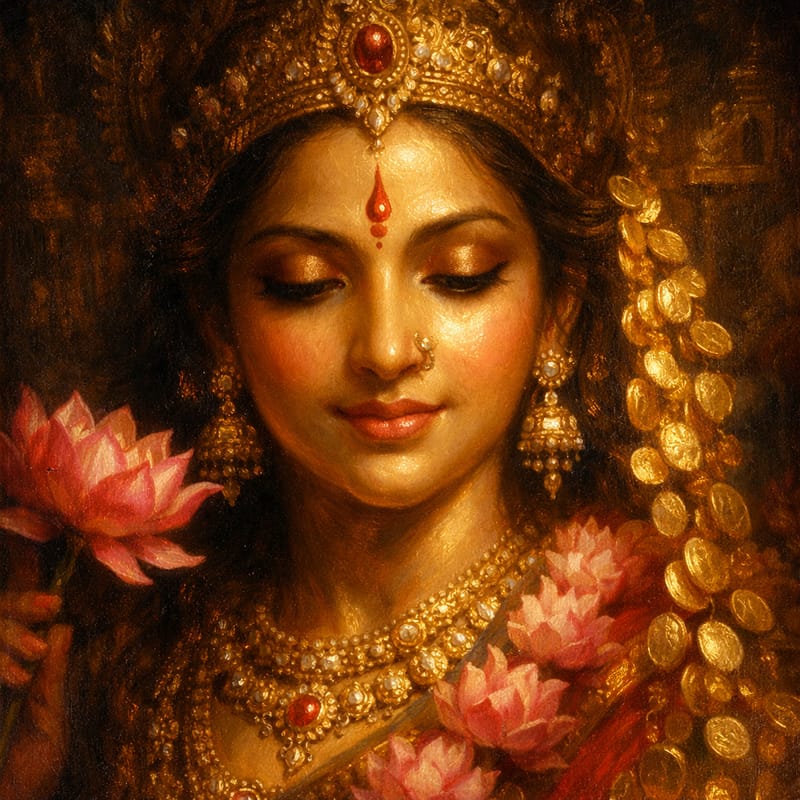
Ashtalakshmi Stotram — Spanish Lyrics
Ashtalakshmi Stotram is a sacred hymn that honors Lakshmi, the Hindu goddess of prosperity, in her eight divine manifestations. 'Ashta' means eight, and each verse celebrates a distinct form: Adi Lakshmi (primordial spiritual wealth), Dhana Lakshmi (material riches), Dhanya Lakshmi (food and agricultural abundance), Gaja Lakshmi (power and sovereignty), Santana Lakshmi (progeny and family), Veera Lakshmi (courage and valor), Vijaya Lakshmi (victory and success), and Vidya Lakshmi (knowledge and wisdom). The refrain 'Jaya Jayahe Madhusoodhana Kaamini' celebrates Lakshmi as the beloved consort of Vishnu, the supreme preserver.
The Stotram is rooted in the Sri Sukta tradition and the Vedic understanding that true prosperity is multidimensional. It teaches that wealth without wisdom leads to ruin, material success without courage becomes fragile, and riches without family meaning ring hollow. By invoking all eight forms together, the practitioner seeks balanced abundance—not merely gold coins, but nourishment, learning, strength to overcome obstacles, the grace to win, and the blessing of healthy lineage. This integrated approach to Lakshmi worship reflects the Vedic principle that dharma (righteousness), artha (prosperity), kama (fulfillment), and moksha (liberation) must coexist harmoniously.
Recite the Ashtalakshmi Stotram during Friday pujas, Navaratri, or Diwali. Light nine lamps representing each form, offer red or yellow flowers and incense, and place gold coins or jewelry before Lakshmi's image. The complete recitation takes 12–15 minutes. Chant specific verses for targeted blessings: Dhana Lakshmi for prosperity, Vidya Lakshmi before studies or exams, Santana Lakshmi for family harmony. Begin on a Friday during the waxing moon for strongest results.
Curated by The Mahakatha Team · Original Composition: Mahakatha · Lyric: Traditional / Vaishnava
Ashtalakshmi Stotram
Lakshmi · Preview · 2:00
Preview ended
Ancient sounds for transformation, carried across 3,000 years.
Get the full version — plus 275 more ancient chants. 80% OFF today only.
Get Ancient Chants Bundle — 80% OFF →3000+ happy customers · Lifetime access · All devices
2.2M people trust Mahakatha
Chant daily with reminders — Get the Mahakatha app
सुमनस वन्दित सुन्दरि माधवि, चन्द्र सहॊदरि हेममये मुनिगण वन्दित मोक्षप्रदायनि, मञ्जुल भाषिणि वेदनुते । पङ्कजवासिनि देव सुपूजित, सद्गुण वर्षिणि शान्तियुते जय जयहे मधुसूदन कामिनि, आदिलक्ष्मि परिपालय माम् ॥ 1 ॥
sumanasa vandita sundari madhavi, chandra sahodari hemamaye munigana vandita mokshapradayani, manjula bhashini vedanute | pankajavasini deva supujita, sadguna varshini shantiyute jaya jayahe madhusudana kamini, adilakshmi paripalaya mam || 1 ||
Adorada por los de buen corazón,
Hermana de la luna y radiante como el oro,
Venerada por los sabios, la Otorgadora de salvación,
Tu palabra es dulce, eres alabada en las escrituras,
Viviendo en la flor de Loto, adorada por todos los devas,
Quien derrama virtud sobre la gente, y es la paz misma,
Me inclino ante ti, consorte de Aquel que mató al demonio Madhu,
Oh Adilakshmi, Por favor protégeme siempre.
अयिकलि कल्मष नाशिनि कामिनि, वैदिक रूपिणि वेदमये क्षीर समुद्भव मङ्गल रूपिणि, मन्त्रनिवासिनि मन्त्रनुते । मङ्गलदायिनि अम्बुजवासिनि, देवगणाश्रित पादयुते जय जयहे मधुसूदन कामिनि, धान्यलक्ष्मि सदापालय माम् [परिपालय माम्] ॥ 2 ॥
ayikali kalmasha nashini kamini, vaidika rupini vedamaye kshira samudbhava mangala rupini, mantranivasini mantranute | mangaladayini ambujavasini, devaganashrita padayute jaya jayahe madhusudana kamini, dhanyalakshmi paripalaya mam || 2 ||
La destructora de la maldición de Kali Yuga,
Tú eres la esencia de los Vedas personificada,
Surgiste de la leche, tu forma es auspiciosa,
moras en los mantras, ellos te alaban,
La Otorgadora de bienestar, viviendo en un loto,
Cuyos pies son adorados por los devas,
Me inclino ante ti, consorte de Aquel que mató al demonio Madhu,
Oh Dhanyalakshmi, Por favor protégeme siempre.
जयवरवर्षिणि वैष्णवि भार्गवि, मन्त्र स्वरूपिणि मन्त्रमये [जयवरवर्णिनि] सुरगण पूजित शीघ्र फलप्रद, ज्ञान विकासिनि शास्त्रनुते । भवभयहारिणि पापविमोचनि, साधु जनाश्रित पादयुते जय जयहे मधु सूधन कामिनि, धैर्यलक्ष्मी परिपालय माम् ॥ 3 ॥
jayavaravarshini vaishnavi bhargavi, mantra svarupini mantramaye suraguna pujita shighra phalaprada, jnana vikasini shastranute | bhavabhayaharini papavimochani, sadhu janashrita padayute jaya jayahe madhu sudhana kamini, dhairyalakshmi paripalaya mam || 3 ||
La victoriosa, la bendita, fuerza emanante de Vishnu, hija del sabio Bhargava,
Los cánticos sagrados te alaban y personifican,
Adorada por los devas, concedes resultados rápidos,
Alabada en los shastras, otorgas sabiduría,
La destructora del miedo, la otorgadora de redención del pecado,
A tus pies los de noble corazón encuentran refugio
Me inclino ante ti, consorte de Aquel que mató al demonio Madhu,
Oh Dhairyalakshmi, Por favor protégeme siempre.
जय जय दुर्गति नाशिनि कामिनि, सर्वफलप्रद शास्त्रमये रधगज तुरगपदाति समावृत, परिजन मण्डित लोकनुते । हरिहर ब्रह्म सुपूजित सेवित, ताप निवारिणि पादयुते जय जयहे मधुसूदन कामिनि, गजलक्ष्मी रूपेण पालय माम् ॥ 4 ॥
jaya jaya durgati nashini kamini, sarvaphalaprada shastramaye radhagaja turagapadati samavrita, parijana mandita lokanute | harihara brahma supujita sevita, tapa nivarini padayute jaya jayahe madhusudana kamini, gajalakshmi rupena palaya mam || 4 ||
La removedora del mal destino, la Otorgadora de resultados,
la encarnación de los shastras,
Rodeada por una caballería de elefantes, caballos y carros,
bendices a todos los seres,
Adorada por Brahma, Vishnu y Shiva,
todo sufrimiento llega a su fin a tus pies
Me inclino ante ti, consorte de Aquel que mató al demonio Madhu,
Oh Gajalakshmi, Por favor protégeme siempre.
अयिखग वाहिनि मोहिनि चक्रिणि, रागविवर्धिनि ज्ञानमये गुणगणवारधि लोकहितैषिणि, स्वरसप्त भूषित गाननुते । [सप्तस्वर] सकल सुरासुर देव मुनीश्वर, मानव वन्दित पादयुते जय जयहे मधुसूदन कामिनि, सन्तानलक्ष्मी त्वं पालय माम् [परिपालय माम्] ॥ 5 ॥
ayikhaga vahini mohini chakrini, ragavivardhini jnanamaye gunaganavaradhi lokahitaishini, saptasvara bhushita gananute sakala surasura deva munishvara, manava vandita padayute jaya jayahe madhusudana kamini, santanalakshmi paripalaya mam || 5 ||
Viajando en un ave, la encantadora, la consorte de aquel que porta el Chakra,
que calma la emoción, que es la esencia de la sabiduría,
El océano de virtud, la bondad de todos los seres,
Adornada con las siete notas de la música, venerada por la música,
Aquella cuyos pies son adorados por todos los devas, asuras, sabios y seres humanos,
Me inclino ante ti, consorte de Aquel que mató al demonio Madhu,
Oh Santanalakshmi, Por favor protégeme siempre.
जय कमलासिनि सद्गति दायिनि, ज्ञानविकासिनि गानमये अनुदिन मर्चित कुङ्कुम धूसर, भूषित वासित वाद्यनुते । कनकधरास्तुति वैभव वन्दित, शङ्करदेशिक मान्यपदे जय जयहे मधुसूदन कामिनि, विजयलक्ष्मी सदा पालय माम् [परिपालय माम्] ॥ 6 ॥
jaya kamalasini sadgati dayini, jnanavikasini ganamaye anudina marchita kunkuma dhusara, bhushita vasita vadyanute | kanakadharastuti vaibhava vandita, shankaradeshika manyapade jaya jayahe madhusudana kamini, vijayalakshmi paripalaya mam || 6 ||
Residiendo en un loto, Otorgadora de salvación, Dadora de conocimiento, la encarnación de la música,
Adorada con bermellón cada día, la exponente de los instrumentos musicales,
La rica lluvia de oro ofrecida por Sankara como alabanza en oración te complace,
Me inclino ante ti, consorte de Aquel que mató al demonio Madhu,
Oh Vijayalakshmi, Por favor protégeme siempre.
प्रणत सुरेश्वरि भारति भार्गवि, शोकविनाशिनि रत्नमये मणिमय भूषित कर्णविभूषण, शान्ति समावृत हास्यमुखे । नवनिधि दायिनि कलिमलहारिणि, कामित फलप्रद हस्तयुते जय जयहे मधुसूदन कामिनि, विद्यालक्ष्मी सदा पालय माम् ॥ 7 ॥
pranata sureshvari bharati bhargavi, shokavinashini ratnamaye manimaya bhushita karnavibhushana, shanti samavrita hasyamukhe | navanidhi dayini kalimalaharini, kamita phalaprada hastayute jaya jayahe madhusudana kamini, vidyalakshmi sada palaya mam || 7 ||
La amada diosa de los devas, la diosa de Bharata, la hija de Bhargava,
la que termina el dolor, adornada con joyas preciosas,
Orejas enjoyadas con gemas, un rostro sonriente que es la paz misma,
La Otorgadora de las nueve formas de riqueza, la Removedora de la maldición de Kali Yuga, tu mano bendice nuestros esfuerzos con éxito,
Me inclino ante ti, consorte de Aquel que mató al demonio Madhu,
Oh Vidyalakshmi, Por favor protégeme siempre.
धिमिधिमि धिन्धिमि धिन्धिमि-दिन्धिमि, दुन्धुभि नाद सुपूर्णमये घुमघुम घुङ्घुम घुङ्घुम घुङ्घुम, शङ्ख निनाद सुवाद्यनुते । वेद पूराणेतिहास सुपूजित, वैदिक मार्ग प्रदर्शयुते जय जयहे मधुसूदन कामिनि, धनलक्ष्मि रूपेणा पालय माम् ॥ 8 ॥
dhimidhimi dhindhimi dhindhimi-dindhimi, dundhubhi nada supurnamaye ghumaghuma ghunghuma ghunghuma ghunghuma, shankha ninada suvadyanute | veda puranetihasa supujita, vaidika marga pradarshayute jaya jayahe madhusudana kamini, dhanalakshmi rupena palaya mam || 8 ||
Los sonidos de dhimi-dhimi le complacen y completan su forma,
Y también el resonante ghuma-ghuma de la caracola
Adorada en los vedas y los Puranas, la guía que ilumina el camino de la vida espiritual
Me inclino ante ti, consorte de Aquel que mató al demonio Madhu,
Oh Dhanalakshmi, Por favor protégeme siempre.
अष्टलक्ष्मी नमस्तुभ्यं वरदे कामरूपिणि । विष्णुवक्षः स्थला रूढे भक्त मोक्षम् प्रदायिनि ॥ शङ्ख चक्रगदाहस्ते विश्वरूपिणिते जयः । जगन्मात्रे च मोहिन्यै मङ्गलं शुभ मङ्गलम् ॥
ashtalakshmi namastubhyam varade kamarupini | vishnuvakshah sthala rudhe bhakta moksham pradayini || shankha chakragadahaste vishvarupinite jayah | jaganmatre cha mohinyai mangalam shubha mangalam ||
Rezo a Ashtalakshmi, la Otorgadora de todo lo que se desea,
La consorte del Señor Vishnu, la Otorgadora de Salvación,
Portando una caracola, un chakra, una maza en tus manos,
eres la encarnación del cosmos,
Oh Divina Diosa del Universo, que todo sea bienestar y prosperidad.
How to Chant Ashtalakshmi Stotram
- 1
Find a quiet, clean space
Sit in a comfortable, undisturbed environment. Face east or north if possible. You may light incense or a candle to set a contemplative atmosphere.
- 2
Settle into a comfortable posture
Sit cross-legged on the floor or upright in a chair. Keep the spine erect and place the hands on the knees with palms facing upward.
- 3
Take three cleansing breaths
Inhale slowly through the nose, hold briefly, and exhale completely. Repeat three times to calm the mind and prepare for mantra recitation.
- 4
Begin chanting Ashtalakshmi Stotram
Chant the mantra clearly and with devotion — aloud, in a whisper, or silently. Use a mala (108 beads) to count repetitions. Aim for a consistent, unhurried rhythm throughout the session.
- 5
Rest in stillness
After completing your chanting, sit quietly for two to five minutes. Allow the vibration of the mantra to settle within. Close the practice with a moment of gratitude.
Benefits of Ashtalakshmi Stotram
-
Asks for all eight dimensions of prosperity together—wealth, nourishment, courage, victory, wisdom, power, spiritual abundance, and progeny—rather than one-sided gain.
Source: Traditional practice; Sri Sukta Vedic texts
-
Removes specific blocks to each form of wealth through targeted divine invocation, addressing the root cause of imbalance rather than surface symptoms.
Source: Traditional practice
-
Cultivates Veera (courage) to face challenges, Vijaya (victory) in endeavors, and Vidya (wisdom) in decision-making, transforming passive recipients into empowered co-creators of abundance.
Source: Upanishadic philosophy
-
Encourages a balanced relationship with abundance, guarding against greed, envy, or the spiritual emptiness that can come with outward success without inner growth.
Source: Traditional practice
-
Asks for blessings on lineage and family continuity through Santana Lakshmi, so that prosperity passes to future generations with values intact.
Source: Puranic tradition
-
Aligns the chanter with Lakshmi's divine energy on Fridays, the day sacred to her, amplifying receptivity and grace.
Source: Traditional practice
Story & Symbolism
The Ashtalakshmi Stotram emerges from the Sri Sukta, an ancient Vedic hymn to Lakshmi preserved in the Rigveda's supplementary texts (Khila). The Sri Sukta, likely composed between 1500–1000 BCE, established Lakshmi as the embodiment of abundance, prosperity, and auspiciousness. However, the classical Sri Sukta addresses Lakshmi as a singular divine principle. Over centuries, Puranic and devotional traditions refined this understanding, recognizing that prosperity has eight interdependent dimensions. The Ashtalakshmi framework—systematizing Lakshmi's eight forms—represents a mature evolution of Vedic wisdom, making abstract prosperity tangible and addressable through specific invocations.
The eight-form classification reflects the Vedic view of completeness (ashtanga means eight-fold). Just as the eight cardinal directions enclose space, the eight Lakshmis enclose all possible forms of wealth and well-being. Adi Lakshmi represents the primordial, unmanifest potential from which all other forms arise—the spiritual substratum. The remaining seven manifest in the material and relational realms: Dhana (gold and currency), Dhanya (food and sustenance), Gaja (power and sovereignty), Santana (lineage and family), Veera (valor and inner strength), Vijaya (victory and achievement), and Vidya (knowledge and wisdom). This taxonomy means that no dimension of human flourishing is overlooked in the seeker's prayers.
The contemporary Ashtalakshmi Stotram gained widespread prominence through Sri Adi Shankara's monastic tradition and flourished in South Indian temples, particularly in Kerala and Tamil Nadu, where it remains a cornerstone of Lakshmi puja. Modern spiritual organizations, including the Sri Mata Amritanandamayi Math, have preserved and disseminated the complete lyrics globally, making this ancient teaching accessible to millions of practitioners seeking balanced, holistic abundance in the modern world.
How to Use in Daily Life
Friday Morning Ritual
Recite one verse of Ashtalakshmi Stotram each Friday morning during abhisheka (ritual bathing) or morning puja. Start with Adi Lakshmi and progress through all eight over consecutive weeks, deepening familiarity with each form's unique blessing.
Meditation Practice
After chanting the full Stotram, sit quietly for 5–10 minutes. Visualize golden light flowing from Lakshmi's hands into your home, body, and relationships. Feel each blessing settling—courage in your chest, wisdom in your heart, prosperity in your life.
Intention-Focused Chanting
Before exams, recite Vidya Lakshmi verses. In times of hardship, focus on Dhana Lakshmi. Seeking family harmony, invoke Santana Lakshmi. This targeted approach channels Lakshmi's energy to your specific need while maintaining connection to the eight-fold whole.
Evening Gratitude
Chant the Stotram softly in the evening before sleep. This practice anchors gratitude for the day's blessings and invites Lakshmi's protective presence during night hours, supporting restful, abundant dreams and peaceful sleep.