

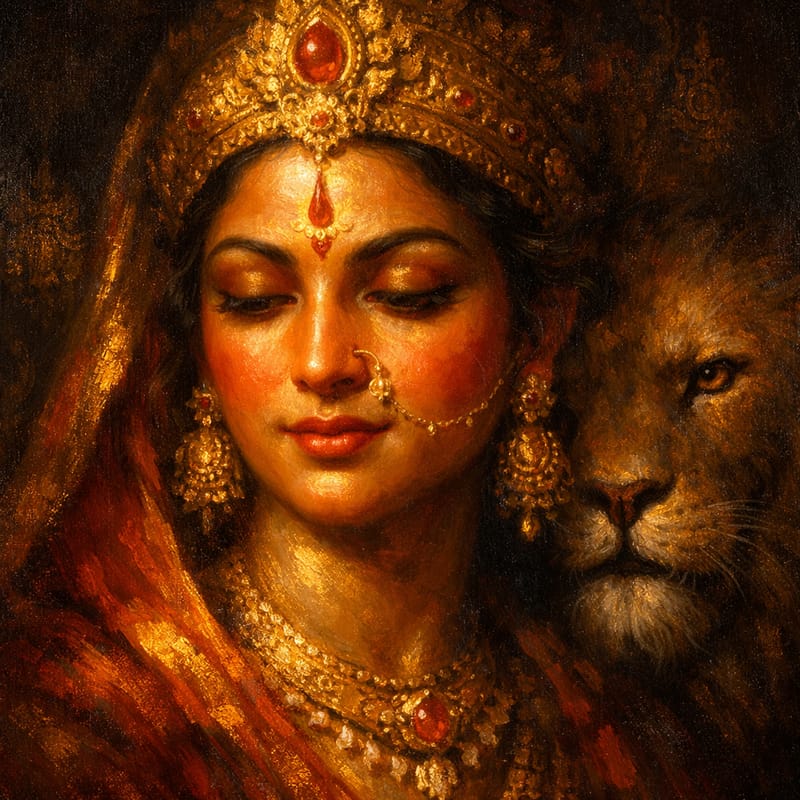
Ya Devi - Devi Suktam — Bengali Lyrics
The Ya Devi - Devi Suktam is a hymn from the Devi Mahatmya that honors the Divine Goddess (Devi) present in all beings and phenomena. Each verse identifies the Goddess with a fundamental quality or cosmic principle—from consciousness and intellect to sleep, hunger, memory, and compassion. The repeated refrain 'namastasyai namastasyai namastasyai namo namah' (I bow to her, I bow to her, I bow to her again and again) expresses complete surrender and profound reverence. This mantra reveals how Durga, in her transcendent and immanent forms, permeates every aspect of creation.
Spiritually, this suktam teaches that the Divine Mother is not distant or separate, but intimately woven into the fabric of all existence. Each verse enumerates her presence as Vishnu-maya (cosmic illusion), consciousness, intellect, sleep, hunger, shame, peace, faith, splendor, wealth, livelihood, memory, and compassion—recognizing that all experiences and faculties flow from the Goddess. In Vedantic and Tantric philosophy, this recognition dissolves the illusion of separation and reveals divinity in all beings. By invoking these names and forms of Durga, the devotee acknowledges her as the supreme creative, sustaining, and dissolving force that transcends material and spiritual realms alike.
Practitioners traditionally recite this mantra during morning meditation, evening prayers, or Navratri (the nine-night festival honoring Durga). Chant 108 times or in sets of 11 with sincere devotion and clear awareness of each quality invoked. Beginners should focus on proper pronunciation and maintain a calm, centered mind. Regular practice deepens connection with the Divine Mother within and around you, awakening recognition of her presence in all beings and circumstances.
Curated by The Mahakatha Team · Original Composition: Mahakatha · Lyric: Traditional / Vedic
Ya Devi - Devi Suktam
Durga · Preview · 2:00
Preview ended
Ancient sounds for transformation, carried across 3,000 years.
Get the full version — plus 275 more ancient chants. 80% OFF today only.
Get Ancient Chants Bundle — 80% OFF →3000+ happy customers · Lifetime access · All devices
2.2M people trust Mahakatha
Chant daily with reminders — Get the Mahakatha app
Lyrics
या देवी सर्वभूतेषु विष्णुमयेति शब्दिता। नमस्तस्यै नमस्तस्यै नमस्तस्यै नमो नमः॥
যা দেবী সর্বভূতেষু বিষ্ণুমযেতি শব্দিতা। নমস্তস্যৈ নমস্তস্যৈ নমস্তস্যৈ নমো নমঃ॥
সেই দিব্য দেবী, যিনি সকল প্রাণীর মধ্যে বিষ্ণুর সৃষ্টিরূপে পরিচিত,
আমি ভক্তিভরে বারবার প্রণাম করি।
या देवी सर्वभूतेषु चेतनेत्यभिधीयते। नमस्तस्यै नमस्तस्यै नमस्तस्यै नमो नमः॥
যা দেবী সর্বভূতেষু চেতনেত্যভিধীযতে। নমস্তস্যৈ নমস্তস্যৈ নমস্তস্যৈ নমো নমঃ॥
সেই দিব্য দেবী, যিনি সকল প্রাণীর মধ্যে চেতনারূপে বিরাজ করেন,
আমি ভক্তিভরে বারবার প্রণাম করি।
या देवी सर्वभूतेषु बुद्धिरूपेण संस्थिता। नमस्तस्यै नमस्तस्यै नमस्तस्यै नमो नमः॥
যা দেবী সর্বভূতেষু বুদ্ধিরূপেণ সংস্থিতা। নমস্তস্যৈ নমস্তস্যৈ নমস্তস্যৈ নমো নমঃ॥
সেই দিব্য দেবী, যিনি সকল প্রাণীর মধ্যে বুদ্ধিরূপে বিরাজ করেন,
আমি ভক্তিভরে বারবার প্রণাম করি।
या देवी सर्वभूतेषु निद्रारूपेण संस्थिता। नमस्तस्यै नमस्तस्यै नमस्तस्यै नमो नमः॥
যা দেবী সর্বভূতেষু নিদ্রারূপেণ সংস্থিতা। নমস্তস্যৈ নমস্তস্যৈ নমস্তস্যৈ নমো নমঃ॥
সেই দিব্য দেবী, যিনি সকল প্রাণীর মধ্যে নিদ্রারূপে বিরাজ করেন,
আমি ভক্তিভরে বারবার প্রণাম করি।
या देवी सर्वभूतेषु क्षुधारूपेण संस्थिता। नमस्तस्यै नमस्तस्यै नमस्तस्यै नमो नमः॥
যা দেবী সর্বভূতেষু ক্ষুধারূপেণ সংস্থিতা। নমস্তস্যৈ নমস্তস্যৈ নমস্তস্যৈ নমো নমঃ॥
সেই দিব্য দেবী, যিনি সকল প্রাণীর মধ্যে ক্ষুধারূপে বিরাজ করেন,
আমি ভক্তিভরে বারবার প্রণাম করি।
या देवी सर्वभूतेषु छायारूपेण संस्थिता। नमस्तस्यै नमस्तस्यै नमस्तस्यै नमो नमः॥
যা দেবী সর্বভূতেষু ছাযারূপেণ সংস্থিতা। নমস্তস্যৈ নমস্তস্যৈ নমস্তস্যৈ নমো নমঃ॥
যে দিব্য দেবী সকল প্রাণীতে ছায়ারূপে অবস্থান করেন,
আমি ভক্তিভরে বারবার প্রণাম করি।
या देवी सर्वभूतेषु शक्तिरूपेण संस्थिता। नमस्तस्यै नमस्तस्यै नमस्तस्यै नमो नमः॥
যা দেবী সর্বভূতেষু শক্তিরূপেণ সংস্থিতা। নমস্তস্যৈ নমস্তস্যৈ নমস্তস্যৈ নমো নমঃ॥
যে দিব্য দেবী সকল প্রাণীতে শক্তিরূপে অবস্থান করেন,
আমি ভক্তিভরে বারবার প্রণাম করি।
या देवी सर्वभूतेषु तृष्णारूपेण संस्थिता। नमस्तस्यै नमस्तस्यै नमस्तस्यै नमो नमः॥
যা দেবী সর্বভূতেষু তৃষ্ণারূপেণ সংস্থিতা। নমস্তস্যৈ নমস্তস্যৈ নমস্তস্যৈ নমো নমঃ॥
যে দিব্য দেবী সকল প্রাণীতে তৃষ্ণারূপে অবস্থান করেন,
আমি ভক্তিভরে বারবার প্রণাম করি।
या देवी सर्वभूतेषु क्षान्तिरूपेण संस्थिता। नमस्तस्यै नमस्तस्यै नमस्तस्यै नमो नमः॥
যা দেবী সর্বভূতেষু ক্ষান্তিরূপেণ সংস্থিতা। নমস্তস্যৈ নমস্তস্যৈ নমস্তস্যৈ নমো নমঃ॥
যে দিব্য দেবী সকল প্রাণীতে সহিষ্ণুতারূপে অবস্থান করেন,
আমি ভক্তিভরে বারবার প্রণাম করি।
या देवी सर्वभूतेषु जातिरूपेण संस्थिता। नमस्तस्यै नमस्तस्यै नमस्तस्यै नमो नमः॥
যা দেবী সর্বভূতেষু জাতিরূপেণ সংস্থিতা। নমস্তস্যৈ নমস্তস্যৈ নমস্তস্যৈ নমো নমঃ॥
যে দিব্য দেবী সকল প্রাণীতে উৎসরূপে অবস্থান করেন,
আমি ভক্তিভরে বারবার প্রণাম করি।
या देवी सर्वभूतेषु लज्जारूपेण संस्थिता। नमस्तस्यै नमस्तस्यै नमस्तस्यै नमो नमः॥
যা দেবী সর্বভূতেষু লজ্জারূপেণ সংস্থিতা। নমস্তস্যৈ নমস্তস্যৈ নমস্তস্যৈ নমো নমঃ॥
যে দিব্য দেবী সকল প্রাণীতে লজ্জারূপে অবস্থান করেন,
আমি ভক্তিসহকারে বারবার প্রণাম করি।
या देवी सर्वभूतेषु शान्तिरूपेण संस्थिता। नमस्तस्यै नमस्तस्यै नमस्तस्यै नमो नमः॥
যা দেবী সর্বভূতেষু শান্তিরূপেণ সংস্থিতা। নমস্তস্যৈ নমস্তস্যৈ নমস্তস্যৈ নমো নমঃ॥
যে দিব্য দেবী সকল প্রাণীতে শান্তিরূপে অবস্থান করেন,
আমি ভক্তিসহকারে বারবার প্রণাম করি।
या देवी सर्वभूतेषु श्रद्धारूपेण संस्थिता। नमस्तस्यै नमस्तस्यै नमस्तस्यै नमो नमः॥
যা দেবী সর্বভূতেষু শ্রদ্ধারূপেণ সংস্থিতা। নমস্তস্যৈ নমস্তস্যৈ নমস্তস্যৈ নমো নমঃ॥
যে দিব্য দেবী সকল প্রাণীতে শ্রদ্ধারূপে অবস্থান করেন,
আমি ভক্তিসহকারে বারবার প্রণাম করি।
या देवी सर्वभूतेषु कान्तिरूपेण संस्थिता। नमस्तस्यै नमस्तस्यै नमस्तस्यै नमो नमः॥
যা দেবী সর্বভূতেষু কান্তিরূপেণ সংস্থিতা। নমস্তস্যৈ নমস্তস্যৈ নমস্তস্যৈ নমো নমঃ॥
যে দিব্য দেবী সকল প্রাণীতে সৌন্দর্যরূপে অবস্থান করেন,
আমি ভক্তিসহকারে বারবার প্রণাম করি।
या देवी सर्वभूतेषु लक्ष्मीरूपेण संस्थिता। नमस्तस्यै नमस्तस्यै नमस्तस्यै नमो नमः॥
যা দেবী সর্বভূতেষু লক্ষ্মীরূপেণ সংস্থিতা। নমস্তস্যৈ নমস্তস্যৈ নমস্তস্যৈ নমো নমঃ॥
যে দিব্য দেবী সকল প্রাণীতে লক্ষ্মীরূপে অবস্থান করেন,
আমি ভক্তিসহকারে বারবার প্রণাম করি।
या देवी सर्वभूतेषु वृत्तिरूपेण संस्थिता। नमस्तस्यै नमस्तस्यै नमस्तस्यै नमो नमः॥
যা দেবী সর্বভূতেষু বৃত্তিরূপেণ সংস্থিতা। নমস্তস্যৈ নমস্তস্যৈ নমস্তস্যৈ নমো নমঃ॥
দিব্য দেবীর প্রতি, যিনি সকল প্রাণীতে ক্রিয়া রূপে অবস্থান করেন,
আমি বারবার ভক্তিসহকারে প্রণাম করি।
या देवी सर्वभूतेषु स्मृतिरूपेण संस्थिता। नमस्तस्यै नमस्तस्यै नमस्तस्यै नमो नमः॥
যা দেবী সর্বভূতেষু স্মৃতিরূপেণ সংস্থিতা। নমস্তস্যৈ নমস্তস্যৈ নমস্তস্যৈ নমো নমঃ॥
দিব্য দেবীর প্রতি, যিনি সকল প্রাণীতে স্মৃতি রূপে অবস্থান করেন,
আমি বারবার ভক্তিসহকারে প্রণাম করি।
या देवी सर्वभूतेषु दयारूपेण संस्थिता। नमस्तस्यै नमस्तस्यै नमस्तस्यै नमो नमः॥
যা দেবী সর্বভূতেষু দযারূপেণ সংস্থিতা। নমস্তস্যৈ নমস্তস্যৈ নমস্তস্যৈ নমো নমঃ॥
দিব্য দেবীর প্রতি, যিনি সকল প্রাণীতে দয়া রূপে অবস্থান করেন,
আমি বারবার ভক্তিসহকারে প্রণাম করি।
या देवी सर्वभूतेषु तुष्टिरूपेण संस्थिता। नमस्तस्यै नमस्तस्यै नमस्तस्यै नमो नमः॥
যা দেবী সর্বভূতেষু তুষ্টিরূপেণ সংস্থিতা। নমস্তস্যৈ নমস্তস্যৈ নমস্তস্যৈ নমো নমঃ॥
দিব্য দেবীর প্রতি, যিনি সকল প্রাণীতে সন্তুষ্টি রূপে অবস্থান করেন,
আমি বারবার ভক্তিসহকারে প্রণাম করি।
या देवी सर्वभूतेषु मातृरूपेण संस्थिता। नमस्तस्यै नमस्तस्यै नमस्तस्यै नमो नमः॥
যা দেবী সর্বভূতেষু মাতৃরূপেণ সংস্থিতা। নমস্তস্যৈ নমস্তস্যৈ নমস্তস্যৈ নমো নমঃ॥
দিব্য দেবীর প্রতি, যিনি সকল প্রাণীতে মাতা রূপে অবস্থান করেন,
আমি বারবার ভক্তিসহকারে প্রণাম করি।
या देवी सर्वभूतेषु भ्रान्तिरूपेण संस्थिता। नमस्तस्यै नमस्तस्यै नमस्तस्यै नमो नमः॥
যা দেবী সর্বভূতেষু ভ্রান্তিরূপেণ সংস্থিতা। নমস্তস্যৈ নমস্তস্যৈ নমস্তস্যৈ নমো নমঃ॥
যে দিব্য দেবী সকল প্রাণীতে ভ্রান্তিরূপে অবস্থিতা,
আমি ভক্তিসহকারে বারবার প্রণাম করি।
इन्द्रियानामधिष्ठात्री भूतानां चाखिलेषु या। भूतेषु सततं तस्यै व्याप्तिदेव्यै नमो नमः॥
ইন্দ্রিযানামধিষ্ঠাত্রী ভূতানাং চাখিলেষু যা। ভূতেষু সততং তস্যৈ ব্যাপ্তিদেব্যৈ নমো নমঃ॥
দিব্য দেবী সকল জগতের সকল প্রাণীর ইন্দ্রিয়সমূহ শাসন করেন,
তিনি চিরকাল সর্বব্যাপী, এবং আমি ভক্তিসহকারে প্রণাম করি।
चितिरूपेण या कृत्स्नमेतद्व्याप्य स्थिता जगत्। नमस्तस्यै नमस्तस्यै नमस्तस्यै नमो नमः॥
চিতিরূপেণ যা কৃত্স্নমেতদ্ব্যাপ্য স্থিতা জগত্। নমস্তস্যৈ নমস্তস্যৈ নমস্তস্যৈ নমো নমঃ॥
চেতনারূপে, তিনি ব্রহ্মাণ্ডকে পরিব্যাপ্ত করে তাতে অবস্থান করেন,
আমি তাঁকে ভক্তিসহকারে বারবার প্রণাম করি।
How to Chant Ya Devi - Devi Suktam
- 1
Find a quiet, clean space
Sit in a comfortable, undisturbed environment. Face east or north if possible. You may light incense or a candle to set a contemplative atmosphere.
- 2
Settle into a comfortable posture
Sit cross-legged on the floor or upright in a chair. Keep the spine erect and place the hands on the knees with palms facing upward.
- 3
Take three cleansing breaths
Inhale slowly through the nose, hold briefly, and exhale completely. Repeat three times to calm the mind and prepare for mantra recitation.
- 4
Begin chanting Ya Devi - Devi Suktam
Chant the mantra clearly and with devotion — aloud, in a whisper, or silently. Use a mala (108 beads) to count repetitions. Aim for a consistent, unhurried rhythm throughout the session.
- 5
Rest in stillness
After completing your chanting, sit quietly for two to five minutes. Allow the vibration of the mantra to settle within. Close the practice with a moment of gratitude.
Benefits of Ya Devi - Devi Suktam
-
Cultivates recognition of divine presence in all beings, dissolving illusions of separation and fostering universal compassion.
Source: Devi Mahatmya (Markandeya Purana)
-
Strengthens mental clarity, intuition, and inner wisdom by invoking Buddhi (intellectual principle) as the Goddess.
Source: Traditional Vedantic practice and Tantra Shastra
-
Brings emotional balance and inner peace by awakening qualities of forgiveness, patience, memory, and tender compassion.
Source: Devi Mahatmya teachings on divine attributes
-
A prayer for prosperity and sustenance, invoking the Lakshmi aspect of the Divine Mother.
Source: Traditional practice and Lakshmi Tantra
-
Can bring comfort in suffering by seeing all experiences as divine expressions and vehicles for growth.
Source: Advaita Vedanta and Kashmir Shaivism teachings
-
Strengthens feminine energy, intuition, and shakti (power) in both men and women, balancing masculine and feminine principles.
Source: Tantra Shastra and contemporary Devi worship
Story & Symbolism
The Ya Devi - Devi Suktam emerges from the Devi Mahatmya, the 700-verse scripture embedded in the Markandeya Purana, composed by sage Markandeya around the 5th century BCE. This text represents the apex of Shakta philosophy, celebrating the Divine Feminine (Shakti or Devi) as the supreme cosmic principle underlying all existence. The Ya Devi verses form the concluding hymn of the Devi Mahatmya, traditionally recited after hearing or reading the complete scripture. Sage Markandeya composed these verses to synthesize the profound teachings about Durga's cosmic manifestations, transforming abstract theology into a practical devotional formula that could be memorized and chanted by all seekers regardless of literacy or spiritual sophistication.
Spiritual significance lies in the mantra's systematic revelation of how the Divine Mother manifests as every quality and principle in creation. Rather than treating divinity as distant or transcendent only, these verses teach that Durga permeates existence as consciousness, intellect, compassion, memory, shame, peace, faith, and every other fundamental force. In Vedantic philosophy, this reflects the non-dual teaching that Brahman (ultimate reality) expresses itself through infinite names and forms. In Tantric tradition, invoking these divine qualities is believed to awaken corresponding powers (siddhi) within the practitioner. This mantra bridges devotion and wisdom, emotion and intellect, by making the abstract principle of divine immanence tangible and chantable.
Today, the Ya Devi - Devi Suktam remains central to Navratri observances worldwide and daily Devi worship in homes and temples. Its transmission has been preserved through oral lineages, temple traditions, and classical Sanskrit texts. Modern spiritual teachers and recorded versions by accomplished musicians have made this mantra accessible to global audiences, while maintaining its authenticity and transformative power. The mantra's enduring relevance speaks to its universal teaching: that divinity resides not in distant heavens but in every breath, thought, and being around us.
How to Use in Daily Life
Morning Practice
Chant this mantra at dawn (brahma muhurta, (pre-dawn)) for 21-108 repetitions. Face east, sit with spine upright, and begin with three deep breaths. Morning practice activates intuition and clarity for the entire day.
Meditation Focus
Use the mantra during meditation to anchor awareness on the Divine Mother's omnipresence. With each verse, visualize that specific quality (consciousness, intellect, compassion) flowing through all beings. Deepen your recognition of divinity everywhere.
Navratri Devotion
Recite this entire suktam during the nine nights of Navratri for maximum potency. Chant in the evening after dinner or before sleep. Many practitioners complete 108 cycles over all nine days, one day per Durga form.
Evening Closure
Chant before sleep to invoke peace, forgiveness, and compassion. This practice transforms sleep into spiritual rest and invites protective, healing dreams. End with three prostrations and gratitude to the Divine Mother.