

Mahakatha
Mrityunjayaya Rudraya Mantra

Mrityunjayaya Rudraya Mantra — Hindi Lyrics

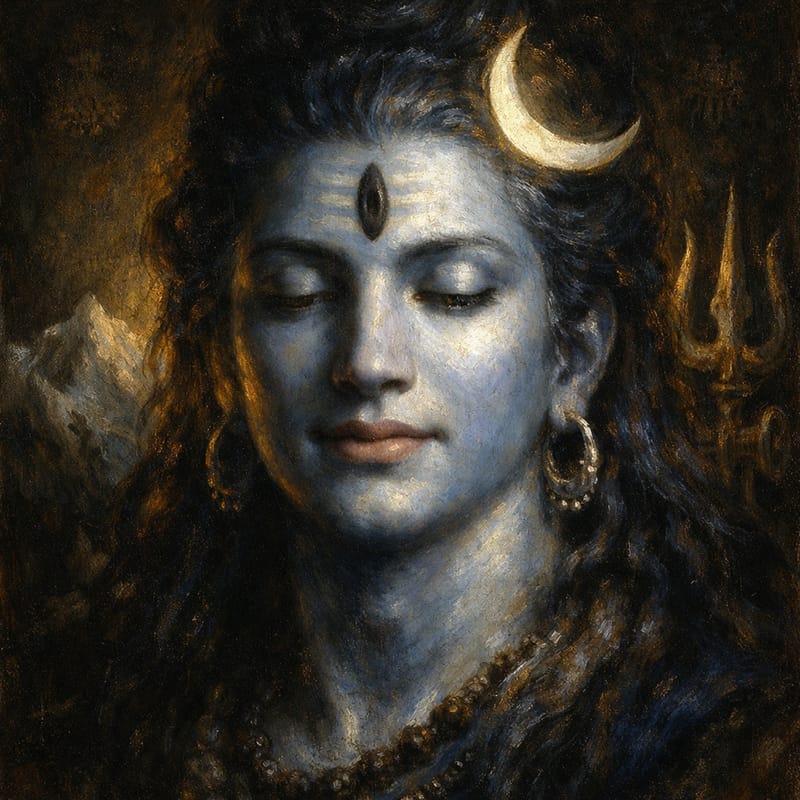
The Mrityunjayaya Rudraya mantra is a sacred invocation to Shiva in his fierce, protective forms. 'Mrityunjayaya' honors Shiva as the conqueror of death itself—not merely physical mortality, but the deeper fear of impermanence that binds the soul. 'Rudraya' calls upon his fierce, transformative aspect that dissolves ego and attachments. 'Nilakanthaya' references his blue throat, earned when he drank the poison of creation to protect the universe. 'Shambhave' balances this ferocity with his benevolent nature. Together, these invocations bow to Shiva's supreme mastery over life, death, and transformation.

Spiritually, this mantra represents the journey from mortality to immortality—both literal and metaphorical. The Shiva Purana and Upanishads teach that Shiva embodies paradox: he is simultaneously the destroyer and the liberator, the fierce ascetic and the gentle protector. By chanting this mantra, the seeker aligns with Shiva's consciousness and recognizes that true liberation comes not from avoiding death, but from transcending the fear of it. 'Amriteshaya' (lord of immortality) and 'Sarvaya' (the all-pervading) remind us that the divine essence permeates all existence, rendering the false boundary between life and death obsolete.

Practitioners typically chant this mantra during morning meditation (Brahma muhurta) or evening practice, ideally 108 times using a mala. It is especially cherished during times of sickness, emotional turmoil, or spiritual crisis. Begin with clear intention, sitting in a quiet space, and allow the rhythm of the Sanskrit syllables to anchor your awareness. This mantra works best when combined with pranayama (breath work) and contemplation of Shiva's form. Even 11 or 21 repetitions daily builds cumulative spiritual strength.

Curated by The Mahakatha Team · Original Composition: Mahakatha · Lyric: Traditional / Vedic

Mrityunjayaya Rudraya Mantra

Shiva · Preview · 2:00

2:00

Chant offline with daily reminders — Get the Mahakatha app

मृत्युंजयाय रुद्राय नीलकण्ठाय शम्भवे। अमृतेशाय सर्वाय महादेवाय ते नमः॥

मृत्युंजयाय रुद्राय नीलकण्ठाय शम्भवे। अमृतेशाय सर्वाय महादेवाय ते नमः॥

हे शिव! मृत्यु के विजेता, सबसे उग्र, नीलकण्ठ, सबको आशीर्वाद देने वाले

अमर, सर्वव्यापी, सभी देवताओं के स्वामी, मैं आपको नमन करता हूँ!

How to Chant Mrityunjayaya Rudraya Mantra

  1. 1

    Find a quiet, clean space

    Sit in a comfortable, undisturbed environment. Face east or north if possible. You may light incense or a candle to set a contemplative atmosphere.

  2. 2

    Settle into a comfortable posture

    Sit cross-legged on the floor or upright in a chair. Keep the spine erect and place the hands on the knees with palms facing upward.

  3. 3

    Take three cleansing breaths

    Inhale slowly through the nose, hold briefly, and exhale completely. Repeat three times to calm the mind and prepare for mantra recitation.

  4. 4

    Begin chanting Mrityunjayaya Rudraya Mantra

    Chant the mantra clearly and with devotion — aloud, in a whisper, or silently. Use a mala (108 beads) to count repetitions. Aim for a consistent, unhurried rhythm throughout the session.

  5. 5

    Rest in stillness

    After completing your chanting, sit quietly for two to five minutes. Allow the vibration of the mantra to settle within. Close the practice with a moment of gratitude.

Benefits of Mrityunjayaya Rudraya Mantra

  • Overcomes fear of death and impermanence, cultivating acceptance of life's cycles.

    Source: Shiva Purana; Traditional Shaivite practice

  • Strengthens mental resilience and emotional fortitude during physical or emotional hardship.

    Source: Upanishads; Tantric tradition

  • Slow, steady chanting can help bring calm and inner peace during a crisis.

    Source: Traditional practice; Shaiva devotional tradition

  • Purifies the subtle body (nadis) and aligns chakras, particularly activating the Ajna (third eye).

    Source: Tantric texts; Kundalini Yoga tradition

  • Deepens spiritual transformation by dissolving ego-attachments and unveiling the immortal Self.

    Source: Advaita Vedanta; Shiva Samhita

Deity Shiva
Composition Mahakatha (Original) · Traditional / Vedic (Lyric)
Also called Rudra Mantra · Shiva Mrityunjaya Stotram · Rudra Kavach · Mrityu Jai Mantra
Shiva also known as Mahadeva · Maheshwara · Shankar · Bholenath · Nataraja

Story & Symbolism

The Mrityunjayaya Rudraya mantra belongs to the oldest spiritual tradition of India—the worship of Shiva as supreme consciousness. Shiva appears in the Rigveda as Rudra, the fierce, mysterious god of storms and transformation. Over millennia, through the Upanishads, Puranas, and Tantric texts, Rudra evolved into Shiva the supreme deity, encompassing creation, preservation, and dissolution. The specific mantra combining Mrityunjaya (death-conqueror), Rudra, and Nilakantha crystallized in the Tantric tradition, particularly in Kashmir Shaivism, where Shiva worship reached its philosophical and practical apex. The Shiva Purana and related texts document these invocations as part of daily sadhana (spiritual practice).

The mythology surrounding each epithet deepens its power. Mrityunjaya references Shiva's eternal nature—he alone transcends the cycle of birth and death. Rudra embodies his fierce grace; he destroys ignorance without mercy. Nilakantha (blue-throat) immortalizes Shiva's cosmic sacrifice: when the gods and demons churned the ocean of milk, a deadly poison emerged. Shiva drank it to save the universe from destruction, his throat turning blue from the poison. This act symbolizes the spiritual principle that true liberation requires consuming one's own inner poison—fear, ego, attachment—and transforming it into wisdom. Shambhave (benevolence) reveals that this fierceness flows from infinite compassion.

Today, the mantra thrives in both monastic Shaivite orders and householder practice worldwide. Modern spiritual seekers, particularly those facing sickness or existential crisis, have turned to this mantra as a direct way to pray for Shiva's protection and grace. Its resurgence reflects humanity's timeless need to confront mortality with courage and transcendence—exactly what Shiva represents.

How to Use in Daily Life

🌅

Dawn Practice

Chant during Brahma muhurta (one hour before sunrise) when the mind is naturally clear and receptive. Face east, sit upright, and complete 108 repetitions with a mala. This establishes spiritual momentum for the entire day.

🧘

During Meditation

Use this mantra as your meditation anchor. After settling breath, chant silently or aloud for 20-30 minutes. Allow the Sanskrit syllables to dissolve into pure sound, then into silence. This deepens inner awareness and purifies the subtle body.

🙏

In Times of Crisis

During sickness, grief, or existential fear, chant with full emotional intensity. No ritual is needed—simply repeat the mantra aloud or mentally with complete sincerity. The chant invokes Shiva's protection and can help you meet the crisis with equanimity.

💤

Evening Integration

Before sleep, chant softly 21 or 27 times to integrate the day's experiences and settle the mind. This can help you rest more peacefully. The mantra becomes the bridge between waking and dream consciousness.

Frequently Asked Questions

What is the Mrityunjayaya Rudraya Mantra?
The Mrityunjayaya Rudraya Mantra is a sacred invocation dedicated to Lord Shiva, specifically addressing him as Rudra, the fierce and transformative aspect of the divine. 'Mrityunjaya' translates to 'conqueror of death,' while 'Rudra' refers to Shiva's powerful, protective form. This mantra is traditionally believed to be part of the broader spiritual practices within Shaivism, the devotional path centered on Shiva worship. The mantra seeks the blessings of Shiva in his role as the ultimate destroyer of ignorance and death, not in a literal sense but as the liberator from the cycle of birth and rebirth (samsara). According to various Puranic texts and tantric traditions, this mantra embodies the principle that true death is the death of ego and illusion, while the eternal self remains untouched. The Mrityunjayaya Rudraya Mantra is often chanted as part of meditation practices, healing rituals, and spiritual advancement. It represents the philosophy that by surrendering to Shiva's transformative power, one can transcend fear and achieve spiritual liberation. This mantra combines devotion with the recognition of Shiva's infinite, omnipotent nature and is considered a powerful tool for those seeking protection, longevity, and spiritual growth.
What are the benefits of chanting the Mrityunjayaya Rudraya Mantra?
Practitioners traditionally believe that chanting the Mrityunjayaya Rudraya Mantra offers numerous spiritual and physical benefits. Spiritually, the mantra is said to deepen one's connection with Shiva and facilitate inner transformation, helping practitioners transcend fear of death and the ego's limitations. In Vedic and tantric traditions, regular chanting is believed to support spiritual growth and lead toward self-realization and moksha (liberation). On a psychological level, many practitioners report increased mental clarity, reduced anxiety, and greater emotional resilience when incorporating this mantra into their daily practice. Many devotees offer its rhythmic recitation as a prayer for good health and vitality. Scholars suggest that the act of chanting itself—focusing the mind on divine concepts—naturally reduces stress and promotes meditative states. Some traditions recite the mantra as a prayer for protection and for help with obstacles in life's journey. The practice is also traditionally a prayer for good health and long life, in keeping with the mantra's theme of transcending mortality. Additionally, devotees suggest that sincere practice cultivates qualities like courage, wisdom, and compassion. However, these benefits are traditionally understood as byproducts of genuine spiritual practice rather than promised outcomes, emphasizing that sincere devotion and consistent effort form the foundation of meaningful results.
How should I chant the Mrityunjayaya Rudraya Mantra?
To chant the Mrityunjayaya Rudraya Mantra effectively, begin by finding a clean, quiet space where you won't be disturbed. Traditionally, practitioners sit in a comfortable cross-legged position or any posture that allows the spine to remain upright, which is believed to facilitate energy flow. Start with a few deep breaths to center yourself and calm the mind. You can chant the mantra aloud or silently, depending on your preference and circumstances. Many traditions suggest that chanting aloud gives a fuller, more absorbing practice, while mental chanting is beneficial for meditation and inner focus. Begin with a humble invocation or intention, acknowledging your devotion to Shiva. Chant the mantra slowly and deliberately, pronouncing each syllable clearly, letting the sound fill your body. Many practitioners use a mala (prayer beads) with 108 beads to count repetitions, completing at least one full mala round daily. The number 108 holds sacred significance in Hindu traditions. Ideally, chant early morning during Brahma Muhurta (pre-dawn hours) when the mind is naturally more receptive. Consistency matters more than quantity—daily practice, even for 10-15 minutes, is more beneficial than sporadic longer sessions. Conclude your practice with gratitude and a moment of silence to let the mantra settle. Maintain sattvic (pure) lifestyle practices and approach the mantra with sincere devotion for optimal results.
What is the origin and history of the Mrityunjayaya Rudraya Mantra?
The Mrityunjayaya Rudraya Mantra emerges from the rich tapestry of Vedic and Tantric Sanskrit traditions, with roots extending back thousands of years. According to Puranic texts and scholarly research, mantras honoring Rudra—the Vedic precursor to classical Shiva—appear in some of the oldest Vedic compositions, including the Rigveda and Yajurveda. The concept of Mrityunjaya, the victor over death, has been central to Hindu philosophy and spiritual practice since ancient times. The mantra reflects the philosophical understanding developed through centuries of yogic and meditative traditions that recognized the power of sacred sound (shabda) in transforming consciousness. Tantric texts, particularly those within the Kashmir Shaivism tradition, extensively discuss mantras addressing Shiva in his fierce and protective aspects. The formulation of specific mantras like the Mrityunjayaya Rudraya likely developed as spiritual practitioners systematized and refined mantra practices across generations. Historical evidence suggests these practices were refined and codified through various religious texts, tantric scriptures, and the teachings of enlightened masters who transmitted this knowledge through oral traditions. The mantra represents the evolution of Shaivite philosophy, which emphasizes Shiva as the supreme consciousness and the ultimate source of both creation and dissolution. Over millennia, various Hindu lineages and traditions have incorporated and adapted similar mantras, making them integral to contemporary Shaivite worship and spiritual practice worldwide.
What is the correct pronunciation of the Mrityunjayaya Rudraya Mantra?
Correct pronunciation is essential for authentic mantra practice, as Sanskrit syllables are traditionally held to carry spiritual significance. The Mrityunjayaya Rudraya Mantra is pronounced as follows: 'Mri-tyun-jay-aya Ru-dra-ya.' Break it down syllable by syllable: 'Mri' (like 'free' with an 'm'), 'tyun' (like 'tune'), 'jay' (like 'jay' in jaybird), 'aya' (ah-yah), 'Ru' (roo), 'dra' (drah), 'ya' (yah). When chanting, make sure that each syllable receives equal emphasis and flows smoothly into the next. The 'r' sounds should be rolled gently from the back of the throat, and the 'a' sounds should be pronounced as 'ah' in 'father.' Many practitioners benefit from learning pronunciation from experienced teachers or authentic Sanskrit resources. Mahakatha and similar platforms often provide audio recordings demonstrating correct pronunciation, which is invaluable for beginners. Pay attention to the natural rhythm and meter of the mantra—Sanskrit mantras possess inherent musicality that facilitates their meditative quality. If you're unfamiliar with Sanskrit phonetics, listening to recordings from established Shaivite institutions or spiritual masters can significantly improve your accuracy. Remember that sincere effort and consistent practice matter more than perfect pronunciation, but refining your articulation deepens the mantra's effectiveness and honors the ancient tradition from which it originates.
What happens if we chant Mrityunjayaya Rudraya Mantra?
Most people find that chanting Mrityunjayaya Rudraya Mantra slowly, with attention, leaves them calmer and more settled for a while. Traditionally, it is chanted to Shiva as a prayer for protection. Experiences differ from person to person, so approach it as a regular, unhurried practice rather than a quick fix.

Related Prayers & Chants