

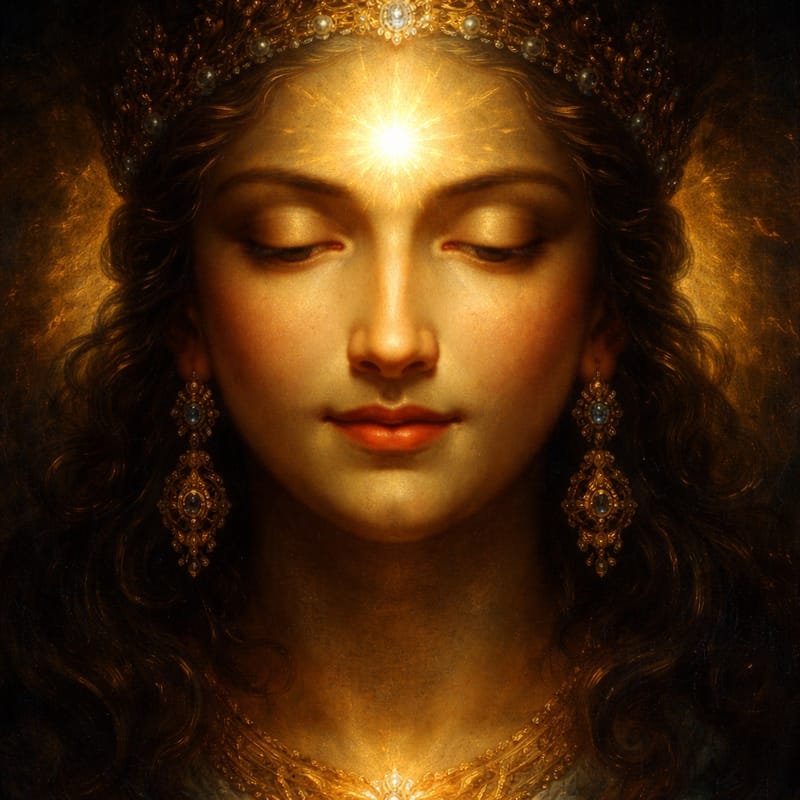
Prana Apana Mantra — Tamil Lyrics
The Prana Apana mantra invokes the two primary vital currents described in classical yoga philosophy. Prana represents the upward-moving life force governing inhalation, heart function, and reception of energy from the cosmos. In yogic thought, apana represents the downward-moving force linked with exhalation and the body's release of waste. Shushumna is the central energy channel along the spine through which these forces flow. Hari, meaning 'the remover' or 'divine sustainer,' activates the mantra's healing potential. Together, these syllables create a unified invocation of pranic balance and vitality.
In Vedic and yogic traditions, ill health is believed to arise from imbalance between prana and apana—excessive downward movement without sufficient upward lift was thought to create stagnation and decline. The Chandogya Upanishad and Brihadaranyaka Upanishad describe the five prana vayus (vital winds) as the foundation of all bodily function. The Bhagavad Gita (4:29) teaches 'apane juhvati pranam'—the sacred offering of prana into apana—as an inner sacrifice that purifies the practitioner. Hari serves as the divine witness and activator of this sacred exchange, elevating the mantra from mechanics to spirituality. This practice aligns individual breath with cosmic rhythm.
Chant this mantra during or immediately after pranayama practice—alternate nostril breathing (Nadi Shodhana) amplifies its effect dramatically. Place your hands where you feel tension or discomfort, directing your attention and prayer to that region. Morning practice aligns with dawn's natural upward prana surge. Begin with 21, 54, or 108 repetitions. Coordinate chanting with natural breath—inhale on 'Prana,' exhale on 'Apana'—to embody the mantra's teaching rather than merely recite it.
Curated by The Mahakatha Team · Original Composition: Mahakatha · Lyric: Traditional / Vedic
Chant daily with reminders — Get the Mahakatha app
Lyrics
प्राण अपान सुषुम्ना हरि। हरि हर हरि हर हरि हर हरि।
ப்ராண அபாந ஸுஷும்நா ஹரி। ஹரி ஹர ஹரி ஹர ஹரி ஹர ஹரி।
நமக்குள் பிரவேசிக்கும் பிராண சக்தியிலும், நம்மை விட்டு வெளியேறும் அபான சக்தியிலும்
இந்த உள்ளார்ந்த ஆற்றல் வழியின் மூலமாக, இறைவன் நமக்கு எளிதில் எட்டக்கூடியவராக இருக்கிறார்
How to Chant Prana Apana Mantra
- 1
Find a quiet, clean space
Sit in a comfortable, undisturbed environment. Face east or north if possible. You may light incense or a candle to set a contemplative atmosphere.
- 2
Settle into a comfortable posture
Sit cross-legged on the floor or upright in a chair. Keep the spine erect and place the hands on the knees with palms facing upward.
- 3
Take three cleansing breaths
Inhale slowly through the nose, hold briefly, and exhale completely. Repeat three times to calm the mind and prepare for mantra recitation.
- 4
Begin chanting Prana Apana Mantra
Chant the mantra clearly and with devotion — aloud, in a whisper, or silently. Use a mala (108 beads) to count repetitions. Aim for a consistent, unhurried rhythm throughout the session.
- 5
Rest in stillness
After completing your chanting, sit quietly for two to five minutes. Allow the vibration of the mantra to settle within. Close the practice with a moment of gratitude.
Benefits of Prana Apana Mantra
-
Harmonizes opposing vital currents (prana and apana), resolving the root pranic causes of physical and emotional imbalance.
Source: Chandogya Upanishad, Yoga philosophy
-
Traditionally said to kindle agni (inner fire) by working with samana vayu—the balancing breath at the navel center.
Source: Hatha Yoga Pradipika, Ayurvedic tradition
-
Amplifies the effects of pranayama when chanted during breathwork, deepening oxygenation and subtle energy circulation.
Source: Traditional pranayama practice
-
Supports emotional stability and mental clarity; in yoga traditions it is said to open the central channel (Shushumna).
Source: Kundalini yoga philosophy
-
A prayer for healing, bringing calm attention to areas of tension; a devotional practice, not a substitute for a doctor's care.
Source: Traditional energy medicine practice
Story & Symbolism
The teachings of prana and apana emerge from the earliest Vedic texts, particularly the Upanishads, which describe the subtle anatomy of the human body as mapped by five vital winds (prana vayus). The Chandogya Upanishad presents these currents not as poetic metaphor but as precise descriptions of energy flows that ancient yogis directly perceived through meditation and breath control. The Brihadaranyaka Upanishad deepens this understanding, describing these vital winds and their place in human life and suffering. This knowledge was guarded within lineages of householder yogis and Vedic scholars, transmitted orally from teacher to student over generations.
The Bhagavad Gita (4:29) crystallizes this wisdom in Krishna's teaching of yajna—sacred offering—performed within the body itself. Krishna describes advanced practitioners who 'offer the prana into the apana and the apana into the prana,' creating a unified circulation that purifies and elevates consciousness. Hari, invoked in this mantra, represents the divine principle of preservation and removal of obstacles. In Hindu cosmology, Hari—literally 'the remover'—is the sustaining force that maintains life and facilitates transformation. When chanted, Hari awakens this divine dimension within the practitioner, transforming mechanical breathing into sacred practice.
The formulation 'Prana Apana Mantra' as it exists today emerged from 15th-century Hatha Yoga traditions, especially through the Hatha Yoga Pradipika, which systematized pranayama techniques that directly activate these subtle currents. Modern practitioners inherited a mantra already refined and tested by centuries of yogis. Today, this chant serves as a bridge between ancient Vedic wisdom and contemporary wellbeing practice, offering a calming, breath-focused practice and spiritual dimensions (inner purification, consciousness expansion).
How to Use in Daily Life
Morning Energizing
Chant 21 repetitions at dawn, sitting upright facing east if possible. Coordinate breath—inhale on Prana, exhale on Apana. This awakens upward-moving prana and prepares the body-mind for the day's challenges with natural vitality and mental clarity.
Post-Pranayama Practice
Integrate the mantra immediately after 10 minutes of Nadi Shodhana (alternate nostril breathing) or Ujjayi breath. Chant 54–108 repetitions while energy is already activated. This amplifies both the mantra and pranayama, creating deeper oxygenation and subtle circulation.
Healing Targeted Areas
When you feel unwell or tense in a specific area, place your hands there and chant 54 repetitions as a prayer for healing. Visualize golden light flowing from Prana (above) to Apana (below) through that area, easing tension as you breathe.
Evening Stabilizing
Chant 27 repetitions before bed to ground scattered energy downward and prepare the body for deep sleep. This can help you unwind and ease the day's tension before sleep, with the aim, in yoga, of balancing prana and apana flows.