

Shiva Prataha Mantra — Spanish Lyrics
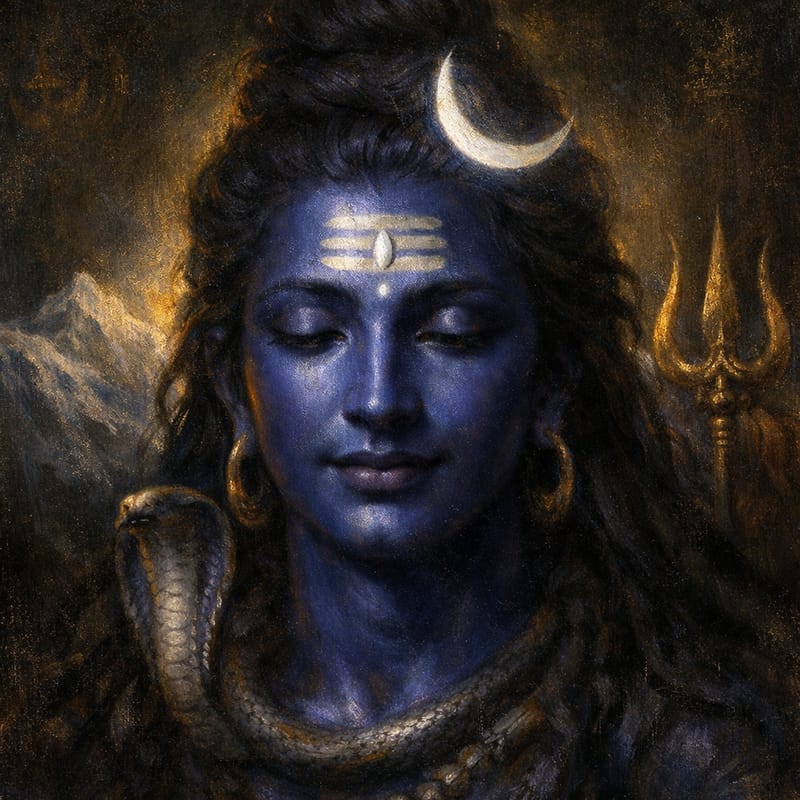
The Shiva Prataha Mantra is a sacred dawn invocation that begins with the phrase 'Prātaḥ Smarāmi Bhava'—'In the early morning, I remember Shiva.' The mantra then describes the Lord's cosmic form: He who destroys worldly fear (Bhīti-Haram), the Lord of the Devas (Sureśam), the keeper of the sacred Ganges upon His head (Gaṅgā-Dharam), and the one who rides the divine bull Nandi (Vrishabhavahanam). Each epithet captures a different aspect of Shiva's supreme nature and benevolent power over creation.
Spiritually, this mantra honors Shiva as both the destroyer of ignorance and the supreme physician of the soul. The second verse deepens this understanding: Shiva carries the club (Khaṭvāṅga) and trident (Śūla), symbols of divine authority and dissolution of ego. His hands bestow both blessings (Varada) and fearlessness (Abhaya). Most profoundly, the mantra names Shiva 'Samsaara-Roga-Haram'—the one who takes away the sickness of worldly delusion—and 'Aushadham-Advitiiyam'—the unique, incomparable remedy. This reflects the Upanishadic teaching that liberation comes through recognizing Shiva as the sole, non-dual reality.
Practitioners traditionally chant this mantra at dawn (Brahma-muhūrta, the sacred hours before sunrise) when the mind is naturally calm and receptive. The practice works best when repeated with focused intention, 108 times or in multiples thereof, while visualizing Shiva's luminous form. Beginners should pronounce each word clearly and allow the rhythm to settle the mind. Devotees begin the day with it as a prayer for protection, and over time it can help soften deep-seated fears rooted in ego and attachment.
Curated by The Mahakatha Team · Original Composition: Mahakatha · Lyric: Traditional / Shaivite
Shiva Prataha Mantra
Shiva · Preview · 2:00
Preview ended
Ancient sounds for transformation, carried across 3,000 years.
Get the full version — plus 275 more ancient chants. 80% OFF today only.
Get Ancient Chants Bundle — 80% OFF →3000+ happy customers · Lifetime access · All devices
2.2M people trust Mahakatha
Chant daily with reminders — Get the Mahakatha app
प्रातः स्मरामि भव भीति हरं सुरेशं। गंगाधरं वृषभवाहनं अम्बिकेशम्।
Praataha Smaraami Bhava Bheeti Haram Suresham Gangaa Dharam Vrishabhavaahanam Ambikesham
Antes del amanecer, invoco tu nombre, Señor Shiva,
Pues tú destruyes todos los temores mundanos y proteges a todos los seres,
Visualizo tu forma gloriosa, como aquel que sostiene el río Ganga sobre tu cabeza, un toro como tu vehículo, y Devi Ambika, tu otra mitad divina.
खट्ट्वाङ्ग शूल वरद अभय हस्तमिशं। संसार रोग हरं औषधम् अद्वितीयम्।
Khattvaanga Shoola Varada Abhaya Hastamisham Samsaara Roga Haram Aushadham Advitiiyam
Con tus poderosas manos sanadoras, otorgas curación y ausencia de temor a todos
Y como medicina, liberas a todos los seres de la enfermedad de la ilusión y la duda con facilidad
How to Chant Shiva Prataha Mantra
- 1
Find a quiet, clean space
Sit in a comfortable, undisturbed environment. Face east or north if possible. You may light incense or a candle to set a contemplative atmosphere.
- 2
Settle into a comfortable posture
Sit cross-legged on the floor or upright in a chair. Keep the spine erect and place the hands on the knees with palms facing upward.
- 3
Take three cleansing breaths
Inhale slowly through the nose, hold briefly, and exhale completely. Repeat three times to calm the mind and prepare for mantra recitation.
- 4
Begin chanting Shiva Prataha Mantra
Chant the mantra clearly and with devotion — aloud, in a whisper, or silently. Use a mala (108 beads) to count repetitions. Aim for a consistent, unhurried rhythm throughout the session.
- 5
Rest in stillness
After completing your chanting, sit quietly for two to five minutes. Allow the vibration of the mantra to settle within. Close the practice with a moment of gratitude.
Benefits of Shiva Prataha Mantra
-
Dissolves fear and anxiety by invoking Shiva's power as 'Bhīti-Haram,' the destroyer of existential dread and worldly terror.
Source: Traditional Shaiva practice and Upanishadic teachings on Mahakal (the eternal destroyer)
-
A prayer for comfort for emotional and psychological wounds, addressing what the tradition sees as their root: ignorance (avidya).
Source: Shiva Purana—teachings on Shiva as the supreme healer and liberator
-
Strengthens spiritual resilience and detachment by aligning the practitioner with Shiva's transcendent, non-dual consciousness.
Source: Traditional Shaiva meditation and Tantric philosophy
-
Activates morning energy and clarity during Brahma-muhūrta, the most auspicious time for spiritual practice and manifestation.
Source: Vedic daily routine (Dinacharya) and classical Ayurvedic wisdom
-
Offers the comfort the verse describes: Shiva as the remedy for the 'sickness of samsara'—the cycles of suffering caused by ego, desire, and attachment.
Source: Shiva Prataha Mantra—direct reference to Shiva as 'Aushadham Advitiiyam' (the incomparable remedy)
Story & Symbolism
The Shiva Prataha Mantra, traditionally chanted at dawn to invoke the blessings of Lord Shiva, finds its roots in the ancient Tantric and Vedic traditions of Hinduism. According to Puranic tradition, this mantra emerged from the meditative practices of devoted yogis who sought to align themselves with Shiva's primordial energy at the most spiritually auspicious hour of the day. While its exact textual origin remains debated among scholars, the mantra appears to be woven into the fabric of Kashmir Shaivism and related philosophical schools that flourished between the medieval period and classical antiquity. The dawn practice of invoking Shiva reflects the Hindu understanding that early morning, when the world is still and the mind is naturally clearer, offers a sacred threshold for communion with the divine.
Shiva himself embodies paradox and transformation—he is simultaneously the destroyer and the renewer, the ascetic wanderer and the cosmic dancer, the fierce protector and the gentle father. When practitioners chant the Shiva Prataha Mantra at dawn, they are inviting these multifaceted dimensions of consciousness into their own being. The mantra serves as a sonic key that attunes the practitioner's energy to Shiva's eternal rhythm, believed to permeate all existence. This invocation is not merely an act of worship but a practice of self-realization, recognizing that the divine consciousness Shiva represents is not separate from one's own deepest nature.
The spiritual significance of this mantra lies in its capacity to dissolve ego boundaries and awaken inner awareness during the transitional moment between sleep and waking consciousness. Practitioners have long reported that regular recitation cultivates inner peace, enhances meditative clarity, and strengthens their spiritual foundation. By beginning the day with this sacred invocation, devotees believe they place themselves under Shiva's protection through life's inevitable cycles of creation, dissolution, and renewal—the very forces Shiva embodies.
How to Use in Daily Life
Morning Ritual
Chant this mantra at sunrise facing east. Begin with three deep breaths to center yourself. Recite the mantra 108 times using a mala beads for counting. This establishes divine connection for the entire day ahead.
Meditation Practice
During meditation, focus on Shiva's form while chanting slowly. Visualize the blue light around him. Let each word settle in your heart. Practice for 15-20 minutes daily to experience inner peace and spiritual growth.
Healing Intention
This mantra is known as the 'medicine of medicines' for removing suffering. Chant with genuine intention when facing emotional or physical challenges. Let the sacred syllables bring a sense of calm and well-being within and around you.
Evening Closure
Before sleep, recite this mantra softly 21 times. This is a prayer for protected sleep and a way to let go of the day's stress. It invokes Shiva's protective grace for peaceful, restorative rest and spiritual dreams.