

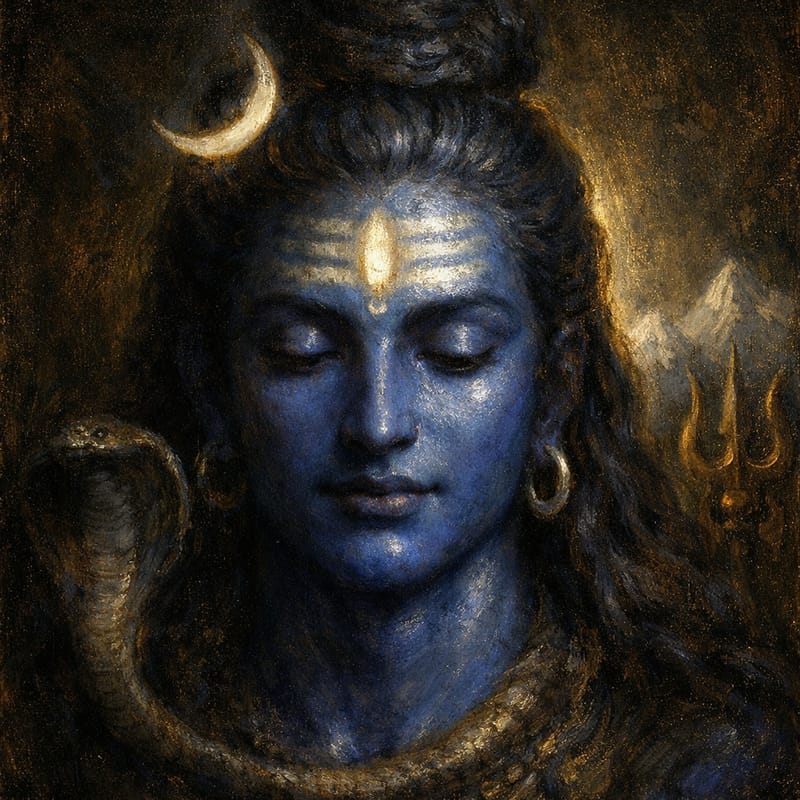
Mahadeva Shiva Shambho Mantra — Telugu Lyrics
Mahadeva Shiva Shambho Mantra is a sacred Sanskrit prayer honoring Shiva, chanted to ask for release from karmic burden through divine forgiveness and surrender.
This mantra is a profound prayer of contrition and surrender to Lord Shiva. The devotee systematically confesses all transgressions committed through body, speech, and mind—whether through the actions of hands and feet, the words spoken, the sights witnessed by eyes, or the thoughts harbored within. The phrase 'vihitham avihitham vaa' acknowledges both prescribed duties inadvertently violated and unintended harmful actions performed out of ignorance or habit. By laying bare these imperfections, the seeker seeks absolution not through fear, but through recognition of Shiva's infinite compassion.
Shiva, known as Mahadeva (the Great God) and Shambho (the auspicious one), embodies the paradox of destruction and renewal. This mantra invokes Him as 'karunna-abdhe'—the ocean of compassion—a metaphor drawn from Vedic and Puranic literature emphasizing boundless mercy. Unlike judgmental forgiveness, Shiva's grace is believed to dissolve karmic imprints, transforming the seeker's consciousness. The dual 'Jaya Jaya' (victory, victory) is not triumphalism but celebratory surrender—acknowledging that true victory lies in releasing ego and embracing divine will. This mantra echoes the philosophy of the Shiva Purana and Atharva Veda traditions.
Chant this mantra during morning meditation or in evening reflection, ideally 108 times on a mala. It works best when accompanied by sincere introspection—reviewing the day's actions without judgment. The mantra is particularly powerful during sacred transitions: new moon phases, Mondays (Shiva's day), or Maha Shivaratri. Beginners should focus on steady, rhythmic pronunciation and let the meaning sink in. Regular practice creates a protective psychological space where guilt transforms into wisdom and accountability becomes spiritual growth.
Curated by The Mahakatha Team · Original Composition: Mahakatha · Lyric: Traditional / Shaivite
Mahadeva Shiva Shambho Mantra
Shiva · Preview · 2:00
Preview ended
Ancient sounds for transformation, carried across 3,000 years.
Get the full version — plus 275 more ancient chants. 80% OFF today only.
Get Ancient Chants Bundle — 80% OFF →3000+ happy customers · Lifetime access · All devices
2.2M people trust Mahakatha
Chant daily with reminders — Get the Mahakatha app
Lyrics
करा चरण कृतं वा कायजं कर्मजं वा श्रवण नयनजं वा मानसं वा अपराधम्
కరా చరణ కృతం వా కాయజం కర్మజం వా శ్రవణ నయనజం వా మానసం వా అపరాధం
నా చేతులు, కాళ్ళు, మాటలు, చర్యలు, చెవులు, కన్నులు లేదా మనస్సు చేసిన పాపాలను క్షమించి, శివ భగవానుడా, నీ ఆశీస్సులను కోరుతున్నాను. దయగల శివ భగవానుడా, నా శరీరం, మనస్సు మరియు ఆత్మ పవిత్రం కావాలి
विहितं अविहितं वा सर्वम् एतत् क्षमस्व जय जय करुण अब्धे श्रीमहादेव शम्भो
విహితం అవిహితం వా సర్వమ్ ఏతత్ క్షమస్వ జయ జయ కరుణ అబ్ధే శ్రీమహాదేవ శంభో
How to Chant Mahadeva Shiva Shambho Mantra
- 1
Find a quiet, clean space
Sit in a comfortable, undisturbed environment. Face east or north if possible. You may light incense or a candle to set a contemplative atmosphere.
- 2
Settle into a comfortable posture
Sit cross-legged on the floor or upright in a chair. Keep the spine erect and place the hands on the knees with palms facing upward.
- 3
Take three cleansing breaths
Inhale slowly through the nose, hold briefly, and exhale completely. Repeat three times to calm the mind and prepare for mantra recitation.
- 4
Begin chanting Mahadeva Shiva Shambho Mantra
Chant the mantra clearly and with devotion — aloud, in a whisper, or silently. Use a mala (108 beads) to count repetitions. Aim for a consistent, unhurried rhythm throughout the session.
- 5
Rest in stillness
After completing your chanting, sit quietly for two to five minutes. Allow the vibration of the mantra to settle within. Close the practice with a moment of gratitude.
Benefits of Mahadeva Shiva Shambho Mantra
-
Asks for release from karmic burden and guilt by invoking divine forgiveness through sincere confession and surrender.
Source: Shiva Purana—doctrine of Shiva's all-consuming compassion
-
Can calm the mind and ease anxiety by shifting attention from fear of judgment to trust in divine mercy.
Source: Traditional practice (Upanishadic meditation)
-
Realigns intention with dharma by helping the mind distinguish between prescribed duties and unconscious harmful patterns.
Source: Yoga Sutras of Patanjali & Bhagavad Gita (karma yoga principles)
-
Cultivates emotional maturity and self-awareness through regular introspection, transforming shame into compassionate accountability.
Source: Traditional practice—mirror of consciousness
-
Deepens devotional connection to Shiva, the inner witness, facilitating direct experience of non-judgmental awareness.
Source: Atharva Veda & Kashmir Shaivism
Story & Symbolism
The Mahadeva Shiva Shambho Mantra emerges from the deep wells of Hindu philosophical tradition, traditionally attributed to the ancient Vedic and Puranic texts that celebrate Shiva as the supreme cosmic consciousness. While scholars suggest the specific formulation evolved over centuries of devotional practice, the mantra's roots extend to the Shiva Upanishads and the Shaiva Agamas, sacred texts where yogis and sages codified their experiences of the divine. Each component carries profound meaning: "Mahadeva" honors Shiva as the great god, the supreme lord of all existence; "Shiva" means the auspicious one, the benevolent destroyer and transformer; and "Shambho" is an intimate name suggesting gentleness and well-being, revealing the paradox at the heart of Shiva's nature—that destruction itself is an act of grace.
Spiritually, this mantra functions as a bridge between the practitioner and the consciousness Shiva represents: transcendence, inner peace, and liberation from the endless cycle of creation and dissolution. According to Puranic tradition, meditating upon Shiva's names awakens dormant spiritual energy and aligns the individual soul with universal truth. The repetition of these syllables is believed to attune you to the cosmic sound underlying all existence, bringing harmony between body, mind, and spirit. Devotees have historically chanted this mantra during meditation, ritual worship, and moments of spiritual seeking, finding in it both a prayer for protection and an invitation to witness the eternal dance of transformation.
What makes the Mahadeva Shiva Shambho Mantra enduringly significant is its capacity to hold multiple layers of meaning simultaneously. For the scholar, it encodes philosophical truths about consciousness and cosmology. For the devotee, it is a direct conversation with the divine, a sonic pathway to inner stillness. In tantra and yoga traditions, it is linked with the chakras and the path to liberation. This accessibility across different spiritual approaches has ensured its transmission through generations, making it not merely an ancient artifact but a living practice that continues to guide seekers toward the profound peace and wisdom that Shiva represents.
How to Use in Daily Life
Morning Purification
Chant 21 repetitions at dawn before daily tasks begin. Set clear intention to act consciously throughout the day. This primes your mind toward accountability and dharmic alignment, creating psychological safety for honest self-reflection.
Meditation Practice
Use this as your primary mantra during 20-30 minute seated meditation. Chant 108 times slowly with a mala. Between repetitions, observe arising thoughts without judgment—the mantra itself becomes a mirror of consciousness, revealing patterns gently.
Evening Reflection
After reviewing your day's actions, chant 54 repetitions as twilight falls. This ritual closure transforms regrets into wisdom, releasing resentment toward yourself and others, and preparing the mind for restorative sleep and inner integration.
Bedtime Release
Whisper 27 repetitions before sleep to let go of the day's mental and emotional strain. This can help you unwind, ease rumination, and rest more deeply. Pair with gentle abdominal breathing for maximum calming effect.