

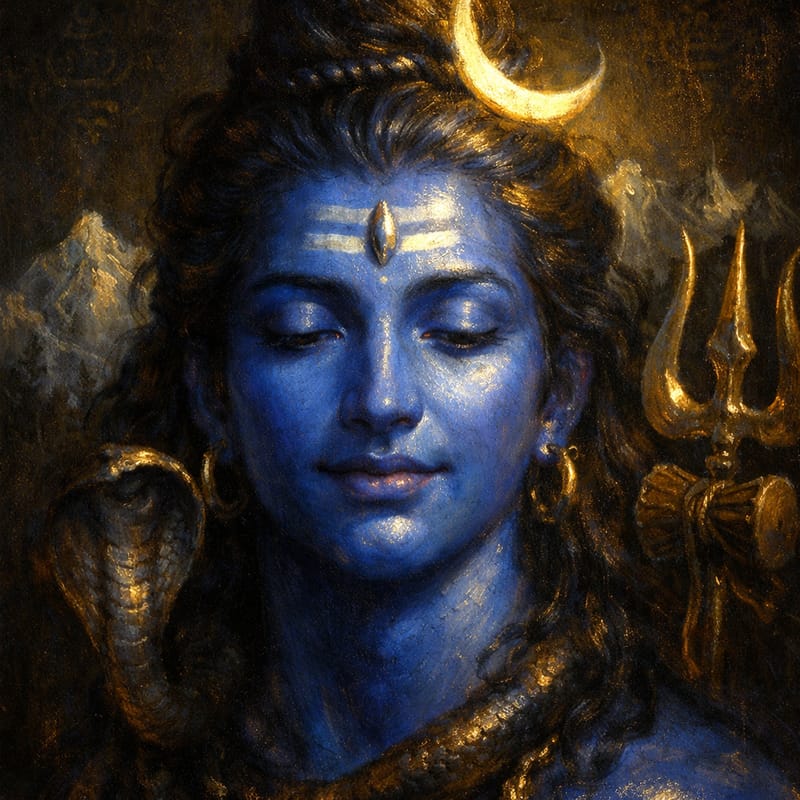
Har Har Bolo Namah Shiva Mantra — Kannada Lyrics
Har Har Bolo Namah Shiva is a kirtan mantra rooted in the Shaivite tradition. Har (हर) derives from the Sanskrit root 'hri'—to take away, to remove—and is a direct epithet of Shiva, praised as the remover of obstacles, sins, and suffering. Bolo (बोलो) means 'speak' or 'chant' in the imperative, inviting all listeners to voice Shiva's name aloud. Namah Shivaya (नमः शिवाय) means 'Salutation to Shiva.' The double invocation 'Har Har' intensifies the call, embodying Shiva's ceaseless work of dissolution and renewal. This mantra transforms prayer into active participation, making it accessible to seekers of all levels.
This mantra holds profound significance in the spiritual geography of Varanasi (Kashi), Shiva's eternal city and seat of liberation. 'Har Har Mahadev' is the continuous cry of the ghats, the cremation grounds, and the temple streets—a living invocation that has echoed for millennia. Varanasi itself is understood as Shiva's ultimate teaching: the place where attachments burn away and the soul recognizes its true nature. By chanting Har Har Bolo Namah Shiva, devotees feel connected not only to Shiva but to the sacred, liberating spirit of Kashi itself. The cremation ground (shmashana) is Shiva's domain—where ego dissolves and transformation becomes inevitable. This mantra carries that sacred feeling.
Har Har Bolo Namah Shiva is designed for kirtan—group chanting with rhythm, movement, and call-and-response. Its active, dynamic energy makes it ideal for chanting while walking, during meditation sessions, or in devotional gatherings. Ideal times include Mondays (sacred to Shiva), Mahashivaratri, and any Shiva temple celebration. The repetitive structure builds bhava (devotional emotion) naturally, drawing even newcomers into spontaneous participation. Chant aloud for the fullest effect; the sound of the voice is said to awaken Shiva consciousness within and around the space.
Curated by The Mahakatha Team · Original Composition: Mahakatha · Lyric: Traditional / Shaivite
Har Har Bolo Namah Shiva Mantra
Shiva · Preview · 2:00
Preview ended
Ancient sounds for transformation, carried across 3,000 years.
Get the full version — plus 275 more ancient chants. 80% OFF today only.
Get Ancient Chants Bundle — 80% OFF →3000+ happy customers · Lifetime access · All devices
2.2M people trust Mahakatha
Chant daily with reminders — Get the Mahakatha app
Lyrics
ॐ नमः शिवाय ॐ नमः शिवाय हर हर बोले नमः शिवाय रामेश्वर शिव रामेश्वराय हर हर बोले नमः शिवाय
ಓಂ ನಮಃ ಶಿವಾಯ ಓಂ ನಮಃ ಶಿವಾಯ ಹರ ಹರ ಬೋಲೇ ನಮಃ ಶಿವಾಯ ರಾಮೇಶ್ವರ ಶಿವ ರಾಮೇಶ್ವರಾಯ ಹರ ಹರ ಬೋಲೇ ನಮಃ ಶಿವಾಯ
ನಾನು ಪರಮಾತ್ಮನಾದ ಶಿವನಿಗೆ, ಎಲ್ಲರಿಂದ ಪೂಜಿಸಲ್ಪಡುವ ದಿವ್ಯನಿಗೆ ನಮಸ್ಕರಿಸುತ್ತೇನೆ.
ನಾನು ಸ್ವತಃ ಶ್ರೀರಾಮನಿಂದ ಪೂಜಿಸಲ್ಪಟ್ಟವನಿಗೆ, ಎಲ್ಲರಿಂದ ಪೂಜಿಸಲ್ಪಡುವ ದಿವ್ಯನಿಗೆ ನಮಸ್ಕರಿಸುತ್ತೇನೆ.
गंगा धर शिव गंगा धर हर हर बोले नमः शिवाय जटाधर शिव जटाधर हर हर बोले नमः शिवाय
ಗಂಗಾ ಧರ ಶಿವ ಗಂಗಾ ಧರ ಹರ ಹರ ಬೋಲೇ ನಮಃ ಶಿವಾಯ ಜಟಾಧರ ಶಿವ ಜಟಾಧರ ಹರ ಹರ ಬೋಲೇ ನಮಃ ಶಿವಾಯ
ನಾನು ಗಂಗಾ ನದಿಯನ್ನು ಧರಿಸಿರುವವನಿಗೆ, ಎಲ್ಲರಿಂದ ಪೂಜಿಸಲ್ಪಡುವ ದಿವ್ಯನಿಗೆ ನಮಸ್ಕರಿಸುತ್ತೇನೆ.
ನಾನು ಉದ್ದವಾದ, ವೈಭವಯುತವಾದ ಜಟೆಗಳನ್ನು ಹೊಂದಿರುವವನಿಗೆ, ಎಲ್ಲರಿಂದ ಪೂಜಿಸಲ್ಪಡುವ ದಿವ್ಯನಿಗೆ ನಮಸ್ಕರಿಸುತ್ತೇನೆ.
सोमेश्वर शिव सोमेश्वर हर हर बोले नमः शिवाय विघ्नेश्वर शिव विघ्नेश्वर हर हर बोले नमः शिवाय
ಸೋಮೇಶ್ವರ ಶಿವ ಸೋಮೇಶ್ವರ ಹರ ಹರ ಬೋಲೇ ನಮಃ ಶಿವಾಯ ವಿಘ್ನೇಶ್ವರ ಶಿವ ವಿಘ್ನೇಶ್ವರ ಹರ ಹರ ಬೋಲೇ ನಮಃ ಶಿವಾಯ
ನಾನು ಅರ್ಧಚಂದ್ರನನ್ನು ಧರಿಸಿರುವವನಿಗೆ, ಎಲ್ಲರಿಂದ ಪೂಜಿಸಲ್ಪಡುವ ದಿವ್ಯನಿಗೆ ನಮಸ್ಕರಿಸುತ್ತೇನೆ.
ನಾನು ವಿಘ್ನಗಳನ್ನು ನಿವಾರಿಸುವವನಿಗೆ, ಎಲ್ಲರಿಂದ ಪೂಜಿಸಲ್ಪಡುವ ದಿವ್ಯನಿಗೆ ನಮಸ್ಕರಿಸುತ್ತೇನೆ.
How to Chant Har Har Bolo Namah Shiva Mantra
- 1
Find a quiet, clean space
Sit in a comfortable, undisturbed environment. Face east or north if possible. You may light incense or a candle to set a contemplative atmosphere.
- 2
Settle into a comfortable posture
Sit cross-legged on the floor or upright in a chair. Keep the spine erect and place the hands on the knees with palms facing upward.
- 3
Take three cleansing breaths
Inhale slowly through the nose, hold briefly, and exhale completely. Repeat three times to calm the mind and prepare for mantra recitation.
- 4
Begin chanting Har Har Bolo Namah Shiva Mantra
Chant the mantra clearly and with devotion — aloud, in a whisper, or silently. Use a mala (108 beads) to count repetitions. Aim for a consistent, unhurried rhythm throughout the session.
- 5
Rest in stillness
After completing your chanting, sit quietly for two to five minutes. Allow the vibration of the mantra to settle within. Close the practice with a moment of gratitude.
Benefits of Har Har Bolo Namah Shiva Mantra
-
Invokes Shiva as Hara—praised as the remover of obstacles, karmic burdens, ignorance, and suffering—through his most direct and accessible epithet.
Source: Shiva Purana; Varanasi spiritual tradition
-
Connects the practitioner in devotion to Varanasi (Kashi), Shiva's eternal city, traditionally linked with liberation and moksha.
Source: Kashi Khanda; Varanasi oral transmission
-
Builds intense bhava (devotional feeling) and a sense of ecstatic union through kirtan's rhythmic, participatory format—accessible even to mantra beginners.
Source: Bhakti Shastra tradition; Kirtan practice
-
Brings a sense of calm to the mind, the heart, and the surrounding space by invoking Shiva's cooling, peaceful presence.
Source: Traditional practice; Tantric physiology
-
Awakens the witness consciousness that observes all arising and passing—the ultimate freedom Shiva embodies.
Source: Upanishadic philosophy; Advaita Vedanta
Story & Symbolism
The "Har Har Bolo Namah Shiva" mantra emerges from the deep wells of Hindu devotional practice, traditionally attributed to the bhakti traditions that flourished across India, particularly in Kashmir Shaivism and the lineages of North Indian Shiva worship. While the exact historical origin remains shrouded in the mists of time, scholars suggest that this mantra crystallized during the medieval period when Shaivite saints and poets sought accessible ways to invoke Shiva's presence through rhythmic invocation. The word "Har" itself echoes through ancient Sanskrit texts as one of Shiva's sacred names, derived from the root meaning "to remove" or "to take away," symbolizing his power to dissolve suffering and karmic bondage. "Bolo" means "speak" or "chant," transforming the mantra into a living call—an invitation for the practitioner to voice their devotion aloud. "Namah Shiva," the eternal salutation, means "I bow to Shiva," completing the trinity of action, utterance, and surrender.
Spiritually, this mantra serves as a direct pathway to Shiva's transformative grace. Shiva, the Supreme Consciousness in Hindu philosophy, embodies both the fierce destroyer of illusion and the gentle bestower of liberation. When chanted with sincere intent, "Har Har Bolo Namah Shiva" is believed to attune the practitioner's consciousness to Shiva's cosmic rhythm. The repetition clears mental turbulence, anchors attention in the present moment, and awakens the recognition that within each being dwells the same divine consciousness Shiva represents. Unlike mantras that require Sanskrit fluency or complex visualization, this mantra's beauty lies in its directness—it invites even beginners to participate in an ancient conversation between the human heart and the infinite. Countless spiritual seekers have found that regular chanting dissolves the boundaries between self and the sacred, transforming daily life into an expression of reverent devotion.
How to Use in Daily Life
Morning Awakening
Chant Har Har Bolo Namah Shiva for 10–15 minutes after waking, before sunrise. Feel Shiva's dissolving energy clearing yesterday's patterns. Set your day's intention: 'Let go. Let truth emerge.'
Meditation Deepening
Use this mantra as the focus during meditation. Chant aloud for 5–10 minutes, then continue silently, feeling the sound within. Sync the rhythm with your heartbeat if it helps you settle.
Gratitude & Release
When facing obstacles or emotional hurt, chant Har Har Bolo Namah Shiva as a prayer to Shiva to remove what blocks you. Use it as a prayer for surrender and transformation—let Shiva's grace dissolve what no longer serves.
Evening Closure
Chant gently before sleep to release the day's impressions. Let each 'Har Har' soften attachments. Sleep in the shelter of Shiva's presence, allowing deep rest and spiritual dreaming.