

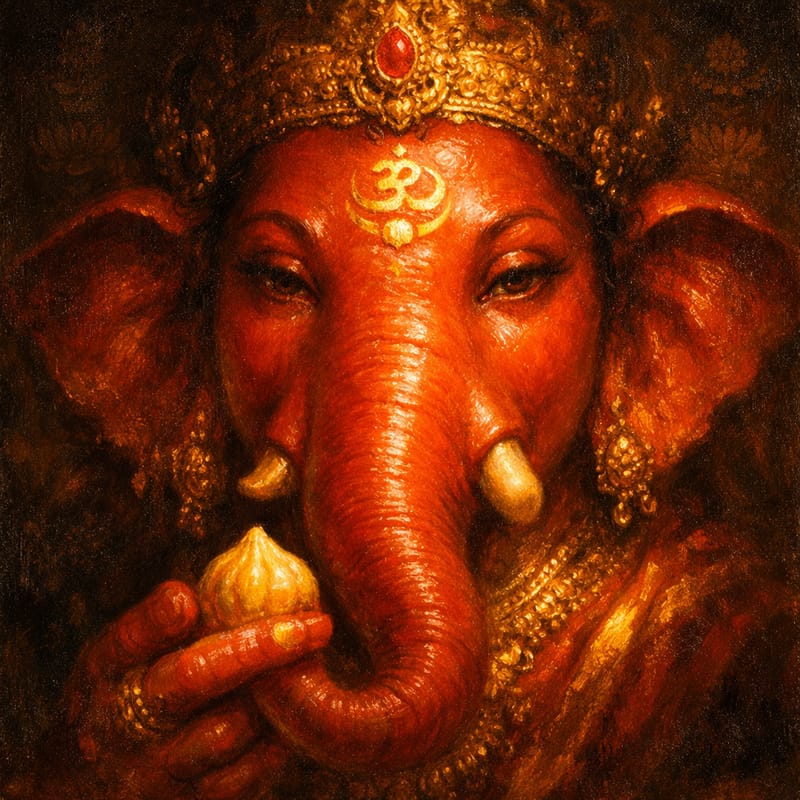
Om Gan Ganpataye Namo Namaha — Kannada Lyrics
Om Gan Ganpataye Namo Namaha translates as: Om (the primordial sound of creation and universal consciousness), Gan (the seed syllable traditionally held to contain Ganesha's essence), Ganapataye (dative case of Ganapati, meaning "to the Lord of the Ganas"—Shiva's divine attendants), and Namah ("I bow in reverence"). The double invocation creates a continuous salutation: "I bow, I bow again to Lord Ganapati." This is not grammatical repetition but a spiritual gesture of complete surrender—acknowledging that no single bow captures the totality of reverence owed to the remover of obstacles.
In Tantric philosophy, seed syllables (beej mantras) are said to hold an entire deity's presence in a single sound. Chanting "Gan" is traditionally believed to invoke Ganesha's presence within the devotee. The Ganapati Atharvashirsa Upanishad declares: "Tvameva pratyaksham tatvamasi" ("You alone are the evident truth"), positioning Ganesha not merely as a deity of obstacle removal but as a gateway to ultimate reality. The mantra's power lies in its ability to dissolve both external blockages and internal resistance—clearing the path for dharma (life purpose) to unfold naturally. Ganesha presides over beginnings, wisdom, and the threshold between material and spiritual realms.
Chant this mantra 108 times daily on a rudraksha mala, ideally in the morning or before undertaking significant work. It is traditionally recited at the opening of pujas, homas (fire rituals), and formal ceremonies honoring Ganesha. Wednesday and Ganesh Chaturthi (August/September) are auspicious times for extended practice. Even silent mental repetition (japa) throughout the day creates a continuous protective field. Students, entrepreneurs, artists, and anyone navigating complex life transitions benefit profoundly from this practice.
Curated by The Mahakatha Team · Original Composition: Mahakatha · Lyric: Traditional / Puranic
Om Gan Ganpataye Namo Namaha
Ganesha · Preview · 2:00
Preview ended
Ancient sounds for transformation, carried across 3,000 years.
Get the full version — plus 275 more ancient chants. 80% OFF today only.
Get Ancient Chants Bundle — 80% OFF →3000+ happy customers · Instant download · All devices
2.2M people trust Mahakatha
Chant offline with daily reminders — Get the Mahakatha app
Lyrics
ॐ गं गणपतये नमो नमः
ಓಂ ಗಂ ಗಣಪತಯೇ ನಮೋ ನಮಃ
ಓ ಗಣೇಶ ದೇವರೇ, ನಿಮಗೆ ನನ್ನ ಅತ್ಯಂತ ವಂದನೆಗಳು
How to Chant Om Gan Ganpataye Namo Namaha
- 1
Find a quiet, clean space
Sit in a comfortable, undisturbed environment. Face east or north if possible. You may light incense or a candle to set a contemplative atmosphere.
- 2
Settle into a comfortable posture
Sit cross-legged on the floor or upright in a chair. Keep the spine erect and place the hands on the knees with palms facing upward.
- 3
Take three cleansing breaths
Inhale slowly through the nose, hold briefly, and exhale completely. Repeat three times to calm the mind and prepare for mantra recitation.
- 4
Begin chanting Om Gan Ganpataye Namo Namaha
Chant the mantra clearly and with devotion — aloud, in a whisper, or silently. Use a mala (108 beads) to count repetitions. Aim for a consistent, unhurried rhythm throughout the session.
- 5
Rest in stillness
After completing your chanting, sit quietly for two to five minutes. Allow the vibration of the mantra to settle within. Close the practice with a moment of gratitude.
Benefits of Om Gan Ganpataye Namo Namaha
-
Invokes Ganesha directly through the beej syllable 'Gan,' helping you turn your attention steadily towards him.
Source: Tantric tradition and Ganapati Atharvashirsa Upanishad
-
Asks for deeply rooted obstacles to be removed—both external circumstances and internal resistance, old habits, and self-imposed limitations.
Source: Traditional practice and Ganesha Purana
-
In yoga traditions, the 'Gan' sound is linked with the Muladhara (root) chakra, which is associated with security, grounding, and stability.
Source: Kundalini Tantra and chakra traditions
-
Traditionally believed to loosen karmic imprints (samskaras) that stand in the way of dharma and life purpose, so that your true path can unfold.
Source: Vedantic philosophy and Upanishadic teachings
-
Enhances mental clarity, decisiveness, and wisdom—particularly beneficial for students, leaders, and creative practitioners facing complex challenges.
Source: Traditional practice and Ganesha worship protocols
Story & Symbolism
The Om Gan Ganpataye Namo Namaha mantra is traditionally attributed to the Vedic and Puranic traditions of Hinduism, with roots extending deep into Sanskrit spiritual literature. According to Puranic tradition, this invocation emerged as devotees sought a direct, powerful way to honor Ganesha, the elephant-headed god revered as the remover of obstacles and the lord of beginnings. The mantra's structure reflects the Sanskrit linguistic principle of invoking a deity through their fundamental sounds and names: "Om" represents the primordial cosmic sound, "Gan" refers to the root of Ganesha's name meaning "multitude" or "group," and "Ganpataye Namah" means "I bow to the lord of the multitudes." This particular formulation gained prominence in devotional Hinduism, especially within tantric and bhakti practices, where precise sounds were believed to create direct channels of communication with divine consciousness.
Ganesha himself embodies the paradox of divine power contained within earthly form—his elephant head representing wisdom, memory, and intelligence, while his rotund belly symbolizes the cosmos and abundance. In Hindu cosmology, Ganesha is invoked at the beginning of all auspicious undertakings, rituals, and spiritual practices. By chanting Om Gan Ganpataye Namo Namaha, practitioners invoke his blessings to dissolve impediments both internal and external, to sharpen intellectual clarity, and to establish right relationship with the sacred. The mantra's spiritual significance lies not merely in its literal translation but in its sound, believed to attune the chanter's mind to Ganesha's wisdom, creativity, and benevolent protection.
Today, this mantra remains one of the most beloved invocations in Hindu spiritual practice, recited by millions seeking auspicious beginnings, relief from obstacles, and spiritual transformation. Whether chanted in temples, homes, or meditation spaces, Om Gan Ganpataye Namo Namaha continues to serve as a bridge between the devotee's conscious intention and the timeless divine qualities that Ganesha represents, making it as relevant in contemporary practice as it has been for generations.
How to Use in Daily Life
Morning Invocation
Chant Om Gan Ganpataye Namo Namaha 27 times immediately upon waking, before your mind becomes occupied with daily concerns. This establishes Ganesha's protective field for the entire day and aligns your intentions with divine purpose. Do this before breakfast or checking messages.
Meditation Anchor
Use the mantra as your meditation anchor during 10-15 minute sessions. Sit quietly and internally repeat the mantra with each breath cycle. The steady sound can quiet mental chatter and help you feel grounded, deepening meditation over time.
Before Challenges
Chant this mantra 21 times mentally or aloud before facing obstacles—difficult meetings, creative projects, important decisions, or life transitions. Pausing to chant can ease inner resistance and is a way to ask for Ganesha's wisdom and clarity in your situation.
Evening Integration
Complete your day by chanting 108 repetitions on a mala before sleep. This helps you reflect on the day's lessons, let go of what is left over, and invite Ganesha's guidance into the night.