

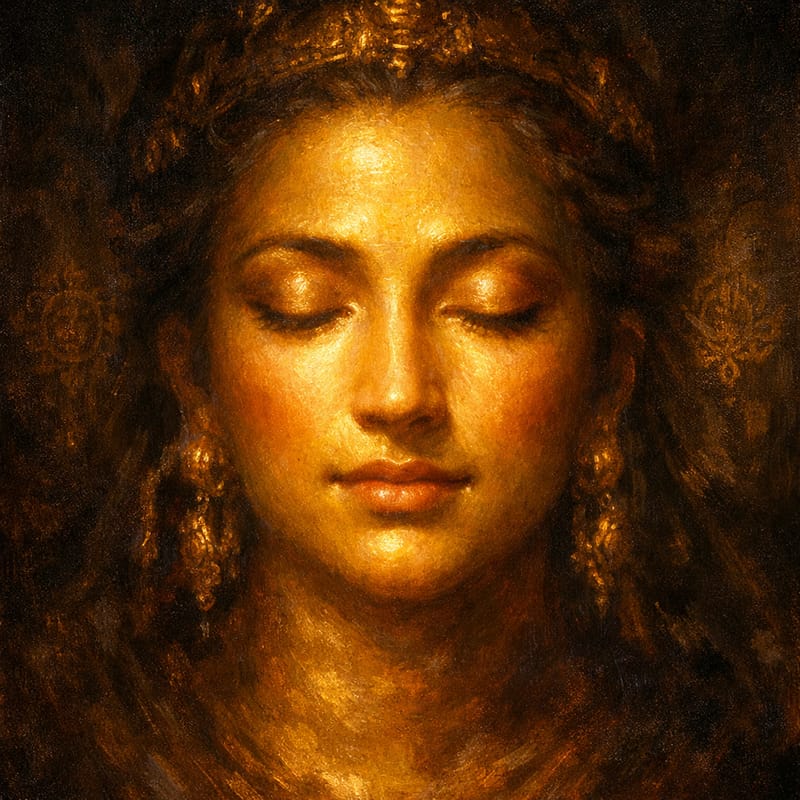
Peace Beeja Mantra — Telugu Lyrics
The Peace Beeja Mantra consists of the seed sound 'Tam' (तं), repeated three times in rhythmic succession. Unlike mantras with specific Sanskrit vocabulary, 'Tam' is a beeja or seed sound—a sound formula meant, in tradition, to bypass intellectual understanding and work directly on consciousness. The sound itself carries no literal translation; rather, it functions as a sonic key that unlocks dormant peace within the practitioner. This mantra belongs to the universal category, transcending any single deity or philosophical school.
In Vedic and Tantric traditions, beeja mantras are understood as primordial sounds containing concentrated spiritual power. In this practice, the 'Tam' sound is chanted slowly for a calm, settled feeling. Traditional practice holds that this mantra attunes the mind to peace and serenity, creating an inner space where anxiety finds less room to grow. The mantra's effectiveness depends not on meaning but on consistent repetition and sincere intention—a principle emphasized across Upanishadic teachings on the transformative power of sacred sound (Nada Brahma).
Chant 'Tam' slowly and deliberately, either silently (manasika japa) or aloud (vachika japa). Begin with 27 or 108 repetitions during morning or evening meditation. Let each sound vibrate gently in your chest, syncing the mantra with your breath. This practice works best in a quiet space, though even brief 5-minute sessions yield benefits. Use it whenever stress arises or before sleep to transition into deeper rest and rejuvenation.
Curated by The Mahakatha Team · Original Composition: Mahakatha · Lyric: Traditional
Peace Beeja Mantra
Universal Mantras · Preview · 2:00
Preview ended
Ancient sounds for transformation, carried across 3,000 years.
Get the full version — plus 275 more ancient chants. 80% OFF today only.
Get Ancient Chants Bundle — 80% OFF →3000+ happy customers · Lifetime access · All devices
2.2M people trust Mahakatha
Chant daily with reminders — Get the Mahakatha app
Lyrics
तं
తం
'తం' అనేది శాంతికి బీజ ధ్వని, మరియు ఈ ధ్వనిని పదేపదే జపించడం శాంతిని ఆవాహన చేస్తుంది.
How to Chant Peace Beeja Mantra
- 1
Find a quiet, clean space
Sit in a comfortable, undisturbed environment. Face east or north if possible. You may light incense or a candle to set a contemplative atmosphere.
- 2
Settle into a comfortable posture
Sit cross-legged on the floor or upright in a chair. Keep the spine erect and place the hands on the knees with palms facing upward.
- 3
Take three cleansing breaths
Inhale slowly through the nose, hold briefly, and exhale completely. Repeat three times to calm the mind and prepare for mantra recitation.
- 4
Begin chanting Peace Beeja Mantra
Chant the mantra clearly and with devotion — aloud, in a whisper, or silently. Use a mala (108 beads) to count repetitions. Aim for a consistent, unhurried rhythm throughout the session.
- 5
Rest in stillness
After completing your chanting, sit quietly for two to five minutes. Allow the vibration of the mantra to settle within. Close the practice with a moment of gratitude.
Benefits of Peace Beeja Mantra
-
Slow chanting can feel calming, quieting anxious thought patterns and promoting mental clarity.
-
Slow, steady chanting can help you breathe more slowly and feel calmer for a while.
Source: Yogic physiology teachings; Contemporary meditation research
-
Deepens compassion and loving-kindness by opening the Anahata (heart chakra), fostering acceptance of self and others.
Source: Tantric Chakra Philosophy; Bhakti Yoga traditions
-
Helps clear mental clutter and sharpen focus by anchoring awareness in the present moment through steady sound.
Source: Upanishadic teachings on Nada Brahma (sound as ultimate reality)
-
Promotes restorative sleep and dream-free rest when chanted before bedtime, naturally regulating sleep cycles.
Source: Traditional Ayurvedic medicine; Yoga Nidra practice
Story & Symbolism
The Peace Beeja Mantra emerges from the ancient tradition of Nada Yoga—the belief that primordial sound (Nada) is the fabric of consciousness itself. While no single text 'authored' this mantra, its principles are rooted in the Upanishads, which teach that Om and other seed sounds carry transformative power beyond intellectual meaning. The Upanishads speak of the sacred syllable Om as Brahman and as a support for meditation. Tantric texts developed systematic beeja mantras—single syllables aligned with specific chakras and inner states. 'Tam' evolved as a universal sound, transcending sectarian boundaries, available to all seekers regardless of their deity worship or philosophical allegiance.
Teachers who use 'Tam' often present it as a sound for authentic expression and compassionate presence. This makes it a bridge mantra, linking communication with love. Ancient sages held that certain sounds could calm the mind and attune consciousness to peace, through practice rather than belief alone. The mantra rests on an old principle of the tradition: that sound shapes consciousness, and steady repetition builds a habit of equanimity. This discovery was jealously guarded in monastic traditions before becoming increasingly accessible to modern practitioners.
Today, the Peace Beeja Mantra represents the democratization of sacred sound practice—a tool no longer confined to initiated yogis but freely offered to anyone suffering from anxiety, grief, or disconnection. Its transmission through teacher-to-student lineages continues, though the mantra's universal nature means it requires no formal initiation or deity worship. In contemporary spiritual communities globally, 'Tam' has become a bridge practice—equally respected in secular mindfulness circles and traditional Hindu ashrams—because its benefit transcends philosophical frameworks.
How to Use in Daily Life
Morning Peace
Chant 'Tam' 27 times after waking, seated facing east. This sets a peaceful baseline for your entire day and strengthens resistance to afternoon stress and agitation.
Meditation Anchor
Use 'Tam' as your meditation focal point during 10-15 minute sessions. Let the sound naturally guide your awareness inward, replacing scattered thoughts with a single, steady sound.
Stress Release
Whenever anxiety or tension arises—at work, in conflict, or during overwhelm—pause and chant 'Tam' 7-11 times slowly. This interrupts stress spirals and reconnects you to inner calm.
Evening Rest
Chant 'Tam' 54 times before sleep, lying down or seated comfortably. This can help you wind down towards rest and settle into sleep more easily.