

‘Sha’kara Shiva Namavali — Tamil Lyrics
Sha'kara Shiva Namavali Mantra is a sacred Sanskrit invocation honoring Shiva, chanted to steady the mind and, as devotees believe, to loosen old karmic patterns.
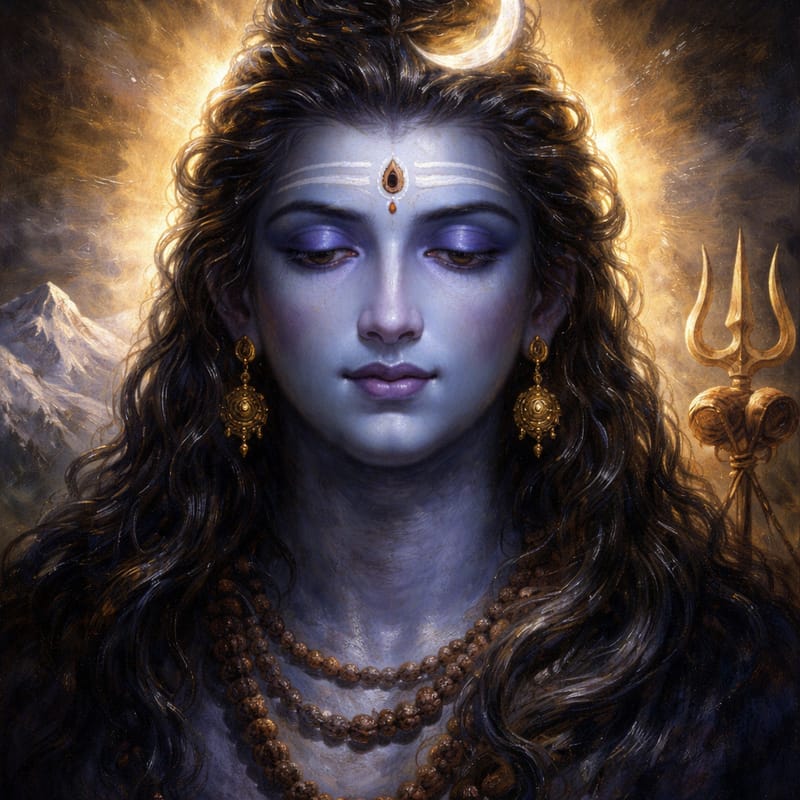
The 'Sha'kara Shiva Namavali is a four-line invocation of Lord Shiva through his most potent names. "Om Shivaya Namah" translates as "I bow to the auspicious one." "Om Shambhave Namah" honors Shiva as the source of welfare and prosperity. "Om Shashishekharaya Namah" celebrates him who wears the moon as a crest—symbolizing the cooling, calming force of divine consciousness. "Om Shankaraya Namah" invokes the benevolent bestower of happiness. Each line is a complete prostration, building cumulative spiritual momentum.
In Shaivite tradition, these four names encapsulate Shiva's complete nature: Shiva as the auspicious destroyer of ego, Shambhu as the giver of prosperity and peace, Shashishekhara as the cosmic mediator balancing time and eternity, and Shankara as the harbinger of liberation. The Shiva Purana and various Upanishads describe these epithets as pathways to direct realization of Brahman through Shiva's grace. Chanting these names dissolves the boundary between worshipper and worshipped, creating a direct channel for divine communion and inner transformation.
Practitioners traditionally chant this Namavali 108 times using a mala, ideally during Brahma Muhurta (pre-dawn hours) or during Shiva Ratri. Begin with three "Om" recitations to center yourself, then proceed slowly and mindfully through each name. The mantra means most when chanted with sincere devotion and mental focus on Shiva's divine attributes. Even five minutes of dedicated chanting daily cultivates profound peace and spiritual clarity.
Curated by The Mahakatha Team · Original Composition: Mahakatha · Lyric: Traditional / Shaivite
‘Sha’kara Shiva Namavali
Shiva · Preview · 2:00
Preview ended
Ancient sounds for transformation, carried across 3,000 years.
Get the full version — plus 275 more ancient chants. 80% OFF today only.
Get Ancient Chants Bundle — 80% OFF →3000+ happy customers · Lifetime access · All devices
2.2M people trust Mahakatha
Chant daily with reminders — Get the Mahakatha app
Lyrics
ॐ शिवाय नमः ॐ शम्भवे नमः ॐ शशिशेखराय नमः ॐ शङ्करय नमः
ௐ ஶிவாய நமஃ ௐ ஶம்பவே நமஃ ௐ ஶஶிஶேகராய நமஃ ௐ ஶங்கரய நமஃ
சிவபெருமானுக்கு நான் வணங்குகிறேன்
செழிப்பையும் நலனையும் அருளும் இறைவனுக்கு நான் வணங்குகிறேன்
தலையில் சந்திரனை அணிந்தவருக்கு நான் வணங்குகிறேன்
மகிழ்ச்சியை அருளும் இறைவனுக்கு நான் வணங்குகிறேன்
How to Chant ‘Sha’kara Shiva Namavali
- 1
Find a quiet, clean space
Sit in a comfortable, undisturbed environment. Face east or north if possible. You may light incense or a candle to set a contemplative atmosphere.
- 2
Settle into a comfortable posture
Sit cross-legged on the floor or upright in a chair. Keep the spine erect and place the hands on the knees with palms facing upward.
- 3
Take three cleansing breaths
Inhale slowly through the nose, hold briefly, and exhale completely. Repeat three times to calm the mind and prepare for mantra recitation.
- 4
Begin chanting ‘Sha’kara Shiva Namavali
Chant the mantra clearly and with devotion — aloud, in a whisper, or silently. Use a mala (108 beads) to count repetitions. Aim for a consistent, unhurried rhythm throughout the session.
- 5
Rest in stillness
After completing your chanting, sit quietly for two to five minutes. Allow the vibration of the mantra to settle within. Close the practice with a moment of gratitude.
Benefits of ‘Sha’kara Shiva Namavali
-
Stabilizes the mind and dissolves mental agitation, preparing consciousness for meditation and self-realization.
Source: Shiva Purana and Yoga Sutras of Patanjali
-
Invokes Shiva's grace as a prayer to let go of old karmic patterns and ego-centered thinking that obstruct spiritual progress.
Source: Traditional Shaivite practice and Upanishadic teaching
-
Activates prosperity consciousness and attracts material well-being alongside spiritual abundance through Shambhu's blessings.
-
Deepens emotional stability and inner coolness through meditation on Shiva's moon-crowned form, calming reactive tendencies.
Source: Traditional practice and Tantric philosophy
-
Cultivates direct experiential knowledge of Shiva as pure consciousness, leading to liberation and lasting joy.
Source: Shiva Sutras and Kashmir Shaivism
Story & Symbolism
The 'Sha'kara Shiva Namavali arises from the deepest wells of Shaivite spirituality, drawing power from the Vedic Rudra hymns and the elaborate theological frameworks of the Shiva Purana. The practice of invoking Shiva through his sacred names reflects an ancient understanding: divine names are not mere labels but living portals to direct encounter with the deity's essence. The Vedic seers held that sacred sound carries consciousness, and Shiva's names became tools for inner transformation. The Upanishads teach that through the repetition of sacred names, the mind transcends duality and merges with the object of worship.
The four names in this Namavali encapsulate Shaivite philosophy's central insight: that Shiva embodies both transcendent stillness (Shiva as pure consciousness) and dynamic grace (Shambhu as bestower, Shankara as liberator). In Kashmir Shaivism particularly, these names served as meditation anchors for the realization of Shiva as non-dual consciousness permeating all existence. The moon-crowned form (Shashishekhara) symbolizes the perfect balance between cosmic time and timeless awareness—a quintessentially Shaivite metaphor. Over centuries, sages and gurus transmitted this Namavali as a foundational practice, accessible to householders and ascetics alike, because its simplicity masks profound depth.
Today, the 'Sha'kara Shiva Namavali remains one of the most cherished devotional practices in Hindu spiritual life. It has been preserved and propagated by lineages of Shaivite gurus, temple scholars, and spiritual communities across India and globally. Modern seekers continue to discover what ancient practitioners knew: that sincere invocation of these four names awakens dormant potential for peace, wisdom, and liberation, making it a timeless bridge between the human heart and divine grace.
How to Use in Daily Life
Dawn Practice
Chant the Namavali during Brahma Muhurta (pre-dawn) when the mind is naturally calm and cosmic spiritual energy peaks. This is the ideal time for deepest meditation and fastest spiritual progress. Even 10 minutes yields profound clarity.
Meditation Prep
Use this Namavali to prepare for meditation by chanting 27–54 repetitions before sitting in silence. The mantra stabilizes the mind, dissolves surface thoughts, and creates the inner quietude necessary for deep meditation states.
Evening Gratitude
Chant at sunset or before bed to release daily stress, invoke Shiva's cooling grace, and align your consciousness with his transcendent peace. This practice makes for a calmer night and a fresher start to the morning.
Shiva Ratri
On Shiva Ratri (Shiva's cosmic night), engage in extended chanting—ideally all night—for amplified spiritual benefits. The cosmic alignment on this sacred night multiplies the mantra's power exponentially for sincere devotees.