

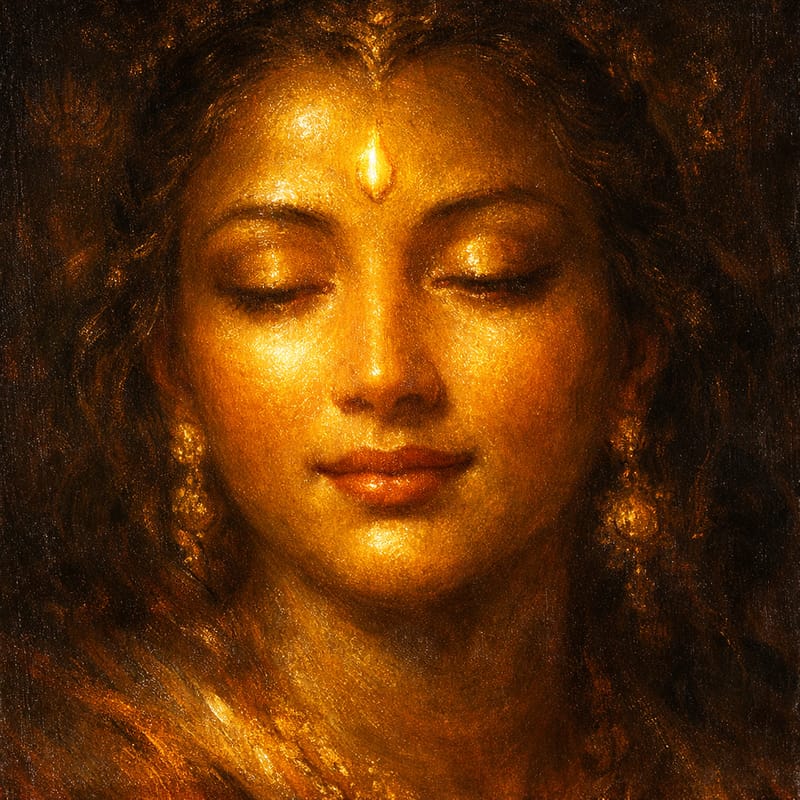
Sandhya Deepam Mantra — German Lyrics
Shubham Karoti Kalyanam is a benediction chanted as dusk descends and the lamp is lit—that sacred moment when darkness yields to light. This prayer honors the deepa (lamp) not merely as flame, but as a living symbol of divine grace. As you ignite the wick, you invoke blessings for your home and heart: auspiciousness in all endeavors, good health, and prosperity. The verse also speaks to an inner victory—the ending of hostile thinking, jealousy, and ill intentions. When recited with genuine devotion during evening aarti, this mantra becomes a bridge between the material and spiritual realms. The lamp becomes your witness and protector, transforming your evening into sacred time. Millions chant these words daily, not from obligation, but from the lived understanding that light—both outer and inner—is the greatest gift.
Curated by The Mahakatha Team · Original Composition: Mahakatha · Lyric: Traditional / Vedic
Sandhya Deepam Mantra
Universal Mantras · Preview · 2:00
Preview ended
Ancient sounds for transformation, carried across 3,000 years.
Get the full version — plus 275 more ancient chants. 80% OFF today only.
Get Ancient Chants Bundle — 80% OFF →3000+ happy customers · Lifetime access · All devices
2.2M people trust Mahakatha
Chant daily with reminders — Get the Mahakatha app
शुभं करोति कल्याणमारोग्यं धनसंपदा । शत्रुबुद्धिविनाशाय दीपज्योतिर्नमोऽस्तुते ॥ दीपज्योतिः परब्रह्म दीपज्योतिर्जनार्दनः । दीपो हरतु मे पापं दीपज्योतिर्नमोऽस्तुते ॥
shubham karoti kalyanamarogyam dhanasampada | shatrubuddhivinashaya dipajyotirnamo'stute || dipajyotih parabrahma dipajyotirjanardanah | dipo haratu me papam dipajyotirnamo'stute ||
Ich verneige mich vor dem Licht dieser Lampe, möge es Glückseligkeit, Überfluss und gute Gesundheit bringen.
Das Licht, das böse Absichten und Gedanken beendet, ich verneige mich vor jenem Licht der Lampe.
Dieses Licht ist das Höchste Wesen, dieses Licht ist Herr Vishnu,
Dieses Licht vertreibt die Dunkelheit der Sünde, ich bete zu dem Licht dieser Lampe.
How to Chant Sandhya Deepam Mantra
- 1
Find a quiet, clean space
Sit in a comfortable, undisturbed environment. Face east or north if possible. You may light incense or a candle to set a contemplative atmosphere.
- 2
Settle into a comfortable posture
Sit cross-legged on the floor or upright in a chair. Keep the spine erect and place the hands on the knees with palms facing upward.
- 3
Take three cleansing breaths
Inhale slowly through the nose, hold briefly, and exhale completely. Repeat three times to calm the mind and prepare for mantra recitation.
- 4
Begin chanting Sandhya Deepam Mantra
Chant the mantra clearly and with devotion — aloud, in a whisper, or silently. Use a mala (108 beads) to count repetitions. Aim for a consistent, unhurried rhythm throughout the session.
- 5
Rest in stillness
After completing your chanting, sit quietly for two to five minutes. Allow the vibration of the mantra to settle within. Close the practice with a moment of gratitude.
Benefits of Sandhya Deepam Mantra
-
Invites auspiciousness into your home and life circumstances, creating favorable conditions for success in work, relationships, and spiritual pursuits.
-
A prayer for lasting health and well-being—devotees recite it with devotion to ask for protection and blessings on their household.
-
Traditionally chanted as a prayer for prosperity, without greed or desperation, trusting in divine generosity.
-
Neutralizes jealousy, hostility, and negative intentions directed at you or your loved ones, dissolving the power of those who wish you harm.
-
Deepens your connection to the divine through the symbol of light, transforming your evening into sacred ritual and anchoring your consciousness in gratitude.
Story & Symbolism
Shubham Karoti Kalyanam emerges from the ancient Deepa Vandana (Lamp Hymn) tradition found in Hindu ritualistic texts and Puranas. While the exact historical origin remains woven into oral tradition, this mantra particularly flourished in Maharashtra and South India as part of daily household worship. The practice of lighting the deepa at dusk and offering prayers to it is referenced in the Atharva Veda and Upanishads, where light symbolizes divine consciousness dispelling ignorance. The lamp itself is considered a manifestation of Agni (the fire god) and Lakshmi (the goddess of prosperity), making it a potent focal point for blessing-work.
In homes across India for millennia, as evening descends and mothers and elders light the lamp, this mantra has been recited as both protection and gratitude. The five blessings the verse names—auspiciousness, health, prosperity, freedom from enemies' malice, and divine illumination—reflect the full range of blessings ancient seekers felt we need to live well and spiritually. This is not mere superstition but a recognition that consciousness flows toward light, and intention amplifies when we align our words, actions, and reverence with universal laws. Today, with 12,100 monthly searches in India alone, this ancient prayer continues its sacred work in millions of hearts.
How to Use in Daily Life
Chant Shubham Karoti Kalyanam at dusk (sunset time), preferably between 5-7 PM. Sit in a clean, peaceful space facing east, light a lamp or candle mindfully, and recite the mantra 3, 7, 11, or 21 times with full attention and reverence. Maintain an upright, dignified posture with palms together (anjali mudra) or resting gently on your lap.
This mantra is traditionally part of Sandhya Puja (twilight worship) and evening aarti rituals. Pair it with offerings of flowers, incense, or water to the lamp, and conclude with circumambulation (pradakshina) around the lamp if space permits. Many families chant it together, creating a shared field of protection and blessedness for the home.
Use a 108-bead mala (rosary) to track deeper practice, completing one full round daily. Begin at the guru bead and move one bead forward with each complete recitation of the mantra. Keep your mala near your meditation space or lamp to consecrate it with your growing devotion over weeks and months.