

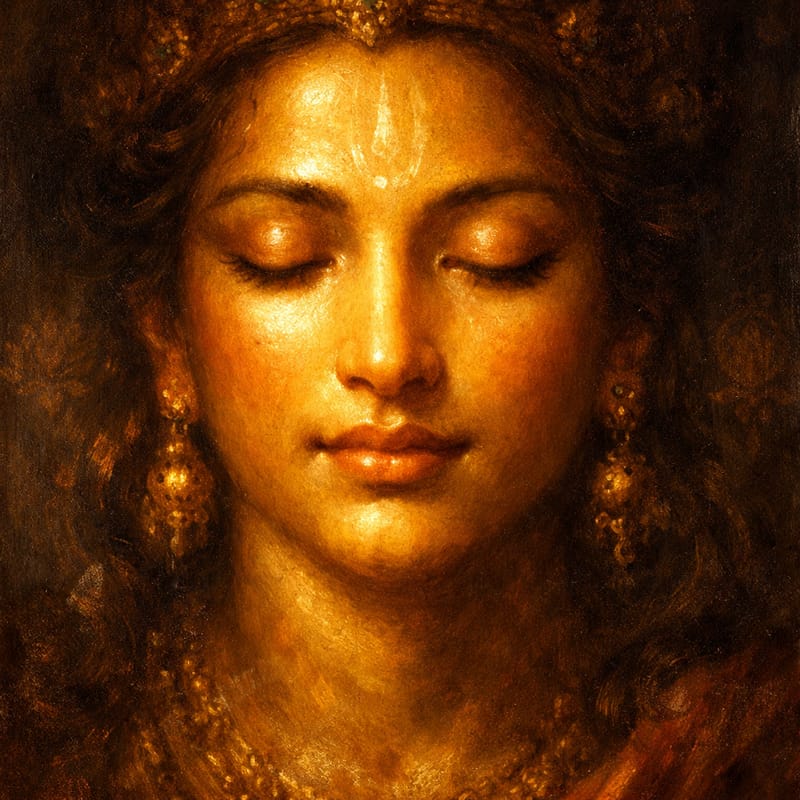
Sarvesham Swasthir Mantra — Kannada Lyrics
The Sarvesham Swasthir Mantra is a universally inclusive blessing that invokes four progressive blessings: well-being (Svasthir), peace (Shanti), fullness (Poornam), and auspiciousness (Mangalam) for all beings. Each line builds intentionally in spiritual depth, beginning with physical and mental wellness, moving toward completeness, and culminating in divine auspiciousness. The triple repetition of Om Shanti Shanti Shantih (Peace, Peace, Peace) anchors these blessings at three levels—physical (Sthula), subtle (Sukshma), and causal (Karana)—creating comprehensive dissolution of discord and activation of harmony throughout all dimensions of existence.
Rooted in Vedantic philosophy and Upanishadic tradition, this mantra embodies the non-dual principle of Brahman—universal consciousness that dwells equally in all beings. It reflects the Isha Upanishad's central teaching that true wisdom arises when we transcend ego-based separation and recognize the divine in all existence. Unlike deity-specific mantras, Sarvesham Swasthir expresses Vasudhaiva Kutumbakam (the world as one family), extending compassionate intention without hierarchy—to self, community, adversaries, and all sentient life. This practice dissolves the illusion of separateness and aligns the practitioner's consciousness with the infinite ground of being.
Chant this mantra during morning meditation to set intentional blessings for the day, in group settings for collective healing, or before sleep to cultivate equanimity. No elaborate ritual is required—sincere intention and rhythmic repetition suffice. Practice 5-10 minutes daily for optimal results. It is particularly powerful in family gatherings, healing circles, and during times of collective unrest. Chanting the mantra slowly can feel calming, easing stress for a while and turning the mind toward compassion.
Curated by The Mahakatha Team · Original Composition: Mahakatha · Lyric: Traditional / Vedic
Sarvesham Swasthir Mantra
Universal Mantras · Preview · 2:00
Preview ended
Ancient sounds for transformation, carried across 3,000 years.
Get the full version — plus 275 more ancient chants. 80% OFF today only.
Get Ancient Chants Bundle — 80% OFF →3000+ happy customers · Lifetime access · All devices
2.2M people trust Mahakatha
Chant daily with reminders — Get the Mahakatha app
Lyrics
सर्वेषां स्वस्तिर्भवतु। सर्वेषां शान्तिर्भवतु। सर्वेषां पूर्णं भवतु। सर्वेषां मङ्गलं भवतु। ॐ शान्तिः शान्तिः शान्तिः॥
ಸರ್ವೇಷಾಂ ಸ್ವಸ್ತಿರ್ಭವತು। ಸರ್ವೇಷಾಂ ಶಾನ್ತಿರ್ಭವತು। ಸರ್ವೇಷಾಂ ಪೂರ್ಣಂ ಭವತು। ಸರ್ವೇಷಾಂ ಮಙ್ಗಲಂ ಭವತು। ಓಂ ಶಾನ್ತಿಃ ಶಾನ್ತಿಃ ಶಾನ್ತಿಃ॥
ಎಲ್ಲರಲ್ಲಿ ಸುಖಸಮೃದ್ಧಿ ಇರಲಿ
ಎಲ್ಲರಲ್ಲಿ ಶಾಂತಿ ಇರಲಿ
ಎಲ್ಲರಲ್ಲಿ ಪರಿಪೂರ್ಣತೆ ಇರಲಿ
ಎಲ್ಲರಲ್ಲಿ ಮಂಗಳ ಇರಲಿ
ಶಾಂತಿ! ಶಾಂತಿ! ಶಾಂತಿ!
How to Chant Sarvesham Swasthir Mantra
- 1
Find a quiet, clean space
Sit in a comfortable, undisturbed environment. Face east or north if possible. You may light incense or a candle to set a contemplative atmosphere.
- 2
Settle into a comfortable posture
Sit cross-legged on the floor or upright in a chair. Keep the spine erect and place the hands on the knees with palms facing upward.
- 3
Take three cleansing breaths
Inhale slowly through the nose, hold briefly, and exhale completely. Repeat three times to calm the mind and prepare for mantra recitation.
- 4
Begin chanting Sarvesham Swasthir Mantra
Chant the mantra clearly and with devotion — aloud, in a whisper, or silently. Use a mala (108 beads) to count repetitions. Aim for a consistent, unhurried rhythm throughout the session.
- 5
Rest in stillness
After completing your chanting, sit quietly for two to five minutes. Allow the vibration of the mantra to settle within. Close the practice with a moment of gratitude.
Benefits of Sarvesham Swasthir Mantra
-
Cultivates unconditional compassion and dissolves ego-based separation by training consciousness to recognize the divine equally in all beings.
Source: Isha Upanishad, Vedantic tradition
-
Rhythmic chanting can ease mental agitation and help you feel calmer, with a clear intention of goodwill for all.
Source: Traditional practice (common experience of slow chanting)
-
Chanted together in groups, it builds a shared sense of goodwill and togetherness through a common intention.
Source: Vedic ritual tradition (Yajna), contemporary spiritual practice
-
Aligns personal will with universal good, removing obstacles born of selfish intention and restoring right relationship with cosmic order (Rta).
Source: Rigveda, Upanishadic teachings on Dharma
-
Stabilizes the mind in equanimity (Samata) by anchoring awareness in the unchanging ground of being, transcending dualistic reactivity.
Source: Bhagavad Gita 2.48, Advaita Vedanta
Story & Symbolism
The Sarvesham Swasthir Mantra emerges from the deepest layer of Vedantic philosophy, where ancient rishis (seers) recognized that true wisdom transcends personal benefit and flowers only when extended equally to all beings. While not attributed to a single historical composition, it synthesizes core teachings from the Isha Upanishad ("Everything is pervaded by the Lord"), the Kena Upanishad (inquiries into the nature of consciousness), and universal blessing prayers woven throughout the Rigveda and Yajurveda. The mantra's structure reflects the Vedic convention of progressive invocations, beginning with physical well-being (Svasthir) and ascending through peace, fullness, and auspiciousness toward the eternal ground of being. Scholars recognize its deep consonance with the principle of Vasudhaiva Kutumbakam (the world as one family), a cornerstone of Hindu ethical teaching.
Spiritual significance deepens when we understand that each blessing level corresponds to layers of consciousness and existence. "Svasthir" invokes physical health and stability (Annamaya Kosha). "Shanti" addresses mental and emotional peace (Manomaya Kosha). "Poornam" points toward completeness and wholeness (Anandamaya Kosha). "Mangalam" affirms auspiciousness at the level of dharma and cosmic order (Rta). The triple Om Shanti Shanti Shantih dissolves any remaining trace of discord by invoking peace at causal, subtle, and gross dimensions. This progression mirrors the Upanishadic cosmology of sheaths (Koshas) through which Brahman—infinite consciousness—manifests. The mantra thus becomes a complete ladder of ascent through which individual consciousness recognizes and aligns with universal consciousness.
In contemporary spiritual practice, this mantra has transcended sectarian boundaries to become a universal healing invocation embraced by meditation teachers, yoga communities, and interfaith gatherings worldwide. Its accessibility—requiring no specific deity worship, complex ritual, or esoteric knowledge—democratizes its power for modern seekers. From silent meditation halls to bustling healing centers, from family gatherings to collective peace initiatives, Sarvesham Swasthir has become the sacred language through which humanity consciously recognizes and affirms its fundamental unity. Its growing prominence reflects a collective spiritual awakening to the truth that individual liberation and universal liberation are inseparable.
How to Use in Daily Life
Morning Wellness
Recite this mantra at sunrise while facing east. Take three deep breaths before starting, visualizing universal health and peace radiating outward. This sets a positive intention for your entire day.
Meditation Practice
Chant slowly during meditation, focusing on each line's meaning. Repeat 3-5 times. The progressive blessings (health, peace, fullness, auspiciousness) naturally calm the mind and promote inner harmony throughout practice.
Universal Compassion
Use before meals or gatherings to invoke blessings for all present and absent. This mantra's universal nature extends compassion beyond yourself, strengthening connections and promoting collective wellbeing in your immediate environment.
Evening Peace
Recite before sleep to release daily tensions. The triple 'Shanti' (peace) affirmation can help settle the mind. Whisper softly while lying down to transition into restful sleep with a heart full of universal blessings.