

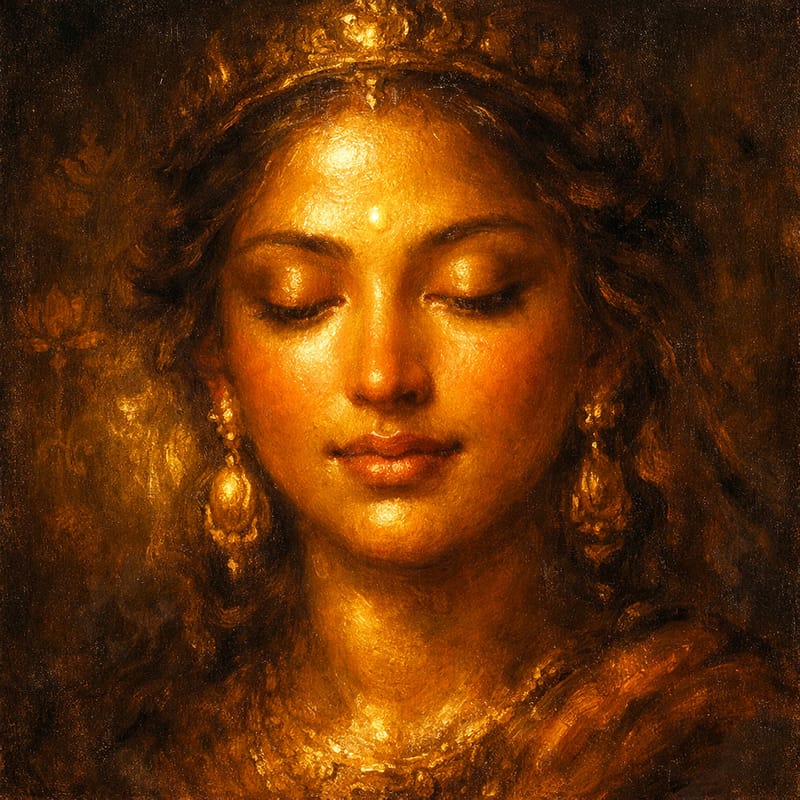
Swadhishthana Mantra for Sacral Chakra — Hindi Lyrics
Swadhishthana Mantra for Sacral Chakra is an ancient Sanskrit mantra dedicated to the water element, awakening creative expression and emotional balance through the seed sound Vam.
Vam (वं) is the primordial seed sound or bija mantra of the Swadhishthana chakra, the sacral energy center located at the base of the spine. Unlike complex mantras invoking specific deities, Vam is a single seed sound—a standalone syllable that tradition links with the water element of this chakra. The mantra's essence lies not in conceptual meaning but in its sound, which tantric tradition links with the subtle channels, or nadis, associated with emotional creativity and sensual awareness.
In Tantric and Vedic traditions, bija mantras are considered the foundational sounds from which creation emerges. Swadhishthana, meaning 'one's own place,' embodies the domain of desire, pleasure, and creative expression. While Vam stands on its own, it is linked with Varuna, the Vedic deity of water, cosmic order, and purification—reflecting the chakra's association with fluidity and flow. Tradition holds that chanting it purifies this centre, and many people find slow chanting a steadying way to reconnect with creativity and emotional balance.
To practice Vam mantra, sit in a comfortable meditative posture with spine erect. Focus your awareness at the lower abdomen, two fingers below the navel. Inhale deeply, then chant 'Vam' on the exhale, letting your attention rest on your sacral region. Traditional practice suggests 108 repetitions daily, ideally during dawn hours. Visualization of an orange lotus with six petals, glowing with warm light, enhances the mantra's effect. Consistent practice gradually removes creative blocks, emotional stagnation, and restores vital life force.
Curated by The Mahakatha Team · Original Composition: Mahakatha · Lyric: Traditional / Shakta
Swadhishthana Mantra for Sacral Chakra
Chakra · Preview · 2:00
Preview ended
Ancient sounds for transformation, carried across 3,000 years.
Get the full version — plus 275 more ancient chants. 80% OFF today only.
Get Ancient Chants Bundle — 80% OFF →3000+ happy customers · Instant download · All devices
2.2M people trust Mahakatha
Chant offline with daily reminders — Get the Mahakatha app
Lyrics
वं
वं
स्वाधिष्ठान (त्रिक) चक्र का बीज मंत्र, जो संस्कृत मूल 'वं' से उत्पन्न है जिसका अर्थ है 'गति करना' या 'इच्छा करना', जल तत्व, सृजनात्मकता और यौन ऊर्जा से संबंधित है।
How to Chant Swadhishthana Mantra for Sacral Chakra
- 1
Find a quiet, clean space
Sit in a comfortable, undisturbed environment. Face east or north if possible. You may light incense or a candle to set a contemplative atmosphere.
- 2
Settle into a comfortable posture
Sit cross-legged on the floor or upright in a chair. Keep the spine erect and place the hands on the knees with palms facing upward.
- 3
Take three cleansing breaths
Inhale slowly through the nose, hold briefly, and exhale completely. Repeat three times to calm the mind and prepare for mantra recitation.
- 4
Begin chanting Swadhishthana Mantra for Sacral Chakra
Chant the mantra clearly and with devotion — aloud, in a whisper, or silently. Use a mala (108 beads) to count repetitions. Aim for a consistent, unhurried rhythm throughout the session.
- 5
Rest in stillness
After completing your chanting, sit quietly for two to five minutes. Allow the vibration of the mantra to settle within. Close the practice with a moment of gratitude.
Benefits of Swadhishthana Mantra for Sacral Chakra
-
Traditionally chanted to encourage creative expression and artistic potential, linked in yoga with the sacral chakra
Source: Tantric philosophy and chakra system texts
-
Restores emotional balance and enhances pleasure, sensuality, and intimate relationships through harmonized water element energy
Source: Traditional Kundalini yoga practice
-
Builds inner strength, confidence, and willpower by stabilizing the foundational life force (apana vayu) governing lower body vitality
Source: Yoga Sutras and chakra activation texts
-
Traditionally believed to purify the subtle channels (nadis), and slow chanting can leave you feeling calmer and refreshed
Source: Tantric healing practices
-
Enhances mental clarity and emotional resilience by dissolving fear and shame patterns stored in this chakra center
Source: Contemporary chakra psychology and Vedic healing
Story & Symbolism
The bija mantra system, including Vam, emerged from the meeting of Vedic sound traditions and Tantric philosophy during the medieval period (8th-16th centuries CE). While the ancient Vedas contained primordial sound teachings and recognized the power of sacred syllables, the systematized correspondence between specific mantras and chakras crystallized in medieval Tantric texts. The Sat-Chakra-Nirupana, written by Swami Swatmarama in the 16th century, provided the foundational blueprint for modern chakra-mantra practice. Vam's assignment to Swadhishthana reflects the traditional belief that sacred sound shapes the subtle body and consciousness itself.
Vam is traditionally associated with Varuna, the Vedic lord of waters and cosmic order, which is why it is paired with Swadhishthana—the water-element chakra linked with emotional flow and creative generation. In Kashmir Shaivism and tantric philosophy, Vam represents the creative power (Shakti) condensing into form. The mantra reflects the traditional principle that sound precedes form; by chanting Vam, practitioners seek to connect with the cosmic creative power behind all forms of expression and desire. The mantra's effectiveness lies in its ability to purify and activate the apana vayu (downward life force), awakening dormant creative power.
Today, the Vam mantra is still taught in Kundalini yoga lineages, contemporary chakra practices, and other yoga traditions. Teachers passing this mantra maintain its sacred integrity while making it accessible to modern seekers worldwide. Whether practiced in ashrams, meditation centers, or private homes, Vam chanting carries forward a long tradition of wisdom—a sound practice kept alive across cultures and generations. This continuity means that each practitioner joins an ancient, living tradition of creative awakening and emotional freedom.
How to Use in Daily Life
Early Morning Chanting
Practice Vam during Brahma Muhurta (pre-dawn) when the mind is naturally clear and receptive. Chant 27-54 repetitions with full awareness on the sacral center. This sets a steady, focused tone for the entire day.
Meditation Integration
Sit in lotus or comfortable pose, spine erect. Close your eyes, draw awareness to two fingers below the navel. Chant Vam on the exhale, visualizing warm orange light expanding. Practice 108 repetitions for deep activation and creative unblocking.
Creative Work Sessions
Before painting, writing, dancing, or any creative endeavor, chant Vam 21 times to clear blocks and activate creative flow. This primes the sacral chakra, allowing inspiration to move freely through your artistic expression.
Evening Emotional Release
End your day by chanting Vam 27-54 times to process emotional residue and restore balance. This clears stagnant energy, supporting healthy sleep and allowing creative solutions to emerge during dreams.