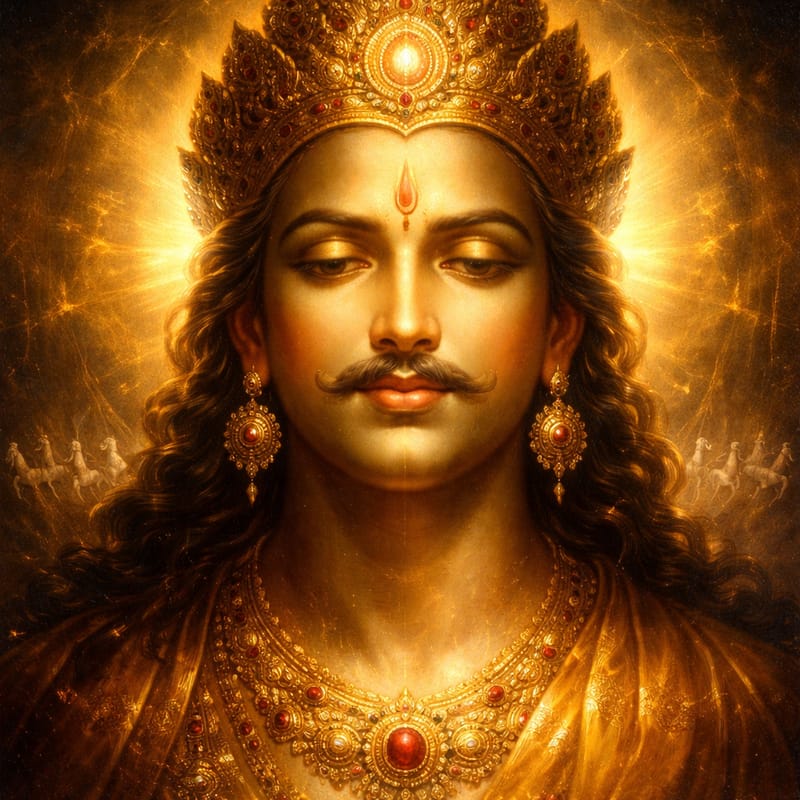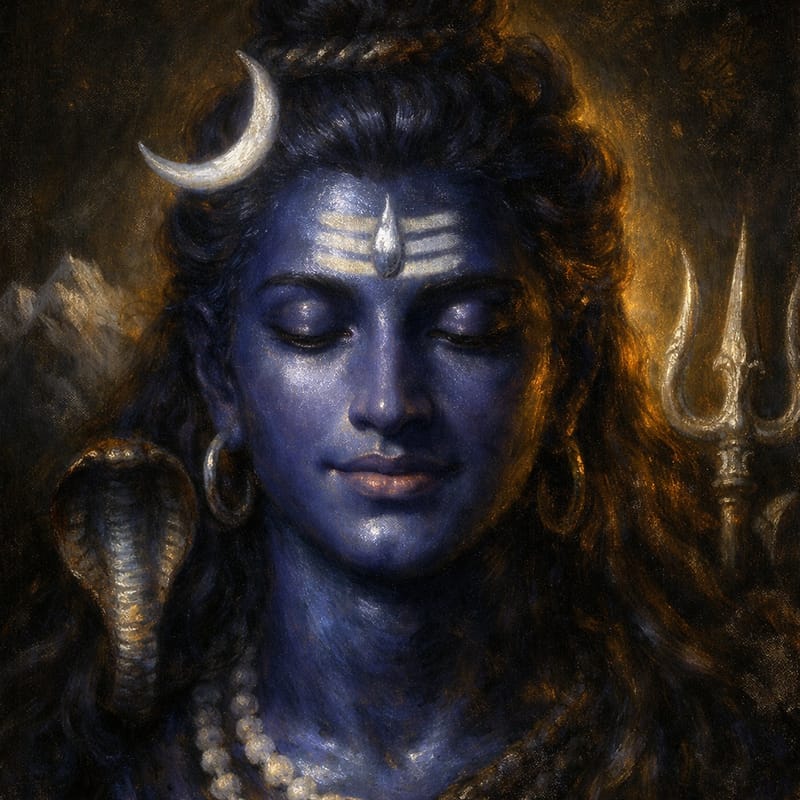


Surya Dev is the sun god of the Hindu tradition. He is the one god we can see every morning. The Rig Veda sings of him crossing the sky in a chariot drawn by seven horses. People offer him water at sunrise. He is honoured at Konark and Modhera and in festivals like Chhath and Pongal.
Who is Surya Dev?
Surya is the sun as a god. Dev simply means god. Many call him the pratyaksha devata, which means the god you can see with your own eyes.
Every other deity is met in a story or an image. Surya is met at dawn. He lights the fields and the rooftops and the faces of everyone who steps outside.
In the Puranas he is the son of the sage Kashyapa and of Aditi, the mother of the gods. One of our Surya mantras calls him Kaashya Peyam, the son of Kashyapa.
Aditya
The son of Aditi. The Adityas are a family of shining gods in the Vedas.
Ravi
One of his most common names. Sunday is called Ravivar after it.
Bhaskara
The maker of light. The name appears in his Gayatri mantra.
Divakara
The maker of the day. Day begins when he rises.
Savitr
The sun as the power that stirs all life awake. The Gayatri Mantra is a prayer to Savitr.
Mitra
The friend. The first name chanted in Surya Namaskar.
Stories of Surya Dev
These are stories. They are told in many versions. Each holds a little of the sun's warmth.
Sanjna and her shadow
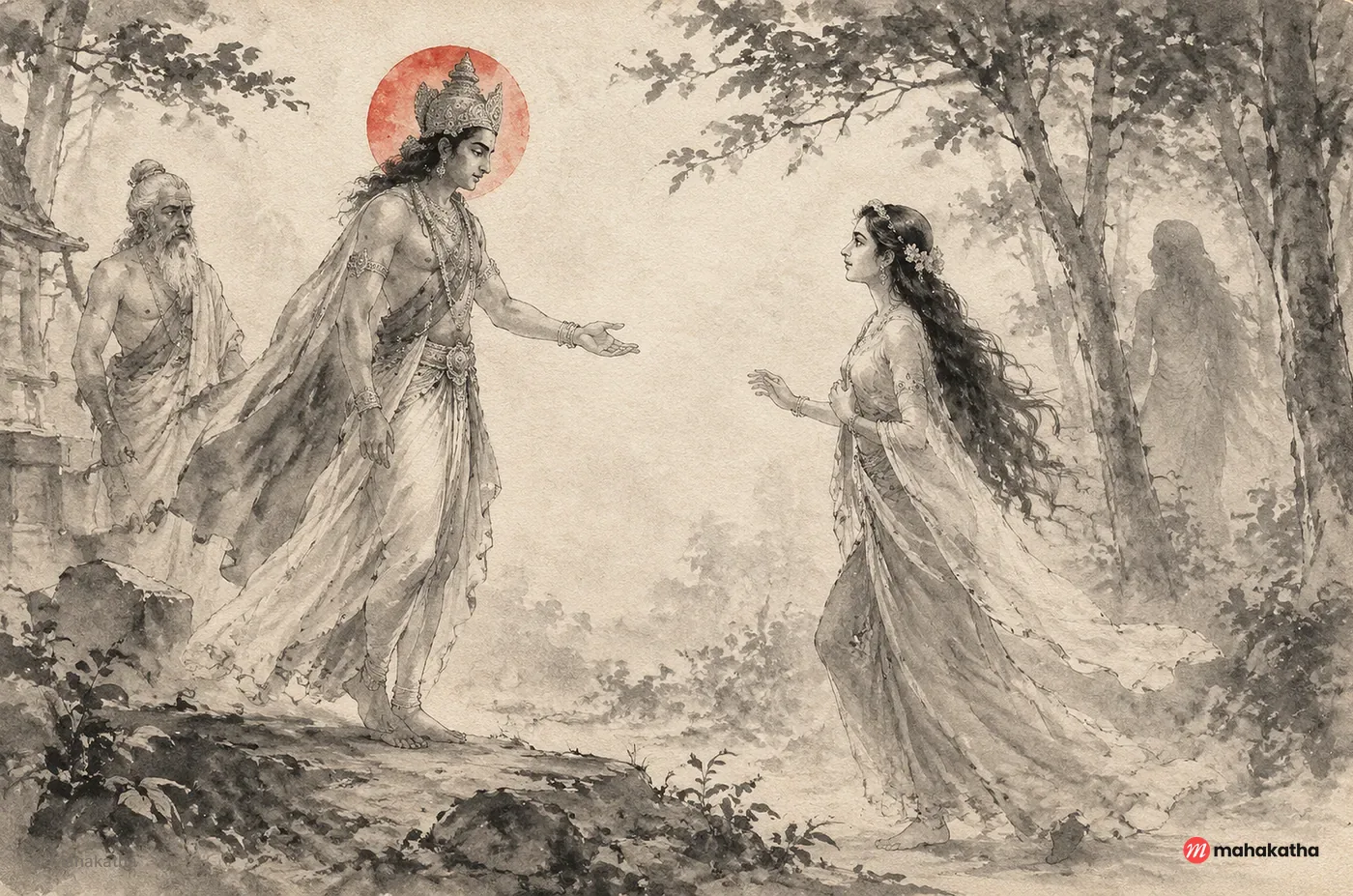
Surya married Sanjna, the daughter of Vishwakarma the divine builder. She could not bear his blazing heat. So she made a shadow woman named Chhaya to take her place and went away. Chhaya became the mother of Shani. When Surya learned the truth he went to bring Sanjna home. Vishwakarma trimmed a little of his brightness so they could be together.
Hanuman and the fruit in the sky
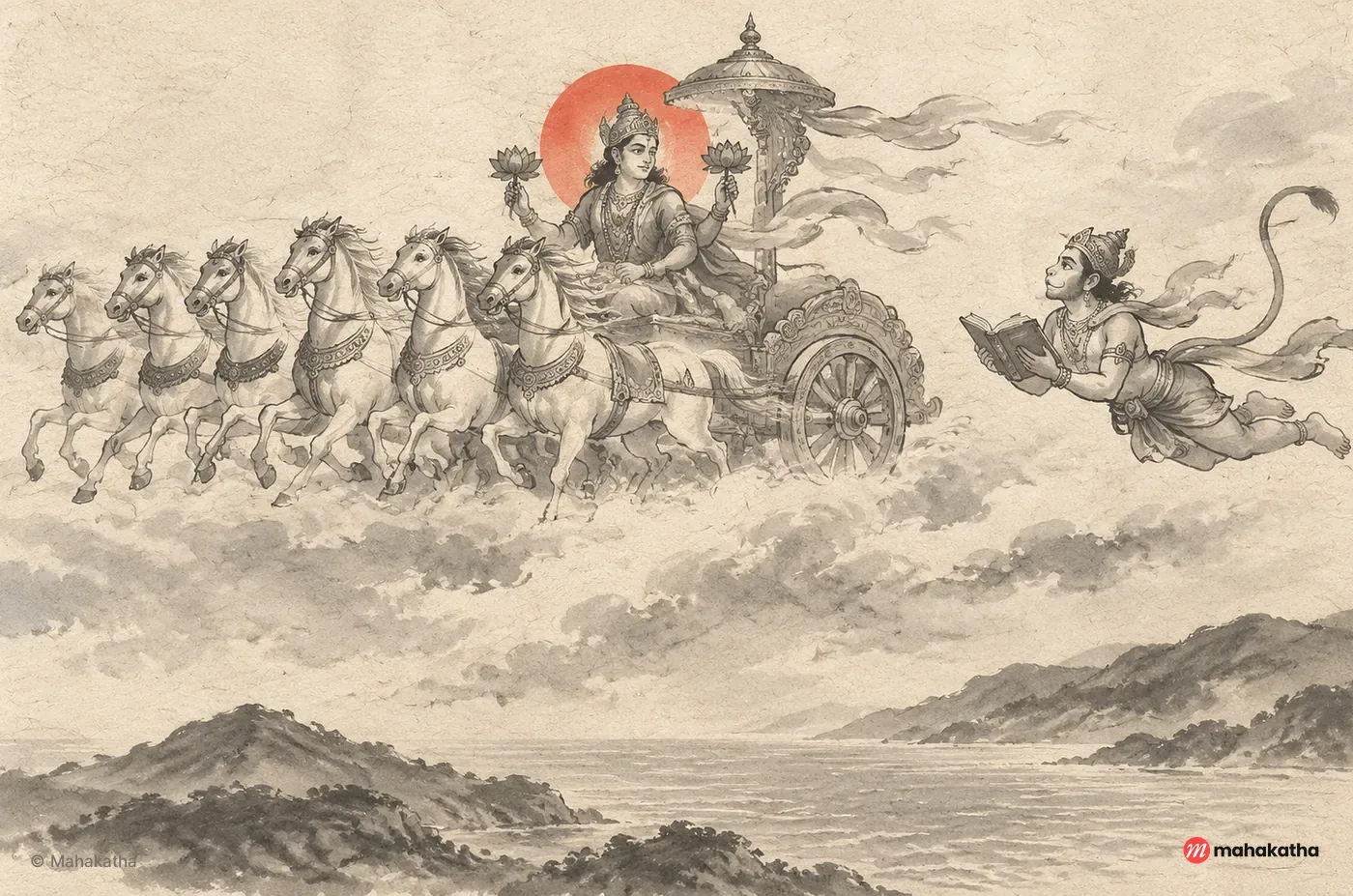
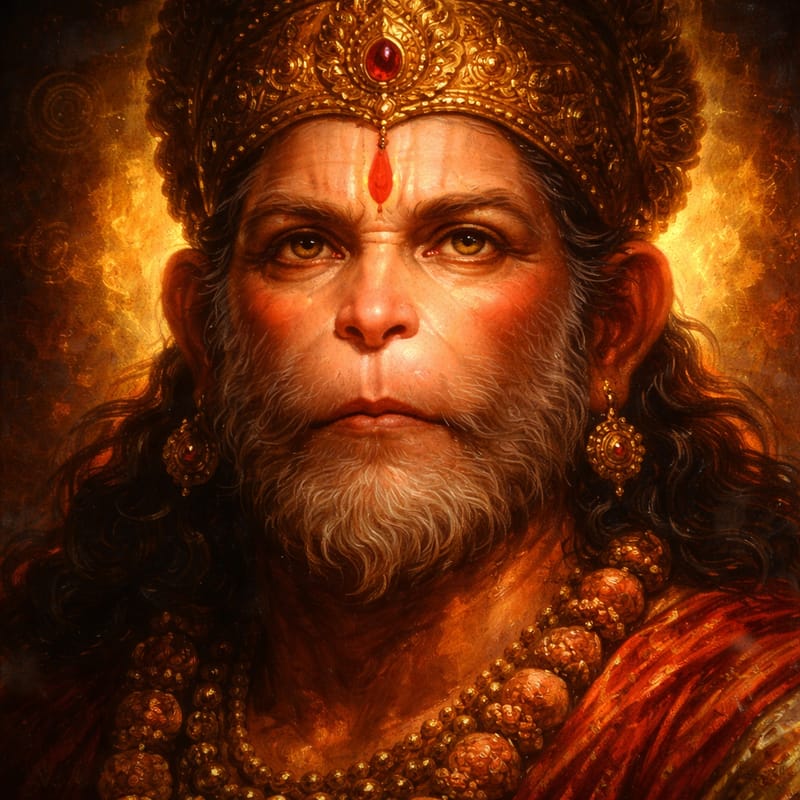
As a baby Hanuman saw the rising sun and thought it was a ripe fruit. He leapt into the sky to eat it. Indra struck him down with his thunderbolt. Later Hanuman became Surya's student. The story says he learned while flying beside the sun's chariot all day.
Karna, son of the sun
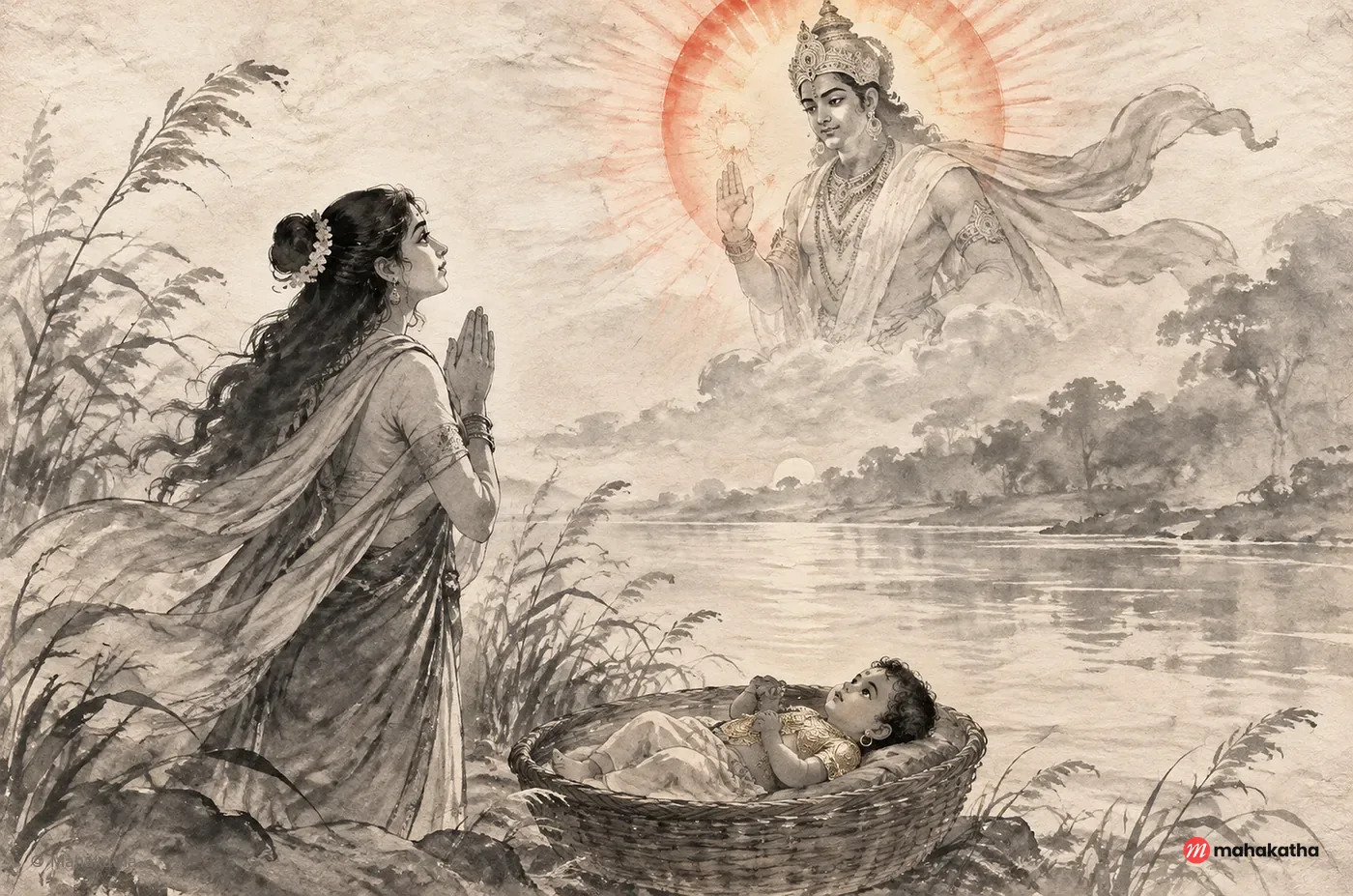
In the Mahabharata young Kunti is given a mantra to call any god. She tries it on the sun and Surya appears. Their son Karna is born with golden armour and earrings. He grows up to be one of the most loved and most tragic heroes of the epic.
Rama and the hymn before battle
The Ramayana tells of Rama weary on the battlefield before he faces Ravana. The sage Agastya teaches him the Aditya Hridayam, a hymn to the sun. Rama chants it and finds his strength again.
The bowl that never emptied
In their forest years the Pandavas had many guests to feed. Yudhishthira prayed to Surya. The story says the sun god gave him the Akshaya Patra. It was a vessel that never ran out of food for the day.
How Surya worship grew over time
Surya is one of the oldest gods of India. His worship has risen and changed shape many times.
The Vedic hymns
The Rig Veda has hymns to Surya and to Savitr, the sun who wakes the world. It sings of his chariot drawn by seven horses. Mitra and Pushan are other Vedic faces of the sun.
The epics
In the Ramayana and the Mahabharata Surya is a living presence. Rama belongs to the Suryavamsha, the dynasty of the sun. Karna is his son.
The Puranas
The Puranas tell of his family and his chariot in detail. The Saura tradition held the sun as the highest god. It became one of the old streams of Hindu worship.
Images and temples
Early sculptures from the north sometimes show Surya in boots and a long coat. Scholars see this as a sign of contact with Central Asia. Many of the great sun temples that survive were built between about the 8th and 13th centuries.
Today
Sun temples are fewer now. Yet Surya is honoured every day with the morning offering of water. He sits at the centre of the Navagraha, the nine planets of Indian astrology. Surya Namaskar has carried his name into yoga classes around the world.
Surya across India: North and South, East and West
The same sun rises over all of India. Each region greets it in its own way.
North
In Bihar and eastern Uttar Pradesh Chhath is the great festival of the sun. In Kashmir the ruins of Martand still look over the valley. Punjab lights the bonfires of Lohri as the season turns toward longer days.
East
Odisha holds Konark, the most famous sun temple in India. In Assam Magh Bihu marks the same turn of the sun as Sankranti. In Bengal pilgrims bathe at Gangasagar where the Ganga meets the sea.
South
Tamil Nadu gives thanks to the sun at Pongal. The first pot of new rice is boiled until it spills over. Andhra Pradesh has the old sun temple at Arasavalli. At Tirumala Ratha Saptami brings a day of processions.
West
Gujarat has the sun temple of Modhera. On Uttarayan the sky over Gujarat fills with kites. In Maharashtra people share til-gul made of sesame and jaggery. They ask each other to speak sweetly as they give it.
Beyond India
Chhath is kept wherever families from Bihar have settled. The Terai of Nepal keeps it with great devotion. For a few days rivers and lakes abroad become ghats.
Sun temples across India
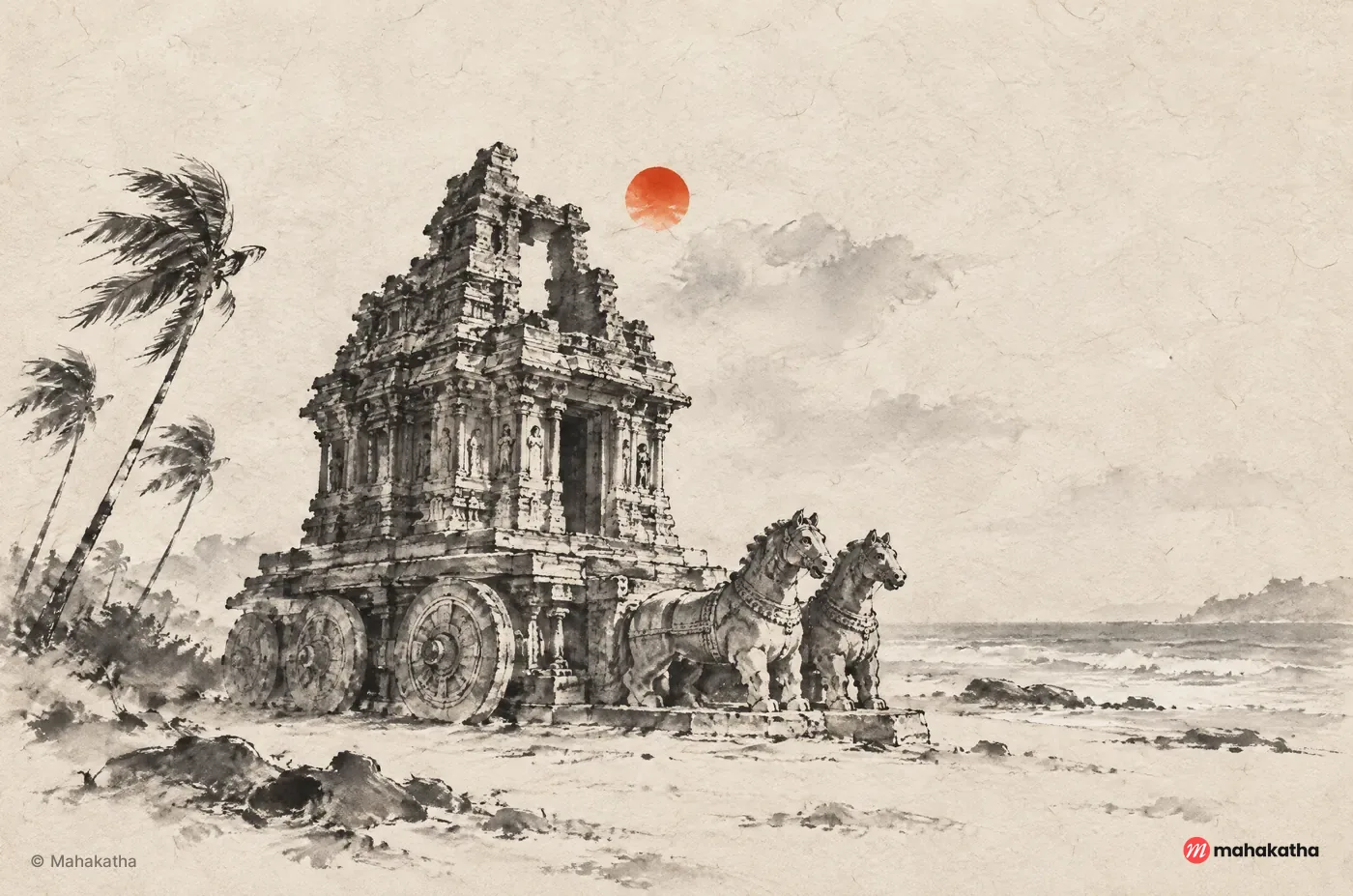
Many great sun temples stand in ruins today. Even in ruin they are full of light.
Konark Sun Temple, Konark (Odisha)
Built in the 13th century as a giant stone chariot for the sun. It has twelve pairs of carved wheels and seven horses. It is a UNESCO World Heritage Site.
Modhera Sun Temple, Modhera (Gujarat)
Built in the early 11th century under the Solanki kings. A great stepped tank called Surya Kund lies before it. Its walls are thick with carvings.
Martand Sun Temple, near Anantnag (Jammu and Kashmir)
Ruins of an 8th-century temple on a high plateau. Even broken it shows the grandeur of old Kashmir.
Suryanar Kovil, near Kumbakonam (Tamil Nadu)
A Navagraha temple where Surya is the main deity. The other eight planets have their own shrines around him.
Arasavalli Sun Temple, Srikakulam (Andhra Pradesh)
One of the oldest living sun temples in the South. Twice a year the early morning rays reach the feet of the image.
Katarmal Sun Temple, near Almora (Uttarakhand)
A cluster of old stone shrines high in the Kumaon hills. The main shrine faces the rising sun.
Deo Sun Temple, Deo (Bihar)
A great centre for Chhath. Huge crowds gather here to offer water to the setting and rising sun.
Surya's symbols and what they mean
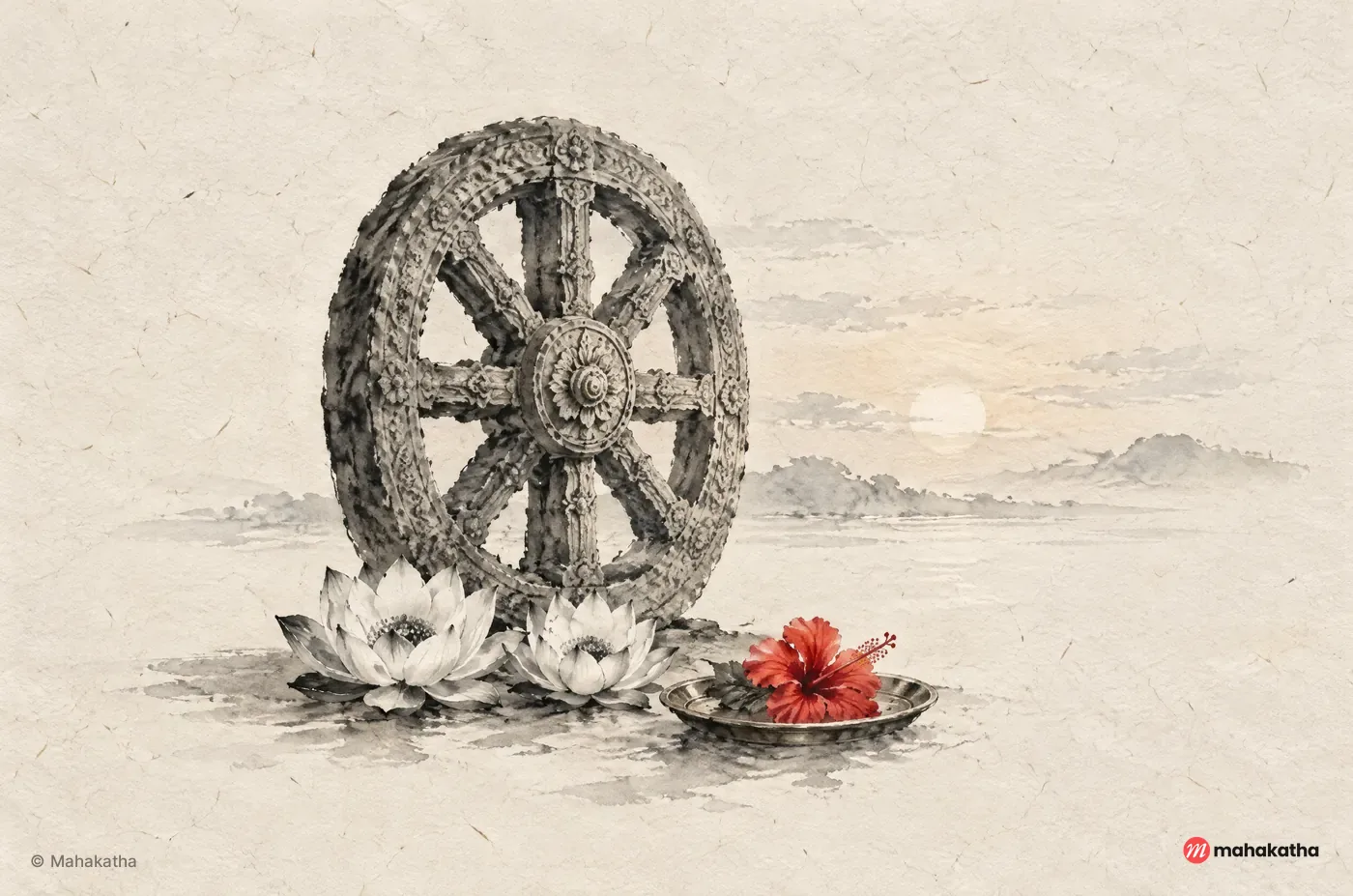
His image is full of movement. Everything about it says the light keeps going.
Seven horses
Seven horses pull his chariot. Many read them as the seven colours of light or the seven days of the week.
Aruna the charioteer
His charioteer Aruna is the red glow of dawn. Light always comes in gently before it blazes.
The single wheel
One old Vedic image gives his chariot a single wheel. Time turns on one steady axle.
Two lotuses
In many images Surya holds a lotus in each hand. The lotus opens when the sun rises.
The red hibiscus
Our Japa Kusuma mantra compares him to a red hibiscus. Red flowers are a favourite offering to him.
Sunday
Sunday is Ravivar, Surya's day. Many keep it for prayer to the sun.
Surya mantras to chant
These mantras come from our library. Each line is quoted as it is sung on the recording.
Om Japa Kusuma Mantra
“Om Japa Kusuma Sankaasham / Kaashya Peyam Mahaa Dyutim”. It greets the sun as bright as a hibiscus. It calls him the son of Kashyapa.
Surya Gayatri Mantra
“om bhaskaraya vidmahe / mahatejaya dhimahi / tanno surya prachodayat”. A Gayatri that asks the radiant one to inspire the mind.
Surya Mantra
“Om Hraam Hreem Hroum Sah / Suryaaya Namah”. A seed mantra used in the worship of the nine planets.
Surya Namaskar Mantra
“Om Mitraya Namaha / Om Ravaye Namaha”. These are names of the sun said with each round of the sun salutation.
Surya Ashtakam
“adideva namastubhyam prasida mama bhaskara |”. Eight verses that greet him as the first god.
Adityasya Namaskaran Mantra
“adityasya namaskaran ye kurvanti dine dine”. An old verse in praise of saluting the sun each day. Our ancestors linked it with strength and a bright mind.
Surya Aarti
A sung offering of light. Many families sing it at the end of Sunday worship.
Surya Kavach
A kavach is a prayer of protection. This one asks the sun to guard the devotee.
Festivals of the sun
India's sun festivals follow the turning of the year. Most of them are also harvest festivals.
Chhath Puja
Days of deep devotion in Bihar, Jharkhand and eastern Uttar Pradesh. Devotees fast and stand in rivers and ponds. They offer arghya to the setting sun and then the rising sun. Arghya means an offering of water. Families make thekua, a sweet of wheat and jaggery. Many also pray to Chhathi Maiya, a mother goddess of the festival.
Makar Sankranti
It marks the sun's move into Makara, the sign of Capricorn. People bathe in holy rivers and share sesame sweets. Gujarat flies kites for Uttarayan. Punjab lights the Lohri bonfire on the night before.
Pongal
The harvest festival of Tamil Nadu. On Thai Pongal families boil new rice with milk and jaggery under the open sky. When it bubbles over they cry Pongalo Pongal. The first share is offered to Surya.
Ratha Saptami
Tradition marks it as Surya's birthday. Many devotees bathe at dawn with arka leaves on the head. Temples take the deity out on a chariot of the sun.
Bringing Surya into your day
Surya asks for nothing but a few minutes of morning. He is already at your window.
Offer water at sunrise
Fill a copper or steel pot with water. Face the rising sun and pour it slowly while you chant his name. Watch the light through the falling water. Never stare straight at the sun.
Chant one Surya mantra
Chant the Surya Gayatri or the Om Japa Kusuma Mantra once each morning. Our full set of Surya mantras has lyrics and meanings.
Try Surya Namaskar
Surya Namaskar is a flowing set of twelve postures. Each round can carry one of twelve names of the sun. Learn it from a good teacher and move at your own pace.
Keep Sunday simple
Some people keep Sunday for the sun. They eat plain food and spend a few quiet minutes in the morning light.
Greet the turning points
Pause for one breath at sunrise and sunset. Thank the light for the day that has come and gone.
What Surya can teach us
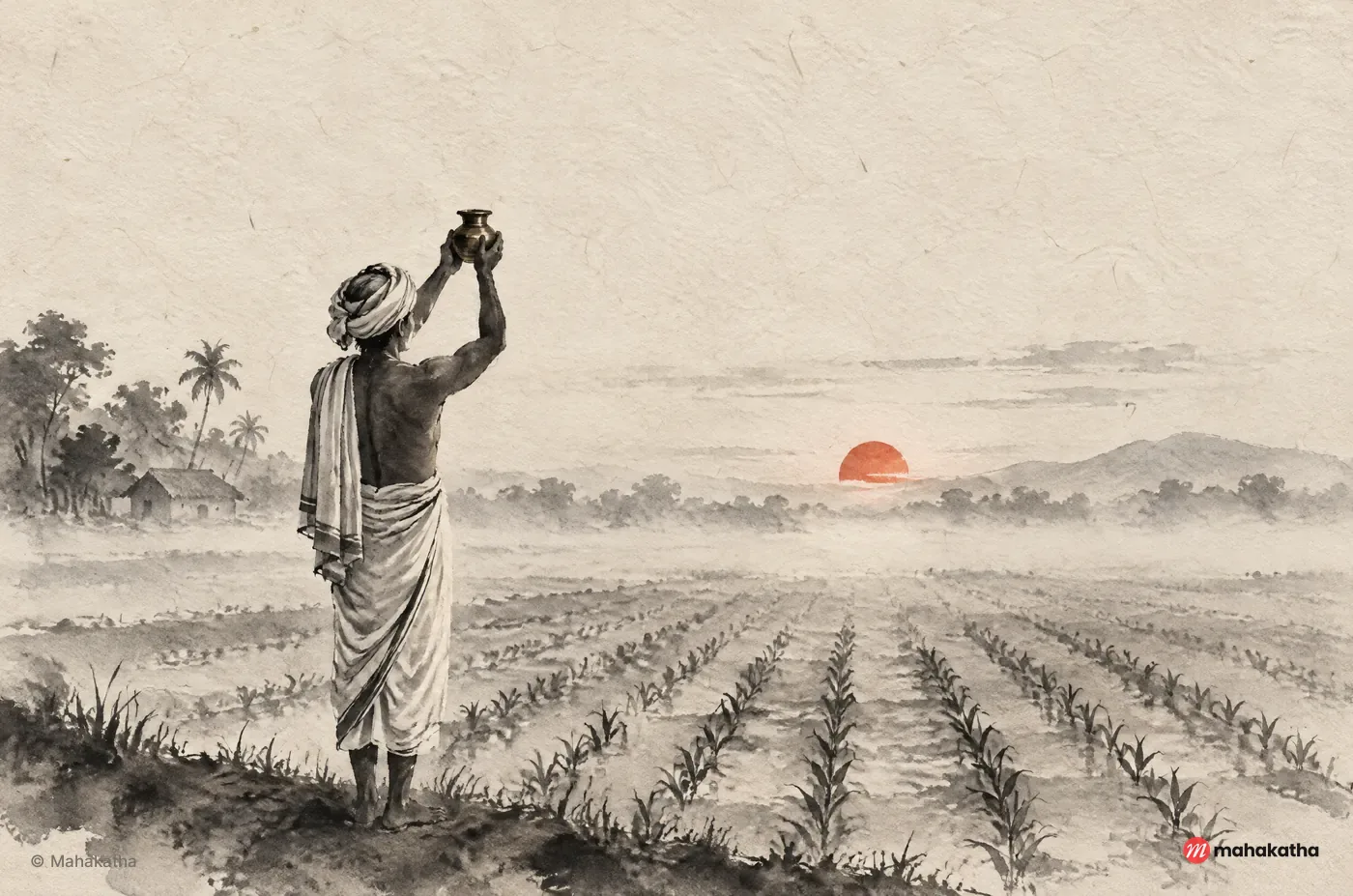
The sun rises every day. It does not ask if we deserve it. It shines on the farmer and the king alike. That is a kind of love we can learn.
When a day goes badly the sun still sets. Tomorrow it rises again. Hard seasons pass in the same way. You do not have to fix everything tonight.
The Rig Veda calls the sun the eye of Mitra and Varuna. An eye sees and does not hide. Living in his light can mean living without secrets. Be the same person in the dark as in the day.
There is an inner sun too. Yogis speak of a light in the heart. Close your eyes after you greet the morning. Feel the warmth on your face and the warmth you carry within.
Questions people ask
Who is Surya Dev?
Surya Dev is the sun god of the Hindu tradition. He is the god we can see each day. The Rig Veda sings of his chariot drawn by seven horses. In the Puranas he is the son of Kashyapa and Aditi. He is the father of Karna, Yama and Shani in the old stories.
Which day is for Surya Dev?
Sunday is Surya's day. It is called Ravivar after his name Ravi. Many devotees offer water to the rising sun on Sunday. Some keep a simple meal or a fast. Others sing the Surya Aarti or chant his mantras at dawn. Any morning is a good time to greet him.
How do you offer water to the sun?
This offering is called arghya. Fill a copper or steel pot with clean water. Stand facing the rising sun. Raise the pot and pour the water slowly in a thin stream. Chant a Surya mantra or simply his name as you pour. Look at the light through the water and never straight at the sun.
What is the Konark Sun Temple?
The Konark Sun Temple stands in Odisha near the eastern coast. It was built in the 13th century as a giant stone chariot for Surya. It has twelve pairs of carved wheels and seven horses. It is a UNESCO World Heritage Site and one of the great works of Indian art.
Why is Chhath dedicated to the sun?
Chhath is a prayer of thanks to Surya and to Chhathi Maiya. Devotees fast and stand in water at dusk and dawn. They offer arghya to the setting sun and then the rising sun. It honours the light that ripens the harvest. It is most loved in Bihar and eastern Uttar Pradesh.
What is Surya Namaskar?
Surya Namaskar means salutation to the sun. It is a flowing set of twelve postures done in rounds. Each round can carry one of twelve names of the sun, such as Mitra and Ravi. The form taught widely today took shape in the early 20th century. Learn it from a good teacher.