

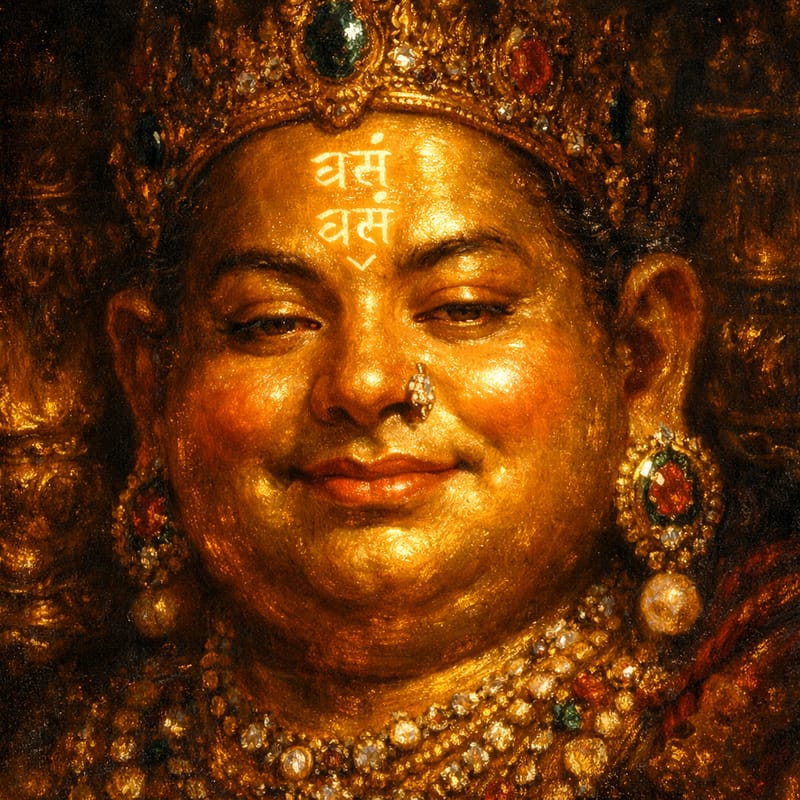
Kubera Beeja Mantra — Tamil Lyrics
The Kubera Beeja Mantra consists of the sacred seed sound 'Dhham' (ध्हं), repeated three times. In Vedic tradition, beeja (बीज) means 'seed'—the primordial, concentrated sound containing the essence of a deity's power. 'Dhham' is the seed syllable (beeja) of Kubera, the Vedic god of wealth, treasures, and worldly abundance. In tradition, this single syllable is associated with prosperity and the flow of wealth.
Kubera holds a unique position in Hindu cosmology as the regent lord (Lokapala) of the northern direction and guardian of all earthly riches. According to the Puranas, he is the divine accountant of karma and wealth distribution. Devotees chant his beeja mantra as a prayer for prosperity, and as a way to let go of inner worry and hesitation around abundance. The repetition of 'Dhham' is a simple, direct way of invoking Kubera's blessings.
Practitioners typically chant this mantra 108 times using a mala bead string, best performed during early morning (Brahma Muhurta) or on Fridays, traditionally associated with material fortune. Begin with focused intention, visualizing golden light filling your space. Maintain a steady rhythm and sincere heart-centered approach. Even 10-15 minutes of daily practice, combined with gratitude and ethical action, can anchor prosperity consciousness into your life and environment.
Curated by The Mahakatha Team · Original Composition: Mahakatha · Lyric: Traditional / Vaishnava
Kubera Beeja Mantra
Kubera · Preview · 2:00
Preview ended
Ancient sounds for transformation, carried across 3,000 years.
Get the full version — plus 275 more ancient chants. 80% OFF today only.
Get Ancient Chants Bundle — 80% OFF →3000+ happy customers · Lifetime access · All devices
2.2M people trust Mahakatha
Chant daily with reminders — Get the Mahakatha app
Lyrics
धं
தம்
'தம்' என்பது செல்வம் மற்றும் வளத்துடன் தொடர்புடைய குபேர பகவானின் பீஜ ஒலியாகும்
How to Chant Kubera Beeja Mantra
- 1
Find a quiet, clean space
Sit in a comfortable, undisturbed environment. Face east or north if possible. You may light incense or a candle to set a contemplative atmosphere.
- 2
Settle into a comfortable posture
Sit cross-legged on the floor or upright in a chair. Keep the spine erect and place the hands on the knees with palms facing upward.
- 3
Take three cleansing breaths
Inhale slowly through the nose, hold briefly, and exhale completely. Repeat three times to calm the mind and prepare for mantra recitation.
- 4
Begin chanting Kubera Beeja Mantra
Chant the mantra clearly and with devotion — aloud, in a whisper, or silently. Use a mala (108 beads) to count repetitions. Aim for a consistent, unhurried rhythm throughout the session.
- 5
Rest in stillness
After completing your chanting, sit quietly for two to five minutes. Allow the vibration of the mantra to settle within. Close the practice with a moment of gratitude.
Benefits of Kubera Beeja Mantra
-
Traditionally chanted as a prayer to Kubera for wealth, prosperity and good fortune
Source: Tantra Tradition & Mantra Shastra
-
Can help you notice worries around wealth, a scarcity mindset, and self-limiting beliefs about abundance
Source: Traditional Tantric Practice
-
A prayer for resources, success in work, and unexpected blessings in your life
Source: Puranic Lore & Devotional Practice
-
Stabilizes finances and protects existing wealth from depletion or loss
Source: Kubera Upasana (Kubera Worship Tradition)
-
Enhances business acumen, decision-making, and recognition in professional endeavors
Source: Traditional Practice
Story & Symbolism
Kubera emerges in the Puranic narratives as one of the most important celestial administrators in Hindu cosmology. According to the Brahma Purana and Padma Purana, Kubera was initially a powerful Yaksha (nature spirit) who earned his elevated position as regent lord of the north and cosmic treasurer through ages of meditation and devotion to Lord Shiva. His transformation from a mortal being to a divine administrator reflects the Hindu principle that any entity—through discipline and spiritual practice—can attain divine status. The Puranas describe his vast treasures housed in his mythical city Alaka in the Himalayas, guarded by celestial beings. His role as 'Dhanada' (wealth-giver) and 'Dhanapati' (lord of wealth) became central to Vedic prosperity theology.
Kubera represents the cosmic principle of abundance and righteous material distribution. His iconography—depicted with a pot of gold and jewels—symbolizes not mere greed, but dharmic prosperity: wealth earned through virtue, shared generously, and used for collective welfare. In Tantric tradition, Kubera is seen as the divine intelligence that regulates the karmic distribution of resources. His beija mantra 'Dhham' distills this entire cosmology into a single seed syllable. Tantric masters recognized that each deity's essence could be compressed into a seed sound (beija), accessible to practitioners for direct communion with that divine principle. Kubera's beija became a cornerstone practice in the broader tantric wealth-consciousness tradition.
Today, the Kubera Beija Mantra is integrated into both traditional Vedic households and contemporary spiritual practice, transmitted through guru-disciple lineages and modern mantra teachers worldwide. This transmission reflects Vedic culture's pragmatic spirituality: recognizing that material well-being supports spiritual growth. The mantra has evolved from classical tantric ritual into accessible personal practice, now chanted by many devotees around the world while keeping its sacred character.
How to Use in Daily Life
Morning Invocation
Chant 108 repetitions during Brahma Muhurta (early dawn), sitting facing north. This starts your day with a prayer to Kubera and sets a clear, grateful intention before daily activities begin.
Meditative Practice
Use a mala to maintain count and rhythm. Visualize golden light emanating from your heart, expanding to fill your entire space with warmth and gratitude. Feel gratitude as if abundance has already arrived.
Before Business
Chant 21 times before important business meetings, negotiations, or big decisions. This turns your mind to Kubera's wisdom as a prayer for favorable outcomes in commercial endeavors.
Evening Practice
Conclude your day with 21 repetitions, releasing tension and worry around wealth and trusting divine abundance. This lets you end the day with thoughts of prosperity as you settle into sleep.