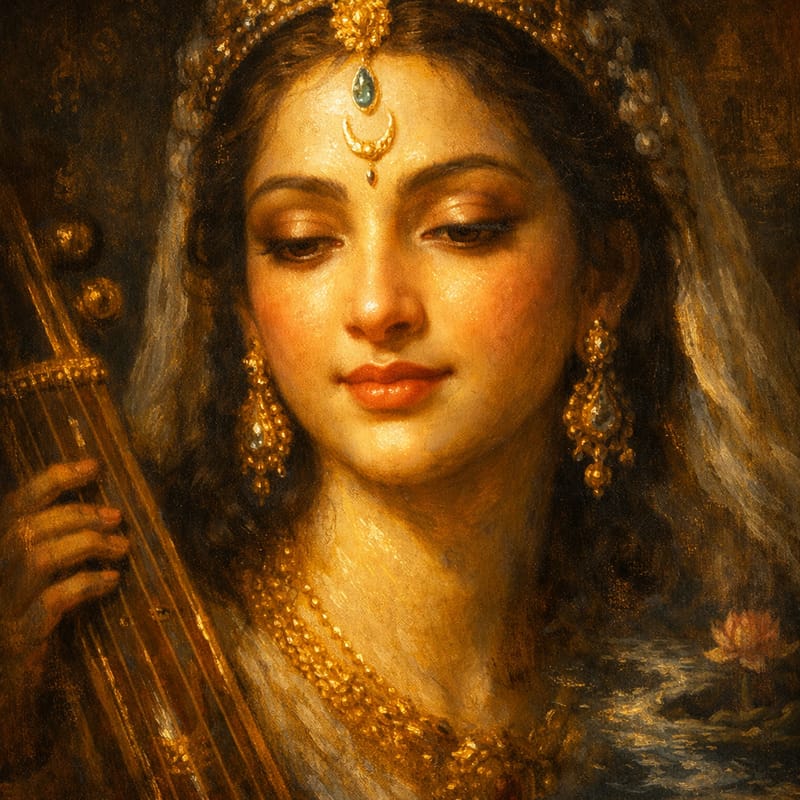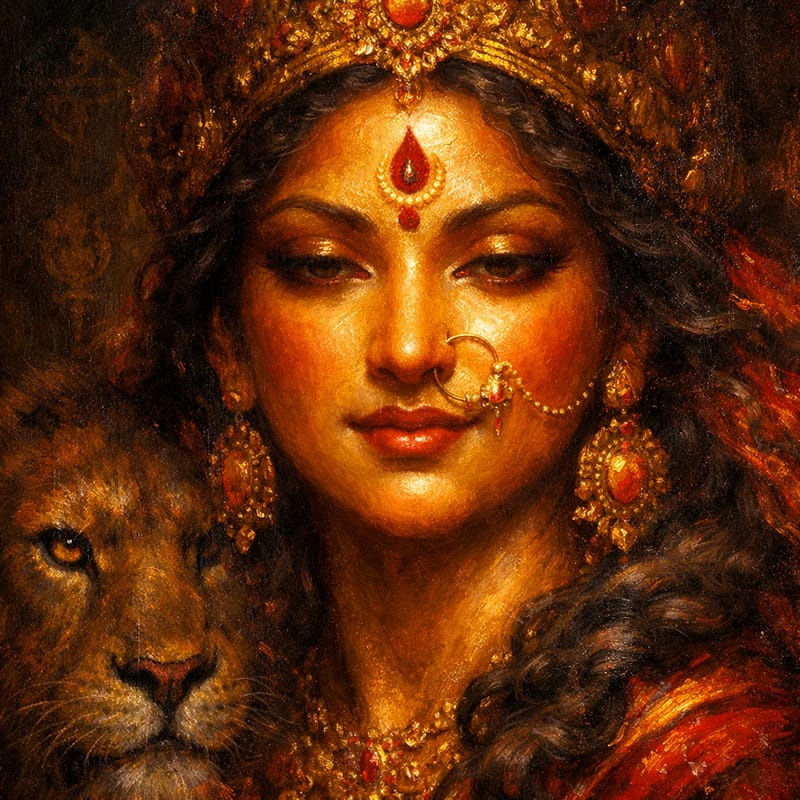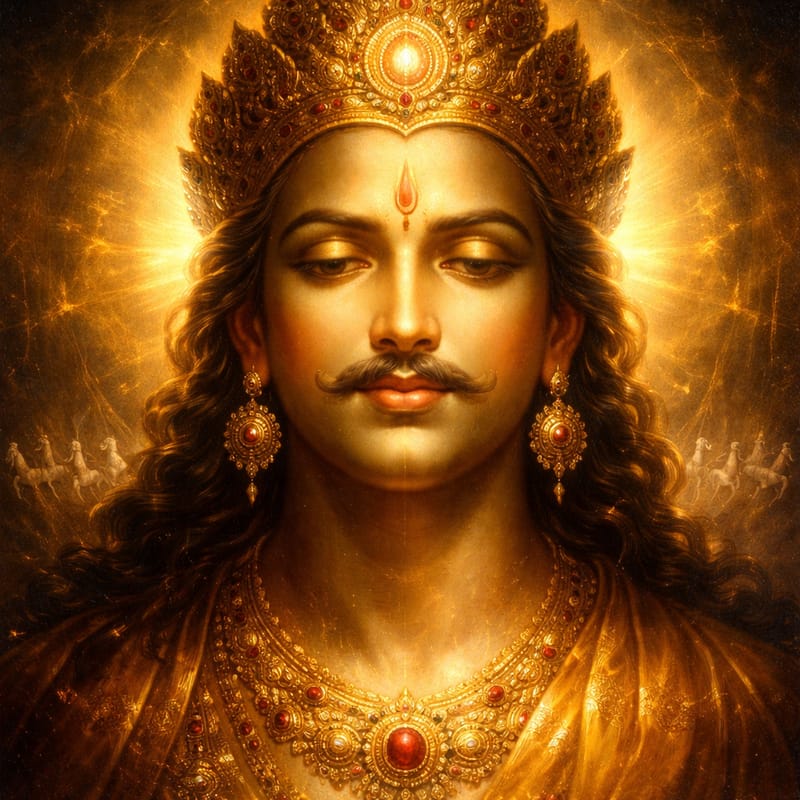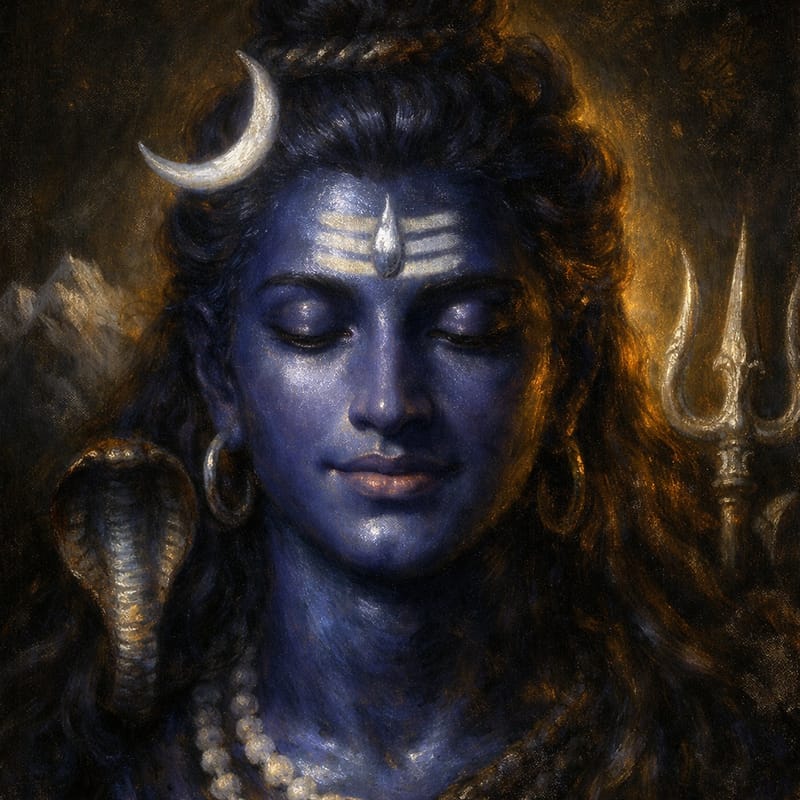


Goddess Gayatri is the Gayatri Mantra seen as a mother. She is called Veda Mata, which means the mother of the Vedas. Gayatri is also the name of an old Vedic meter of 24 syllables. The famous mantra in that meter asks the light of the sun to wake our minds. Over time the verse itself became a goddess.
Who is Goddess Gayatri?
Gayatri is three things at once. She is a meter, a mantra and a goddess. Few deities in India began life as a rhythm of sound.
A meter is the beat of a verse. The Gayatri meter has three lines of eight syllables each. The most famous verse in this meter is a prayer to the sun. People came to call that verse the Gayatri Mantra.
Slowly the verse was felt as a living presence. Devotees began to see a mother in it. She has five faces and sits on an open lotus. The name is often read as the one who protects those who sing her.
Veda Mata
The mother of the Vedas. Tradition holds that all the Vedas live within this one verse.
Savitri
She who belongs to Savitr. Savitr is the sun as the power that stirs all life awake.
Gayatri, Savitri and Saraswati
Tradition says she takes three forms through the day. She is Gayatri at dawn. She is Savitri at noon and Saraswati at dusk.
Tripada
The three-footed one. The old texts use this word for the meter and its three lines.
Gayatri Devi
The simple name used in homes and temples. Devi means goddess.
Stories of Goddess Gayatri
These are stories. They are told in more than one way. Each one shows a side of this quiet goddess.
Vishvamitra sees the mantra
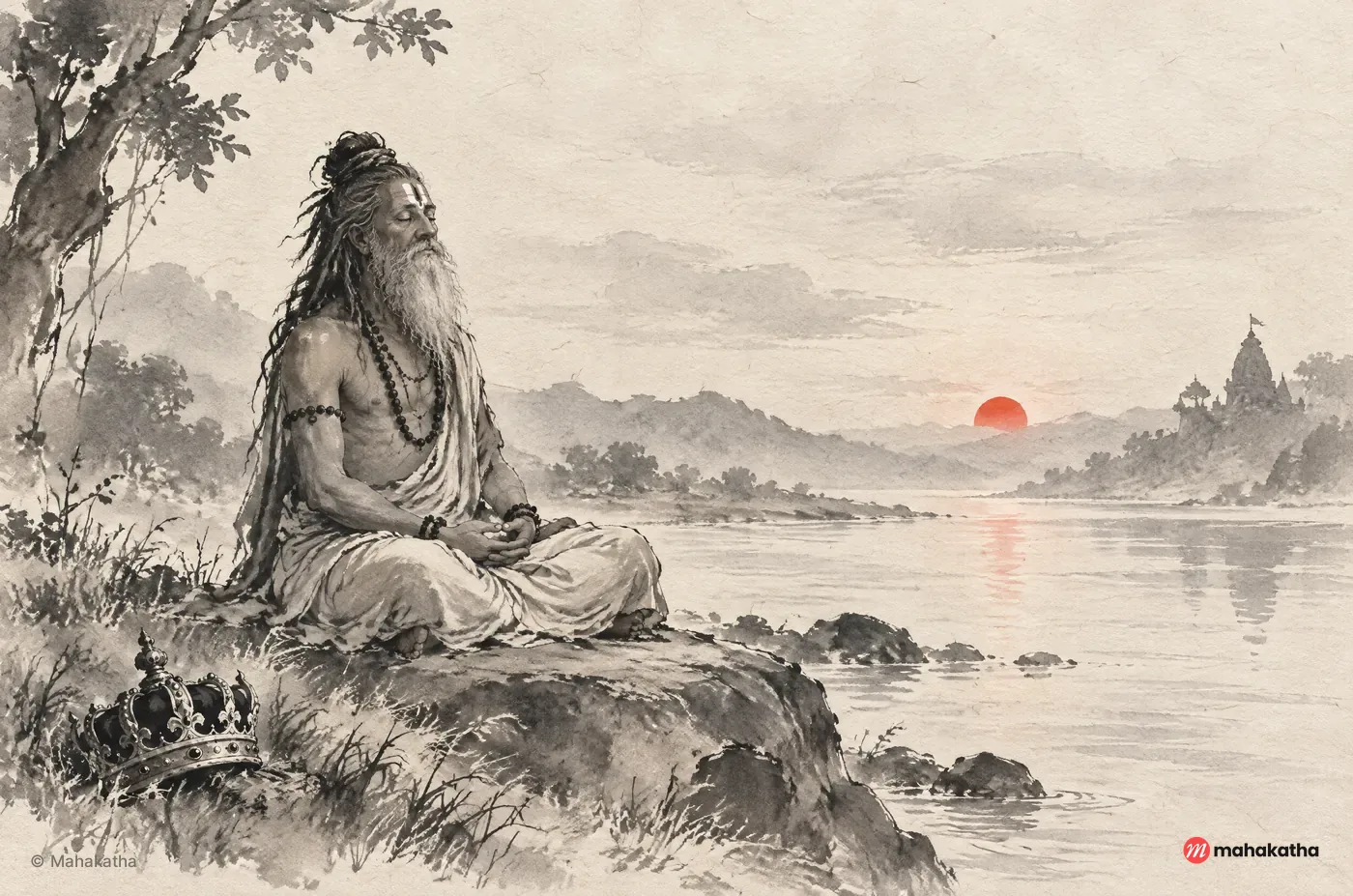
Vishvamitra was born a king. The story says he tried to take a sacred cow from the sage Vasishtha and failed. So he gave up his throne for tapas, which means fierce inner effort. After long years he became a rishi, a seer of mantras. Tradition holds that the Gayatri came to him in that stillness.
The falcon who fetched the soma
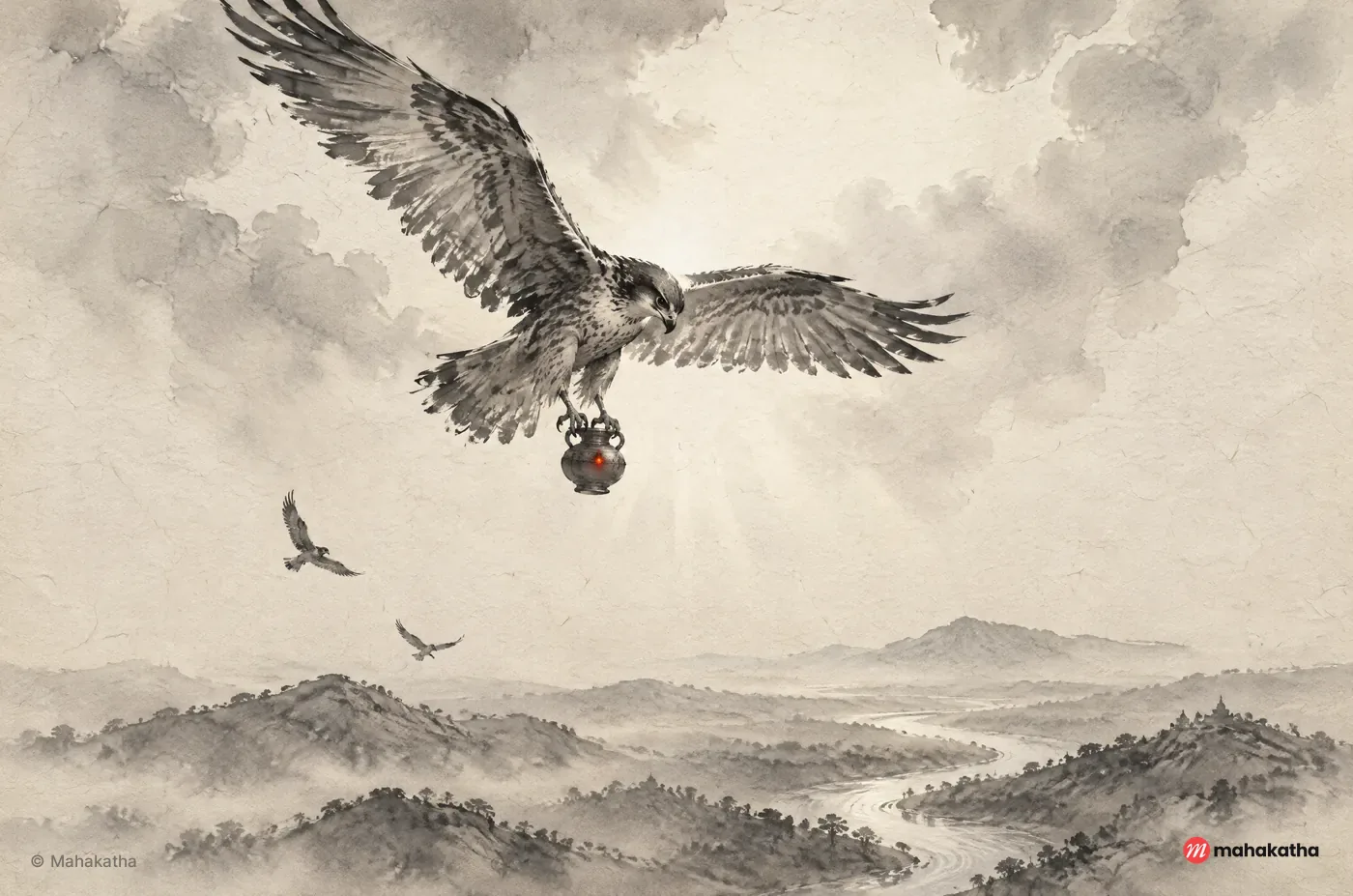
An old Vedic story tells of the meters taking the form of birds. They flew to heaven to bring back soma, the sacred drink of the gods. The others failed. Gayatri flew up as a falcon and returned with it. The story honours her as the strongest of the meters.
The bride at Pushkar
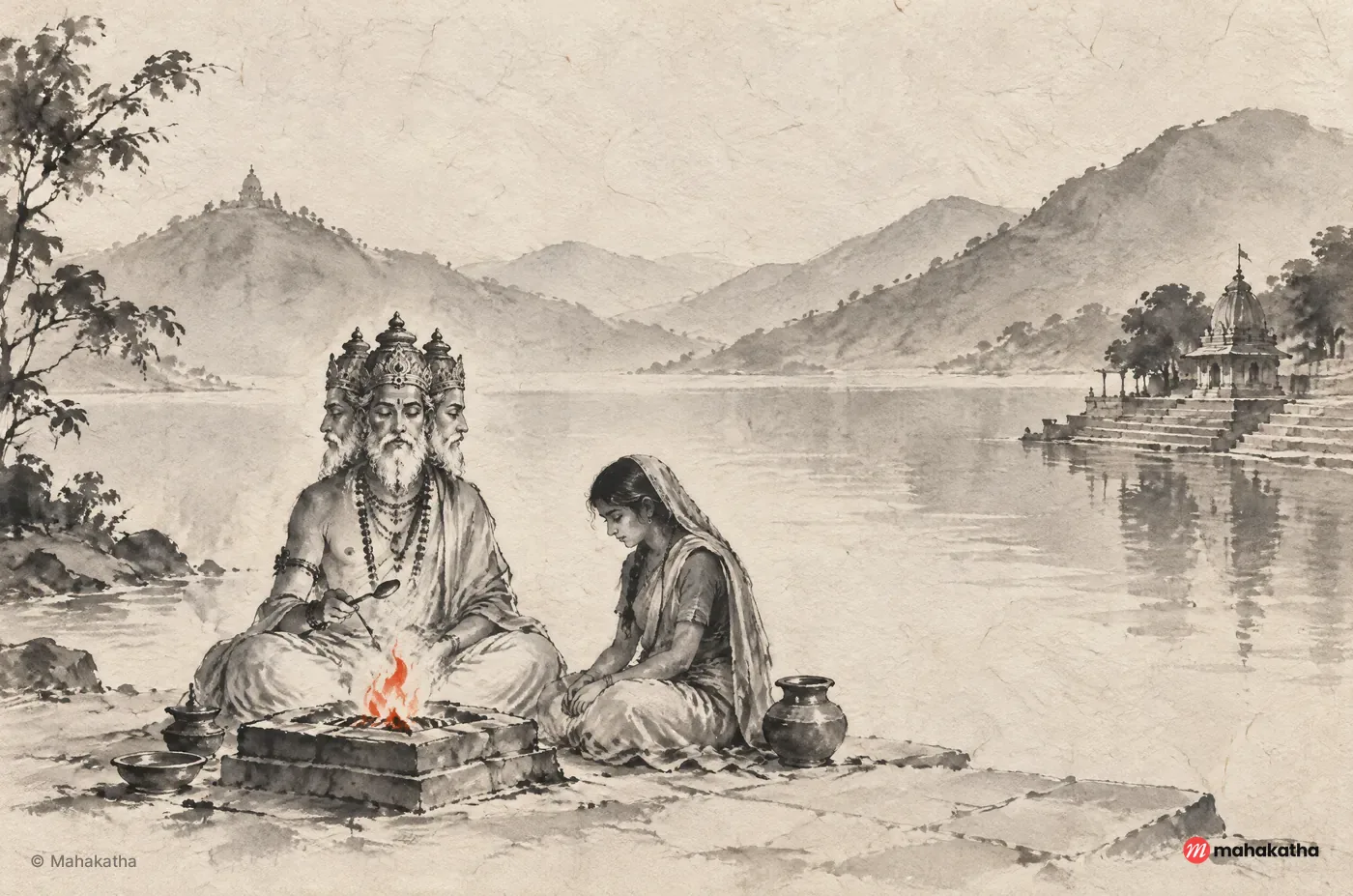
Brahma was holding a great fire ritual at Pushkar. His wife Savitri was late and the right hour was slipping away. So Brahma married Gayatri to finish the rite. Many tellings make her a cowherd girl from a nearby village. Savitri arrived hurt and spoke a curse. The story says Gayatri softened it with a blessing of her own.
Five faces of light
In her best-known image Gayatri has five faces and ten arms. Devotees link the five faces with the five elements of the world. Earth and water are there. So are fire and air and open space. Our library has a Gayatri for each of them.
Krishna's choice
In the Bhagavad Gita Krishna names the best of each kind of thing. Among meters he says he is the Gayatri. A god who chooses a meter tells us how sacred this rhythm was.
How Gayatri worship grew over time
Gayatri's story is the story of one verse. It moved from the hymn to the home and then to the whole world.
The Vedic hymns
Many Rig Veda hymns use the Gayatri meter. The best-known verse is the prayer to Savitr. It is widely cited as Rig Veda 3.62.10. That book of the Rig Veda is traditionally linked with Vishvamitra and his family.
The opening words
The words Om Bhur Bhuvah Svah are not part of the Rig Veda verse. They were added in later practice. These three words are called vyahritis. They name the earth and the sky and the heavens above.
The Upanishads
Some Upanishads reflect on the Gayatri at length. They treat it as a doorway to the whole of the Vedas. The meter became a map of the world and of the breath.
The sandhya prayer
The mantra became the heart of sandhya vandana. This is a prayer said at the meeting points of the day. Dawn and dusk are the most important. Many add noon as well.
The thread ceremony
For centuries the mantra was given in upanayana, the sacred thread ceremony. A teacher whispered it into a young student's ear. It was kept within a small circle.
The goddess takes form
Over time the verse was seen as a mother in her own right. Later hymns describe her five faces and ten arms. Painters gave her a lotus seat and a halo of sunlight.
Today
In the last century the mantra opened to far more people. Reform movements taught it to women and men of every background. Today it is chanted in homes and sung on the radio.
Gayatri across India: North and South, East and West
The same 24 syllables are chanted from the Himalaya to the sea. Each region holds them in its own way.
North
In the North the Gayatri is often a family's first prayer of the day. In Haridwar the Gayatri Pariwar teaches it to large gatherings. Its centre at Shantikunj draws seekers from many countries.
South
In the South the mantra stays close to sandhya vandana. Families keep Gayatri Japam, a day of chanting the mantra many times. It comes the day after Avani Avittam, when men renew their sacred thread.
East
In Bengal reformers of the Brahmo Samaj made the Gayatri part of their worship. They valued it as a prayer to one light.
West
Pushkar in Rajasthan keeps the story of Gayatri as Brahma's bride. Shrines on the hills around the lake honour Brahma's wives. In Gujarat and Maharashtra the mantra is a common morning chant.
Beyond India
The mantra travels with families wherever they settle. It opens many temple gatherings in Britain, Africa and the Americas.
Places linked with Goddess Gayatri
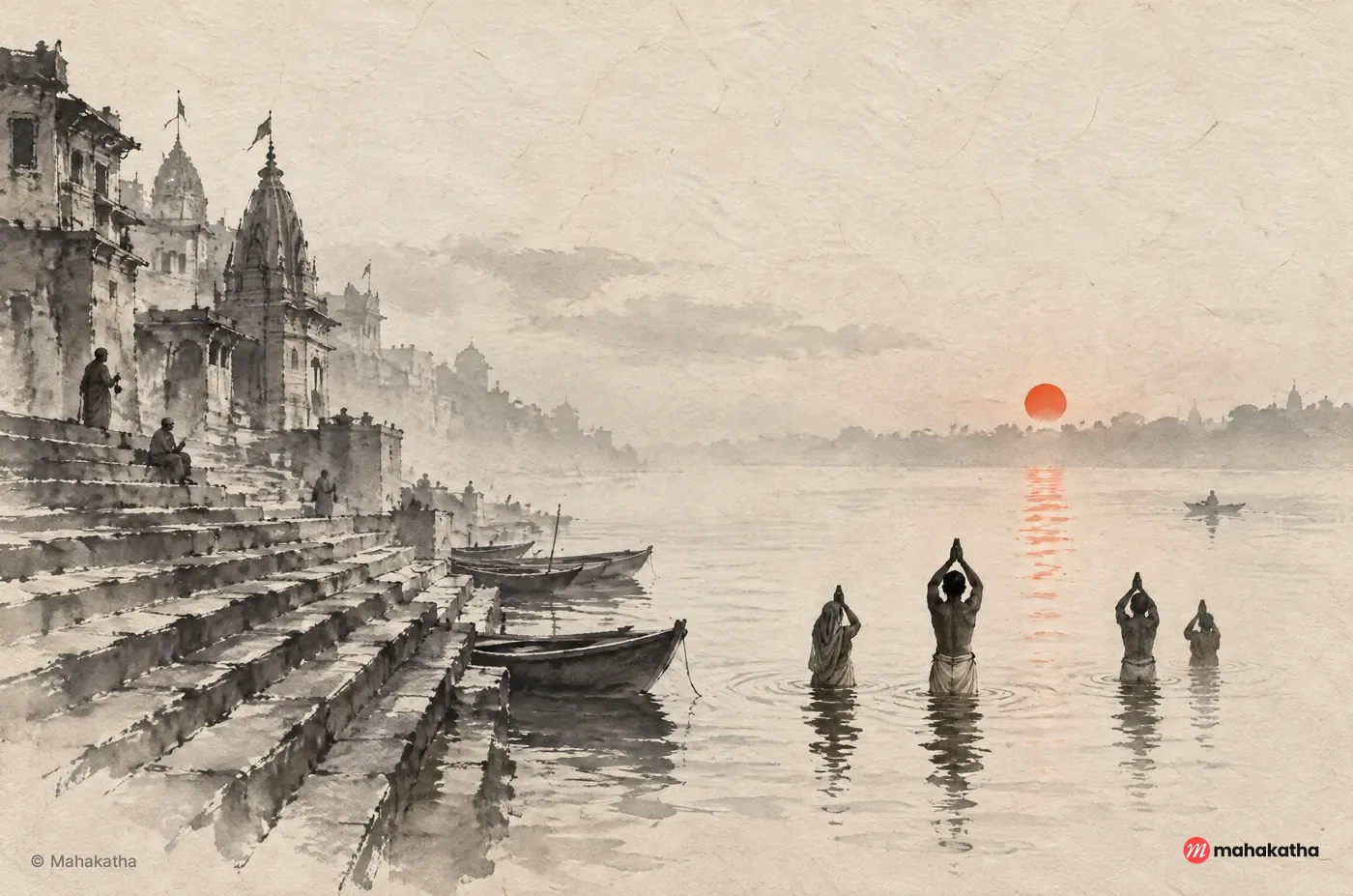
Gayatri has few temples of her own. She lives more in rivers at dawn than in stone.
Brahma Temple, Pushkar (Rajasthan)
One of the few temples to Brahma in India. The story of Gayatri as his bride is told here.
Savitri Temple, Pushkar (Rajasthan)
On Ratnagiri hill above the lake. It honours Savitri, Brahma's first wife in the Pushkar story.
Shantikunj, Haridwar (Uttarakhand)
The centre of the Gayatri Pariwar. The mantra is chanted here every day with fire rituals.
Dashashwamedh Ghat, Varanasi (Uttar Pradesh)
At dawn many people face the rising sun on the river steps. Many chant the Gayatri as they bathe.
Triveni Sangam, Prayagraj (Uttar Pradesh)
Pilgrims stand in the water at sunrise. Many chant the Gayatri as they offer water to the sun.
Konark Sun Temple, Konark (Odisha)
The Gayatri is a prayer to the light of the sun. Konark is India's great temple to that light.
Gayatri's symbols and what they mean
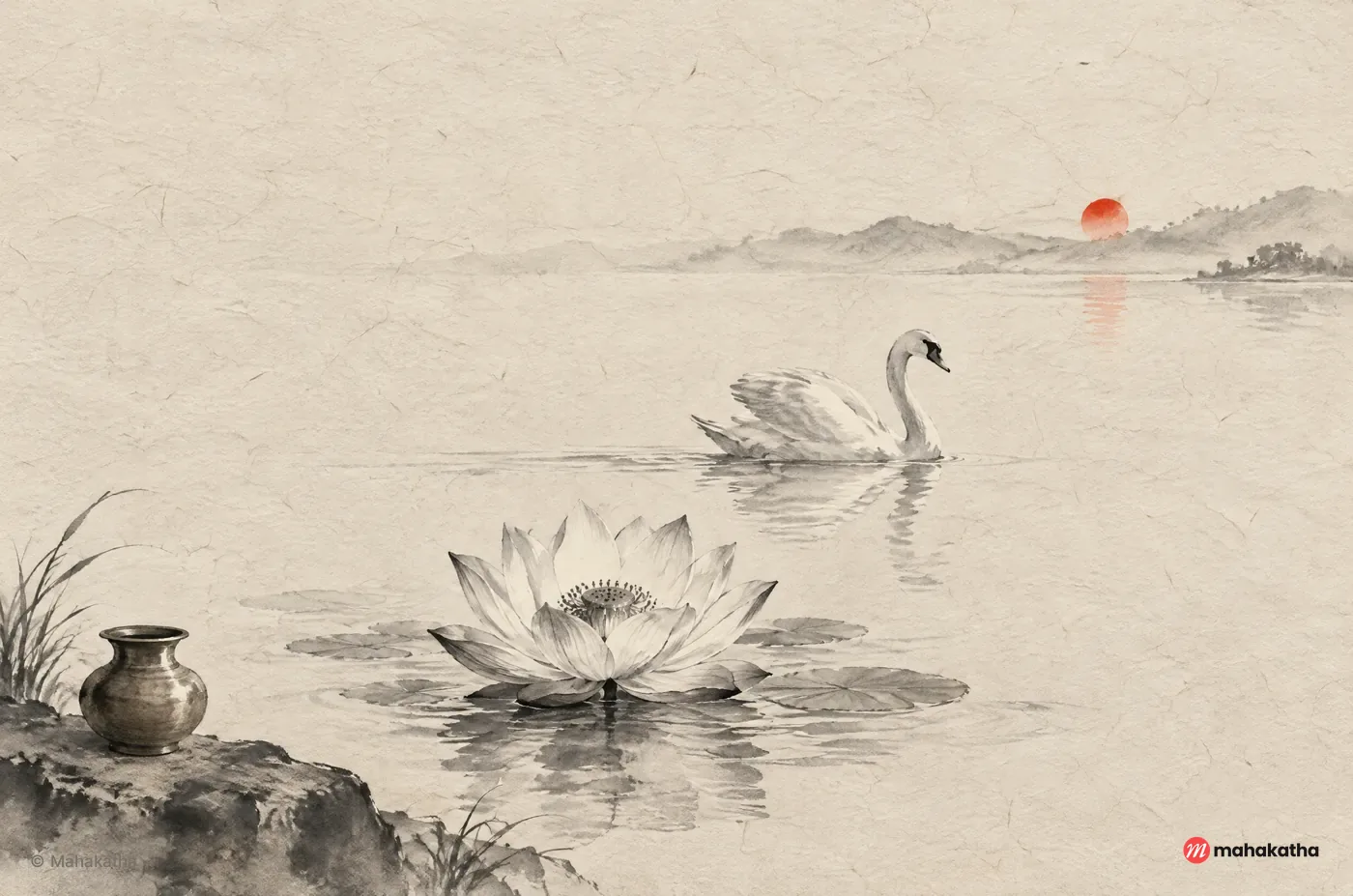
Her image is a picture of the mantra. Each part points back to the light.
Five faces
They are often linked with the five elements. They remind us that the divine looks out in every direction.
Ten arms
Her hands hold many tools of the gods. Together they say every power can serve the light.
The open lotus
She sits on a lotus that has opened fully. The mind can open in the same way at dawn.
The swan
Some images show her with a swan like Saraswati's. It stands for a mind that can choose what is true.
The sun
Many pictures place the sun behind her head. The mantra speaks of the shining light of Savitr.
Three lines of eight
The steady beat of the meter is a symbol too. Three short lines can settle the breath and hold the attention.
Gayatri mantras to chant
A Gayatri has a simple pattern. The first line names the deity. The second line meditates on them. The last line asks for the mind to be lit.
Many deities have their own Gayatri in this pattern. Here are the ones in our library. Each line is quoted as it is sung.
Gayatri Mantra
“Om Bhur Bhuvah Svah / Tatsaviturvarenyam / Bhargo Devasyadheemahi / Dhiyoyonnah Prachodayat”. We meditate on the shining light. May it wake our minds. In our library it sits with Saraswati.
Gayatri Mantra Japa
The same mantra in a slow and steady round. Japa means repeating a mantra many times. It suits a longer sitting.
Surya Gayatri Mantra
“om bhaskaraya vidmahe / mahatejaya dhimahi / tanno surya prachodayat”. A Gayatri to the sun by his name Bhaskara.
Agni Gayatri Mantra
“Om Mahajwalay Vidmahe / Agni Madhyay Dhimahi”. A Gayatri to fire and its bright inner core.
Jala Gayatri Mantra
“Aum Jala Bimbaaya Vidmahe”. A Gayatri to water and to Varuna who rules it.
Vaayu Gayatri Mantra
“Aum Pavanapurushaay Vidmahe”. A Gayatri to the wind that moves through the world and the breath.
Bhoomi Gayatri Mantra
“Om Vasundharaaya Vidmahe”. A Gayatri to the earth as the mother who holds all beings.
Aakaasha Gayatri Mantra
“Om Aakaashaay Cha Vidhmahe”. A Gayatri to open space and the wide sky.
Gayatri festivals
Every sunrise is a small Gayatri festival. A few days in the year are kept for her in a special way.
Gayatri Jayanti
Kept as the day the goddess appeared. Regions keep it on different days. People chant the mantra through the day and hold fire rituals in her name.
Upakarma
Called Avani Avittam in the South. Men who wear the sacred thread put on a new one. They begin the yearly study of the Vedas again.
Gayatri Japam
Kept in the South the day after Upakarma. Devotees chant the Gayatri many times with full attention.
Bringing Gayatri into your day
The Gayatri takes only a minute. That is part of its beauty.
At sunrise
Face the east. Close your eyes and chant the Gayatri Mantra three times. Feel the light on your face.
At the turning points
Pause at dawn and dusk for one round. Add noon if you can. These are the old hours of sandhya.
With a mala
A mala is a string of 108 beads. Chant once for each bead. Let the beat of the meter set the pace of your breath.
Before a hard choice
The mantra asks for a lit mind. It does not ask for a result. Chant it once before you decide.
Try the element Gayatris
Our library has a Gayatri for each of the five elements. Many people chant the earth Gayatri when they want to feel steady.
What Gayatri can teach us
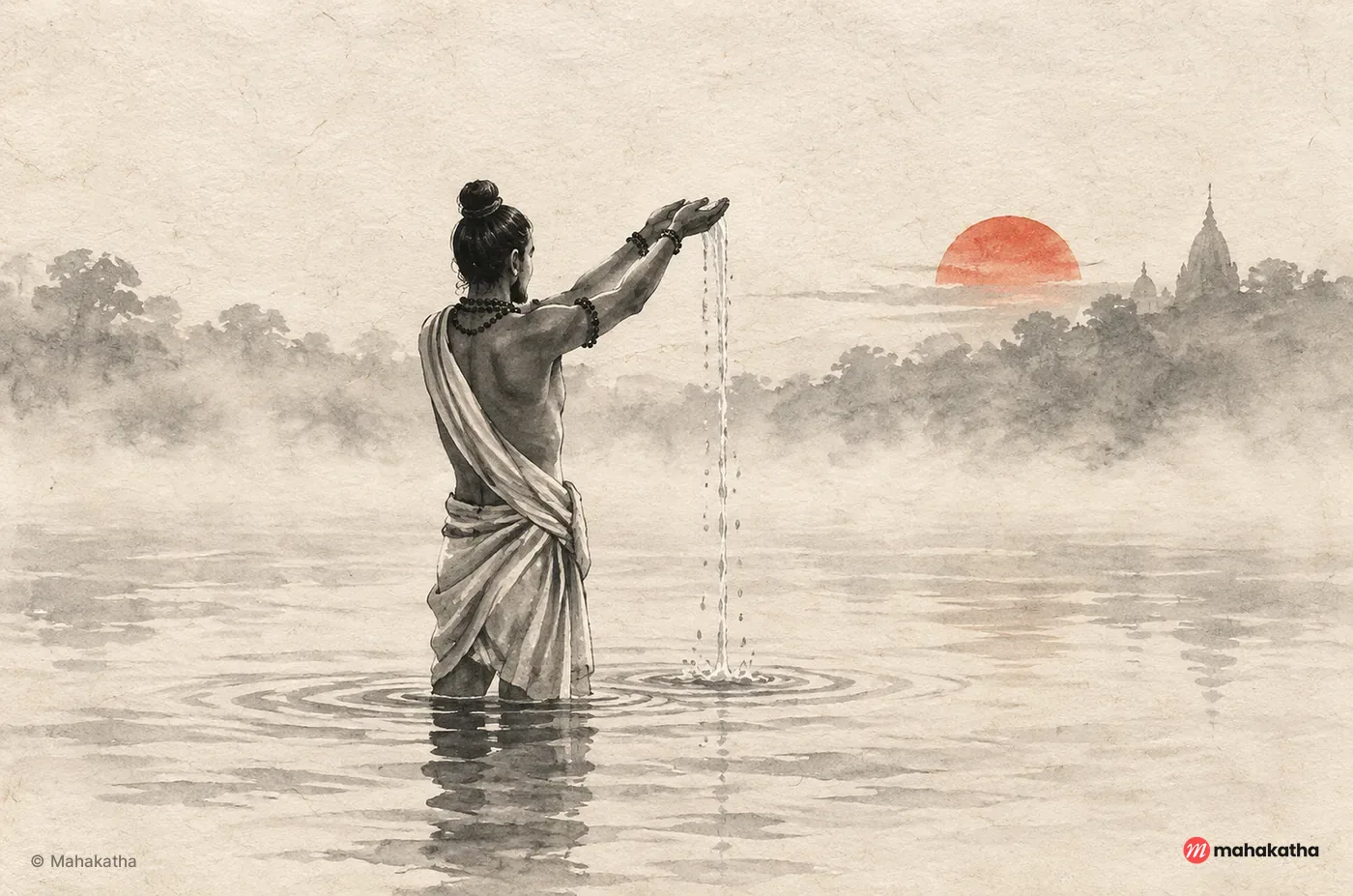
The Gayatri does not ask for money or fame. It does not even ask for comfort. It asks for one thing. May our minds be lit.
This is a brave prayer. It trusts that a clear mind will find its own path. When life feels foggy you do not need every answer. You need a little more light.
The meter teaches too. Three short lines and a steady beat. A life can keep that rhythm. Wake and work. Rest and begin again.
She is called the mother of the Vedas. A mother does not hand us the whole road. She holds the lamp while we walk.
Questions people ask
Who is Goddess Gayatri?
Goddess Gayatri is the Gayatri Mantra seen as a mother. She is called Veda Mata, the mother of the Vedas. Her best-known image has five faces and ten arms on a lotus. Gayatri is also the name of a Vedic meter with three lines of eight syllables.
Where is the Gayatri Mantra found?
The verse is widely cited as Rig Veda 3.62.10. It is a prayer to Savitr, the sun as the power that stirs life. Tradition links it with the sage Vishvamitra. The opening words Om Bhur Bhuvah Svah are not in the Rig Veda verse. They were added in later practice.
What does the Gayatri Mantra mean?
In simple words it says this. We meditate on the shining light of the divine sun. May that light wake and guide our minds. It does not ask for wealth or success. It asks for a clear and lit mind. Many people feel calm and focused when they chant it.
Is Gayatri the same as Saraswati?
They are close but not the same. Tradition says Gayatri takes three forms through the day. She is Gayatri at dawn and Savitri at noon. At dusk she is Saraswati. In the Pushkar story Gayatri is a second wife of Brahma. Our library files the Gayatri Mantra with Saraswati.
Can anyone chant the Gayatri Mantra?
For centuries the mantra was given only in the sacred thread ceremony. It was kept within a small circle. In the last century reform movements opened it to everyone. Today women and men of every background chant it. Many teachers say a sincere heart matters most.
When should the Gayatri Mantra be chanted?
The old hours are dawn and dusk. Many add noon as well. These are the times of sandhya vandana. Sunrise is the most loved hour because the mantra is a prayer to the light of the sun. You can also chant it quietly at any calm moment.